




A landmark study has provided the clearest understanding yet of how Tasmania's iconic Sand Flathead populations have changed over time, establishing the scientific foundation needed to support future assessment, monitoring and recovery of the state's most important recreational fishery.
The report, Developing a cost-effective monitoring regime and stock assessment for Sand Flathead in Tasmania, synthesises more than three decades of biological research, over 130 years of fishing history, and over a decade of fishery-independent data to deliver the most comprehensive assessment of the species ever undertaken.
"Sand flathead populations differ significantly between regions in their size structure, age composition, growth, reproductive output and overall stock condition,” said Professor Sean Tracey, Centre Head of Fisheries and Aquaculture at the University of Tasmania's Institute for Marine and Antarctic Studies (IMAS).
“The strongest evidence of long-term change was reported from southeastern Tasmania, where fishing pressure has also been the highest for many decades. Spawning potential in this region was estimated at approximately 6% of unfished levels.”

While some of this variation between regions may reflect natural environmental differences, when considered alongside the historical record, movement studies and stock assessment modelling, the evidence points to long-term fishing pressure progressively shortening the average size of fish.
Comparisons between historical and contemporary surveys showed that average sand flathead size has declined in several regions around Tasmania over recent decades, with the greatest changes occurring in the southeast.
In comparable surveys, average fish are now about 30 to 40 millimetres smaller than they were three decades ago in some southeastern regions.
"Larger fish are predominantly female, making up about 60 to 80% of fish in the largest size classes,” Professor Tracey said.
“These larger fish contribute disproportionately to spawning biomass and the production of future generations. Their decline has important implications for the long-term productivity of the fishery.”
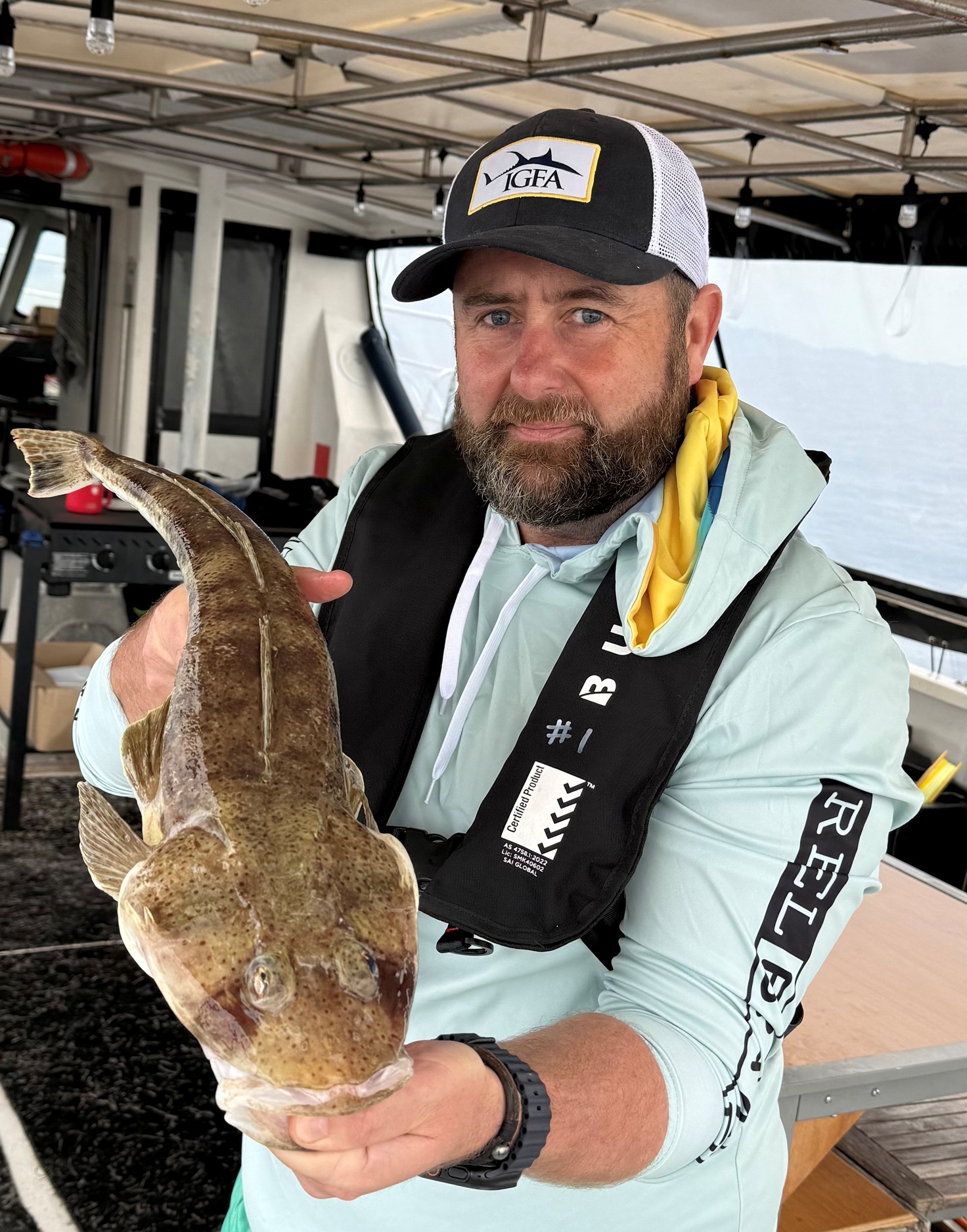
This highlights that rebuilding healthy spawning biomass is not simply increasing fish abundance, but that restoring the long-term productivity of the fishery will rely on increasing the number of larger fish in the population.
The study also found that expanding survey coverage, by adding additional sites within regions, provides greater improvements in assessment precision than simply increasing sampling effort at existing locations. This expanded coverage will provide a stronger evidence base for long-term monitoring.
"This is an encouraging outcome because it means we now have a scientifically robust and cost-effective monitoring framework, capable of tracking recovery over time," Professor Tracey said.
"We now have the biological understanding and monitoring framework needed to objectively evaluate future recovery and provide governments with a much stronger evidence base for future planning."
This research was funded by Fisheries Research and Development Corporation (FRDC) on behalf of the Australian Government: 2020-005 Cost effective monitoring and assessment of Sand Flathead and by the Tasmania State Government through the Sustainable Marine Research Collaboration Agreement (SMRCA).
Cover image: Sand flathead
Credit: Rick Stuart-Smith,
Reef Life Survey