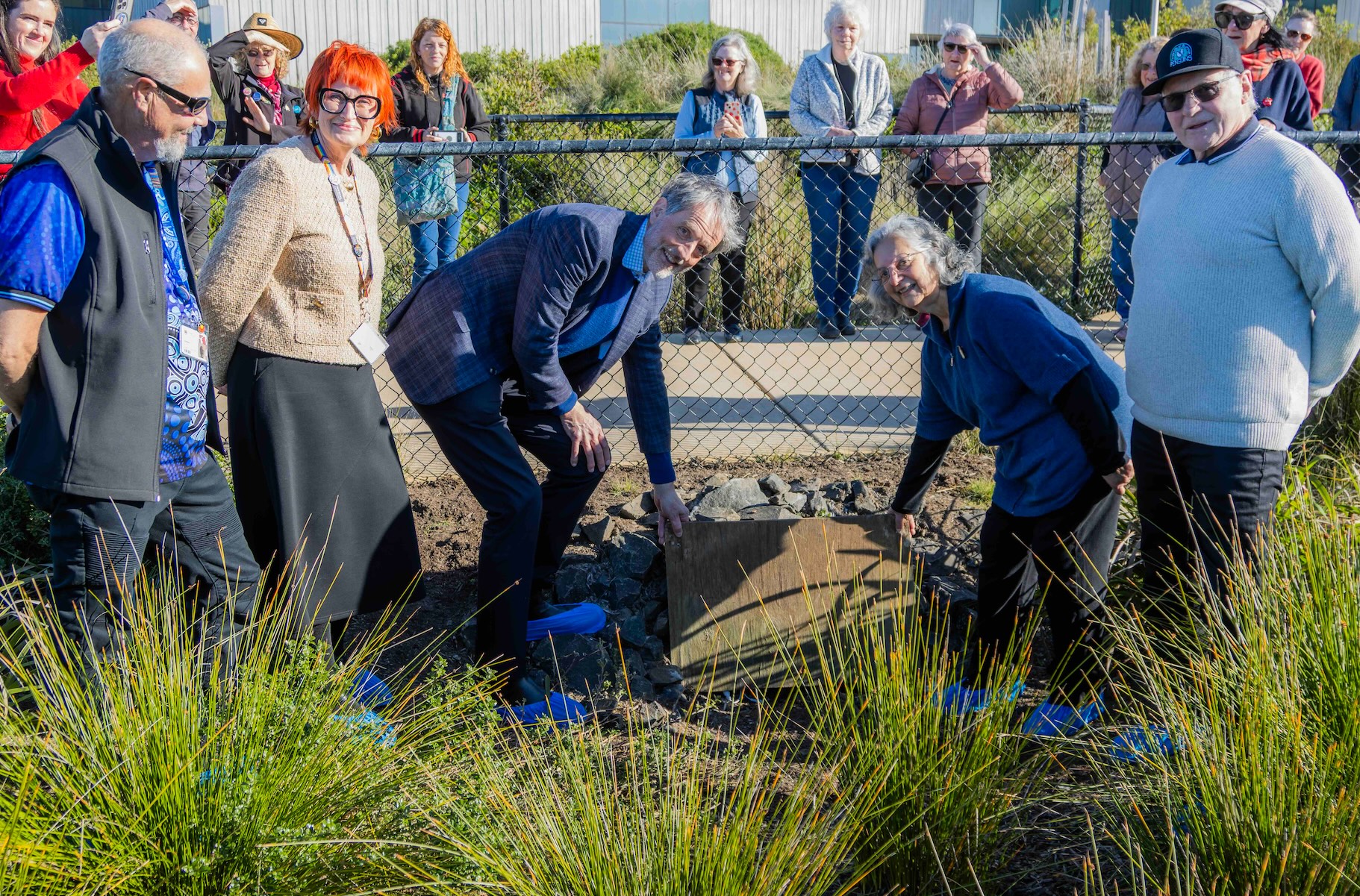
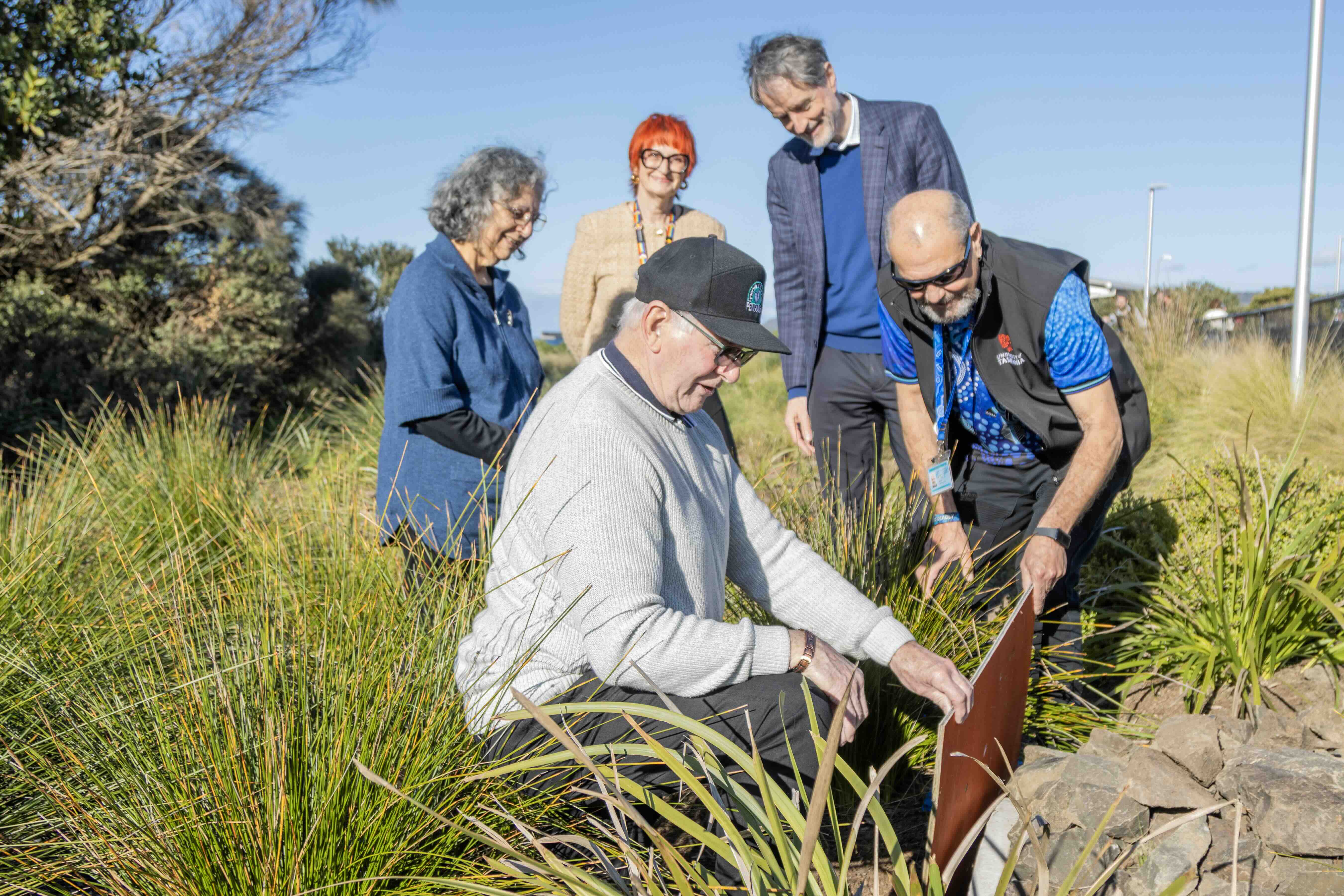
Little penguins living on the edge of West Park now have more habitat through a partnership between the University of Tasmania and Friends of Burnie Penguins.
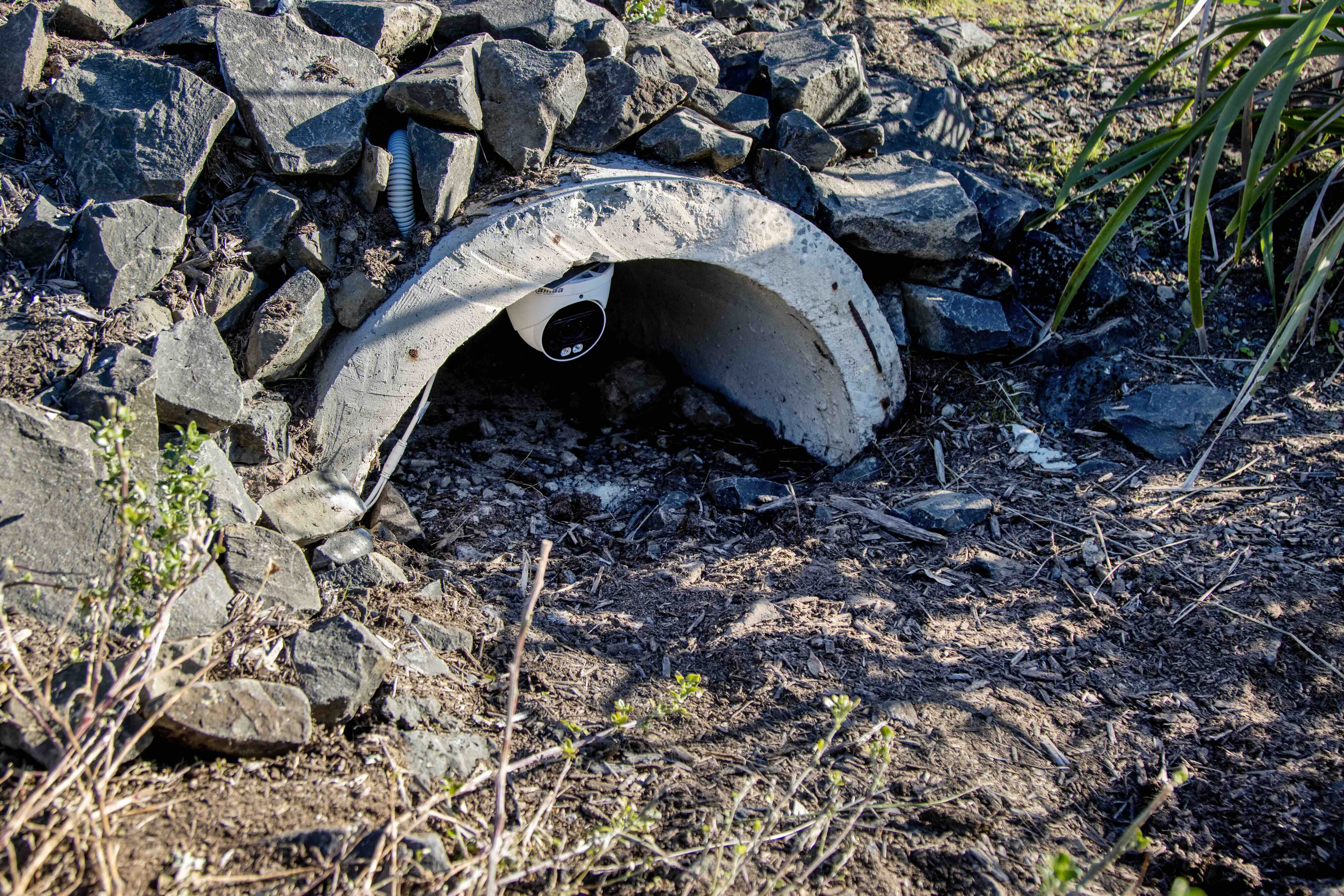
Today (Monday, 17 August) marked the opening of nine purpose-built tunnels positioned below the Coastal Pathway providing the penguins with access between the beach and expanded landscape.
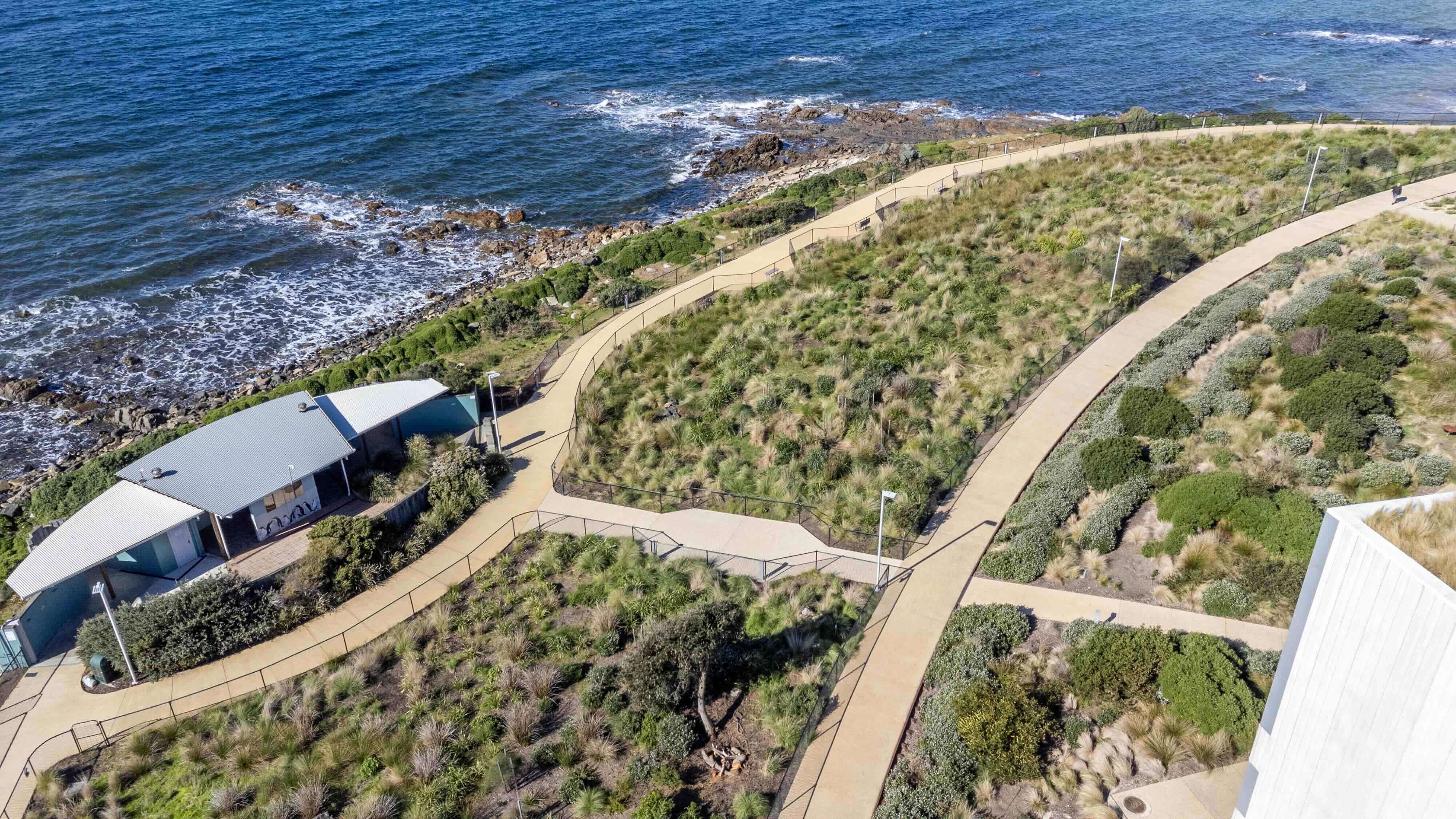
The area, previously used for car parking, has been significantly regenerated with hundreds of native plants as part of the Cradle Coast campus move to West Park.
With the landscape now established and providing sufficient cover, the expanded habitat, bordered by 1.2m fencing, is ready to be opened to the colony.
It will be monitored over the coming months to see how and when the little penguins begin to discover and interact with the space.
University of Tasmania Vice-Chancellor Professor Rufus Black said it was a special pleasure to be welcoming the little penguins into the expanded habitat after years of planning and collaboration.
“Penguins capture our hearts. We admire these brave little creatures as they venture out into the vast dark ocean full of dangers and each night return to rest on our shores,” Professor Black said.
“The little penguins have lived on this coast for at least as long as we have had stories about this special place. The least we could do is to make their home a little larger so their colony can grow.
“More habitat will mean more curiosity and more people falling in love with penguins. That is what will help secure their future. I hope all our students, as they venture out into the wide world themselves, tell the story that they studied on the only campus in the world that is also home to penguins.”
Dr Perviz Marker, Coordinator of Friends of Burnie Penguins and penguin ecologist said the habitat expansion was initiated by the group after approaching the University several years ago when it first announced the West Park move.
“It has been a great collaborative process right from the beginning with conversations with architects about our vision for the car park, to workshopping the ideas with the Friends of Burnie Penguins members and continuing discussions with the UTAS project team to incorporate the ideas and fine tune various elements,” Dr Marker said.
“We are very excited about the transformation on two fronts; 1) it will improve the guided viewing experience for the visitors to the Parsonage Penguin colony and this will be enhanced further with other work we are doing with the Business Northwest group; and 2) with increasing coastal erosion along West Beach, this will provide supplementary penguin habitat that has been lost in this area.
“Penguins are very resilient birds and easily adapt to their surroundings. They are unique in the bird world being one of 18 species that breed and moult on land but spend most of their lives in the oceans.
“Apart from guided viewing, we also work during the non-breeding season with maintenance of the colony, which includes removing weeds, maintenance of burrows and general upkeep.
“We do work with various community groups and more recently with Yolla District School, on our projects and we hope to involve more local schools with some other habitat elements.”
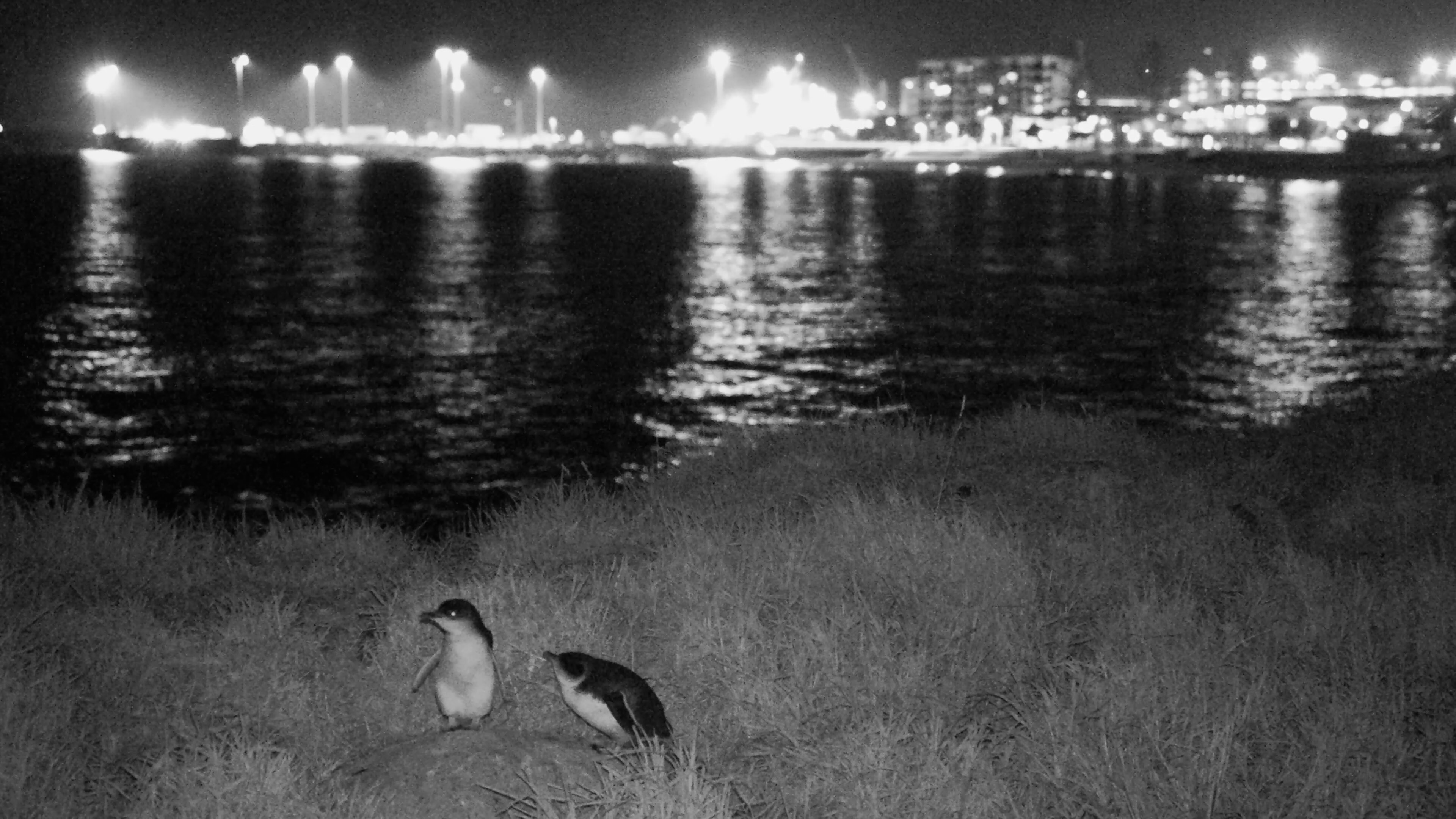
Little Penguins – the world’s smallest penguins – have been known inhabitants of West Park for more than 120 years and used to nest throughout the site until 2001 when fencing limited them to the coastal fringe.
The present-day Parsonage Point colony extends from the Burnie skate park through to a narrow beachside strip running parallel with North Terrace.
Between October and March, the creatures of habit head ashore to the same burrow where they nest and feed their young after a day of gathering food at sea during the breeding season.
In consideration of the growing colony, penguin-friendly amber lighting has been installed by the University throughout the West Park precinct.
The new habitat was designed with assistance from landscape architects ASPECT Studios, with construction overseen by local firm Fairbrother which contributed 12 penguin burrows.
The expanded habitat is one of several sustainable upgrades delivered by the University at West Park. These include wider site landscaping, repurposing a decommissioned railway line into a new public path, improving the Coastal Pathway, installing a community bike hub and public electric vehicle chargers, and creating a shared car park comprising sustainable asphalt.
The University has also made its internet available to the neighbouring Burnie Penguin Observation Centre to enable remote viewing and monitoring of the colony which streams penguin burrow activity live to YouTube.
More information about tour opportunities and the work of Friends of Burnie Penguins can be found on the volunteer group’s Burnie Penguin Observatory Facebook page.