


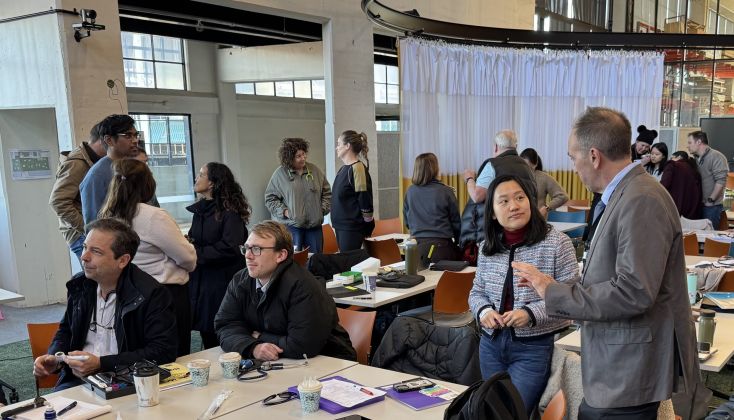

Kirsten's fascination with science began long before she entered a laboratory.
"I think I was interested in science from as far back as I can remember," she says. Growing up on a five-acre property, she was captivated by the natural world, particularly watching chickens hatch from eggs and wondering how the process worked.
Today, that early curiosity has developed into a career dedicated to improving human health. As one of the University's senior lecturers in Biomedicine, Kirsten leads research using next-generation CRISPR technologies to develop and test therapies for rare Bone Marrow Failure Syndromes. These conditions affect the stem cells responsible for producing all the cells in the blood, often impacting young children.
While her research focuses on medical breakthroughs, Kirsten is equally passionate about sustainability. That commitment led to her involvement with Hobart City Council's Climate Ready Hobart Strategy.
"I truly believe that together we can make a difference," she says. "Our consumer power and actions collectively are huge."
Kirsten practises what she preaches. She cycles to work in all weather, has installed solar panels at home, drives an electric vehicle, grows fruit and vegetables, and actively reduces household plastic consumption. Lots of small things that together can make a difference.
“I think that the Climate Ready Hobart strategy is about encouraging people to take these steps wherever and however they can”.
As a medical scientist, Kirsten sees climate change not only as an environmental issue, but also as a major public health challenge.
"Climate change has a huge impact on health," she explains.
From increased respiratory illness caused by bushfire smoke to rising emergency department visits during extreme heat, the health impacts are already being felt across Tasmania. Climate change is also altering the distribution of disease-carrying insects, affecting food security, and contributing to more frequent extreme weather events.
Looking ahead, Kirsten believes communities need to prepare for a range of climate-related health challenges, including heat-related illness, bushfires, mental health impacts, zoonotic diseases, contaminated stormwater, and growing health inequities among vulnerable populations.
These risks highlight the importance of scientific evidence when planning for the future.
"Evidence-informed decision making will be of paramount importance," she says. Research allows governments and communities to anticipate challenges, develop early warning systems, target support where it is most needed, and build resilience before crises occur.
Kirsten believes universities play a critical role in helping communities respond to complex challenges such as climate change.
She points to the value of long-term partnerships between researchers, local government, and community stakeholders, as well as the importance of translating research into practical policy and action.
When she imagines success for Hobart's climate-ready future, she envisions a vibrant city powered by clean energy, supported by efficient buildings and low-emission transport, with strong systems in place to minimise disruption from bushfires, floods, and heatwaves. Just as importantly, she hopes vulnerable community members feel heard, supported, and included in decision making.
Young people, she says, will be central to achieving that vision.
Young people and future scientists will be central to a climate-ready Hobart not just as beneficiaries of the strategy, but as active shapers of it. This is already visible in initiatives like the Youth Climate Action Fund with Bloomberg Philanthropies, which supports youth-led climate action across Hobart and 99 other cities globally, showing that young people are being resourced to lead, not just consulted. Future scientists in particular will be essential for the technical side of the transition: refining emissions data, developing new clean-energy and adaptation technologies, and helping the city adjust its approach as climate science evolves. And because young people will live with the consequences of decisions made today for far longer than anyone else, their sense of urgency and willingness to challenge business-as-usual thinking is itself a valuable driver of ambition — pushing the city to move faster rather than settle for incremental change
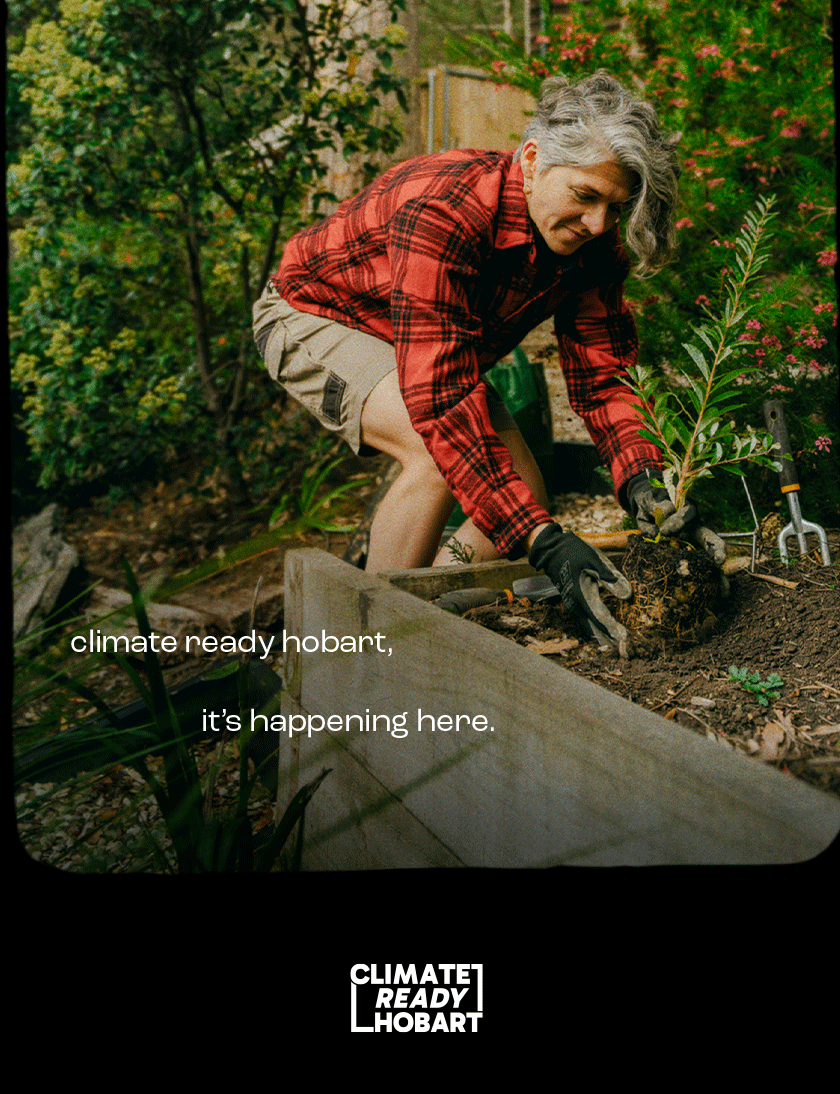
For Kirsten, National Science Week is an opportunity to highlight the important connection between science and everyday life.
National Science Week is a reminder that science isn't just something that happens in labs, it directly shapes decisions that affect everyday life, from how a city plans for bushfires and flooding to how it designs public health responses.
Community engagement with science matters because it builds trust: when people understand the evidence behind a decision, like Hobart's climate risk assessments or emissions pathways, they're more likely to support and participate in the actions that follow.
It also works in the other direction, community knowledge, lived experience, and local observation (like the more than 1,000 face-to-face conversations and citizen's jury that informed the Climate Ready Hobart Strategy) make the science itself more relevant and grounded in real needs.
For Kirsten, a career in science has provided a lifetime of discovery, problem-solving, and purpose. Through her work in medical research and climate advocacy, she is helping to create a healthier, more sustainable future for generations to come.
Kirsten’s advice to students considering a career in science, is that science gives us the evidence that underpins good decision making. It is fun, it is creative and it is endlessly interesting.
“I hope for all of you, wherever you are, that your career has all of these things, and can be as great as a career in science”.
Find out more about Biomedicine, Sustainable Living, Geography, Planning and Spatial Sciences and Marine and Antarctic Science.
Read more about Climate Ready Hobart