

A growing partnership is strengthening reef research in Tasmania’s D’Entrecasteaux Channel.
Pennicott Wilderness Journeys committed three days of skippering and providing a vessel to assist fieldwork for scientists at the University of Tasmania’s Institute for Marine and Antarctic Studies (IMAS).
The support comes in addition to the Pennicott Foundation’s funding of $899,000 over five years to assess the current state of reef health in the Channel.
“The Pennicott Foundation’s incredibly generous support is really helping us to drive our research forward in the Channel,” said IMAS marine ecologist, Dr Camille White.
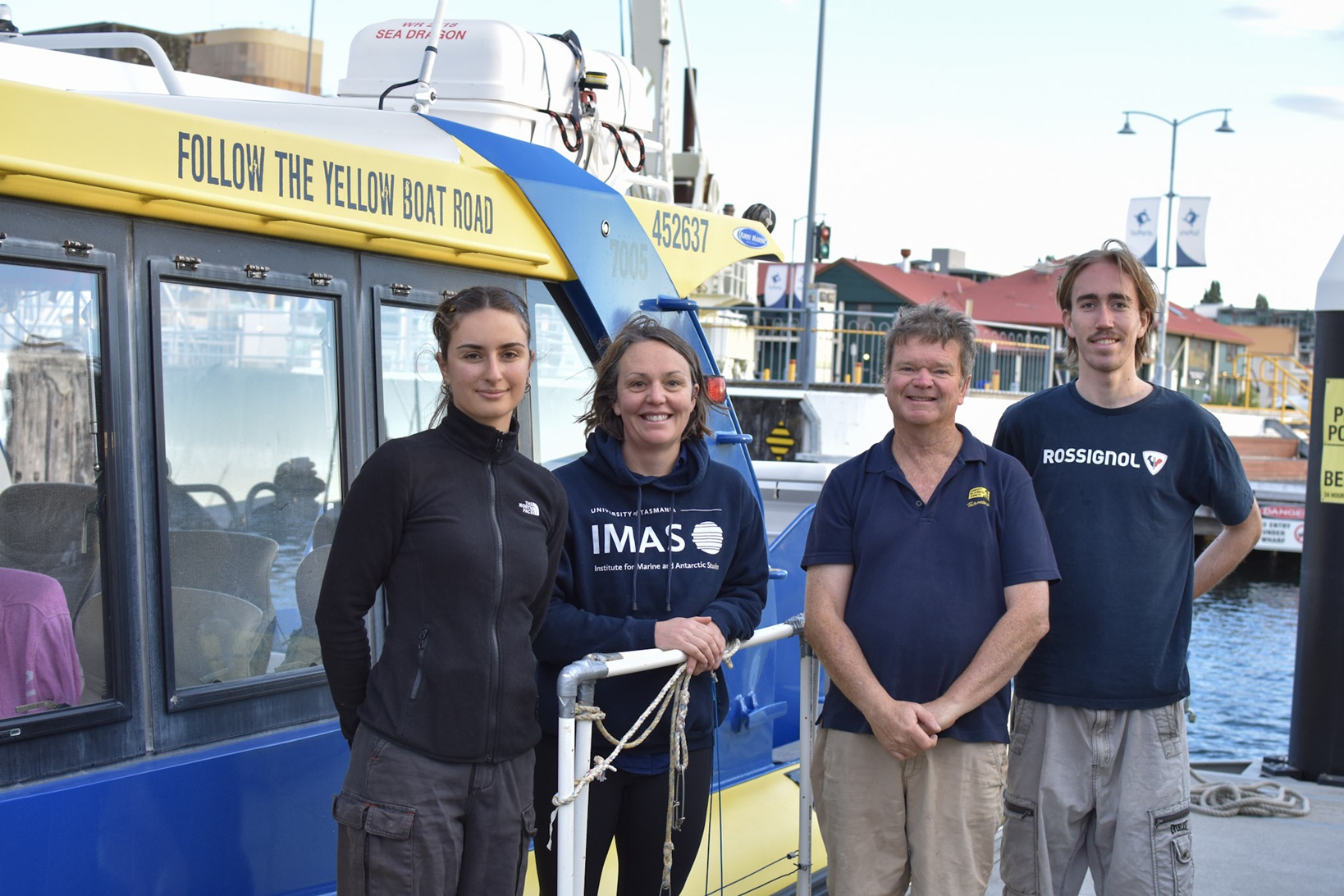
Robert Pennicott, founder of Pennicott Wilderness Journeys and Pennicott Foundation, skippered the Pennicott vessel during the fieldwork and said being directly involved in the research provided valuable insights.
“We are delighted to have this research project underway, and I was really pleased that we could provide one of our vessels to assist with three days of fieldwork,” he said.
“We had a thorough briefing from Camille and it was great to be hands-on as the fieldwork was being undertaken at multiple sites in the D’Entrecasteaux Channel.
“Seeing what the equipment does and what each person is responsible for is incredible. Being involved gives you a real appreciation of how the science works and we are looking forward to seeing the project evolve.”
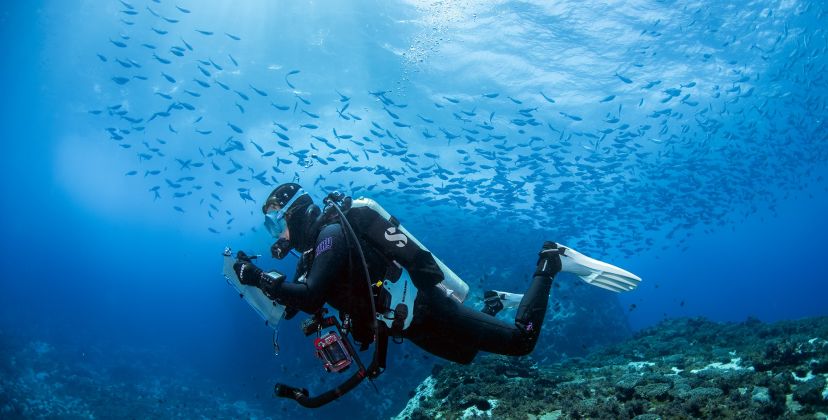
Over three days, Dr White and her team were able to do rapid visual assessment surveys and explore how nutrient enrichment might be affecting the reefs.
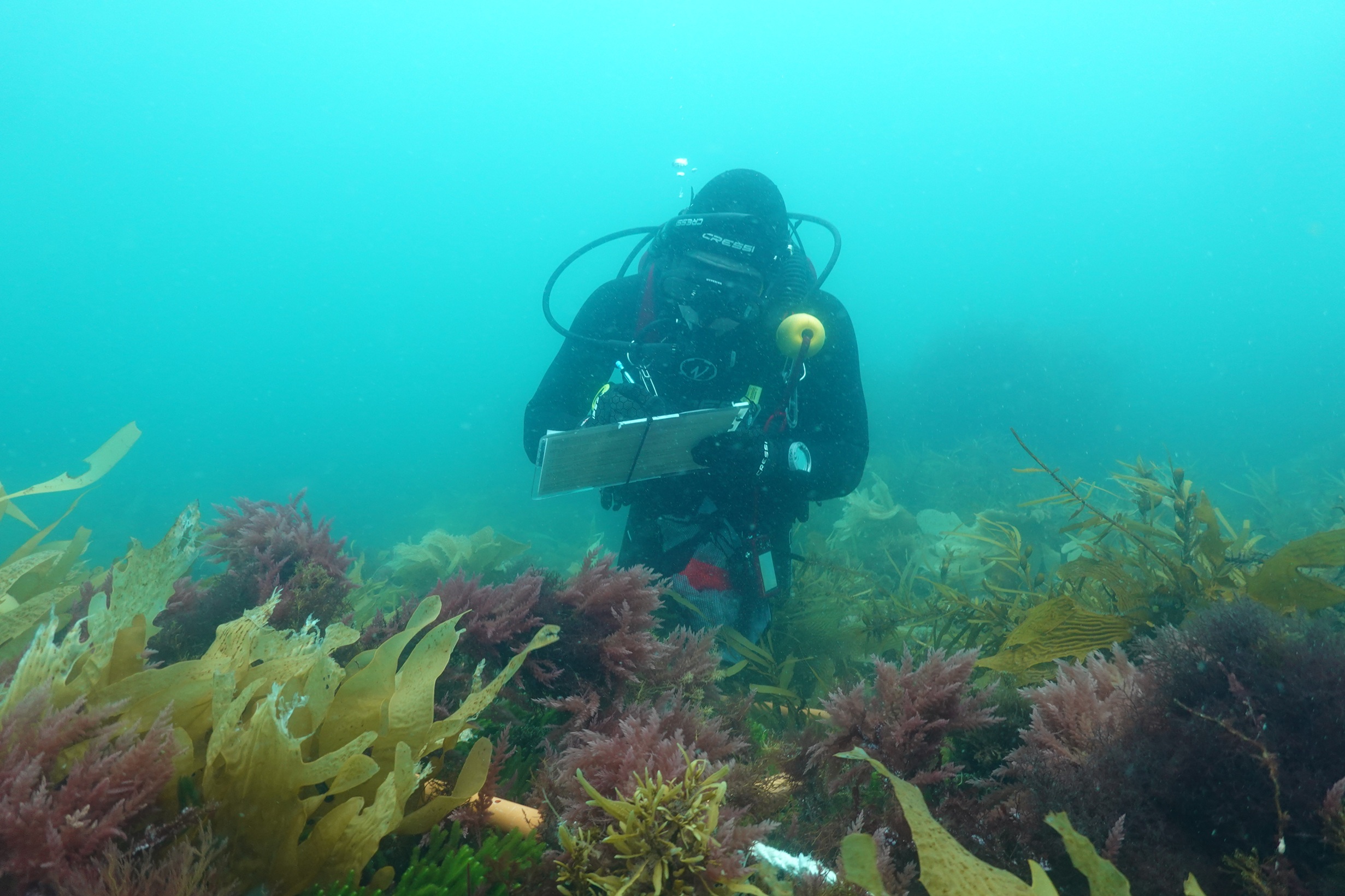
“From our observations so far, we find areas which have good water movement tend to correspond to good reef health, whereas the areas where the water isn’t moving quite so much or don’t have the same amount of wave exposure tend to reflect poorly in condition,” said Dr White.
“However, condition at several sites has changed since our previous observations, so there is a lot to learn in terms of how reefs change over time.”
The fieldwork also provided experience for IMAS honours students Lilli Pollard and Cameron Morgan, whose research projects will focus on the D’Entrecasteaux Channel.
Lilli, who is investigating the diversity of epiphytic algae in the Channel and how these communities change over an eight-month period, said it was exciting to get out into the field and get hands-on experience.
“It was inspiring getting to know Rob and his investment in our marine ecosystems. Hearing how he has witnessed the Channel change in recent years was eye opening,” they said.
“I’m really keen to start my honours research and learn about the species that inhabit our waters and how we can use this knowledge to manage our reefs in the future.”
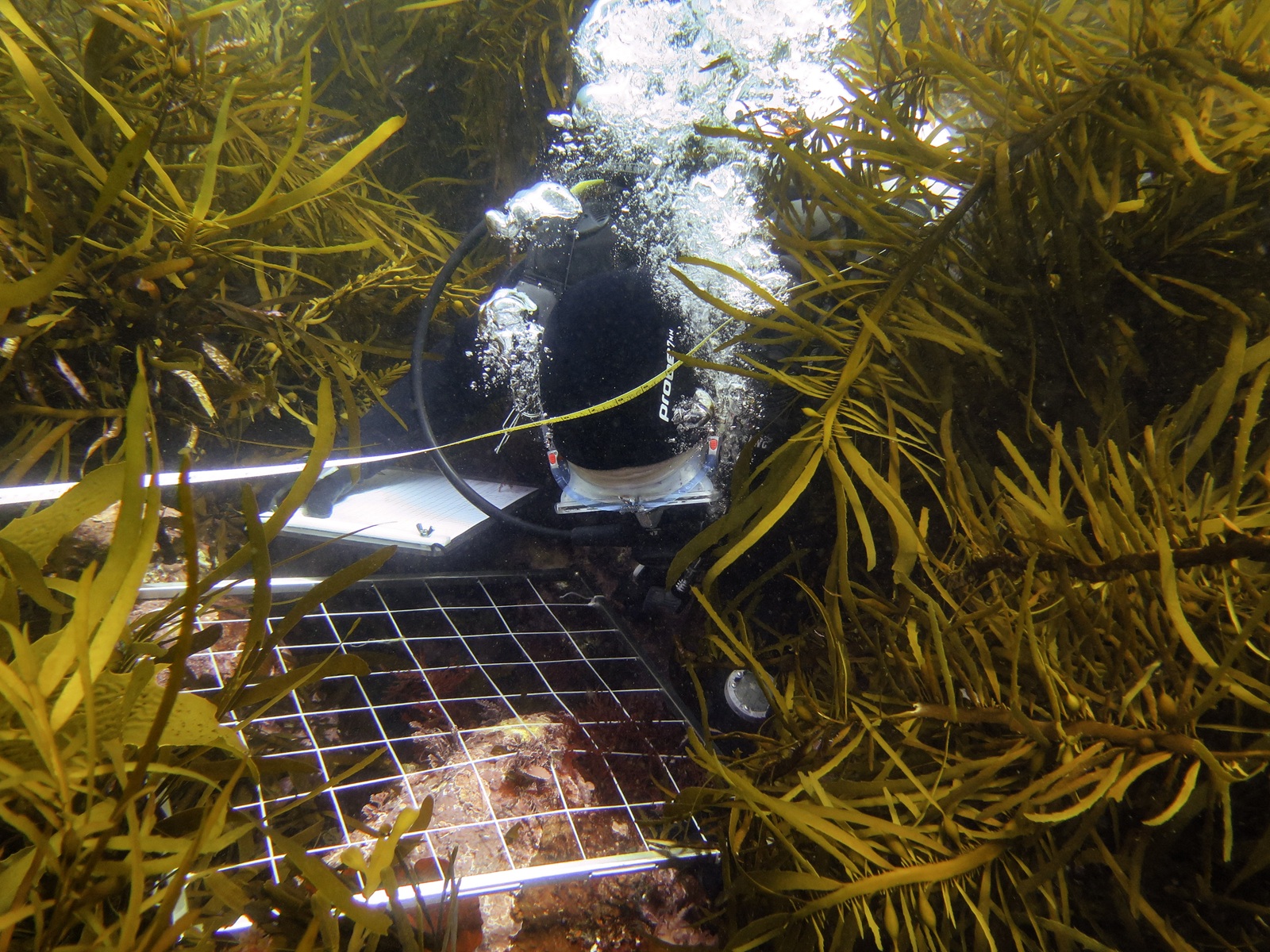
Cameron is assessing how reef function shifts in response to nutrient enrichment across a calendar year.
“It’s really good getting out in the field,” he said.
“Being able to see the ecosystem processes gives me a much better understanding of the data that I’m collecting and what I’m researching.”
Cover image credit: Camille White