

Kelp forests are increasingly threatened by warming temperatures and marine heatwaves, but understanding their real-world vulnerability to climate change requires looking beyond laboratory experiments and modelling.
A new PhD study published in Ecology Letters quantifies the population-specific responses of kelp canopy cover to marine heatwaves. It also highlights the importance of adding long-term field observations to improve understanding and predictions of species vulnerability under a warming climate.
“Each approach gives us different insights, but relying on one single method can underestimate real-world vulnerability,” said lead author Jiaxin Shi, who is a PhD student at the University of Tasmania’s Institute for Marine and Antarctic Studies (IMAS).
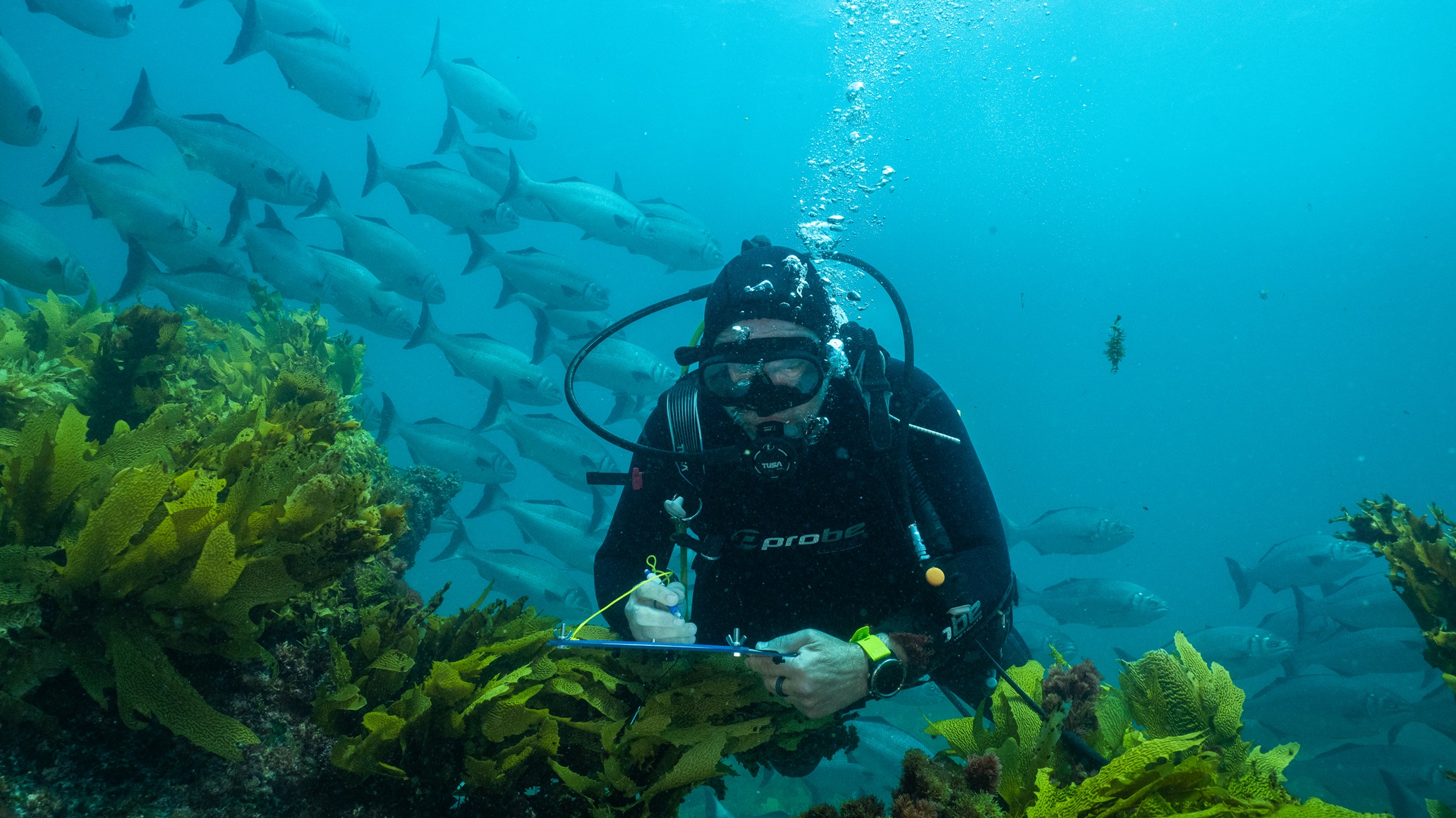
"Integrating field observations with lab work and modelling will improve our ability to identify climate risks, and guide effective conservation on species and ecosystems facing ongoing climate change.”
The study used three decades of reef monitoring observations of golden kelp (Ecklonia radiata), the dominant kelp species forming much of Australia’s Great Southern Reef.
“This allowed us to evaluate how kelp populations actually change in the real world – and to capture the complex and dynamic responses of kelp forests to marine heatwaves over time,” Jiaxin said.
“It’s an approach that can be applied to other species worldwide, improving how managers plan for climate change impacts on coastal marine ecosystems.”
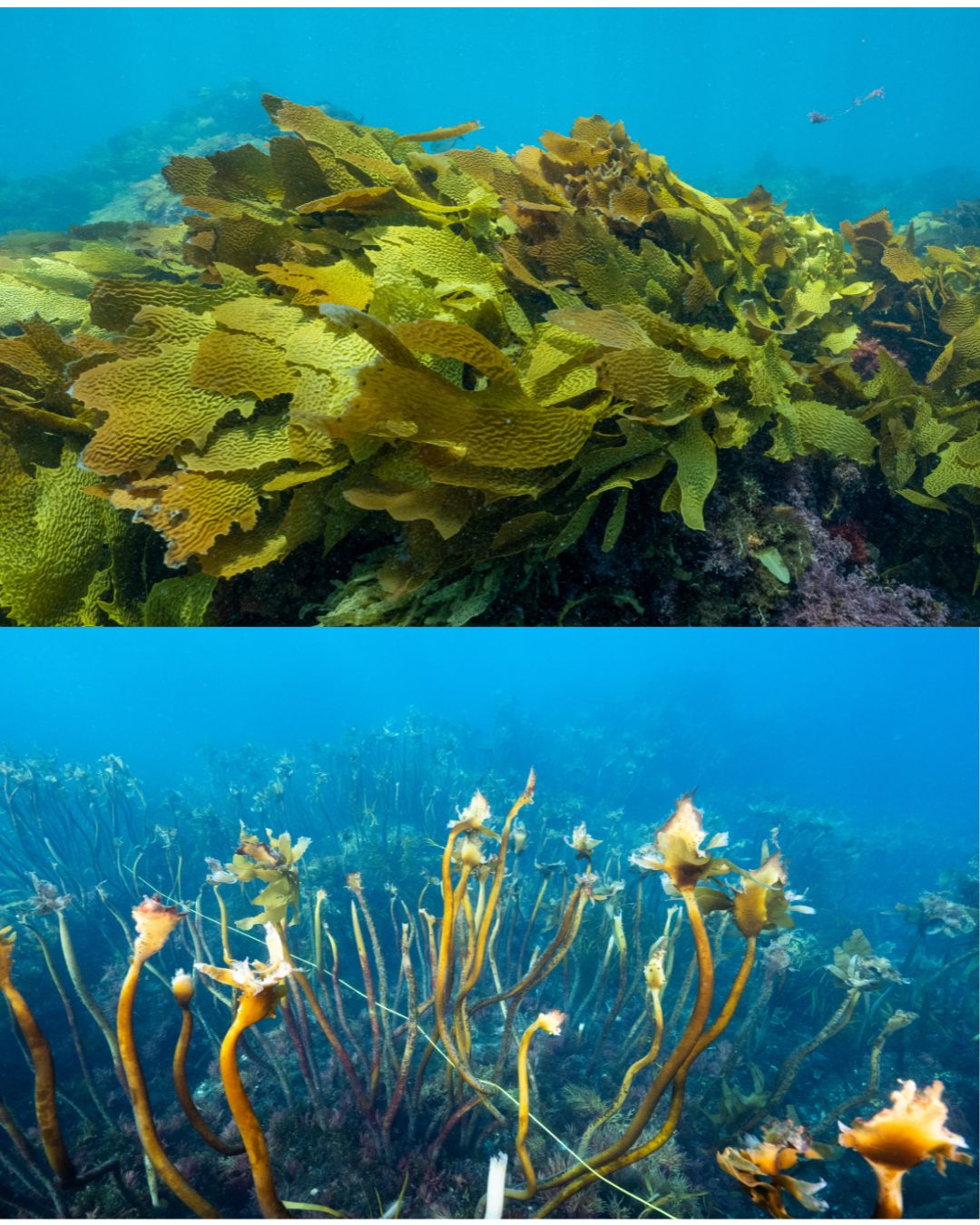
The field observations revealed that, as marine heatwaves intensified, changes in kelp abundances shifted from positive to negative.
Importantly, kelp populations at the warm edge of the species’ distribution range have higher critical thermal limits than populations in cooler parts, but displayed more volatile responses to marine heatwaves.
IMAS marine ecologist and co-author, Dr Scott Bennett, said the impacts of marine heatwaves on kelp forests were evident at very small deviations from typical summertime temperatures, highlighting greater sensitivity than previously predicted by laboratory experiments and distribution models.
“This highlights the importance of calibrating theoretical approaches with actual ecological change,” said Dr Bennett, who is the co-founder of the Great Southern Reef Foundation.
“Reliable predictions of species responses to intensifying warming extremes are crucial yet challenging for profiling risks – and for ultimately informing effective adaptation planning and climate risk management for species.”
Cover image: Coastlines of the Great Southern Reef.
Credit: Stefan Andrews, Great Southern Reef Foundation