

The University of Tasmania is officially the tertiary sector’s world-leader in tackling climate action, with the prestigious Times Higher Education (THE) Impact Ratings awarding us number one in climate action globally for 2026 – for the fifth year in a row.
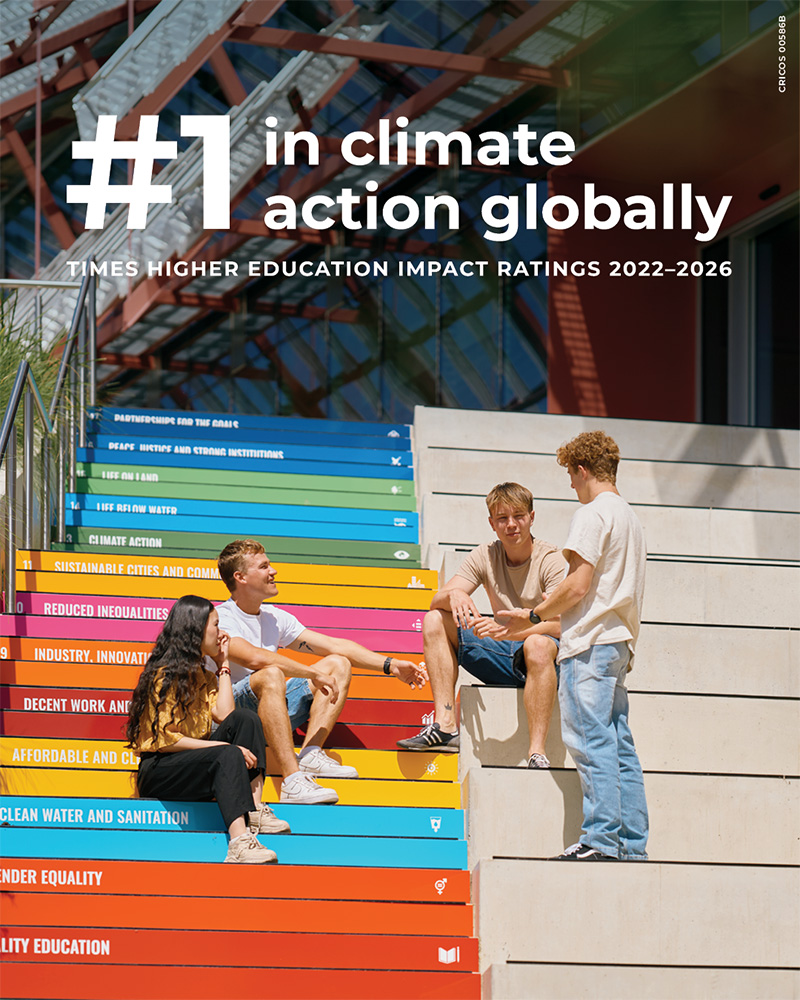
THE Impact Rankings assess universities’ impact on society and the environment against the United Nations’ 17 Sustainable Development Goals (SDGs). The SDGs offer a shared framework for all levels of government, businesses, community groups and education organisations to prioritise action between 2015 to 2030, across environmental, socio-cultural and economic sustainability.
Learn more about SDGs at our University
What does the Climate Action goal specifically measure?
In the THE Impact Rankings, SDG 13 Climate Action specifically rates a university’s research, education and operational initiatives on climate change. We were able to demonstrate that we are addressing these criteria, because, just like the THE Impact Rankings, our Strategic Framework for Sustainability (PDF 3.1 MB) and Sustainability Policy (PDF 124.9 KB) are also directly informed by the UN’s Sustainable Development Goals. Furthermore, the University's Strategic Plan: 2025 Refresh explicitly addresses climate as one of the pressing transitions we need to make in Tasmania.
Specifically, performance is assessed against:
- Research on climate change: The research category looks at the number of published papers by our researchers, and the proportion of those papers published in the top 10% of journals. At the University of Tasmania, we’re passionate about understanding our changing climate, its impacts, and how we can make a difference. Globally, our researchers have been at the leading edge of climate change for about 30 years.
- Low-carbon energy use: This is determined by the amount of low-carbon energy used by the university, including the proportion of electricity sourced from low-carbon sources. Our Greenhouse Gas Emissions Reduction Strategic Plan aims to reduce carbon emissions from energy, including electricity and transport and non-transport fuels.
- Climate education measures: This category takes into account local education and awareness campaigns, efforts to inform and support government and NGOs on climate change adaptation and climate change disaster planning. We are involved with a range of projects aimed at helping our University and broader community to take meaningful climate action.
- Commitment to carbon neutrality: This category requires having a target date by which a university will become carbon neutral according to the Greenhouse Gas Protocol. As we have been carbon neutral certified by the Australian Government Climate Active Standard since 2016, this commitment was easy to demonstrate.