About the project
Conservation covenants are one of the principal legal instruments for private land conservation in Australia, serving to provide long-term protection of biodiversity. Their importance in Australia, and other countries, is growing as governments seek to expand areas under protection and private land often contains ecosystems that are poorly represented in protected area systems.
Our project focuses on investigating the role of conservation covenants to help advance national and global goals to restore ecologically degraded land and adapt to climate change.
Combining a team at the forefront of research on the intersection between ecosystem restoration, climate adaptation and environmental law, this nationally significant project aims to transform knowledge of whether and how conservation covenants and associated laws and policies can facilitate climate-adapted restoration in the 21st century.
As part of this research, we are conducting interviews with policy-makers, regulators, covenanting agencies and other key stakeholders at the national, State and local levels in Australia. The interviews will generate insights into practical experiences of using conservation covenants. Our research seeks to better understand the legal constraints and opportunities for conservation covenants to be used for ecosystem restoration and climate adaptation. The project will also develop proposals for reform of conservation covenants so that their legal frameworks are better able to facilitate biodiversity conservation, ecosystem restoration and adaptation under climate change.
Our research focuses on conservation covenants in New South Wales, Queensland, Tasmania and Victoria, but also looks at some significant developments in other jurisdictions within Australia and abroad.
Our project is generously funded by an Australian Research Council Discovery Grant, with assistance from the University of Tasmania, University of Adelaide, and The Nature Conservancy of Australia.
Meet the team
Ben has been a Professor of Environmental Law at the University of Tasmania since 2014 and is an Adjunct Professor at Osgoode Hall Law School of York University, in Canada. Overall, he has some 30 years of global experience in universities in Australia, Canada, England, the Netherlands and New Zealand, with extensive expertise in numerous facets of environmental law including ecosystem restoration, biodiversity conservation and climate change issues.
Ben has participated in various research and professional collaborations, including as a member of the Australian Panel of Experts on Environmental Law (2014-17), the Governing Board of the IUCN Academy of Environmental Law (2010-14), and currently with the Tasmanian Independent Science Council (since 2020), Ben also has personal experience with conservation covenants on a bush property that he formerly owned in southern Tasmania.
Phil is a cross-disciplinary Associate Professor at the Adelaide Law School and Environment Institute. Her research focuses particularly on biodiversity conservation and climate change adaptation (eg McCormack 2018a), with recent work including publications on legal aspects of climate-driven species redistribution and climate adaptation-oriented ecosystem restoration (McCormack 2018b; McCormack 2019), and an Australian Research Council funded project about climate adaptation and bushfire laws (DE250101463). Phil is a socio-legal scholar, combining traditional legal (doctrinal) research with empirical research, such as qualitative interviews and large content analyses.
Phil’s research has consistently demonstrated shortfalls in legal frameworks and government priorities for nature conservation, and she is thrilled to contribute to this project that recognises the crucial role that private landholders can play in meeting the challenges of the biodiversity and climate crises.
Dr. James Fitzsimons is a leading global expert on private land conservation and conservation covenants. He holds Adjunct Professor positions at the School of Law, University of Tasmania and at the School of Life and Environmental Sciences, Deakin University. He is one of the world's leading authorities specializing in this area of research on private land conservation.
Dr. Fitzsimons is currently Senior Advisor, Global Protection Strategies for The Nature Conservancy focusing on global and national biodiversity conservation targets. He has previously worked in the fields of conservation policy and planning for government environment departments and agencies and for non-government environment organisations.
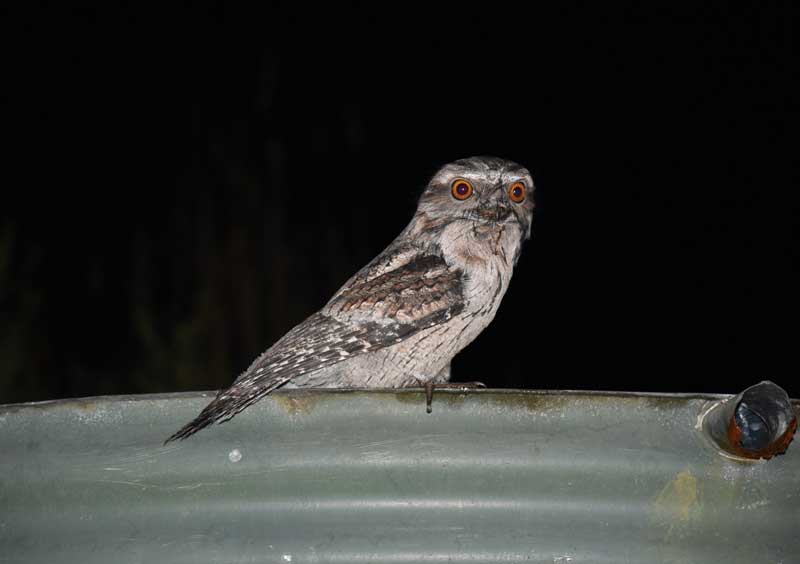
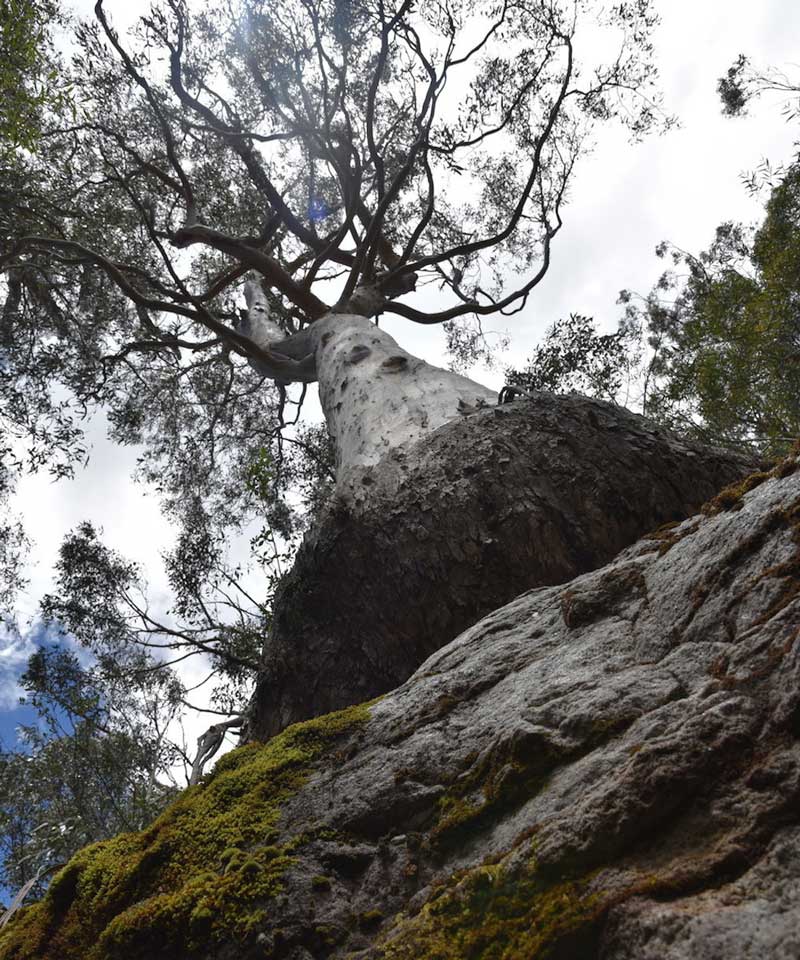
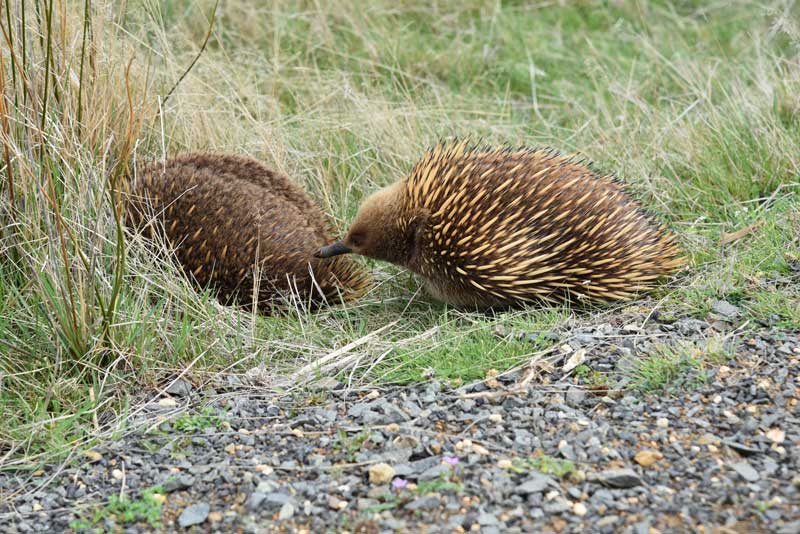
James manages and conducts research on his own covenanted property – 130 ha of threatened box-ironbark woodland in Victoria, which is home to numerous threatened species including:
Sarah is an experienced environmental law professional. She is a current post doctoral research fellow in the School of Law, University of Tasmania, and Lecturer in the Faculty of Law Monash University. Sarah has extensive experience working as a senior lawyer with environmental not-for-profits. Sarah was previously the Legal Counsel for Trust for Nature (Victoria), Victoria's dedicated private land conservation organisation. In this role, Sarah oversaw conservation covenant negotiation and registration as well as providing organisational legal governance guidance and advice.
Sarah is passionate about the role of law in working to provide solutions to the biodiversity and climate crisis and is inspired by thousands of Australian landowners who volunteer their land and time for conservation outcomes. She dreams of owning her own bush block one day.
Nate has completed a Bachelor of Laws (LLB) and a Bachelor of Science (BSc) at the University Adelaide and has experience working as a Research Assistant at the University Adelaide in the field of environmental law. Nate's research will apply desktop research (structured literature review, synthesis and critical analysis) to help design and test a legal and theoretical framework for ‘climate adaptive ecosystem restoration’.
Nate is a Higher Degree by Research (Masters') candidate and is supervised by Chief Investigators Professor Benjamin Richardson and Associate Professor Phillipa McCormack, as well as Associate Professor Alexandra Wawryk, University Adelaide. Concurrently with his thesis, he is also working with the Society for Ecological Restoration (SER) on a project to develop legal building blocks and model legislation for restoration.
Nate's research focus lies at the legal and regulatory response to scientific issues. He acknowledges the law, in many cases, is unsatisfactory in dealing with past environmental harm, and is particularly interested in meaningful environmental legal reform that empowers private landowners to help reverse it.
Faith is an LLB/B.Science student at the University of Sydney with a research interest in environmental jurisprudence and the legal frameworks that govern land and ecological relationships.
Her broader work engages with the Rights of Nature and the institutional innovations needed to bring ecological identity and practice more fully into governance. The work draws on her experience as a Sustainability Data Analyst, Secretary for the National Environmental Law Association's Biodiversity Working Group, and volunteer for the Australian Earth Laws Alliance.
She currently contributes to research on biodiversity covenants and conservation easements at the University of Tasmania.
Publications and media
- Richardson, Benjamin J, Sarah Brugler, Phillipa C. McCormack, James A. Fitzsimons 'Private land, public benefits: Conservation covenants and easements aiding global biodiversity targets' (2027) Land Use Policy 172: 108296
- Brugler, Sarah, Benjamin J Richardson, James Fitzsimons, 'Will the Nature Repair Market deliver long term protection on private land?' (2026) Law Society Journal (Law Society of NSW)
- Richardson, Benjamin J., Dominic Bilton, Afshin Akhtar-Khavari, Sarah Brugler, James A Fitzsimons, Phillipa C. McCormack, 'Conservation Covenants and Easements: A Local Instrument Supporting Global Biodiversity Goals' (2026) Cambridge University Press
- Camatta, Nate, Phillipa McCormack, Alexandra Wawryk & Benjamin J. Richardson, 'Legal design principles: Setting a long-term action plan for effective Australian environmental law reform', (2026) Australasian Journal of Environmental Management.
- Richardson, Benjamin J., Phillipa McCormack, Sarah Brugler, and James A. Fitzsimons, 'Conservation covenants: What is the role of reciprocity?' (2026) Journal of Environmental Law 38: 1-26
- Benjamin J. Richardson, 'Restrictive Covenants for the Conservation of Private land: Can, and Should, an Old Dog be Taught a New Trick?' (2025) Australian Property Law Journal 33(3): 77-102
- Richardson, Benjamin J. and Sarah Brugler, 'Conservation covenants: A tool for NSW landowners to protect biodiversity' (2025) 69(4) Journal of National Parks Association of NSW
- Brugler, Sarah, Benjamin J. Richardson, James A. Fitzsimons, 'Australia's new Nature Repair Market', (2025), The Law Institute Journal
- Richardson, Benjamin J. and Sarah Brugler, 'Conservation Covenants: A Legal Instrument for Biodiversity in Rural Australia', (2025) Law Society Journal (NSW Law Society)
- Richardson, Benjamin J., ‘Conservation covenants in Castlecrag, Sydney: Walter Burley and Marion Griffin’s legal innovation in the interbellum’, (2025) History Australia, 1-23: https://doi.org/10.1080/14490854.2025.2550742
- Richardson, Benjamin J et al, 'Conservation covenants for ecosystem restoration: Adapting an old instrument to a new global conservation challenge?' (2024) 5 Frontiers in Conservation Science Article number: 1335988
- Richardson, Benjamin J et al, 'Private landholders control 60% of the Australian continent-so let's get them involved in nature protection' (2023) The Conversation
- Brugler, Sarah and Benjamin J. Richardson, 'Adapting conservation covenants to Indigenous-owned land' (Pt Thomson Reuters) (2023) 39(5) Environmental and Planning Law Journal 435-449
- Brugler, Sarah, 'Evaluating successes and challenges for effective governance of privately protected areas in Australia' (2023) 4 Frontiers in Conservation Science
News and events
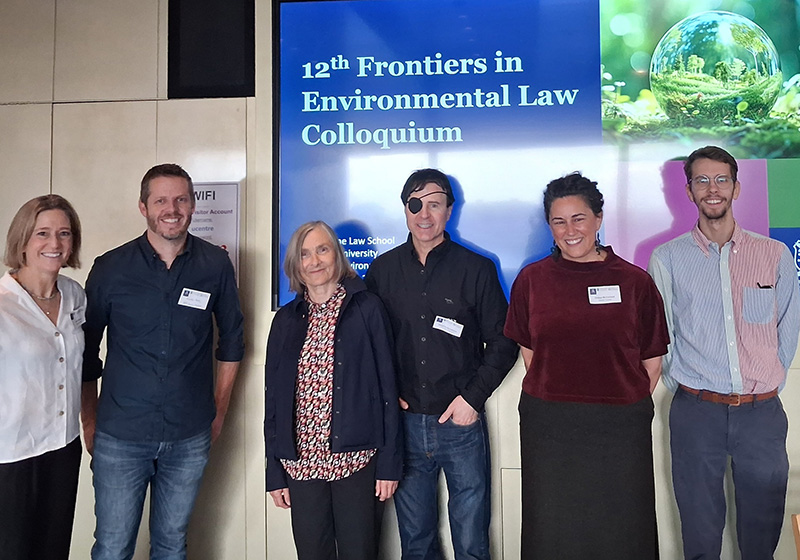
The 12th Frontiers in Environmental Law Colloquium 2026 was hosted by Melbourne Centre for Law and the Environment (Formerly CREEL) Monash University (Monash Law & Monash Business School) in association with National Environmental Law Association (NELA).
The project team convened a panel titled: Past, present and future: The evolving role for covenants in private land management. The panel was chaired by Victoria Marles AM with contributions from Prof. Ben Richardson, Phillipa McCormack, Mat Hardy, Nate Camatta and Sarah Brugler. The panel was a great opportunity to explore early findings from our ARC Discovery Project and brought together scholars and practitioners working on emerging issues, and regulatory developments.
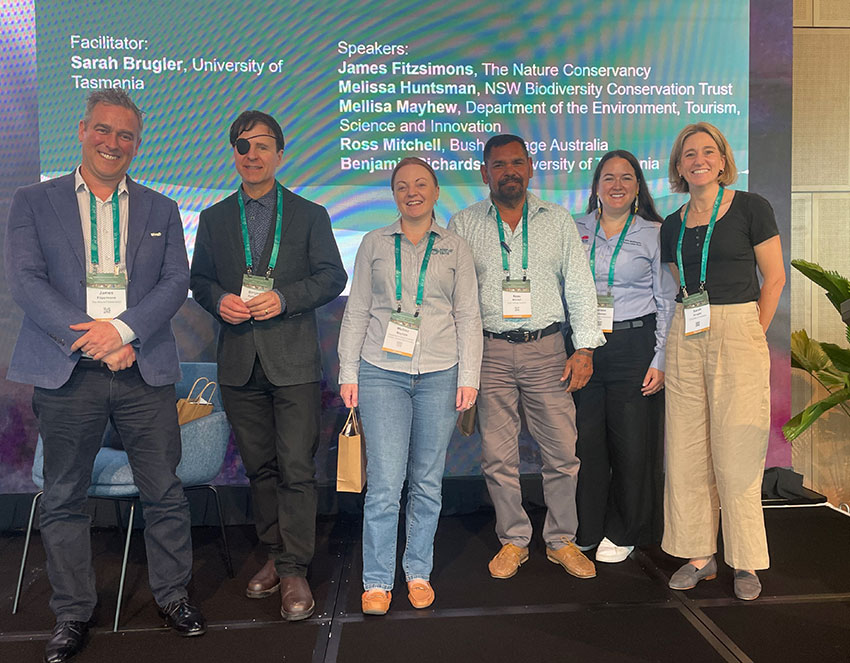
The annual ALCA conference is the premier event in Australia for groups and individuals interested in private land conservation. This year’s event was held in Cairns, with presentations and discussions over 3 days on the theme of Scaling Up: Local Action for Global Solutions.
The conference was attended by project team members Prof. Benjamin J. Richardson, Dr James Fitzsimons and Sarah Brugler, who convened with others a panel to discuss conservation covenants. James discussed current trends, opportunities and challenges for private land conservation in Australia. Ben discussed alternate options for landowners who are unable to secure a conservation covenant, these being restrictive covenants and municipal planning covenants. Other panellists gave case studies of conservation covenants used in New South Wales and Queensland. The panel session was facilitated by Sarah.
Next year’s ALCA conference will be held in Hobart, and the project team plans to participate again. Further information about the valuable work of ALCA, including its conferences, is available at: https://alca.org.au/
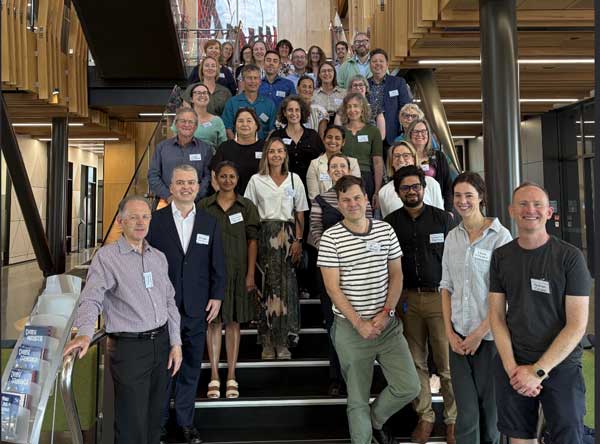
The annual Frontiers in Environmental Law Colloquium provides a forum for environmental law academics and practitioners to share and discuss their experiences, research, and teaching practices. The colloquium theme for 2025 was: Interdisciplinarity and Environmental Law.
The colloquium theme is designed to explore the connections between Environmental Law and other academic disciplines – in providing evidence about the state of the environment, or identifying environmental issues and societal preferences, or implementing environmental solutions via science and technology, or in connection with environmental compliance and monitoring, or environmental communication via the arts or the media. Put simply, to interrogate current and potential connections between environmental law and other academic disciplines (from anthropology to writing studies) to deliver environment-focused outcomes for a more sustainable future.
Ben, Phil, Nate and Sarah all presented papers at the conference showcasing the role of history, theory, policy and science underpinning this project on the role of conservation covenants for ecosystem restoration and climate adaptation.
Ben presented a paper entitled: “Conserving Nature in 1920s Sydney: The Surprising History of the Restrictive Covenant”
Nate, Ben and Phil presented a paper entitled: “Defining a novel conceptual framework for climate-adaptive ecosystem restoration governance”
Sarah presented a paper entitled: “Conservation covenants and their role in ecological restoration: Environmental law’s contributions to interdisciplinary solutions”.
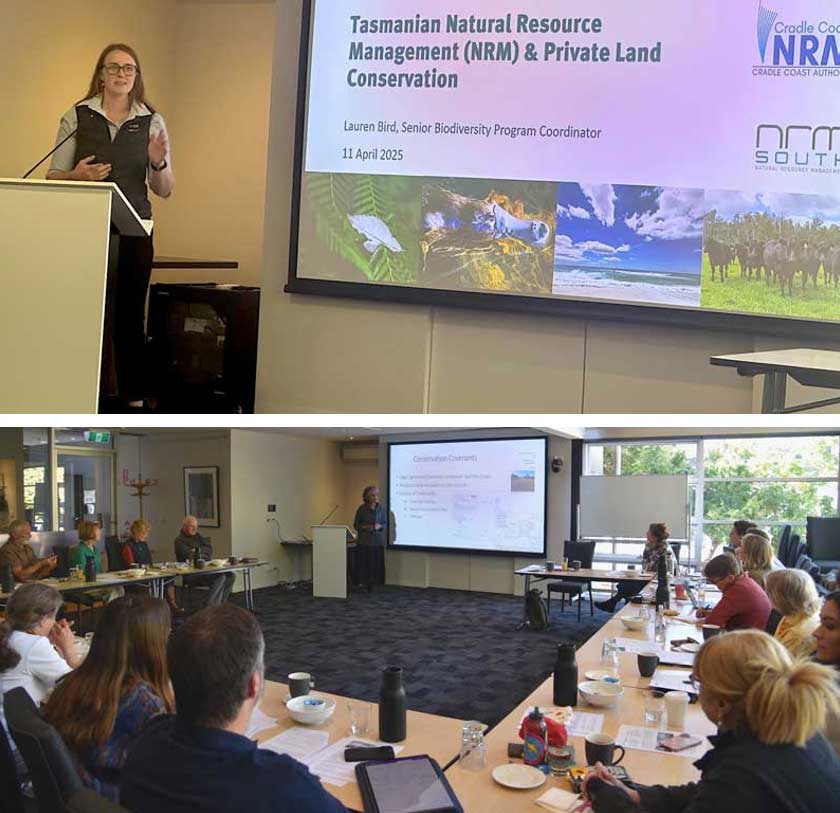
In April 2025, UTAS Law Professor Benjamin J. Richardson organised a special, one-day workshop on ‘Private Land Conservation: Obstacles and Opportunities in Tasmanian Agricultural landscapes.’ The workshop was held as part of an Australian Research Council-funded project examining the role of conservation covenants to facilitate ecological restoration and adaptation to climate change.
Twenty-six participants gathered to discuss the opportunities and obstacles for Tasmanian landholders wishing to protect natural values on their privately held land. The speakers included the project’s team members, Dr Phillipa McCormack (The University of Adelaide), Dr James Fitzsimons (The Nature Conservancy) and Sarah Brugler (UTAS).
Representatives from a wide variety of stakeholders participated, including the Forest Practices Authority, Tasmanian Land Conservancy, Department of Natural Resources & Environment, Natural Resources Management bodies, Indigenous Tasmanians, as well as individual landholders sharing their personal experiences in stewarding conservation covenants in Tasmania.
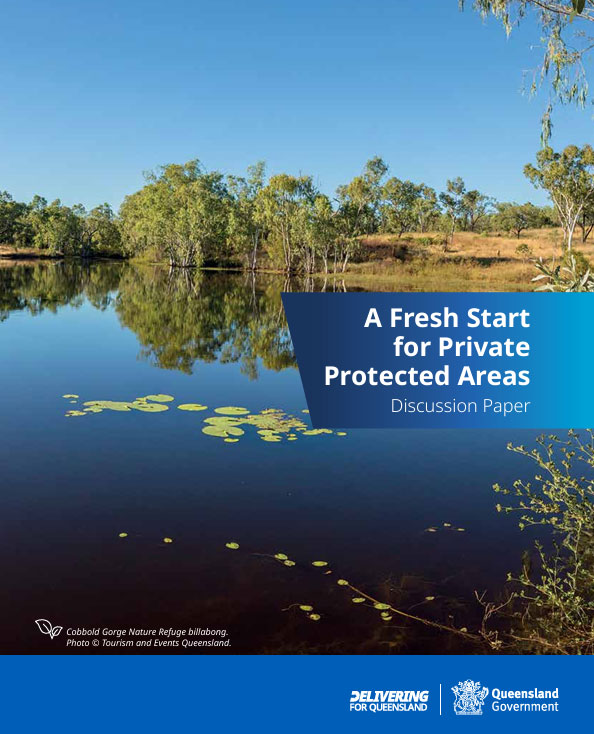
Experts Call for Major Overhaul of Queensland’s Private Protected Area Program
A multidisciplinary research team from the University of Tasmania, University of Adelaide, and The Nature Conservancy has submitted a comprehensive response to the Queensland Government’s discussion paper “A Fresh Start for Private Protected Areas PDF 199.1 KB”.
Backed by Australian Research Council funding, the team urges stronger stewardship, governance, and funding for private protected areas (PPAs) to meet biodiversity and climate goals.
The submission highlights Queensland’s leadership in PPA land area but notes the need for more consistent support and innovation to expand and sustain the program.
Conservation covenants – find out more
Conservation covenants are called different things in different states. They are called ‘nature refuges’ or ‘special wildlife reserves’ in Queensland, ‘conservation agreements’ in NSW, for instance, and in the United States are usually known as ‘conservation easements’.
- Trust for Nature (Victoria)
- Privately Protected Areas in Qld
- Biodiversity Conservation Trust (NSW)
- Private land conservation in Tasmania
- Heritage agreements in South Australia
- Conservation covenants in Western Australia and here
- The peak body for private land conservation in Australia is the Australian Land and Conservation Alliance
- See here for a list of Commonwealth approved covenanting programs
Resources for conservation covenanting around the world
Note: These country highlights are based on a forthcoming publication that compares conservation covenanting programs around the world and how they contribute to global goals relating to protection (i.e. 30 x 30), ecosystem restoration and climate adaptation.
Belgium
- Flemish Government, Agentschap Natuur & Bors
- European Networks for Private Land Conservation, European Networks for Private Land Conservation
- European Commission, Natura 2000
Canada
- Government of Alberta, Alberta Land Use Secretariat, Conservation and Stewardship
- Government of New Brunswick, Protected areas
- Government of Canada, Environment and Climate Change Canada
- Nature Conservancy of Canada, Conservation agreement
- Nova Scotia Government, Special places
- Ontario Land Trust Alliance, OLTA
- Ontario Heritage Trust, Conservation easements
Chile
- Fundacion Tierra Austral, Real Right of Conservation
New Zealand
- Banks Peninsula Conservation Trust, Habitat Protection – Conservation Covenants
- Department of Conservation, Conservation Covenant Areas
- QEII National Trust, QEII National Trust
- Whangarei District Council, Conservation covenants
South Africa
- Republic of South Africa, Biodiversity Stewardship
- Republic of South Africa, South African National Biodiversity Institute
United States
- Land Trust Alliance, Land Trust Alliance,
- National Conservation Easement Database, National Conservation Easement Database
- U.S. Department of Agriculture, Agricultural Conservation Easement Program
- The Nature Conservancy, Private Lands Conservation
International resources, additional countries and related general themes
- Convention on Biological Diversity, Kunming-Montreal Global Biodiversity Framework
- Government of the United Kingdon, Department for Environment, Food & Rural Affairs, Getting and using a conservation covenanting agreement
- International Land Conservation Network, International Land Conservation Network
- International Union for the Conservation of Nature, World Commission on Protected Areas
- International Union for the Conservation of Nature, UCN WCPA Privately Protected Areas and Nature Stewardship Specialist Group
- United Nations Decade on Ecosystem Restoration, Preventing, Halting and Reversing Loss of Nature
- Protected Planet, Protected Areas (WDPA)