The funds are allocated in consultation with elected student representatives from the Tasmanian University Student Association (TUSA) and students can submit direct feedback on the allocation of funds via the Universities annual SSAF survey.
Find out more about the Student Services and Amenities Fee in Ask Us or the Student Fees Policy (PDF 181.1 KB)
In accordance with the Higher Education Legislation Amendment (Student Services and Amenities) Act 2011 and the Administration Guidelines 2012 the University of Tasmania determined that a Student Services and Amenities Fee be introduced from Semester 2 2012.
SSAF 2026-27
2027 – The maximum SSAF rate for 2027 is $386 (capped), part-time SSAF is $289.50, and each 12.5 credit point unit will attract a charge of $57.90.
2026 – The maximum SSAF rate for 2026 is $373 (capped), part-time SSAF is $279.75 and each 12.5 credit point unit will attract a charge of $55.95.
2025 – The maximum SSAF rate for 2025 is $365 (capped), part-time SSAF is $273.75 and each 12.5 credit point unit will attract a charge of $54.75.
The table below provides information on how the University of Tasmania will charge the Student Services and Amenities Fee (SSAF) for 2026.
| Student Type | Charged in 2026? | Note |
|---|---|---|
| Commonwealth Supported Students | Yes, SSAF is charged | Can defer if eligible, need to submit a SA-HELP form |
| Research Students (Domestic only) | Yes, SSAF is charged | Can defer if eligible, need to submit a SA-HELP form |
| Domestic Full Fee-Paying Students | Yes, SSAF is charged but it is incorporated in fee charges | SSAF is incorporated in fee charges |
| Cross-institutional Students | Domestic - if the student is cross-institutional domestic, they are charged SSAF and International - cross-institutional international students are not charged SSAF separately, this fee is included in the annual rate. | Domestic cross-institutional students cannot defer their SSAF (they can defer SSAF at the home institution), these fees must be paid upfront |
| Enabling Program Students | Not charged SSAF | Exemption applies |
| Pathway University College students | Not charged SSAF | Exemption applies |
| International students | Yes, SSAF is charged but it is incorporated in the annual rate | SSAF is incorporated in the annual course fee for international students |
SSAF payment due dates in 2026-27
Payment of SSAF is due 14 days prior to the census date of the relevant study period.
SSAF allocation reports
SSAF survey and expenditure
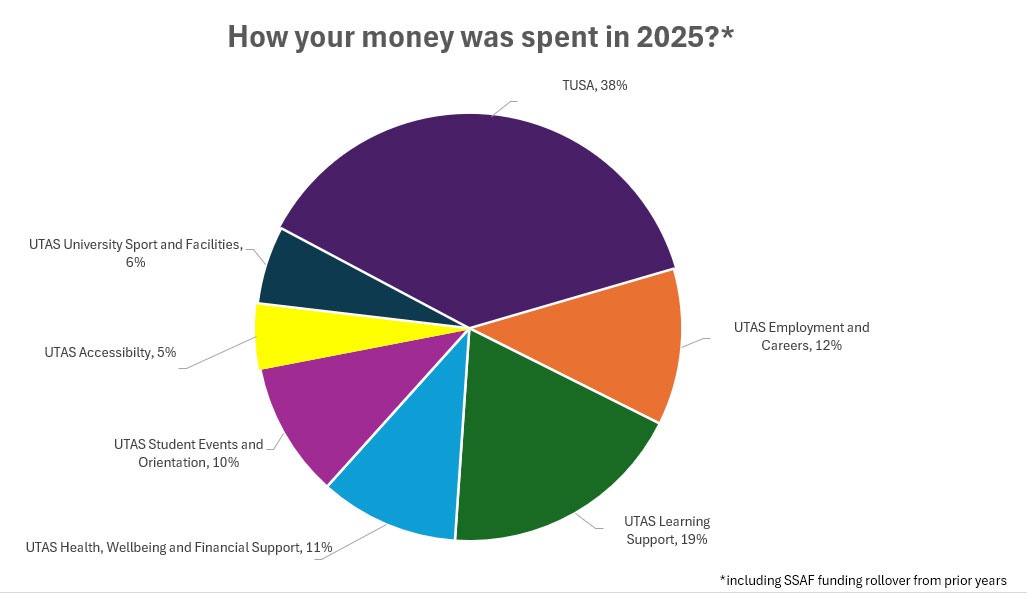
In 2025, two different SSAF funds were used: 2025 SSAF income and SSAF income of prior years.
The 2025 SSAF income was split 40% to TUSA and 60% to University Services, but due to the usage of "older" SSAF funding, the overall split on how SSAF was spent in 2025 is slightly different.
- TUSA received 38% of SSAF funding used in 2025
- The University Learning Supports accounted for 19%
- The University Employment and Careers service received 12%
- The University Student Events and Orientation accounted for 10%
- The University Health, Wellbeing and Financial Supports received 9%
- The University Accessibility Supports received 6%
- University Sports received 6%
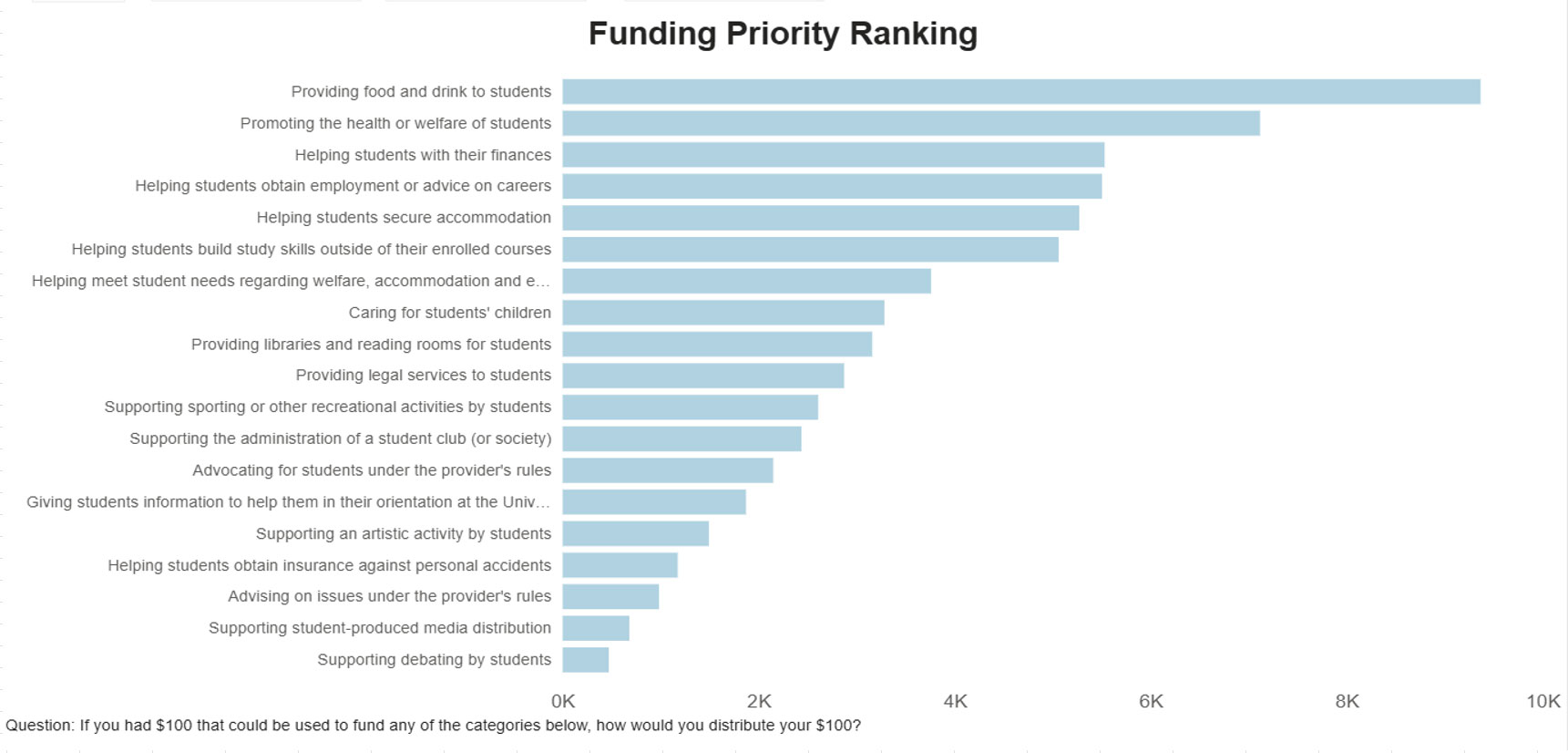
The University runs an annual student survey on students knowledge about SSAF as well as their opinion on how SSAF should be used.
The Funding Priority ranking graph shows how students ranked funding priorities (n=648 respondents) in our 2025 SSAF survey. The highest priorities were services that directly support students' basic needs, well-being, employment and academic success.
Top 5 priorities:
- Providing food and drink to students
- Promoting the health or welfare of students
- Helping students with their finances
- Helping students obtain employment or advice on careers
- Helping students secure accommodation
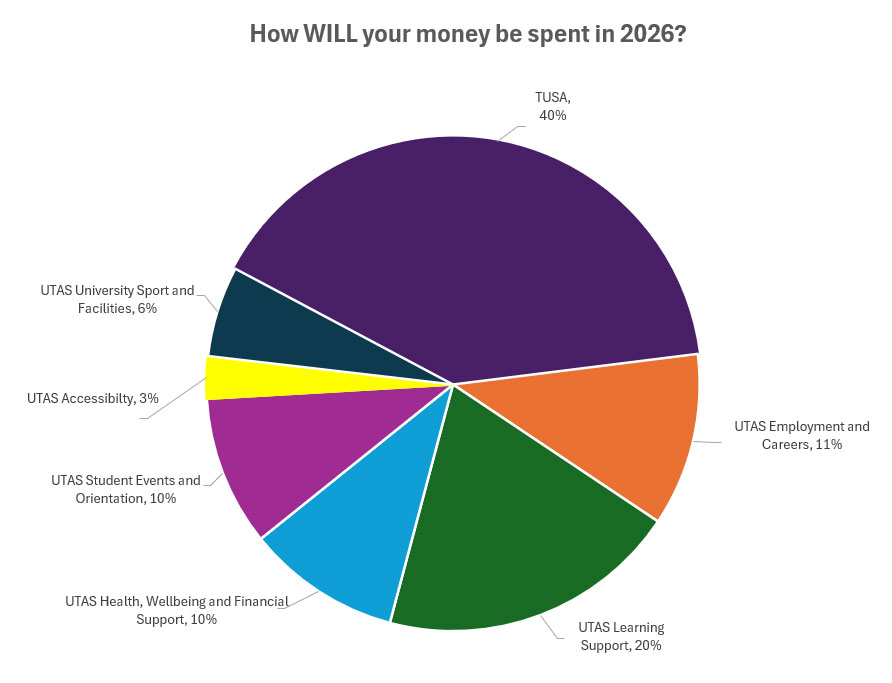
The pie chart shows the planned distribution of SSAF funds in 2026:
- TUSA will receive 40% of the 2026 SSAF income earned.
- The University Learning Support will receive 20%
- The University Employment and Careers service will receive 11%
- The University Health, Wellbeing and Financial Support will receive 10%
- The University Student Events and Orientation will receive 10%
- University Sport will receive 6%
- The University Accessibility Supports will receive 3%