

Since its inception TILES has undertaken research in many projects, drawing upon specific expertise and priorities. The priorities are based on the University of Tasmania's identified research strengths, needs and opportunities locally, nationally, and internationally. TILES’ research is committed to responsible research practices and promotes research integrity.
Research streams Partnerships Research projects Postgraduate study

Practitioners and Academics - Working Together
TILES is committed to excellence in collaborative and interdisciplinary research that links practitioners with academics - together improving the quality of law enforcement and enhancing community safety.

Membership and Collaboration
The Institute is in active collaborative relationship with many (local, national and international) research centres, institutions and organisations. TILES is a member of the Criminology, Law and Police Studies Research Group (CLP) at the University of Tasmania, collaborated with DPFEM and the global law enforcement and public health association.
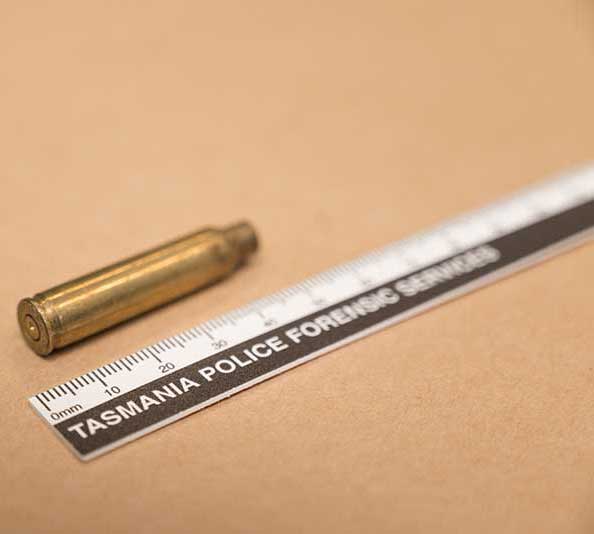
Forensic Studies UTAS is a consortium of researchers at the University of Tasmania who engage in the study of forensics as a social phenomenon, and who primarily draw upon the social sciences in undertaking work in this field. Forensic studies is distinct from forensic science, which generally refers to specific areas of technical and vocational expertise.
Members of Forensic Studies UTAS include researchers who have expertise in criminology, sociology, psychology, media, law and police studies.
- Forensic Studies UTAS Information (PDF 266.2 KB)
- This is the future of forensic science (Research to Reality, UTAS)
Current Projects
- Forensic Education Project (led by Dr Loene Howes). The project looks at the education of forensic scientists and other criminal justice practitioners about forensic science, considering the interdisciplinarity and critical social sciences input into current programs around Australia.
Latest Publications
- Julian R, Howes LM, White R, Critical Forensic Studies, Routledge, pp. 314. ISBN 9781138584747 (2021) [Authored Research Book].
- Woodman PA, Ballantyne K, Julian R, Spiranovic C, ‘The forensic examination of structural fires in Victoria, Australia: Decision-making processes and impact on judicial outcomes’,Science and Justice, DOI: 10.1016/j.scijus.2021.03.009 (2021) [Refereed Article].
- Marshall H, Julian R, Howes LM, 'Forensic science and gendered organizations: An exploratory study of crime scene examiners', Australian Journal of Forensic Sciences, DOI: 10.1080/00450618.2021.1937315 (2021) [Refereed Article].
- Reid CA, Howes LM, 'Communicating forensic scientific expertise: an analysis of expert reports and corresponding testimony in Tasmanian courts', Science and Justice pp. 108-119. ISSN 1355-0306 (2020) [Refereed Article].
A full range of publications relevant to Forensic Studies can be found on Forensic Studies members' profile pages.
Forensic Studies - study units
A key element of forensic studies is how 'evidence' is socially constructed within legal and scientific discourses and practices, and how different players within the criminal justice system conceptualise the nature of criminal investigation, criminal procedure, criminal evidence and courtroom practices. Information on current study units is available on Courses and Units pages, University of Tasmania.
About LEPH (TILES)
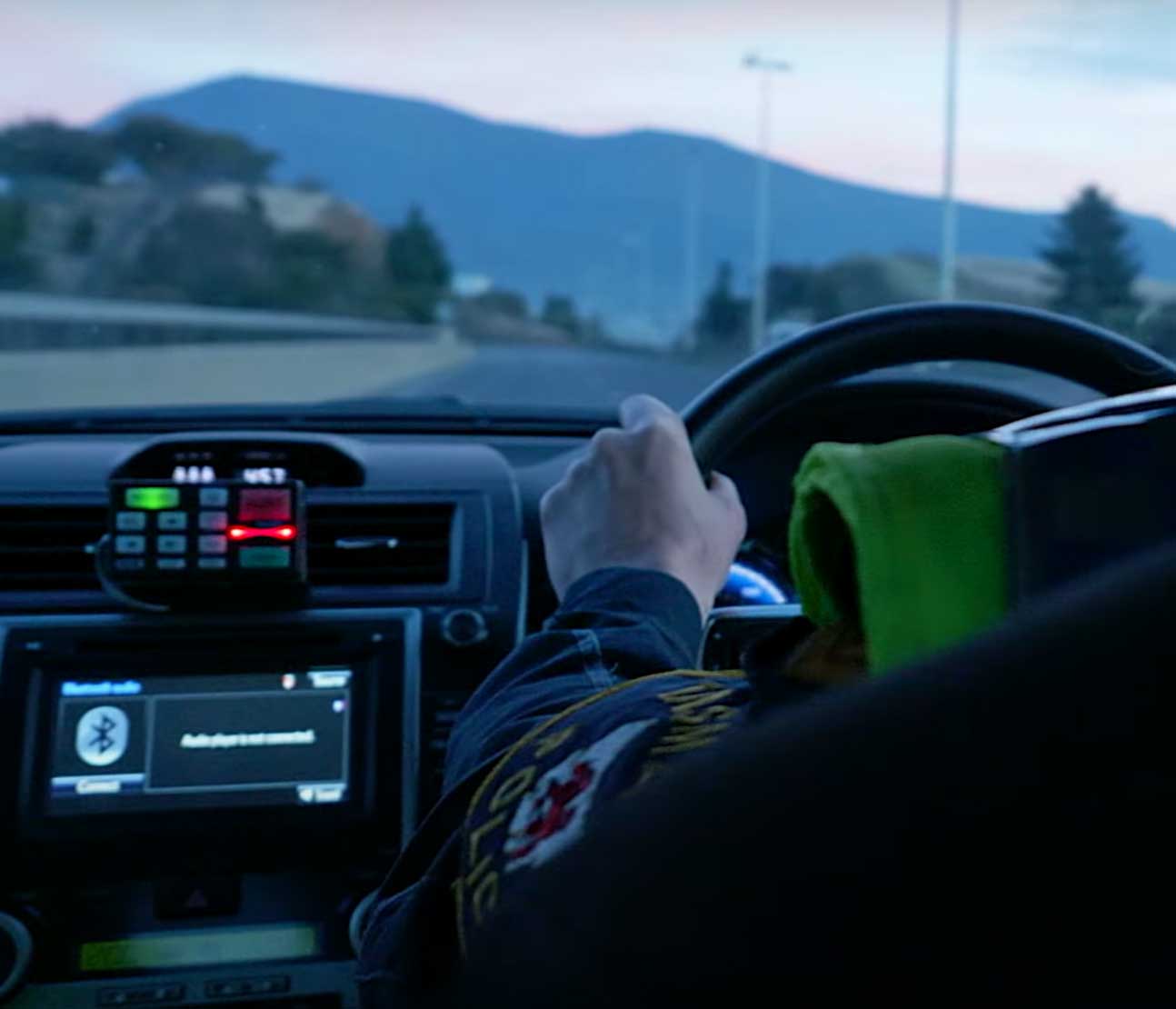
Law Enforcement and Public Health (LEPH) consists of a team of multidisciplinary researchers who study how the two disciplines of law enforcement (or policing) and health co-exist in the field, as well as conceptually.
Research projects on LEPH essentially consist of the critical analysis of police organisations’ collaboration with other government and non-government agencies. From an applied research perspective, the ultimate goal of LEPH is to gather examples of evidence-based practices to develop better, more efficient collaborations in the field and better service delivery.
Members of LEPH include researchers who have expertise in police studies, socio-legal studies, criminology, sociology, health, and public health.
The Tasmanian Optional Protocol to the Convention Against Torture (TasOPCAT) Network was formed in March 2020 as a project within Law Enforcement and Public Health (LEPH).
Research Projects
- Evaluation of Safe Spaces (2021)
- Evaluation of the Tasmanian Suicide Register (2020 - 2021)
- Fostering Trauma-Informed Communities of Practice in areas of Rural and Regional Tasmania (2020).
LEPH Tasmania-wide Consultation
Law Enforcement and Public Health in Tasmania: is collective impact a viable pathway for collaboration?
- TILES Issues Paper on Law Enforcement and Public Health
- LEPH Consultation Information Sheet (PDF 620KB)
Workshop Report Series
- TILES Brief Report Sept 2018 LEPH Showcasing Collective Impact (PDF 237.4 KB)
- TILES Brief Report Oct 2018 LEPH Developing Shared Measures (PDF 256.7 KB)
- TILES Brief Report Oct 2018 LEPH Backbone Organisations (PDF 228.0 KB)
- TILES Brief Report Nov 2018 LEPH Knowledge Exchanges the Determinants of Crime and the Determinants of Health (PDF 371.3 KB)
- TILES_Brief_Report_Dec_2018_LEPH_A Co-located, Multi-Disciplinary Initiative for Tasmania (PDF 170.1 KB)
Media Release & News
- LEPH Team Presentation Wins the Final CSIRO Prize (2019)
- Dr Isabelle Bartkowiak-Théron attended the 2019 Law Enforcement and Public Health conference in Edinburgh, Scotland. At the conference, she attended the post-graduate day, where she judged students' presentations. She also attended the board meeting, the inaugural meeting of the LEPH Special Interest Groups on First Responders Mental Health, and the 2019 meeting of the LEPH Special Interest Group on Education, for which she was elected Chair. She also presented the work done by the LEPH TILES team in Australia and chaired a session during the conference.
- The Examiner News (8 Dec 2017) Researchers linking law enforcement and public health services
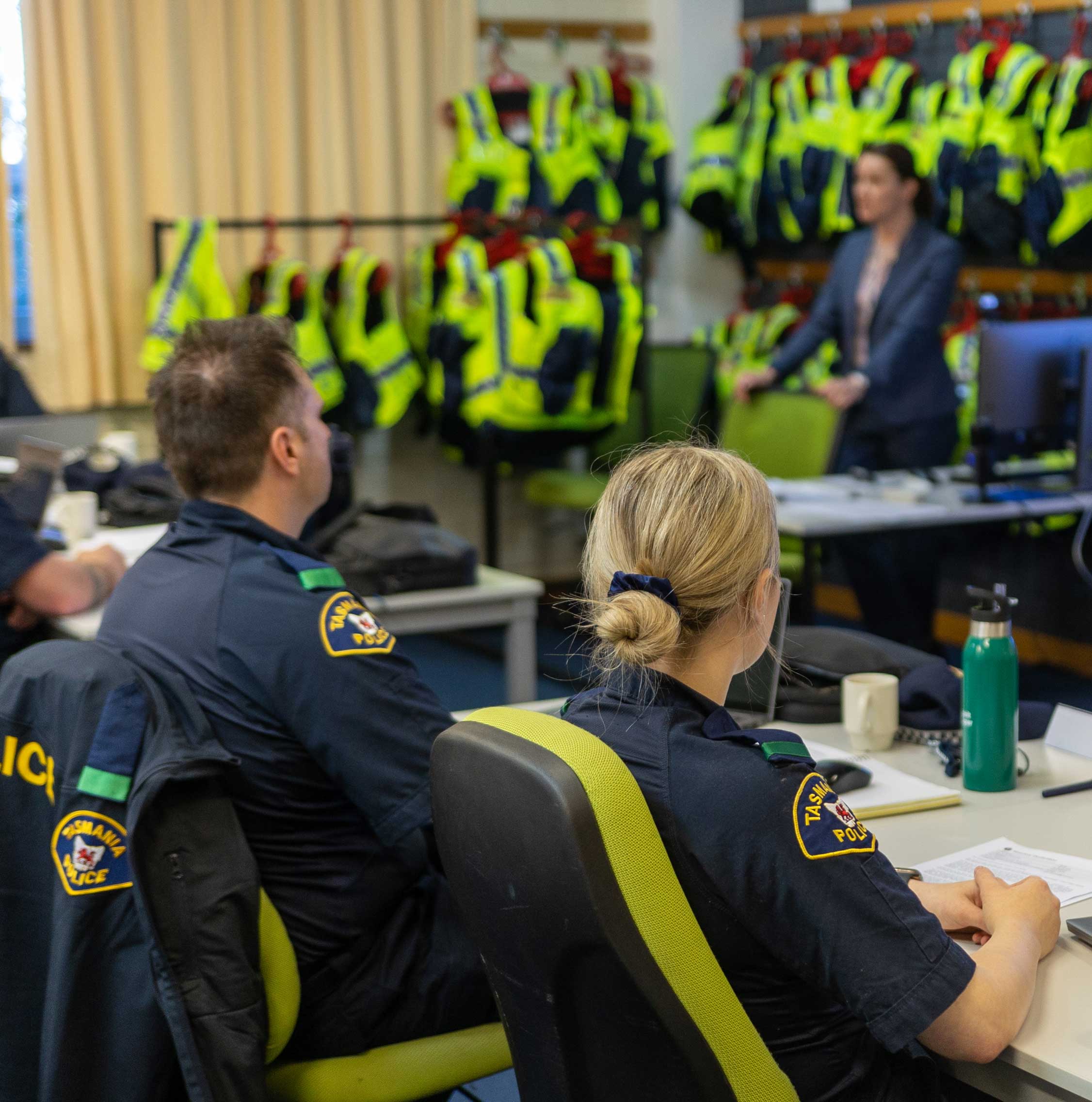
The topics of police education, of the professionalisation of the police, and the question of partnerships between tertiary institutions and police organisations are more than ever on the global agenda. In Australia, police education has seemingly progressed at a steady pace. These developments necessitate that scholars reflect on accomplishments in the professionalization of the police in Tasmania and worldwide.
Research Projects
- Edmund Rice Tasmania Police project (2020)
- How do police educators' perceptions of young peoples engagement in education inform their instructional practice? (2018).
- Building evidence for the professionalisation of police through high impact teaching and learning: Cementing Tasmania as the international leader in police tertiary education (2017 Teaching Development Grant).
Publications
Policing Vulnerability consists of a consortium of researchers who engage in the study of vulnerability at conceptual and operational levels.
Research projects on vulnerability consist of the critical analysis of policing interaction with vulnerable people as defined in legislation and policy. They range from the study of definitions under legislation and policy, to the operationalisation of vulnerability in the field, in such areas as first contact, referrals, liaison schemes, standard operational procedures, communications, custody, release into the court and collaborative practice.
Members of the Policing Vulnerability research team include researchers who have expertise in police studies, socio-legal studies, criminology, sociology, psychology, and social theory.
Publications
- Hughes D, Colvin E, Bartkowiak-Théron I, 'Police and vulnerability in bail decisions', International Journal for Crime, Justice and Social Democracy, 10(3). (2021) [Refereed Article].
- Asquith NL, Bartkowiak-Theron I, Policing Practices and Vulnerable People, Palgrave Macmillan, Switzerland, pp. 263. ISBN 978-3-030-62869-7 (2021) [Authored Research Book].
Partnerships
Department of Police, Fire and Emergency Management (DPFEM)
TILES has a long-standing and successful relationship with the Department of Police, Fire and Emergency Management (DPFEM). DPFEM provides strong commitment and support to TILES in research that improves the quality of law enforcement and enhances community safety in Tasmania and Nationally. The partnership has seen TILES and DPFEM (Tasmania Police) achieve well-established collaborative research.
Global Law Enforcement and Public Health Association (GLEPHA)
TILES is an institutional member of the Global Law Enforcement and Public Health Association (GLEPHA).
GLEPHA brings the law enforcement and public health sectors together to address complex issues requiring an inter-sectoral approach.
Recognising the recurrent failure of approaches devised within isolated individual sectors, GLEPHA sees the importance of bringing together practitioners, policymakers, and academics to explore the interactions between the police and public health across the widest range of social, humanitarian, security, and public health issues.
GLEPHA aims to foster tangible collaborations between stakeholders in law enforcement, public health, local government and community sectors, and between practitioners and academics; promote knowledge creation and dissemination through research, exploration, publication, creation of venues for these activities, and building and development of widening and inclusive networks; bring a focus on racial, ethnic, socioeconomic, gender and geographic equity to both public health and law enforcement systems and their partnerships; and influence public policy using the research knowledge.