

Overview (2027)

Key Information


Duration
Minimum 1 Year, up to a maximum of 3 years.


Location
 CRICOS: 091423A
Duration
Minimum 1 year, up to a maximum of 3 years.
Location
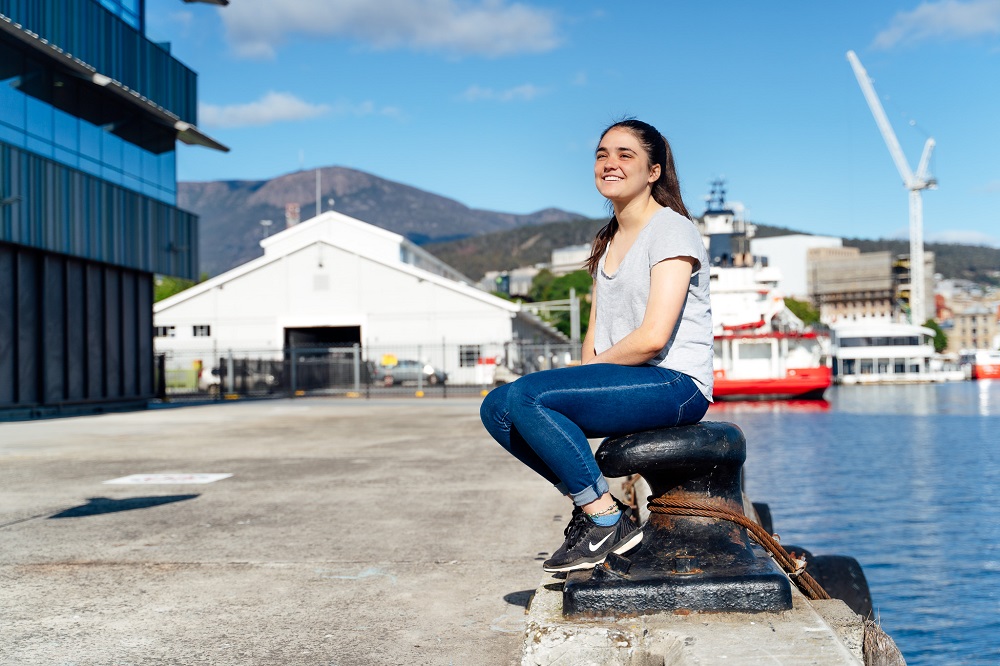
Kat Stuart
Marine and Antarctic Science student
The Bachelor of Marine and Antarctic Science with Honours is an opportunity to move beyond studying existing knowledge and begin contributing to it. Through a substantial independent research project, you'll investigate a real-world marine, Antarctic, fisheries, aquaculture, climate or environmental challenge while working alongside leading researchers in your field.
Delivered through the Institute for Marine and Antarctic Studies (IMAS), this one-year honours program combines advanced research training with specialised supervision from internationally recognised academics. You'll develop the skills to design and conduct research, analyse and interpret data, and communicate scientific findings to professional and academic audiences.
Located in Hobart, Australia's gateway to Antarctica, IMAS offers access to one of the world's largest concentrations of marine and Antarctic researchers. You'll study in an environment where world-leading research is shaping our understanding of oceans, climate systems, fisheries, aquaculture and Antarctic environments.
Honours is ideal for students seeking to deepen their expertise, strengthen their professional and analytical skills, pursue a career in research, or prepare for higher degree research studies such as a Masters or PhD.
*QS World University Rankings by Subject 2025
- 1 Be able to locate, evaluate and synthesize published information within a prescribed field of knowledge.
- 2 Be able to understand and identify core concepts and key issues within the marine or Antarctic environment.
- 3 Gain experience of literature research methods and tools, data collection and analysis, and relevant field and/or laboratory techniques.
- 4 Possess sufficient research and/or technical skills to allow them to complete an in-depth research study in a specialized area related to the marine and/or Antarctic environments.
- 5 Be able to communicate research concepts and findings in a logical manner, in a variety of written and oral forms commonly used by professionals.
- 6 Be capable of writing a research proposal or scientific (natural or social) report/paper to a standard acceptable to a funding body and a peer-reviewed journal.
- 7 Be able to deliver a presentation to a standard required for a meeting of an Australian professional society.
- 8 Have the capacity to develop a coherent argument and defend a position or outcome supported by evidence based on published literature and/or research data.
- 9 Have the ability to plan and conduct a program of research investigating a defined problem or question within constraints imposed by time, money and technical resources.
Unparalleled access to world-leading facilities
The Institute for Marine and Antarctic Studies (IMAS) is a world-class centre of excellence for research and education at the University of Tasmania. Located in Southern Tasmania, it is the home to one of the world's largest critical masses of marine and Antarctic researchers.
The IMAS Hobart building provides operational facilities, the Integrated Marine Observing System, the Southern Ocean Observing System, and the Australian Antarctic Partnership Program. It offers five purpose-built and state-of-the-art laboratories, as well as lecture theatre, computer lab, and
flexible learning spaces.
Your learning experience will also benefit from our strong relationships and proximity to international experts and industry-leading facilities including the Australian Antarctic Division (AAD), CSIRO, and the Commission for the Conservation of Antarctic Marine Living Resources (CCAMLR).
A new, purpose-built, world-class aquaculture and fisheries teaching and research facility is being built in Taroona, located on the banks of the Derwent River just 15 minutes south of Hobart. Expected to open in 2026, the Taroona facilities will feature the latest teaching and research training laboratories
for tropical and temperate species. You'll be able to work and study alongside industry partners and international research leaders.
Catalyst Program and Dean's Summer Research Scholarship
The Catalyst Program is available to high achieving domestic high school leavers studying a STEM course. It combines your Bachelor degree with scholarships, extracurricular experiences, special events, and networking opportunities. As a Catalyst scholarship recipient, you can participate in the Dean’s Summer Research Scholarship (DSRS) three times throughout your degree, with up to $9,000 in scholarships. Non-Catalyst students may also undertake the DSRS with a scholarship payment of $2,000 per experience.
As a Bachelor of Marine and Antarctic Science student, you can take advantage of additional benefits such as access to work-integrated learning opportunities or research projects. Learn more about the Catalyst Program. Learn more about the Catalyst Program.
Become a Student Ambassador
Improve your communication, teamwork and leadership skills, meet new people, inspire and help others, and developing lasting friendships and networks as a student ambassador. Our ambassadors proudly represent the University throughout Tasmania in schools, at University and community events, and support a range of recruitment and engagement activities. Though the Student Ambassador Program or STEM Outreach Team you will have many opportunities for training and professional development, experience in real-world community engagement and outreach, networking, and public speaking, plus end up with a key point of distinction on your CV.
Study overseas at one of our partner institutions
Our international exchange program offers opportunities to study at universities around the world, and it counts towards your degree. Exchange can allow you to have an affordable educational and cultural experience in a foreign country for a semester, or a full year. To facilitate this, we offer a range of scholarships and financial assistance. You may also be eligible for OS-HELP Loans or scholarship funding to assist with their airfares, accommodation and other expenses.
Tasmania’s thriving aquaculture and marine research sectors offer a rich environment for hands-on learning and professional engagement. As the only university in the state, we provide close access to the industry leaders, researchers, and policy makers who are shaping our island and influencing global marine and Antarctic science. Through our deep connections with businesses, non-government organisations, and research centres, you’ll have opportunities to take part in research projects that offer direct, first-hand experience. These experiences not only enhance your education but also help you build valuable networks for your future career.
Whatever you’re passionate about, we’ll give you a hands-on education and an unforgettable adventure with our work integrated learning opportunities.
Career outcomes
This course leads to career opportunities in marine and Antarctic science, fisheries, aquaculture, and environmental policy. It covers a broad range of disciplines including:
- Oceanography
- Climate science
- Marine chemistry
- Marine geology
- Marine and Antarctic biology and ecology
The research training provided through the course equips graduates for roles in government and research organisations such as CSIRO, the Australian Antarctic Division (AAD), the Australian Bureau of Meteorology, and international management agencies like the Commission for the Conservation of Antarctic Marine Living Resources (CCAMLR).
The course provides training in research, to prepare candidates for further research study, in MSc and PhD programs, including the joint UTAS-CMAR QMS PhD program and the joint UTAS-AAD QAS PhD program.
Course structure
Full Time Students: Please enrol in Part 1 (25%) and Part 2 (25%) in one semester and Part 3 (25%) and Part 4 (25%) in the following semester.
Part Time Students: Please enrol in Part 1 (25%) in one semester, followed by Part 2 (25%) in the following semester and so on.
* Students enrol sequentially i.e. Part 1, then Part 2 irrespective of the semester in which they start.
All IMAS staff and their profiles are available, along with pre-approved projects below:
Honours Co-ordinator: Fraser Kennedy
The Bachelor of Marine and Antarctic Science with Honours provides students with advanced knowledge and scientific training in a specialised area of marine and / or Antarctic science; training in research as preparation for employment in a research organisation or…
Credit Points: 25
| Location | Study period | Attendance options | Available to | ||
|---|---|---|---|---|---|
| Hobart | Semester 1 |  |  |  | |
| Semester 2 | | | | ||
- Key:
- On-campus
 Off-Campus
- International students
- Domestic students
View all details for KSM401 Marine and Antarctic Science Honours (Part 1 of 4)
The Bachelor of Marine and Antarctic Science with Honours provides students with advanced knowledge and scientific training in a specialised area of marine and / or Antarctic science; training in research as preparation for employment in a research organisation or…
Credit Points: 25
| Location | Study period | Attendance options | Available to | ||
|---|---|---|---|---|---|
| Hobart | Semester 1 | | | | |
| Semester 2 | | | | ||
- Key:
- On-campus
- Off-Campus
- International students
- Domestic students
View all details for KSM402 Marine and Antarctic Science Honours (Part 2 of 4)
The Bachelor of Marine and Antarctic Science with Honours provides students with advanced knowledge and scientific training in a specialised area of marine and / or Antarctic science; training in research as preparation for employment in a research organisation or…
Credit Points: 25
| Location | Study period | Attendance options | Available to | ||
|---|---|---|---|---|---|
| Hobart | Semester 1 | | | | |
| Semester 2 | | | | ||
- Key:
- On-campus
- Off-Campus
- International students
- Domestic students
View all details for KSM403 Marine and Antarctic Science Honours (Part 3 of 4)
The Bachelor of Marine and Antarctic Science with Honours provides students with advanced knowledge and scientific training in a specialised area of marine and / or Antarctic science; training in research as preparation for employment in a research organisation or…
Credit Points: 25
| Location | Study period | Attendance options | Available to | ||
|---|---|---|---|---|---|
| Hobart | Semester 1 | | | | |
| Semester 2 | | | | ||
- Key:
- On-campus
- Off-Campus
- International students
- Domestic students
View all details for KSM404 Marine and Antarctic Science Honours (Part 4 of 4)
Entry requirements
Candidates for the degree of Bachelor of Marine and Antarctic Science with Honours will have qualified for admission to the degree of Bachelor of Marine and Antarctic Science or to the Bachelor of Applied Science (Marine Environment) at this University or have obtained an equivalent qualification at another approved tertiary institution. Candidates would normally be expected to obtain at least a credit average in the last three semesters (FT equivalent) of undergraduate studies. Candidature is subject to appropriate supervision and project support being available for the thesis topic approved by IMAS and subject to satisfying the prerequisites required for the chosen field of study.
Admission to Honours courses at the University of Tasmania require qualifications equivalent to an Australian bachelor degree. Applicants must achieve the required grade in their qualifying studies, meet any prerequisite subjects and the English language requirements to be eligible for an offer. Admission is conditional on research project and supervisor availability.
English Language Requirements
For students who do not meet the English Language Requirement through citizenship or prior studies in English in an approved country, evidence of an approved English language test completed within the last 2 years must be provided. See the English Language Requirements page for more information.
Course Specific Requirements
Candidates for the degree of Bachelor of Marine and Antarctic Science with Honours will have qualified for admission to the degree of Bachelor of Marine and Antarctic Science or to the Bachelor of Applied Science (Marine Environment) at this University or have obtained an equivalent qualification at another approved tertiary institution. Candidates would normally be expected to obtain at least a credit average in the last three semesters (FT equivalent) of undergraduate studies. Candidature is subject to appropriate supervision and project support being available for the thesis topic approved by IMAS and subject to satisfying the prerequisites required for the chosen field of study.
After the successful completion of a Bachelor of Marine and Antarctic Science with Honours, students can proceed to a research higher degree (Masters or PhD).
Detailed admissions information and advice for all undergraduate courses, including comprehensive, course-level student profiles, is available from UTAS Admissions.
Fees & scholarships
Domestic students
Commonwealth supported places (CSP) are available for this course. For eligible domestic students, this means your fees will be subsidised by the Australian Government. You’ll only need to pay the student contribution amount for each unit you study within the course.
Commonwealth Supported Place indicative annual fee: $9,536
How is this calculated?
This is an estimate. The calculation is based on the average full-time enrolment for this course in 2026. All figures are indicative only for 2027. Actual tuition fees will depend on specific unit enrolment, and are subject to annual increases each year. You can find the complete fee details for each unit of study on the individual unit pages. The units for this course are found in the course structure section of this page.
These figures do not include other costs such as the Student Services and Amenities Fee (SSAF). For further information, please visit Scholarships, fees and costs.
HECS-HELP loans
You may be able to defer payment of the student contribution amount by accessing a HECS-HELP loan from the Government. If eligible, you’ll only have to pay your tuition fees once you start earning above a specific amount.
Further information on student loans and a CSP eligibility checker can be found at Australian Government Study Assist.
International students
2027 annual international student tuition fee: $49,950 AUD
The standard year of study for this course is 100 credit points.
Indicative total tuition fee for international students: $ 49,950 AUD.
This total tuition fee is indicative only. Please visit fees and costs for further information on how this is calculated.
International students are charged the Student Services and Amenities Fee but this fee is incorporated in the annual rate. International students do not have to make any additional SSAF payments.
Domestic scholarships
For information on general scholarships available at the University of Tasmania, please visit the scholarships website.
International scholarships
The University of Tasmania offers a range of scholarships for full fee-paying international students, designed to recognise academic merit and support access to university study.
For many of our international scholarships you will be automatically assessed when you submit your International Student Application, meaning no separate scholarship application is required. Some scholarships may require additional application steps. Explore our International Scholarships to learn more about available opportunities and application requirements.


Share this page
How can we help?
Do you have any questions about choosing a course or applying? Get in touch.