

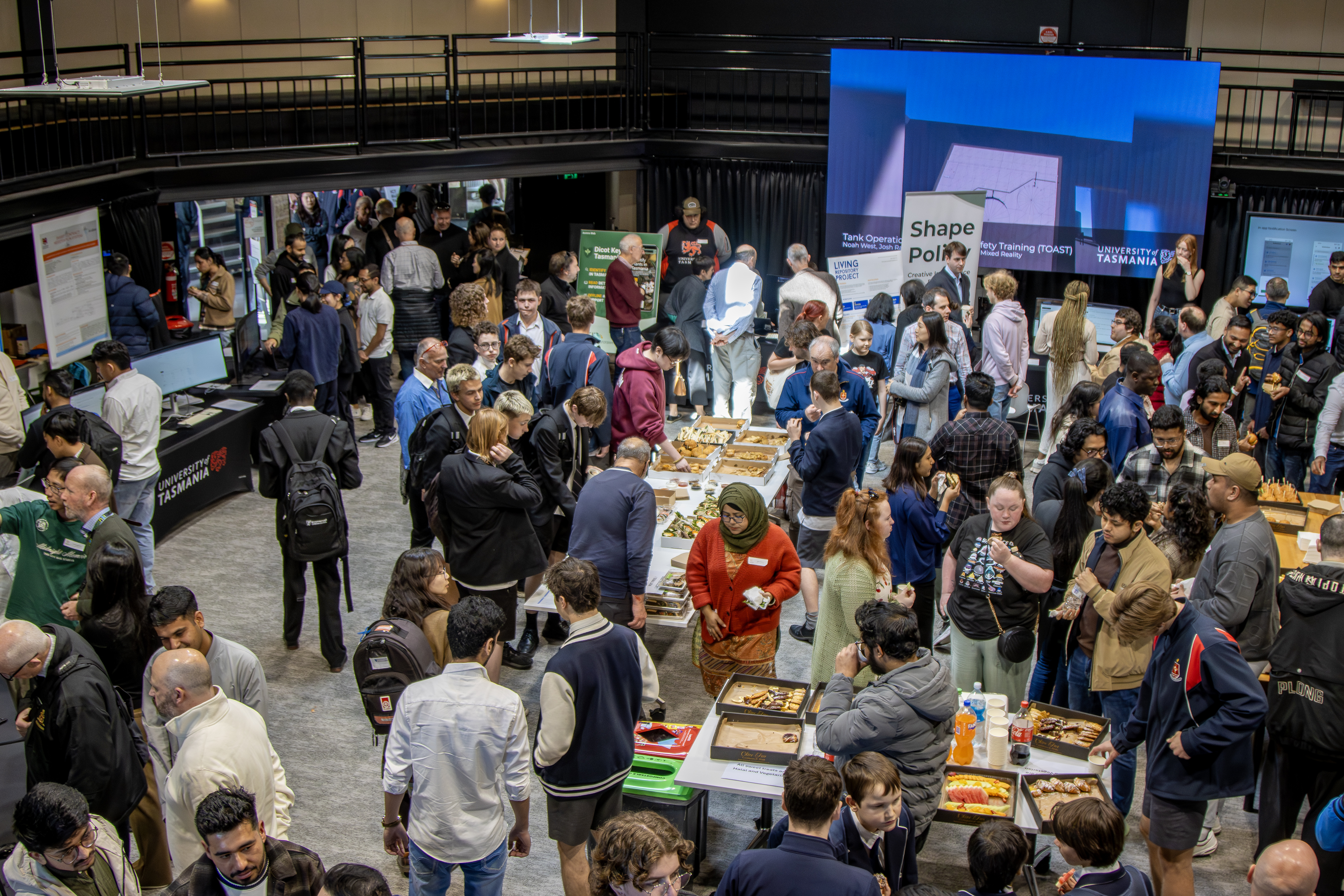
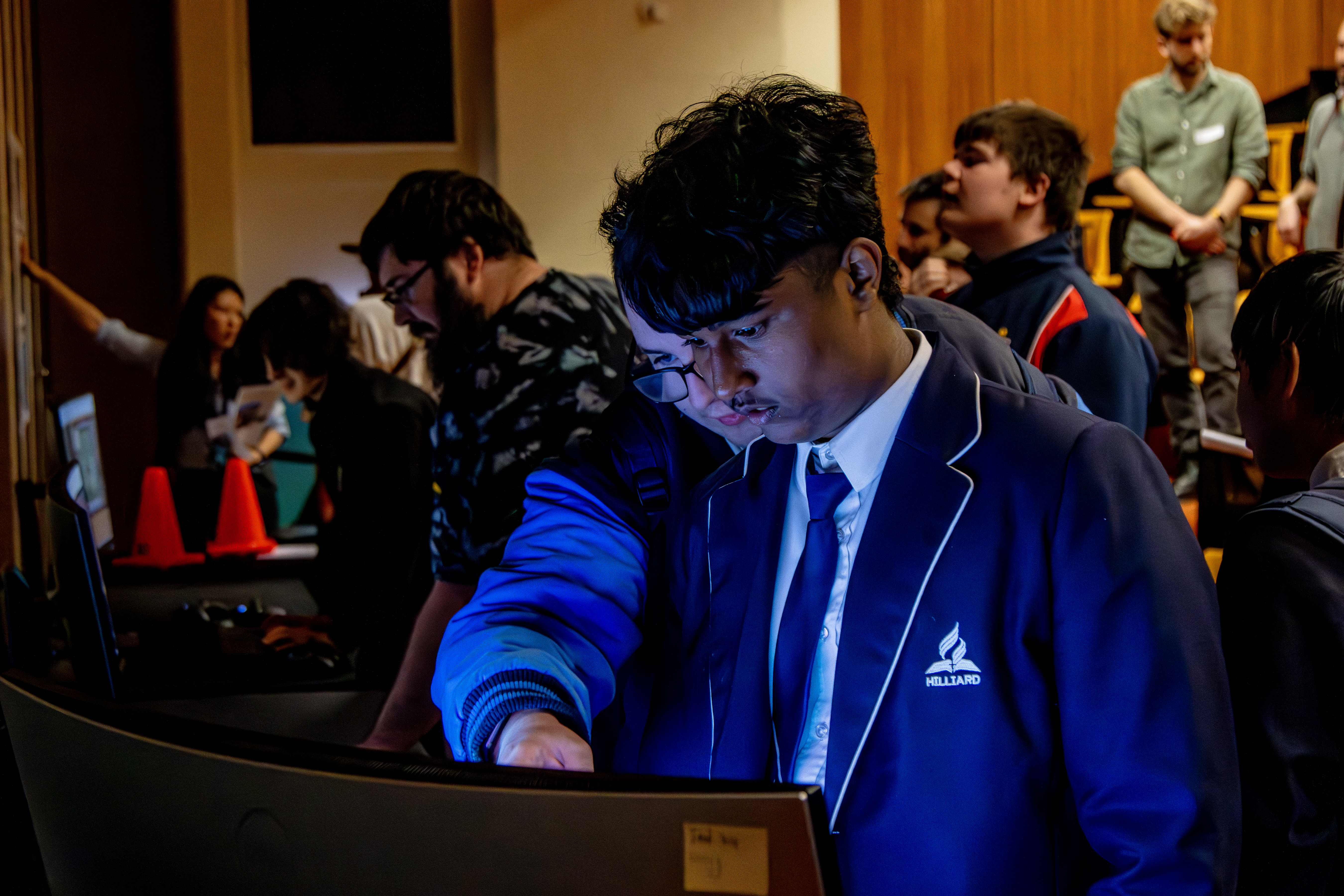
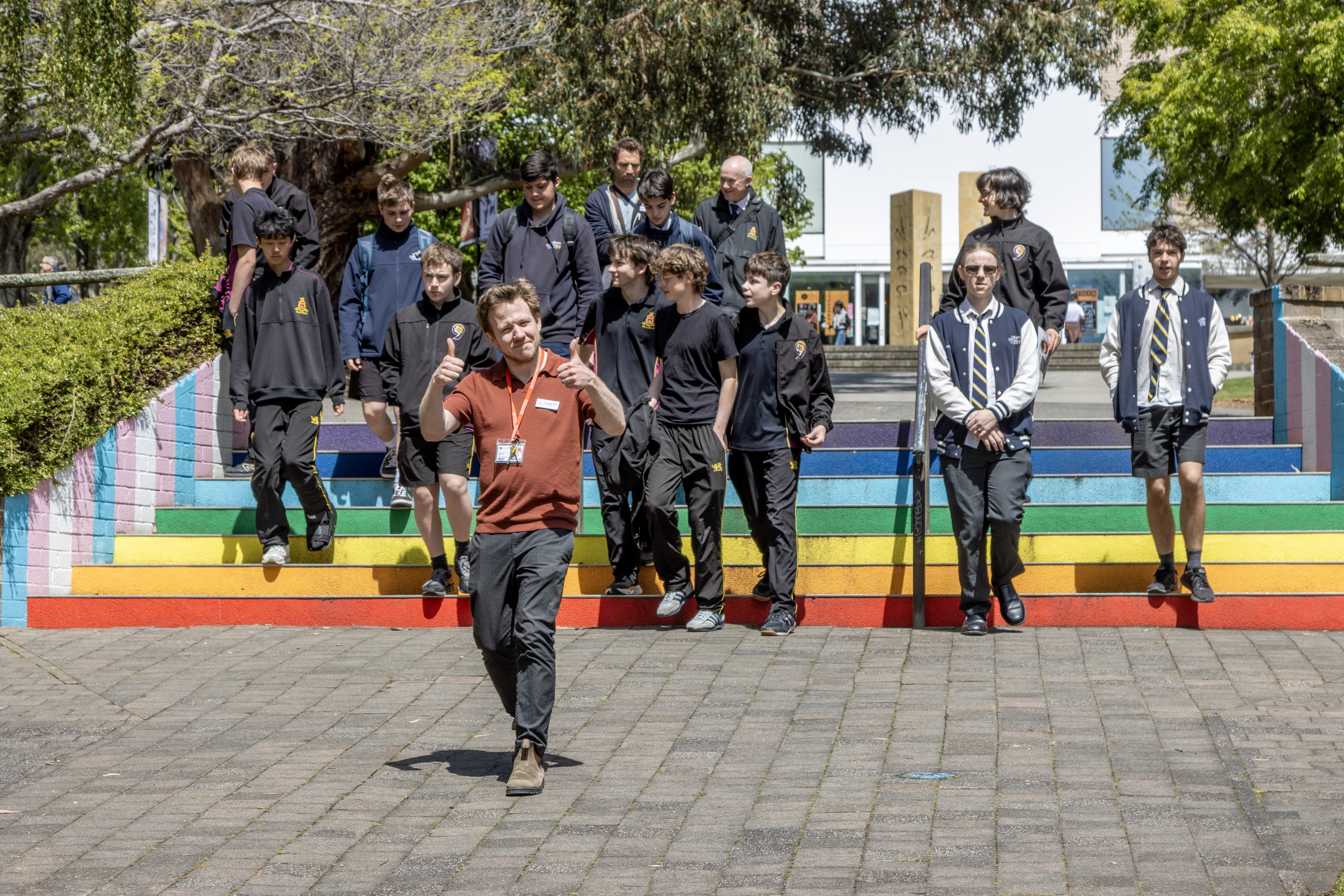
Following on from the inaugural event in semester 1, the School of ICT is hosting the ICT Showcase on Tuesday October 28th 2025 in the Stanley Burbury Theater and Studio Theater on the Sandy Bay campus.
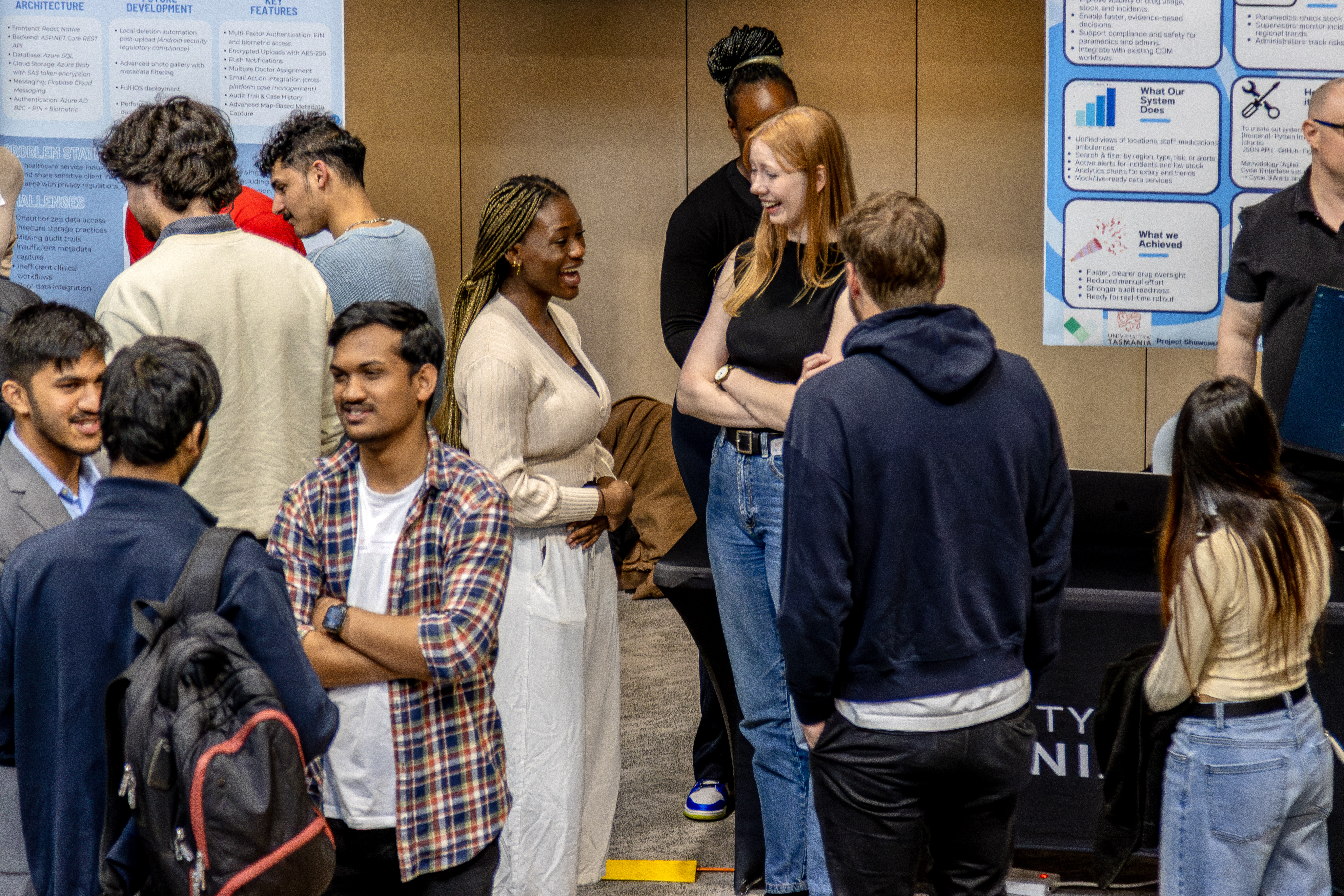
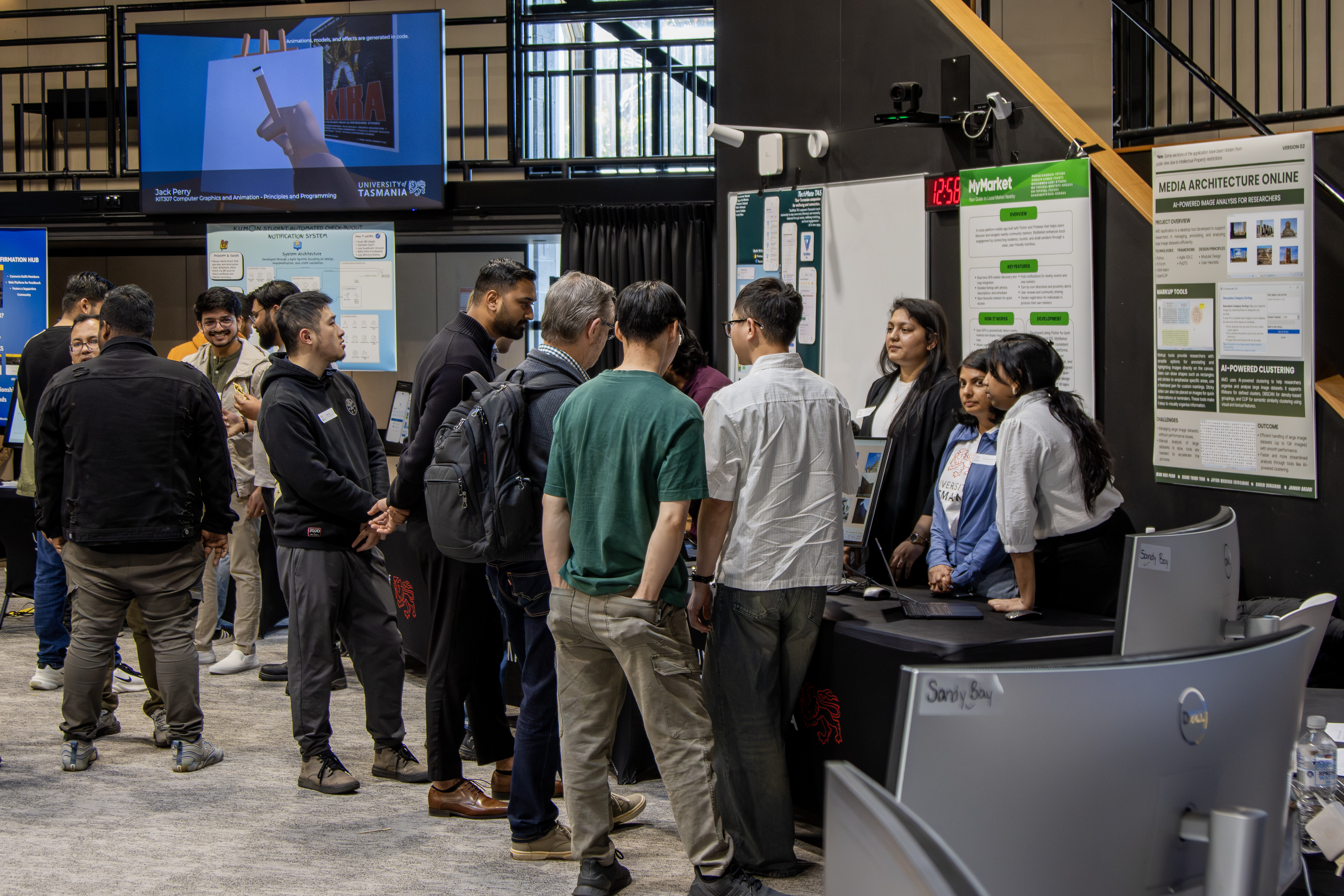
Join us to celebrate the efforts of 20 different Bachelor and Masters student teams as they showcase and demonstrate their final-semester projects to an audience of industry, students, staff, and alumni in this catered expo event. Also on show will be student games, graphics, and mixed reality projects.
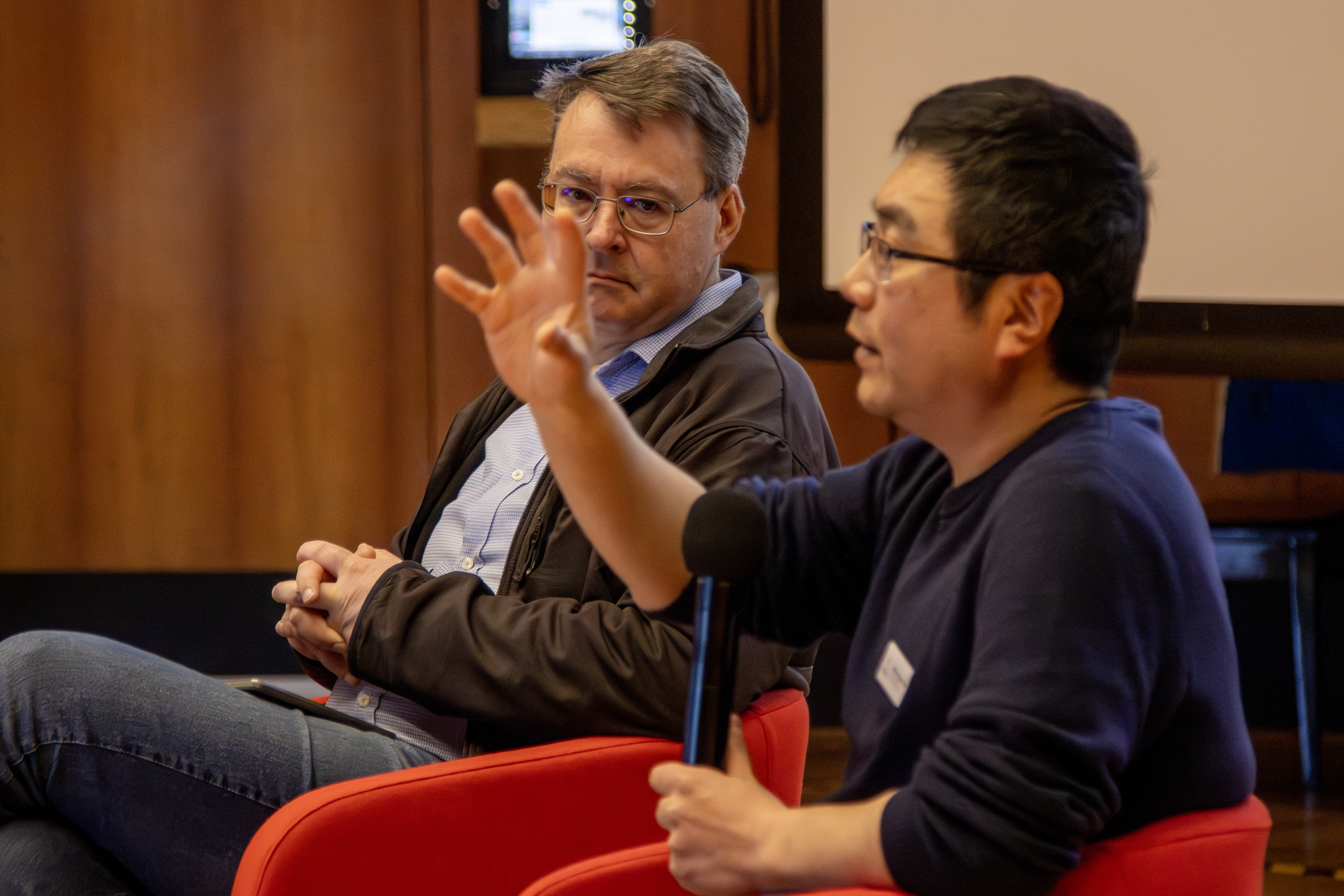
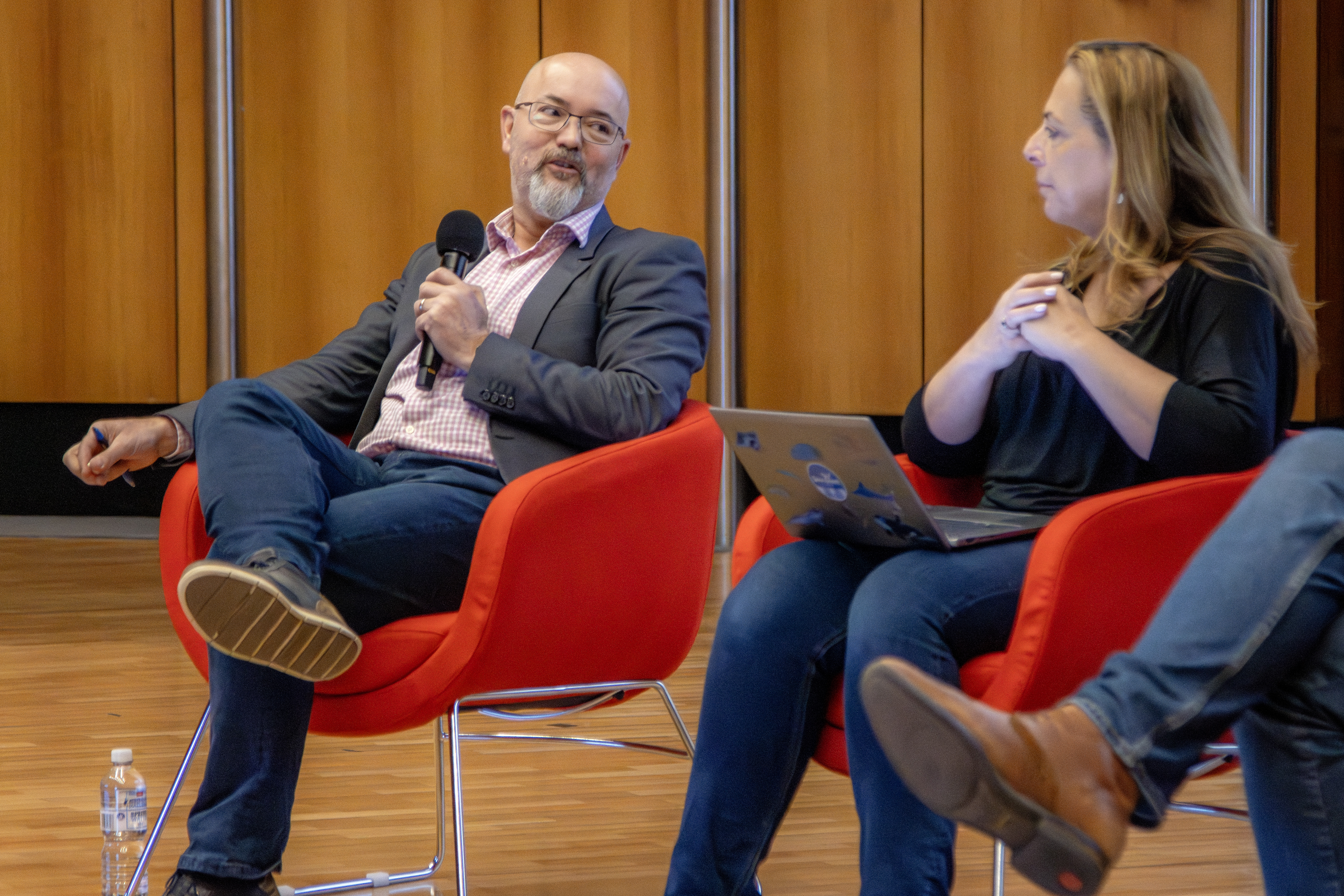
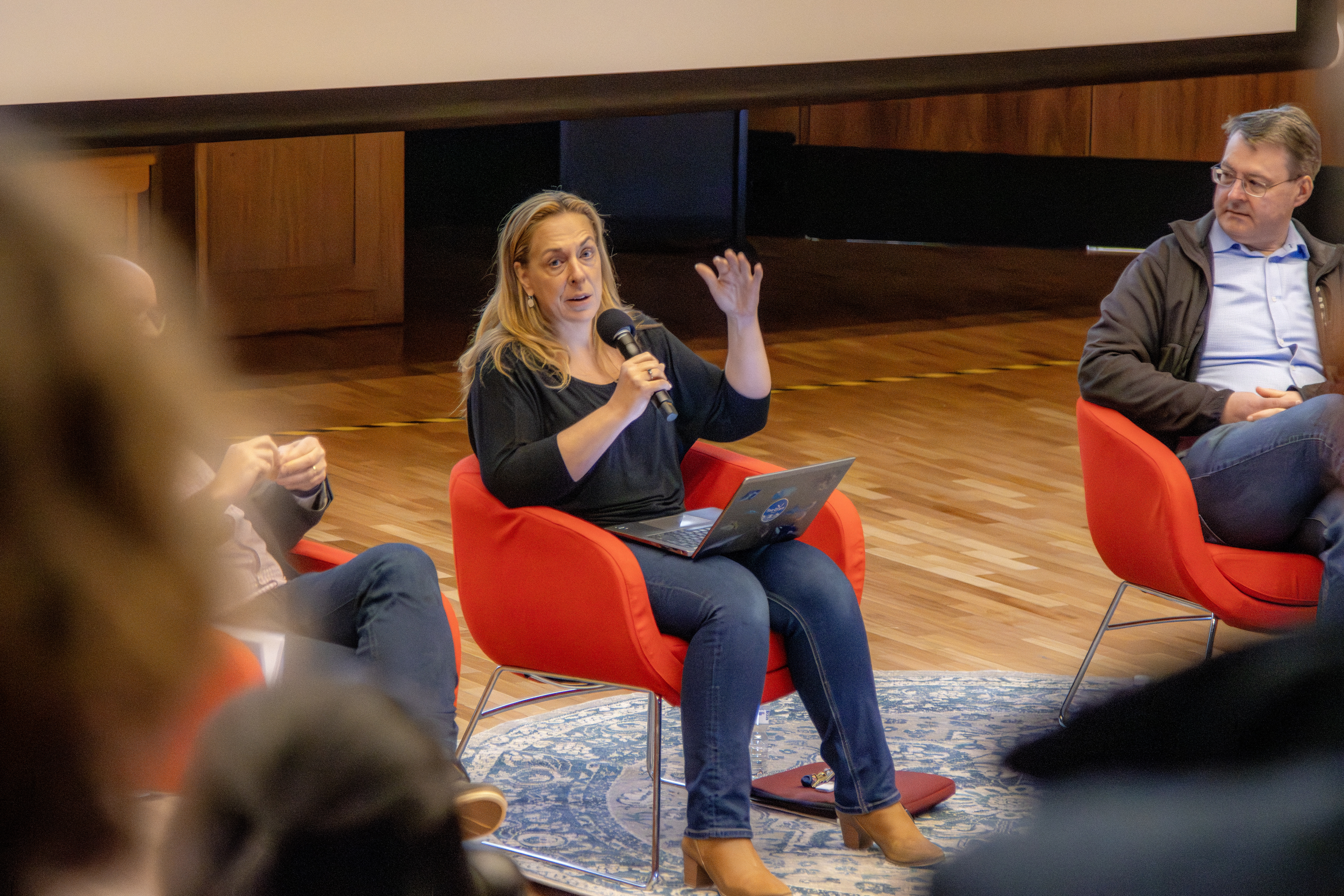
The event features a series of panels with academic and industry members exploring topics of how ICT is addressing global issues of education, climate, and productivity.
The event will also feature the opportunity to speed-date an ICT researcher where you can learn one-on-one about the research taking place in the School of ICT from our post-graduate students and staff.
If that is not all, our extended programme includes a cozy night-time session of interesting lighting-talks answering your burning questions on topics around AI, Cybersecurity, and Gaming. Open to the general public, this session caps off the day with a relaxed chit-chat with attendees and speakers.
Free Registration on Eventbrite
11am–2pm
Student Project Expo
Studio Theater, University Center Lobby
11:30am–2pm
Strategic Panels
Stanley Burbury Theater
11am–2pm
Speed-date an ICT Researcher (Poster Session)
University Center Lobby
5:30pm–7:30pm
Lightning Talks
University Center
The capstone project unit provides an opportunity for students to consolidate the knowledge and skills they have acquired in their course and apply them to a substantial ICT project. Students extend their knowledge and skills in the areas of project management and system development through completing professional project documentation and managing the development of the team project using the agile methodology.
These projects have been developed over the course of one semester (formerly two semesters). Students work in teams with an industry client.
If you are interested in being a client in future semesters, please contact Ming.Wong@utas.edu.au
This year's projects are all about building practical digital tools that help people in many different ways, for example, creating a system to automatically organize university tutors or a QR-code scanner to let parents know their kids are ready for pickup. There's also a big focus on artificial intelligence, where you could create a helpful chatbot that instantly answers student questions, design fun games to help children with learning difficulties, or even build smart programs that can negotiate legal contracts.
At their core, all these projects are about using technology to solve real-world problems and make everyday tasks a little bit easier.
This page will be updated with posters about a week out from the event.
Dicot Key Tasmania: Database Migration & Cross-Platform Prototype
Nicholas Dexter, Rachele Cabero, Teesha Malhotra, Jay Robson, Kyle Boyes, Raj Patel
This project modernizes the Dicot Key Tasmania, transforming a static scientific website into an interactive, cross-platform application. Using a Python pipeline, we scraped complex botanical data from the legacy site and structured it into an SQLite database, which now powers a React Native prototype. The result is a user-friendly plant identification tool for web and mobile, showcasing an effective end-to-end solution for revitalizing and mobilizing valuable legacy data.
Shape Policy: Living project repository open-source prototype development
Samuel Woolrich, Poorvika Kamberkavi, Lachlan Milligan, iluka Wighton, Darcie Keil
This project addresses knowledge loss in policy development by creating an intelligent retrieval system powered by IBM's AI ecosystem. The solution uses IBM Watson Discovery to process diverse project files like PDFs and HTML, with custom Python tools connecting this data to AI agents on IBM watsonx Orchestrate. This enables a powerful workflow where stakeholders can ask natural language questions and receive precise, AI-generated answers, transforming scattered project data into a transparent and auditable knowledge asset.
Paramedic Insights
Aryan Bhattarai, Chantelle Kapofu, Chengyang Huang, Jackie Koo, Nathan Mullins, Valin Raika
This project addresses a critical safety gap for ambulance services by creating a visual analytics dashboard for our award-winning Controlled Drugs Management software. While our system effectively tracks restricted medications, clients often lack the resources to analyze this data for dangerous trends, such as potential drug theft. This new web front-end, built with React and a .NET backend, transforms raw data into a clear, visual story for managers, empowering them to proactively identify illicit activity and operational risks, ultimately turning critical safety information into meaningful, life-saving action.
Secure Photo Uploader for Healthcare Professionals
Aashish Anand, Toluwanimi Falaki, Ravin Boora, Jahid Hossan Ridoy, Jabir Ibne Rahman, Duc Vinh Vu
This project addresses a critical security and privacy gap in healthcare by developing a secure mobile app for handling sensitive patient photographs. It replaces the risky practice of using personal phones by enabling clinicians to capture and upload images directly to a secure Azure cloud environment, bypassing local device storage. The system supports doctor/user assignment to cases, with in-app and email notifications to ensure the right personnel have timely access to relevant patient images. Built using React Native and .NET, the app protects patient data, enhances clinical workflows, and ensures that valuable visual information becomes a secure part of the patient’s history.
Brainy Hacks – Brain training games to improve outcomes for children with learning difficulties
Sanzida Rahman Athoy, Md Eshtyak Rahman Abir, Kanglin Wang, Jack Luttrell, Donglong Wu, Chen Gao
This project enhances the Skylight Program—an online therapeutic platform for children with learning difficulties—by developing a suite of engaging mobile games called ‘Brainy Hacks’. These games are designed to directly train and test cerebellar functions, such as rapid eye-hand coordination, which are crucial for learning. The games feature an adaptive difficulty engine and a scoring system that captures user performance data like speed and accuracy. This data feeds back into the main program's algorithm to personalize each child's therapeutic exercises, turning essential neurological training into motivating gameplay to improve developmental outcomes.
Lady Nelson Ship Orientation & Safety Training Game
Oliver Nillsen, Jaden Nguyen, Caleb Reader, Jordan Holloway, Gurveer Bajwa
This project creates an interactive, web-based game to streamline safety and orientation training for the Lady Nelson tall ship. New crew members virtually explore the vessel to locate critical safety items, triggering informational pop-ups and quizzes that reinforce their knowledge. The experience is structured with multiple difficulty levels, advancing from guided discovery to memory-based challenges, with potential extensions for complex, skill-based scenarios. Built using HTML for easy integration with the organization's existing Moodle and H5P training platforms, this gamified resource transforms essential onboarding into an engaging and effective learning tool.
Tradie App
Syed Mohammad Ali Hossain, Sheikh Ashikur Rahman Ashik, Manish Manish, Eliza Gurney, Arif Hossain Khan Zihan, Aarchi Aarchi
This project delivers a streamlined project management application tailored specifically for tradespeople like plumbers and builders. The app enables users to create projects, assign tasks, and track job progress through a simple, fully responsive interface accessible on any device. Built on a modern stack using Next.js for the frontend and powered by PayloadCMS—a TypeScript-based headless CMS—the solution provides robust data and user role management. This MVP focuses on core workflows to enhance collaboration between office managers and on-site teams, replacing manual disorganization with digital efficiency.
Multi-Lingual Dementia Care Learning Portal: Enhancing Understanding of Dementia Through Lived Experience Video Resources
Ash Spence, Kaushal Atwal, Feven Zeremariam, Juman Ashfi, Md Arafat Hossain Junaead
This project delivers an interactive, multilingual learning portal designed to enhance culturally inclusive dementia care training. The platform is built around a thematically segmented video interview with a family carer, which users can experience with translated subtitles and voiceovers in their chosen language. Each segment is paired with quizzes and reflective prompts to deepen understanding, all tailored to the user's selected role as a family carer or care worker. A backend analytics dashboard tracks engagement, creating a data-informed educational tool that promotes empathy and improves care standards across diverse communities.
Techmate TAS
Rakin Ahmad, Prashant Subedi, Yagya Raj Bhatta, Xuanyi Ren, Najmul Udddin, Savani Ravikumar, Md Muakchear Uddin
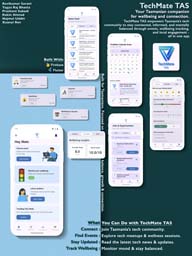
TechMate TAS is a mobile application developed for ACS Tasmania to connect students and tech professionals. The app provides a central hub for tech-related events, a community noticeboard, job opportunities, and wellbeing tracking. Admins can manage events and content, while users can browse and engage with opportunities. Built using Flutter and Firebase, TechMate TAS is designed to enhance engagement and professional development across Tasmania’s ICT community.
Data61_ArcBlock
Chaudhary Sheraz Nadeem, Mohammed Tanvir Chowdhury, Jashanpreet Kaur, Jinshan Wang, Qiran Luo, Gaurab Adhikari
This project develops a multi-agent system to automate legal contract negotiation and smart contract deployment in Web3.0. Using Large Language Models (LLMs), individual agents represent different parties, autonomously negotiating terms to reach a mutual agreement based on user-defined preferences. Upon consensus, the system automatically generates, verifies, and deploys the corresponding smart contract to the blockchain. Built on the ArcBlock and AIGNE frameworks, this work demonstrates a practical application of coordinated AI agents to streamline the creation of legally binding, on-chain agreements.
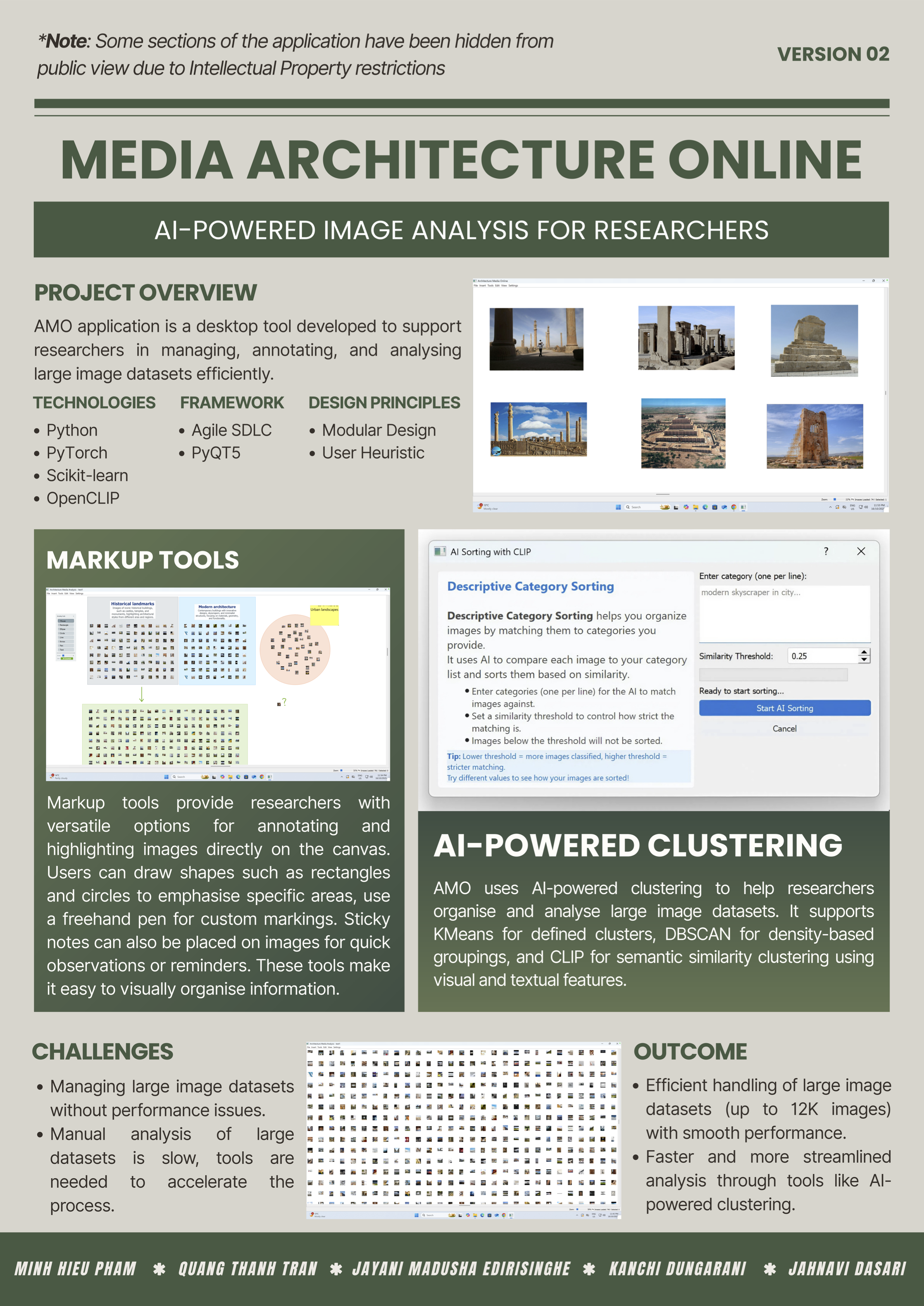
Architecture Media Online – App extension
Quan Thanh Tran, Minh Hieu Pham, Jahnavi Dasari, Kanchi Dungarani, Jayani Madusha Edisiringhe
This project advances a Python-based application for visual data analysis by integrating a new AI/ML module. Building on an existing prototype, the core task is to develop an AI-driven function for automated image sorting, which learns and refines its accuracy based on human validation. The project also includes significant UI/UX enhancements to the canvas-based interface, such as a new drag-and-drop tagging system. Finally, it will prototype multimodal tools to enable the combined analysis of text, image, and video content, transforming the app into an intelligent and more user-friendly data analysis platform.

Ecoacoustics Data Dashboard
Kushani Sajinka Hewa Wellalage, Johny Flavin, Asif Kamal Mahmud, Milan Rokka Chhetri, Sanmeet Kaur
This project is to develop a web-based data dashboard for Sustainable Timber Tasmania to visualize acoustic monitoring data from remote detection units. The platform will present reports on animal calls and other sounds through interactive tabular, time-series chart, and map-based visualizations. Key functionality includes dynamic filtering by date range, species, and location, allowing researchers to isolate specific environmental insights. Built using a modern JavaScript-based stack and hosted on the Nectar Research Cloud, this project will leverage existing frameworks to rapidly deliver an intuitive and maintainable tool for ecological analysis
Kumon Student Automated Check In and Out Notifications
Kayanno Lesa, Malay Pinakinkumar Prajapati, Shakirmahammad Mahendihusain Sakhara, Ark Nileshbhai Pandya, Parth Pravinkumar Patel, Mei Sze Liu
This project automates the student check-in and check-out process for a Kumon tutoring centre, replacing an inefficient and error-prone manual SMS system. The solution involves generating unique QR codes for each parent, which are placed on the student's folder. Upon arrival and departure, staff will scan these codes, instantly triggering a pre-populated text message to the correct guardian notifying them that their child has arrived or is ready for collection. This system is designed for efficiency, supporting bulk QR code generation for existing students and simple onboarding for new ones, ultimately eliminating manual errors and reducing wait times.
Launceston Grammar - Collegial Affirmations
Ritham Chetri, Huzefabhai Imtiyazbhai Vahora, Suman Shakhakarmi, Wentian Wu, Xiaozhu Zhang
This project develops a secure web application for Launceston Grammar to facilitate "collegial affirmations," fostering a positive staff culture. The system enables employees to send short, anonymous messages of appreciation to colleagues during scheduled cycles. To ensure confidentiality and appropriate oversight, an automated bot delivers submissions to the recipient's line manager for vetting before forwarding. The platform will securely integrate with the school's existing Microsoft Entra ID and information systems, automating the workflow and creating a seamless, supportive communication channel
Web-based Tutor Allocation and Database System
Bang Vy Huynh, Isbat Mashiat Oikko, Pham Cong Danh Nguyen, Tolulope Kayode, Md Assadujjaman Tilok, Tafsir Mahmud
This project replaces a cumbersome, spreadsheet-driven workflow for tutor management with a centralized, web-based allocation system. The platform automates the ingestion of tutor applications (EOIs) into a structured database, offering powerful tools for filtering, ranking, and shortlisting candidates. A key feature is the integrated timetable clash detection to prevent scheduling conflicts, all managed through a central dashboard with role-based access. By digitizing this process, the solution eliminates manual data handling, improves accuracy, and provides a transparent, auditable system for academic staffing and resource management.
MyMarket
S M Tofayel, Shashwata Das, Paras Kaushik, Md Tarik Ul Mostafi, Zubair Ahmed, Mohammed Azbi
This project is to develop 'My Market,' a cross-platform mobile application designed to connect users with local community markets. Leveraging GPS and mapping APIs, the app provides a real-time, interactive map displaying nearby farmers, craft, and flea markets with detailed profiles, hours, and vendor information. Core features include a powerful search with filtering, user reviews, a favorites system, and push notifications for events. The project also includes a dedicated portal for market organizers to manage their listings, creating a comprehensive and user-friendly ecosystem to support local commerce and community engagement.
Student Information ChatBot
Ali Raza, Chen Xi, Hoang Giang Nguyen, Roshani Ghimire, Wang, Yu, Yihang Cui
This project develops an intelligent chatbot, powered by IBM Watsonx Orchestrate and Watson Discovery, to serve as a virtual assistant for university students. The chatbot provides instant, conversational answers to queries about courses, enrolment, and unit outlines by retrieving information from institutional documents. Using Watson Discovery for document ranking and Orchestrate for multi-agent workflow automation, the system ensures responses are accurate, contextual, and ethically generated. Integrated with Firebase for data management and deployed via Vercel, it delivers a reliable, user-friendly platform that enhances student support and reduces administrative workload.
TUSA Financial Literacy Program
Annie Tran, Wu Zihou, Raisa Rahman, Suyasha Oli, Anup Pudasaini, Phuong Linh Thai
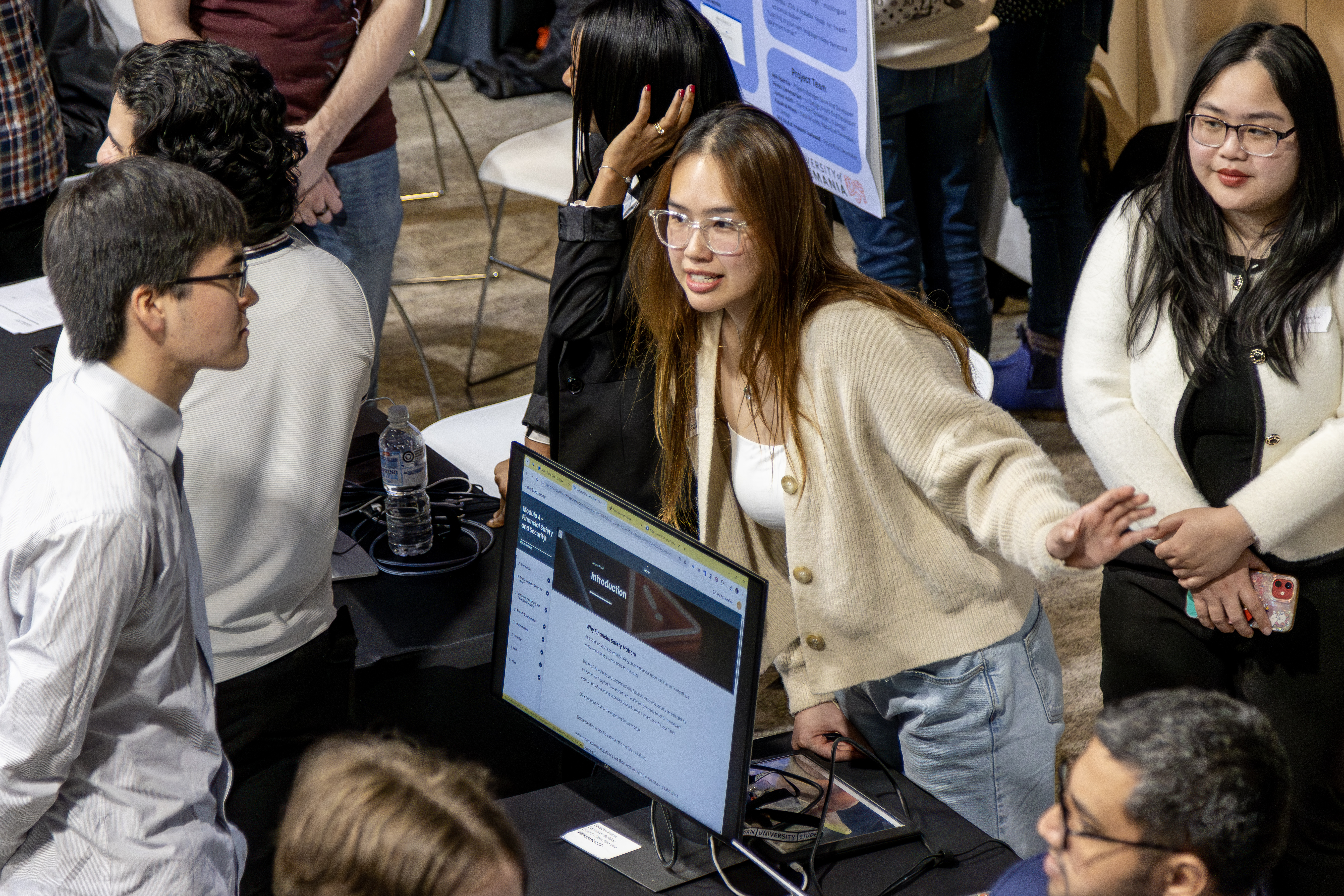
This project is to develop a series of online, self-paced financial literacy modules for the Tasmanian University Student Association (TUSA). Designed to empower university students with essential money management skills, the program will cover key topics like budgeting, debt, saving, and avoiding scams. The core deliverable is to build these interactive learning modules within TUSA's new BuddyBoss Learning Management System. A primary focus will be on leveraging animation to make complex financial concepts engaging, accessible, and memorable for a diverse student audience.
Client Support Dashboard
Mansi Kadam, Rajesh Kumar Chaudhary, Sachin Kharel, Samartha Khatri, Sushan Dhewaju, Sabiha Noor Ovi
This project is to develop a custom Client Support Dashboard for the web development agency, Eighty Options, to enhance time-tracking and resource management. The system will integrate directly with the MinuteDock API, pulling time-entry data to provide tailored processing and visualization. Key features include a tool for bulk-updating time entries, an interface for managing client support contracts, and a live dashboard with interactive charts visualizing resource consumption against contract limits. This containerized application will streamline administrative workflows, optimize resource allocation, and provide data-driven insights for transparent client reporting.
Join us for an engaging series of industry panels in the Stanley Burbury Lecture Theater (just next door to the showcase floor). These panels are designed around the Transitions Themes as part of the University of Tasmania's 2025 Strategic Refresh.
Panel discussions to explore Tasmania's most pressing challenges and exciting opportunities, from bridging the digital divide to revolutionizing our primary industries with AI and pioneering the next wave of environmental monitoring technology. These conversations will highlight the crucial role our local ICT sector plays in shaping the future of the state, and your voice is essential to the discussion.
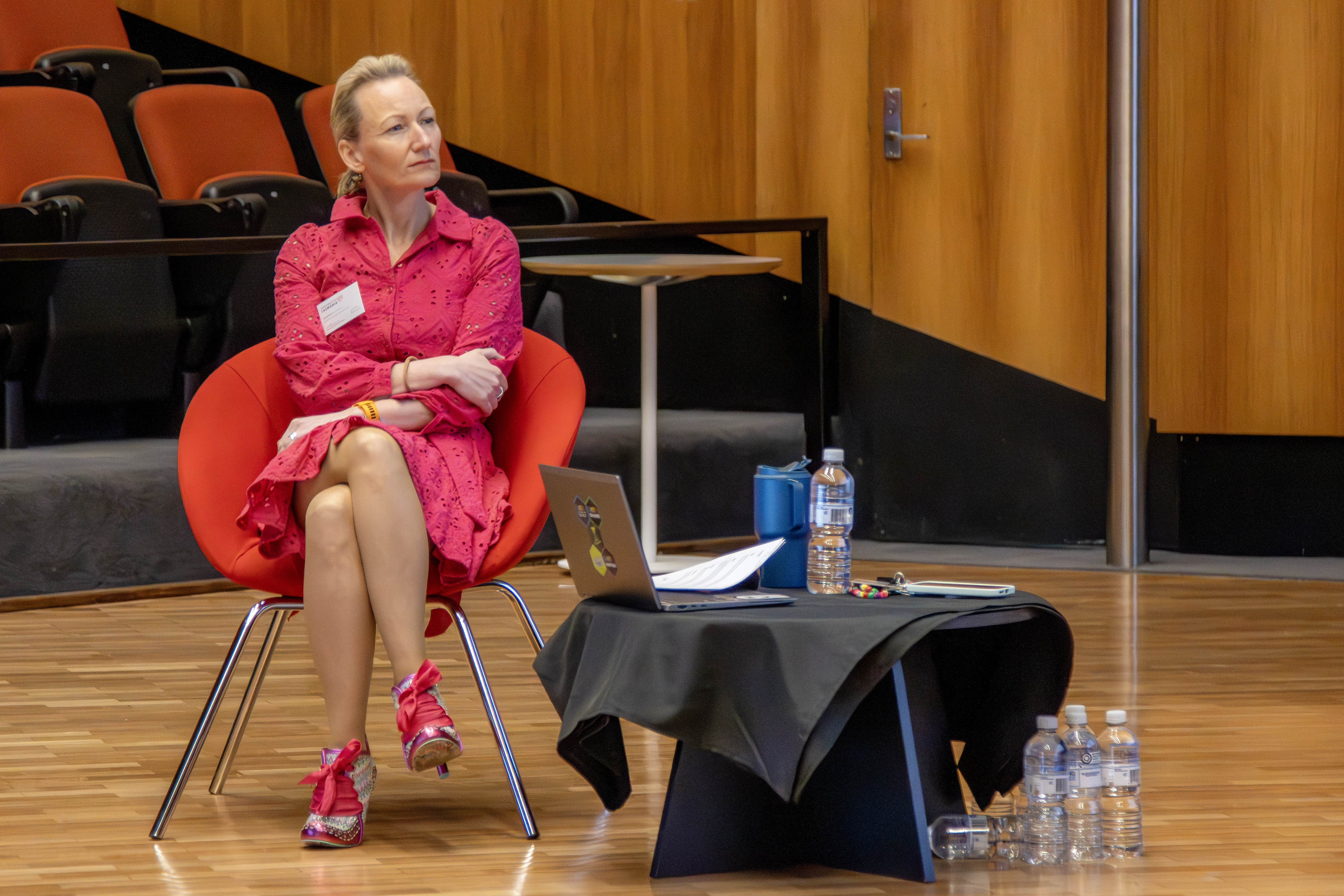
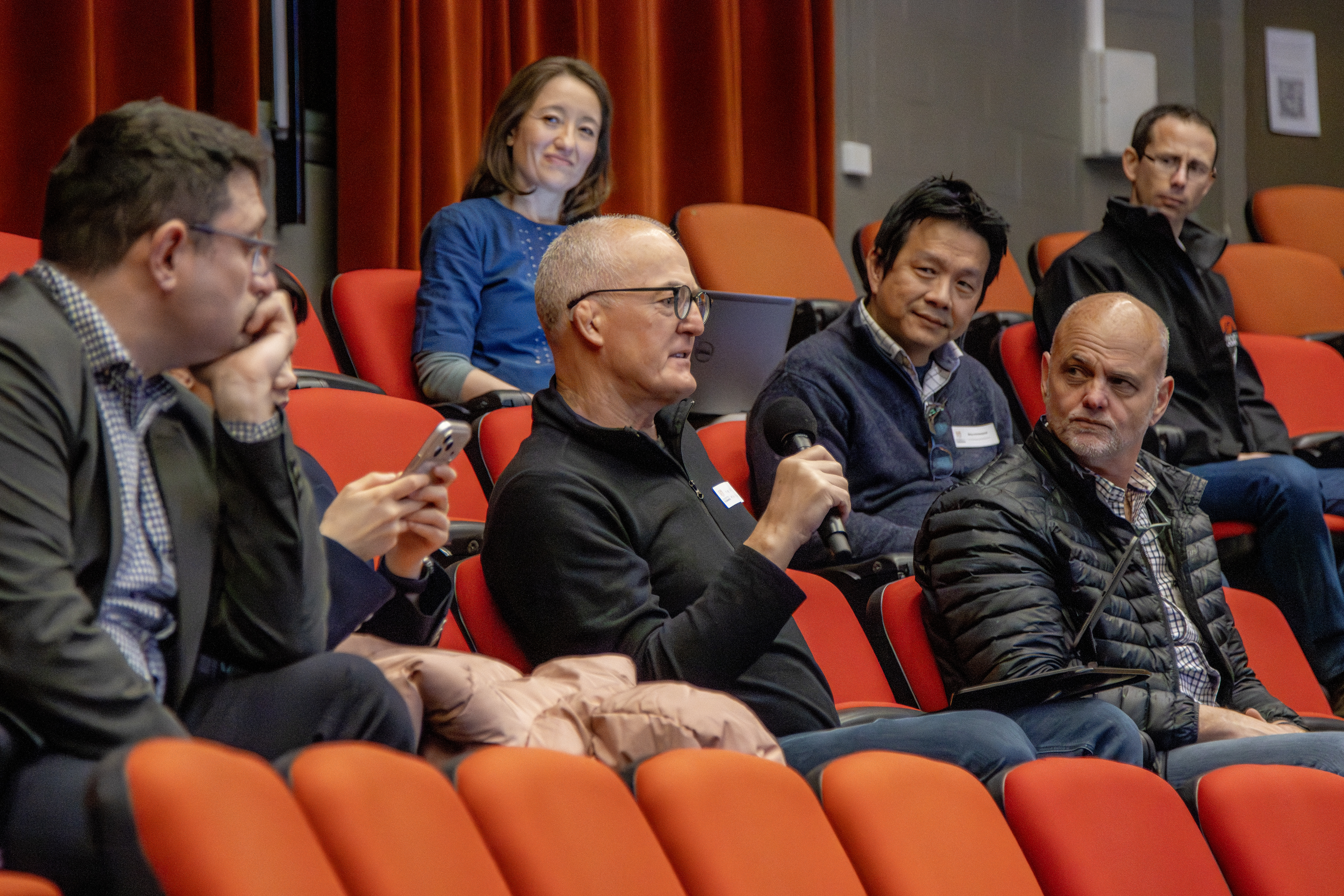
Emceed by Professor Kristy de Salas, each panel will feature ICT staff, UTAS Transitions Theme leads, and industry members. The panels will be an open conversation between attendees and panel members. Post-event workshops are also being planned to ensure the conversation doesn't stop here.
If you would like to be involved in a panel discussion in future runnings of this event then please contact Kristy.deSalas@utas.edu.au
Schedule
| 11:30am | Climate Action, Digitally Driven: ICT for a Resilient Tasmania |
| 12:15pm | Education & Equity: Technology's Role in Shaping Learners' Futures |
| 1:00pm | Productivity Powered by Tech: A Blueprint for Tasmania |
Climate Action, Digitally Driven: ICT for a Resilient Tasmania
Climate Theme
As Tasmania confronts the growing impacts of climate change, technology is a critical tool for building resilience. This panel delves into the role of ICT in adapting to our changing environment. Join us to discuss how digital innovation can enhance climate intelligence, power early warning systems for natural hazards, and empower community-led action. Our experts will explore how to leverage ICT to foster climate literacy and ensure inclusive participation in creating a safer, more sustainable Tasmania.
-
Associate Professor Quan Bai
Artificial Intelligence Major Coordinator, University of Tasmania
-
Professor Erik Wapstra
Dean of Research, Sciences and Engineering and Professor of Evolutionary and Behavioural Ecology
-
Professor Matt King
Director of the ARC Australian Centre for Excellence in Antarctic Science
-
Professor Gretta Pecl
Professor in Marine Ecology
Education & Equity: Technology's Role in Shaping Learners' Futures
Education Theme
Ensuring equitable access to high-quality education is critical for Tasmania's future. This session examines the transformative potential of ICT in our learning systems. Our panelists will explore how digital tools can break down geographical barriers, support our education workforce, and drive systemic reform in curriculum and assessment. We'll discuss how ICT can create clearer pathways for students from school to career and the unique role UTAS can play in championing a more connected and equitable educational landscape for all Tasmanians.
Productivity Powered by Tech: A Blueprint for Tasmania
Productivity Theme
Tasmania faces a significant productivity challenge, particularly in its regional and traditional sectors. This panel explores how Information and Communication Technology (ICT) can act as a powerful catalyst for economic transition. We will discuss the strategic role of ICT in boosting business dynamism, bridging the skills gap, and accelerating industry innovation. Join our experts as they unpack the barriers to technology adoption and identify key opportunities for UTAS to partner with industry, ensuring an equitable and prosperous digital future for the state.
Your next big idea could be just one conversation away. Step into our "Speed-Date an ICT Researcher" session for a fast-paced tour of Tasmania's most exciting new tech research, directly from the minds behind it. Connect one-on-one with our School's staff, PhD, and Honours students and ask your burning questions, and discover the collaborations and innovations that will shape our industry's future.
Research posters will be on show along with the associated researchers in the Stanley Burbury / University Center Lobby space from 11am–2pm. Some projects will also have demonstrations as well, so prepared to be inspired!
Poster Presenters
| Mikaela Green | Persuasive Technologies: Combining Behaviour Change and Technology Acceptance to Help Change Your Life |
| Hai Huang | Autonomous Flock Management Using Deep Reinforcement Learning |
| Chaudhary Sheraz Nadeem | Secure AI for IP Analysis |
| Botirjon Karimov | IoT-Enabled Long-Term Ecoacoustic Monitoring |
| Troy Merritt | Cultivating Capability in Design and Digital Technology |
| Nicolyn Kwok | Predicting Hospital Emergency Department Demand |
| Mira Park | Deep Neural Networks and Image Processing for Detecting Amyloid Beta Plaques in Alzheimer's Mouse Brain |
| Winyu Chinthammit | Human-AI Fused Intelligence |
| Soonja Yeom | |
| Erin Roehrer | |
| Rabbia Idrees |
Welcome to NavigateAI: The AI Literacy Toolkit A Proposal for Partnership and Collaboration
Professor Kristy de Salas
View PosterGet ready to level up your knowledge on hot-topic ICT issues! Our evening Lightning Talks session is a fast-paced showcase where our top tech researchers have just 10-15 minutes to enlighten you on topics of Artificial Intelligence, Cybersecurity, and Gaming. Hear about cutting-edge technology in plain English, and get inspired.
Light refreshments are provided, but as space is limited, securing your spot via the separate Eventbrite ticket is essential.
Schedule (Talk titles TBC)
| 5:30pm | Welcome and Intro |
| 6:00pm | Dr Wenli Yang - Hybrid AI: The Future of Human-AI Partnership |
| 6:15pm | Dr Lindsay Wells - How Games Can Change the World (and Why They're Not... Yet) |
| 6:30pm | Mr Tony Gray - Hacking for Good |
| 6:45pm | Dr Muhammad Bilal Amin |
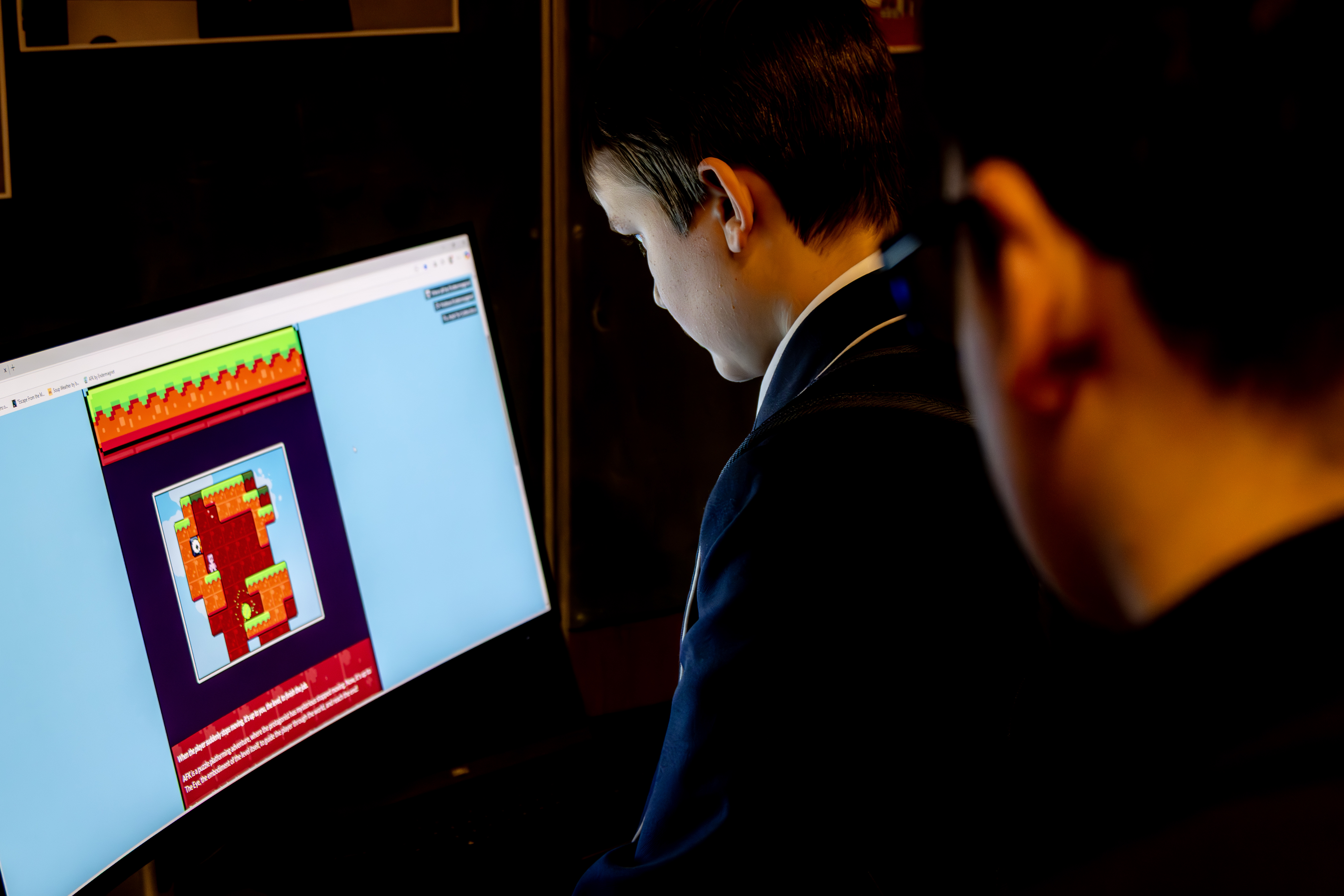
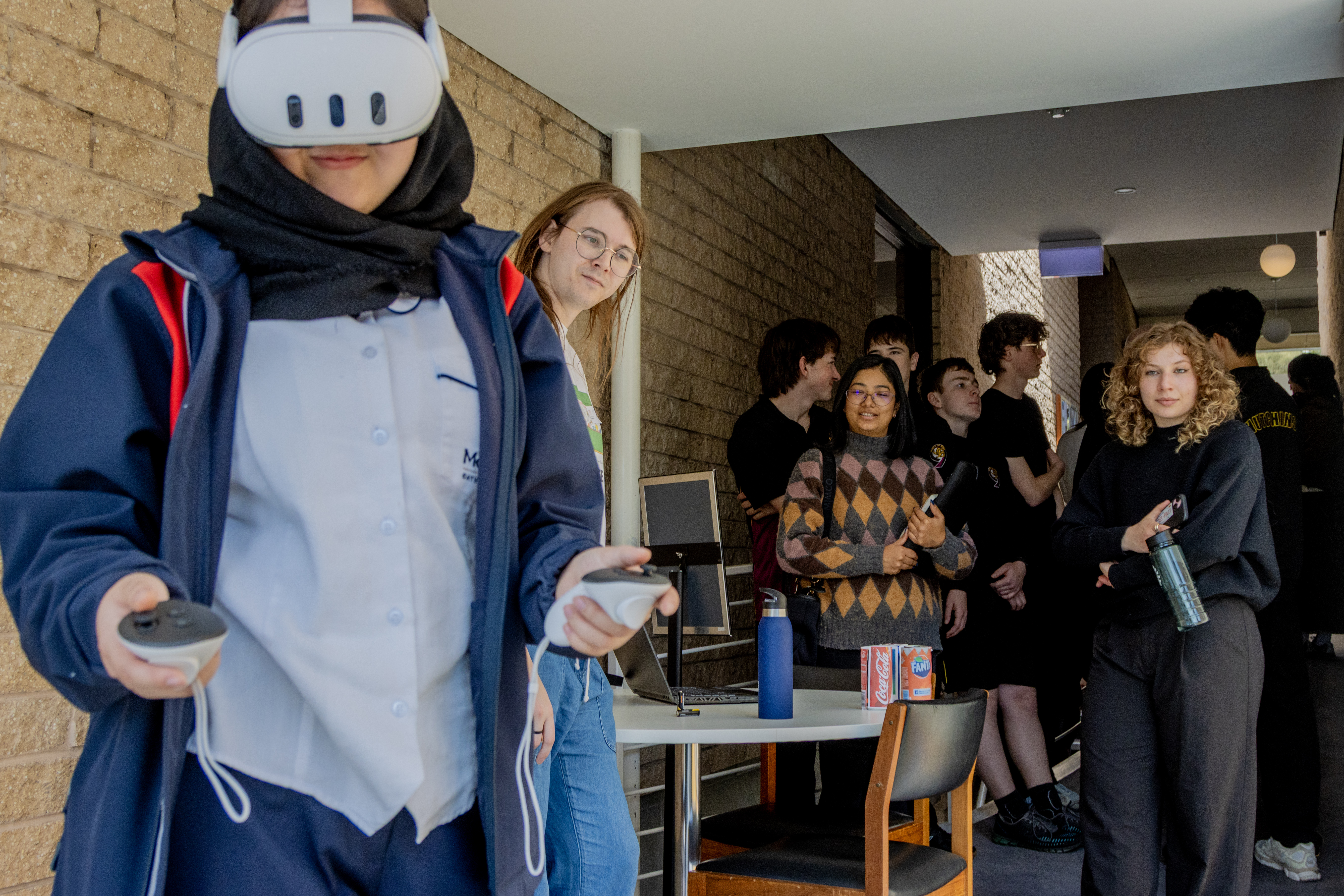
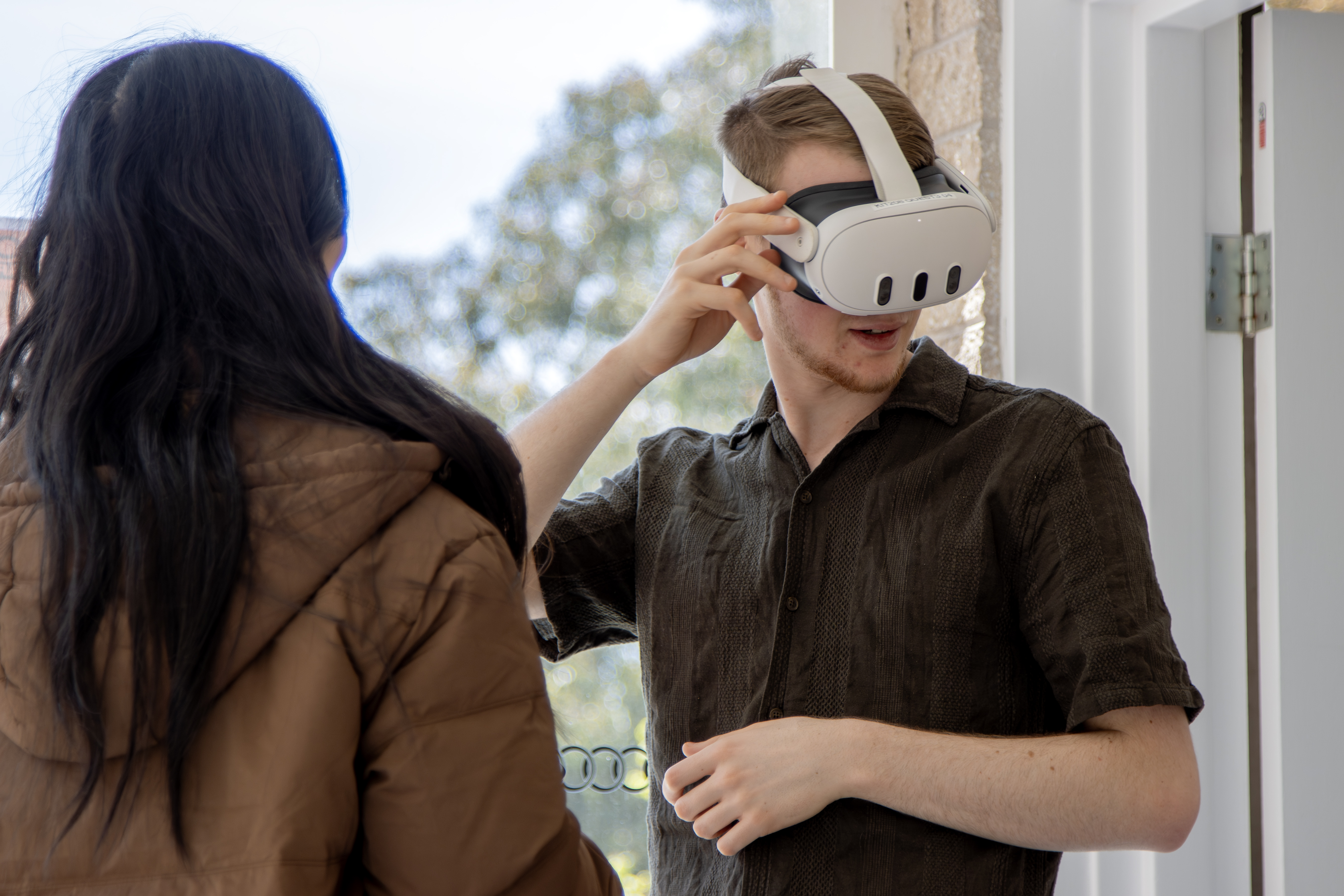
In addition to the work of final semester projects you'll also get the opportunity to play games from our first- and second-year students, watch video reels of fantastic code-generated CGI animations, and experience VR and AR projects tackling real-world problems.
You can also play the games and watch the videos online, through the links below.
Students learn the basics of game development technology and game design, via an intensive process learning practical skills for developing games in the Unity game engine. They then have around 6 weeks to produce their own 2D game.
Unit Coordinator: Ian.Lewis@utas.edu.au
First Love
Alicia Thompson, Brie Healy, Ryan Smith, Tristen Munns
Your mission, should you choose to accept, is help people find their first love!
As a gun-slinging cupid you are tasked with finding the perfect match! Locate each person's ideal partner from a series of clues...
Once a proper target has been chosen, get them close together, and shoot both of them in quick succession in order to gain a confession!
Second State
Artemis Frost, Chloe Gregg, Maddy Wright, Sylvia Benson
A single-player, first person puzzle game, in the tradition of Portal and The Talos Principle.
The core mechanic is "states", positions in space and time that you can place down and later return to in part or in full.
You must manage these states strategically to solve a range of mind-bending puzzles and discover the story behind the liminal dimension they're in.
Scrap'd
Nic Gammler
Monkey Island meets Final Space in an epic adventure game.
Play as Red on a not so typical day on Bosco's Outpost 4 where opportunity comes knocking. Will you take the Call to Adventure or spend your life being another Bosco's drone?
It's a point-and-click game so you point and click to move around. With occasional keyboard input.
AFK
Shawn Hatten
When the player suddenly stops moving, it's up to you, the level, to finish the job.
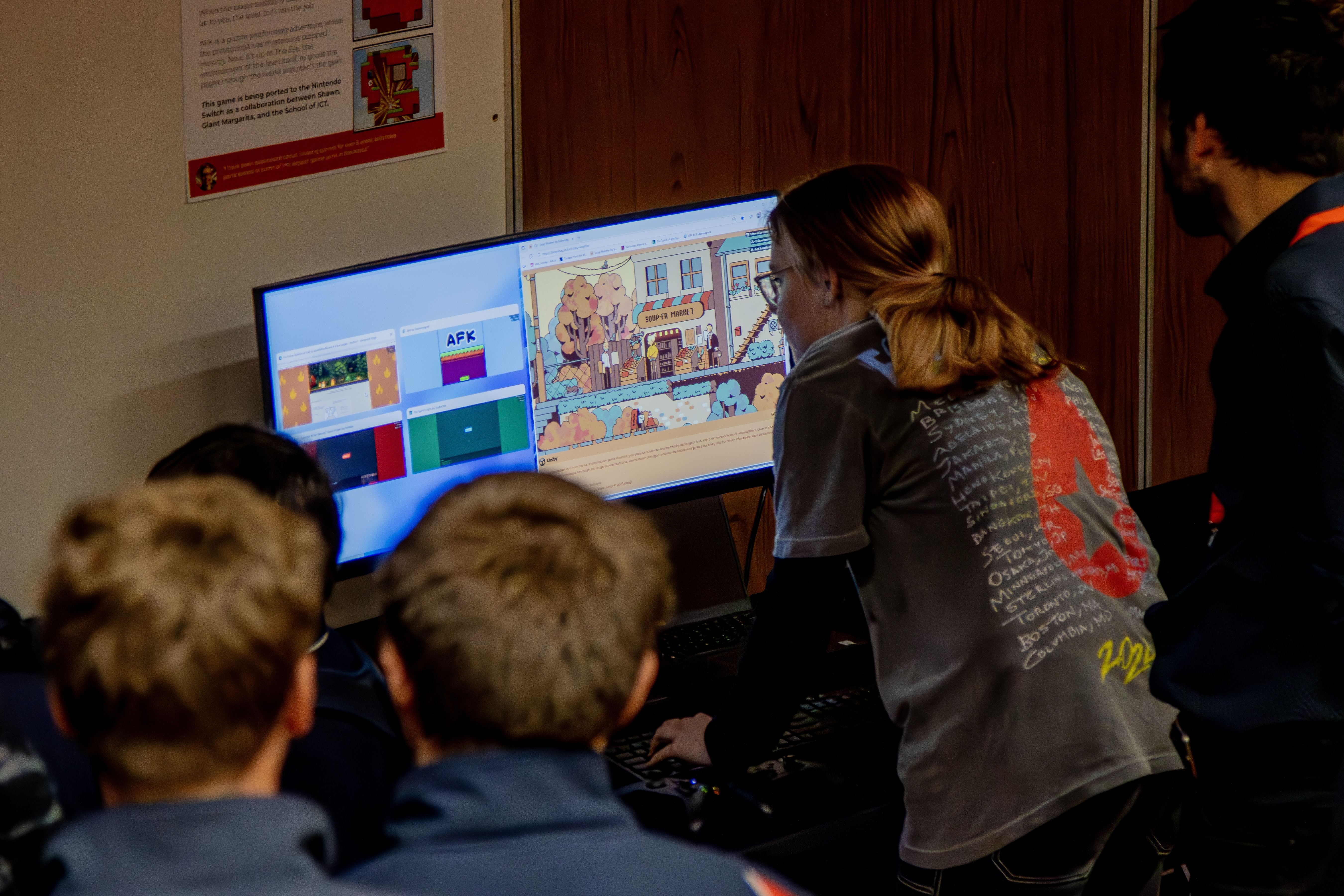
AFK is a puzzle platforming adventure, where the protagonist has mysterious stopped moving. Now, it's up to The Eye, the embodiment of the level itself, to guide the player through the world and reach the goal!
This game is being ported to the Nintendo Switch as a collaboration between Shawn, Giant Margarita, and the School of ICT.
Might be a Mimic
James Baldwin
You have 60 seconds. Sneak into the dungeon, grab as much loot as you can and get the hell out of there before anyone notices.
Should be a bree ... wait, did that chest just lick its lips? Might Be Mimic is a vertical dungeon platformer with rogue-lite elements.
Each level features a randomly generated layout with weighted placement of loot and enemies.
Bomb Chopper
Brayden Cunningham
Whack-a-mole, but the moles fight back!
Pilot a rudimentary helicopter and drop bombs on moles as they pop out of the ground with guns and rocket launchers.
Clear the ground to progress to the next wave. Time your drops to hit the moles and avoid their comically bouncy shields, unless you want your own bombs blowing up in your face. Face more moles and tougher retaliation as you progress.
ShopDrift
Ashley Pickersgill
A fast-paced action rogue-lite, in which you attempts to shoplift large quantities of groceries by drifting a shopping cart throughout a store, firing makeshift produce-related weapons, and avoiding hoards of staff and security trying to stop you.
Edge Survivors
Med Alabdulqader
Edge Survivors is a fast-paced survivor-like game where you play as Circle “cursed” with having infinite edges, fending off waves of envious enemy shapes that want to steal your edge.
Turn your curse into an advantage, and fire off your never ending edge, in this rogue-like bullet-heaven.
Students develop a short movie using procedural animation and texture and lighting effects. Knowledge and skills needed include 3D coordinate systems, 3D transformations, scene graphs, key-frame animation, lighting and shading. The entire animation is programmed using computer graphics techniques applied using the Unity game engine. Since the animation is largely generated through code and not traditional 3D graphics software like Blender or 3DS Max, the outcomes showcase a more technical feat, rather than a purely aesthetic one.
Unit Coordinator: Ian.Lewis@utas.edu.au
2025 Projects
- Tim Cox
- Matthew Laughlin
- Shawn Hatten
- Jack Luttrell
- Patrick Wing
- Han Zhang
- Cam Munro
- Oliver Nillsen
- Caleb Wittmer
2024 Projects
- Jes Lewincamp
- Lily Gough
- Nathan Johns
- Eliza Gurney
- Reuben Clark
- Charlie Cooper
- Ethan Fletcher
- Jack Perry
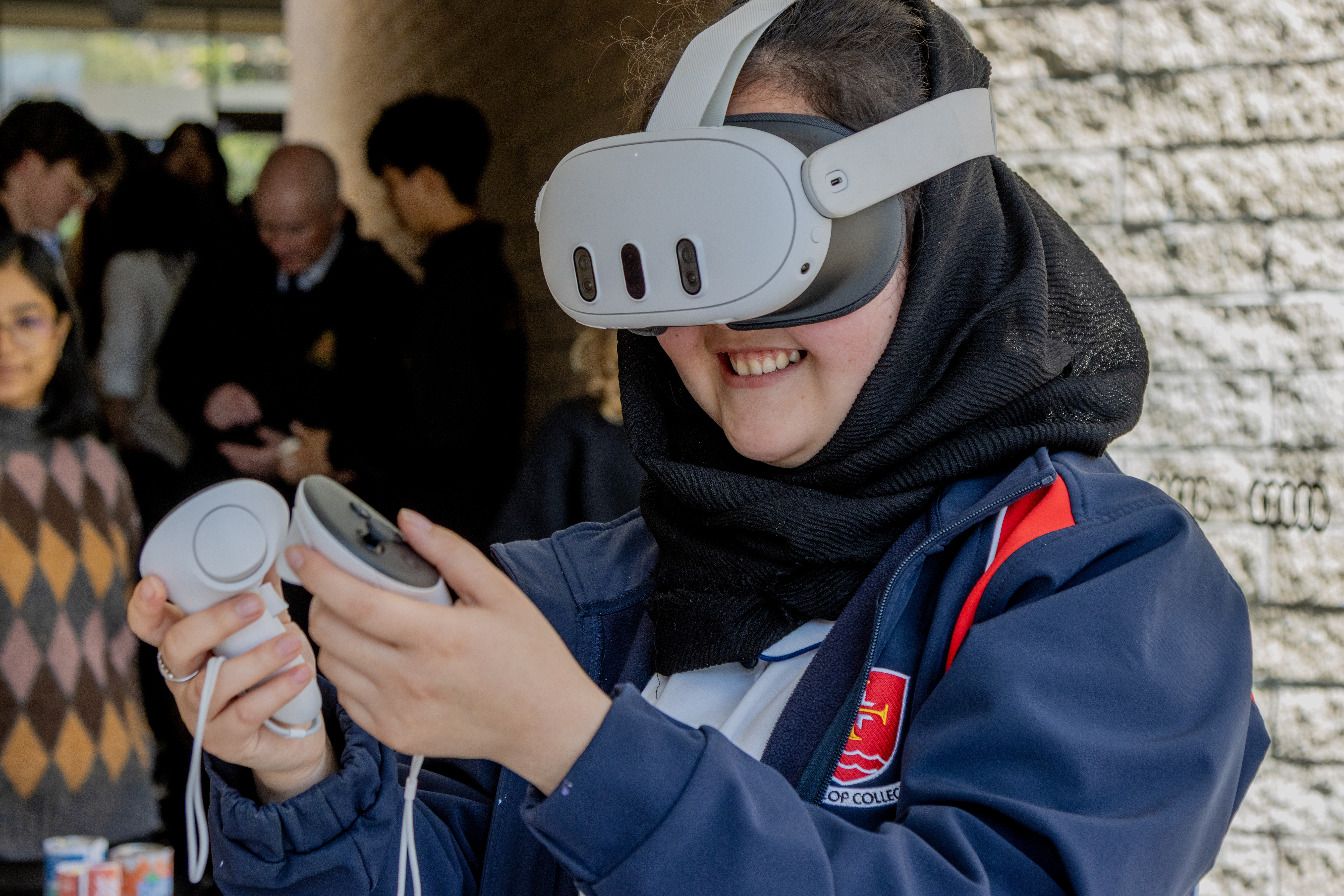
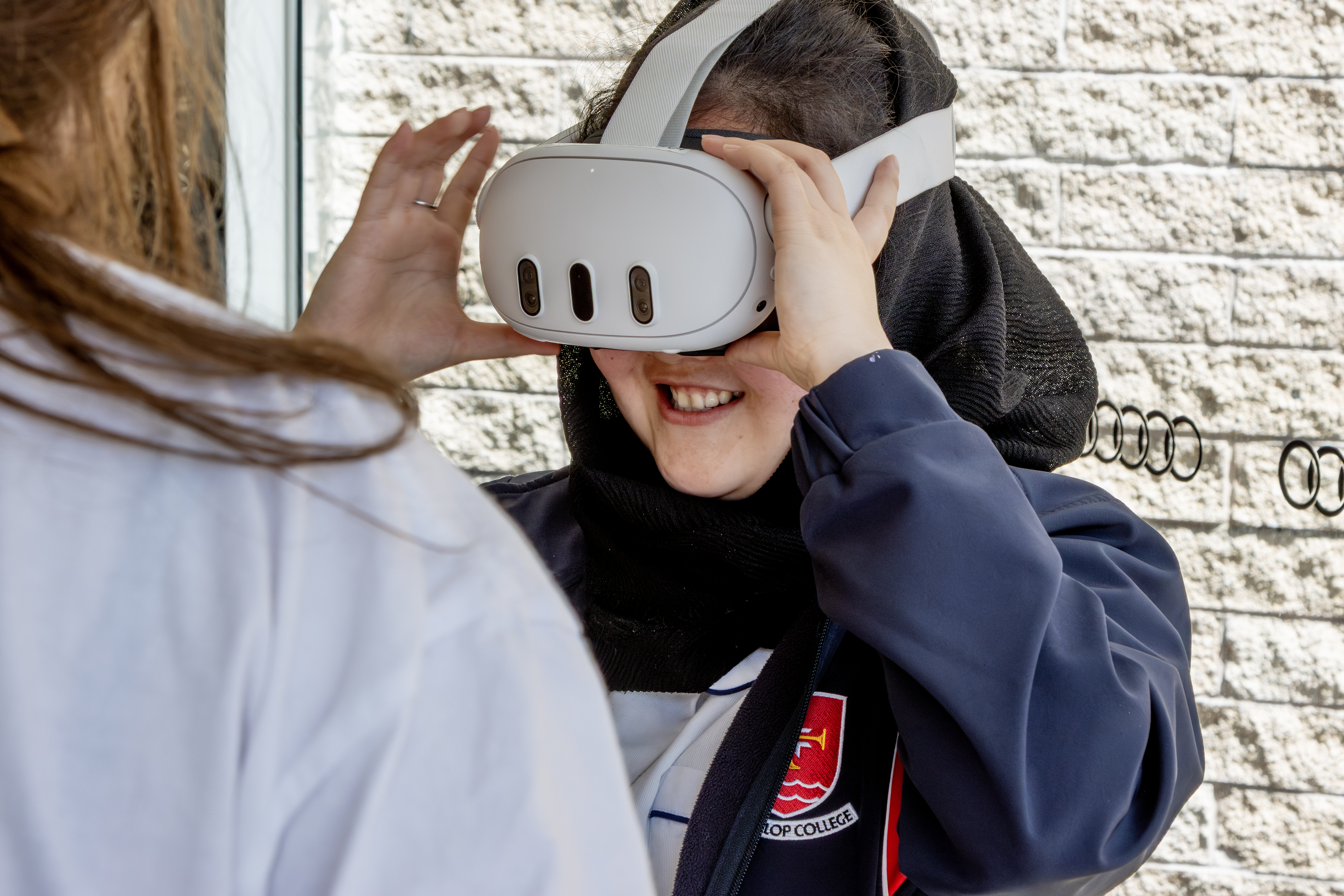
Students work in teams over the course of 6 weeks to create an Augmented Reality (AR) or Virtual Reality (VR) application prototype that works on real hardware (Android Phone or Meta Quest VR Headset). Students produce an application that is designed to tackle a real-world problem.
Unit Coordinator: Winyu.Chinthammit@utas.edu.au
Antarctic Repair VR
Harry Beumer, Josh Daniels
https://josh-daniels.itch.io/antarctic-repair-vr
2025 Projects:
- Aymen Mohamed Abdelazeem Abdalla
- Delaney Torlop
- Isaak Cole
- Liam Patridge
- Matthew Monty
- Patrick Quinlan
Pre-2025 Projects:
Crane Training (2022)
Zachary Berryman
The new era of VR Crane Training. With no risk, consequences or experience. Learn with an immersive experience that replicates a real Tower Crane operator in a virtual construction environment.
What Does Christmas Look Like (Colour-blindness Simulator; 2022)
Jasper Lennaen, Toby Coy, Johannes Nicholas, Delaney Roach, Brayden RansomFrost
Colour Vision Deficiency (CVD) affects 1 in 12 males and 1 in 200 females (Collinge, 2017). ‘What Does Christmas Look Like’ (WDCLL) is a virtual reality (VR) application that allows colour-able designers to experience the effects of various kinds of CVD whilst editing and recolouring the virtual environment to best suit a wide range of colour-able and colour deficient people.
High Voltage Powerline Training Simulator (2022)
Harry Driessen, Oliver Lohrey, Imran Aryan Kamil
High-voltage powerline work is very dangerous, especially so for inexperienced trainees. This application provides a safe and affordable way for high-voltage powerline workers to learn and practice real-world situations such as installing a spacer on a set of power lines.
Antarctic Interactive Map
Ross Vandenberg, Kristan Gorry, James Kidd
This is an application designed to get students and young people engaged in the Antarctic experience. It uses AR technology to show the degradation of the ice sheets in the Antarctic on a sliding scale throughout the years as well as show points of interest (such as animal habitats) through pins on the 2D map.
Carbon Emission Education
Emiliano Balseira Martinez, Christopher Snodgrass, Caleb Wittmer
This application aims to provide an experience that encapsulates the abstract concepts of carbon emissions into an easily understood format. This is achieved by providing the user with various points of interaction designed to inform how changes to aspects of a household affect their carbon footprint.
Bottle Battlers
Oliver Connor, Fabian Lampasona, Micah Sanderson
Have you or anyone you know ever struggled to put the cask down? It is easy to let the train gain speed once it leaves the station, but sometimes you have to hit the brakes! This is exactly what this VR application intends to do. Bottle Battlers: Deliverance targets such behaviours by drilling healthy alternatives. Bottle Battlers - “Get your liver delivered!”
Climate Change Education
Jordan Holloway, Matthew Dunn
This application aims to provide an experience that encapsulates the abstract concepts of carbon emissions into an easily understood format. This will be achieved by providing the user with various points of interaction designed to inform how changes to aspects of a household affect their carbon footprint.
Tank Operations & Advanced Safety Training
Noah West, Josh Rayner
The Tank Operations and Advanced Safety Training v2 (TOAST2) application allows companies operating tank farms to train new pipeline operators with ease. It reduces the costs associated with ordinary training methods and improves accessibility of training, while being undertaken in a hazard-free environment. This access to training will reduce the risk to global infrastructure and the developed/developing nations that rely upon it.
AR Wood Heater Previewer
Jake Rohrlach, Ben Dolliver, Shawn Hatten
Working in wood heater installation often presents the challenge of visualising what a wood heater will look like in a location without the physical heater in place. Using an AR application to visualise the heater solves this problem and could save up to four hours on each installation.
Overcoming Avoidance Behaviours
Patrick Wing, Nick Dexter, William Ditchfield
The application serves to help users confront their fears and overcome exhibited avoidance behaviours through a series of scenarios. These scenarios gradually increase in intensity to help the user slowly expose themselves to the situations in a controlled environment.
Students create a Native Android App (Kotlin), Native iOS App (Swift), and Cross-Platform App (Flutter) on an assignment theme over the course of 13 weeks. The theme this semester was a carpet and window quoting application, which features and external API of products, and careful management of measurements broken down space-by-space and room-by-room in this house.
Unit Coordinator: Lindsay.Wells@utas.edu.au
Showcasing Students:
- Hang Li
- Liam Kearney
- Jason Gamble
- Orn Onnida (Alumni)