

A team of international researchers on board New Zealand’s Ross Sea ‘ACTUATE’ Voyage 2025 is celebrating the discovery of vibrant, complex seafloor communities near the Ross ice shelf and Ross Island.
The benthic ecology team on board NIWA’s RV Tangaroa includes University of Tasmania marine ecologist and ACEAS Chief Investigator, Dr Nicole Hill, who describes the area as “pretty much as far south as you can get by sea and mind-boggling in scale.”
This 39-day voyage, including 30 days within the Antarctic Treaty area, is the Tangaroa’s 16th voyage to Antarctica and the Southern Ocean. It departed from Wellington NZ, in mid-January and arrived at Ross Island at month’s end.
The Ross Sea is the southern-most sea in the world and home to the planet’s third-largest Marine Protected Area.
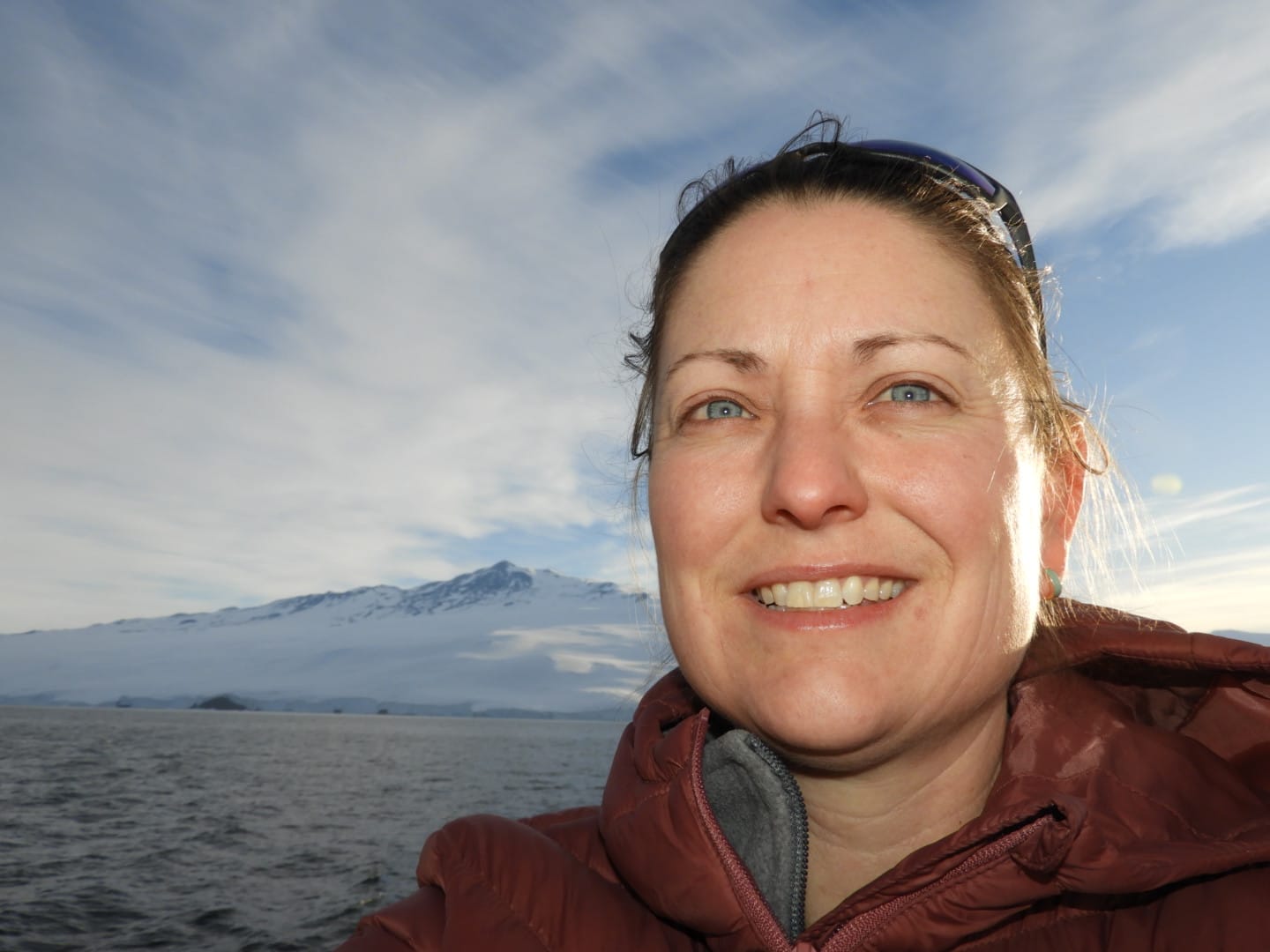
Dr Hill is a specialist in the intersection between mapping and biodiversity and is part of a team of researchers from India, Italy, the UK, Australia and New Zealand. She says what they have discovered has been incredible.
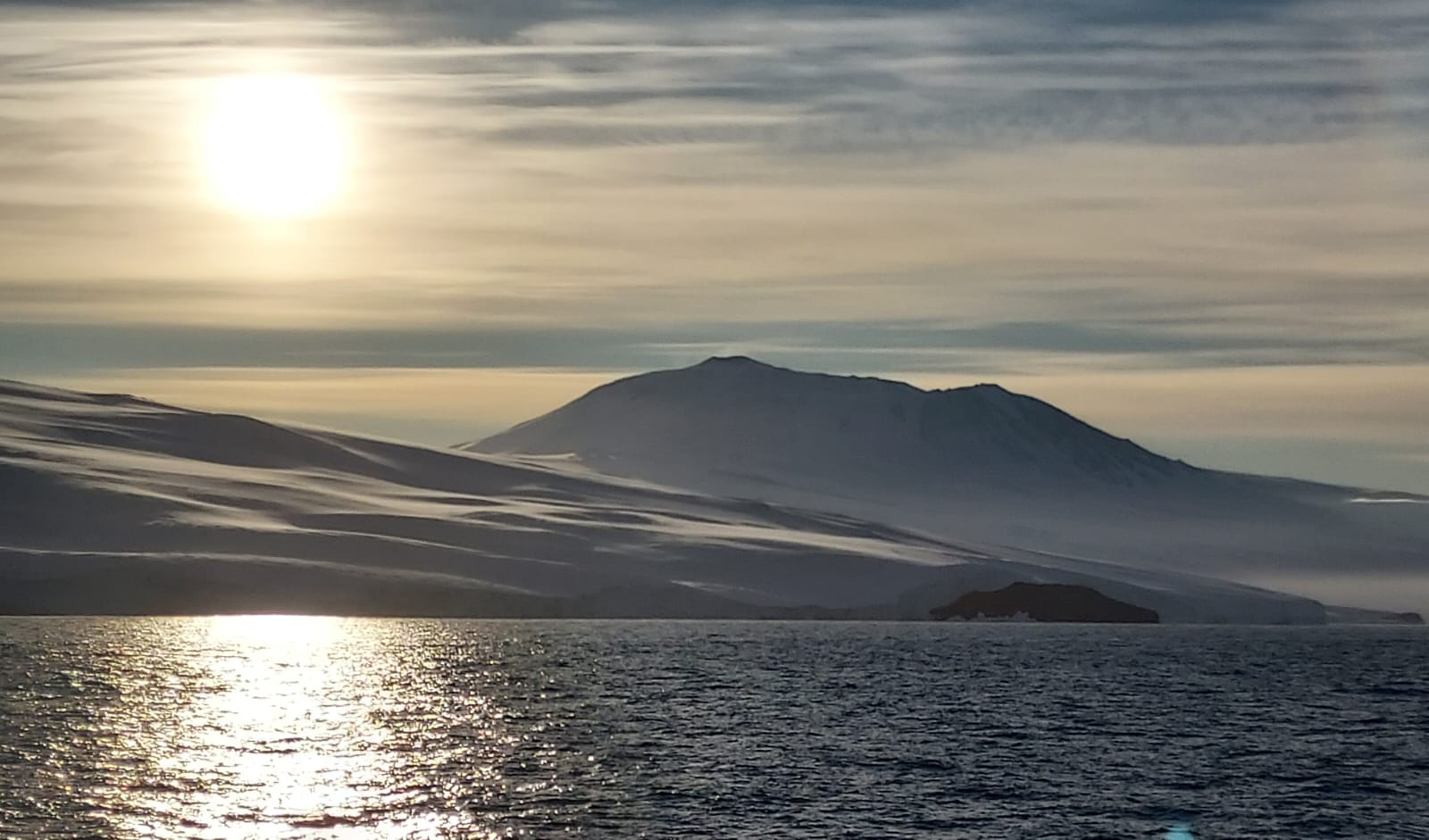
“For the first time we mapped with a sonar a section of seafloor in the bay in front of Mt Erebus, (one of only two active volcanoes in Antarctica) at Ross Island to reveal steep slopes, distinct shelfs and iceberg scours,” Dr Hill said.
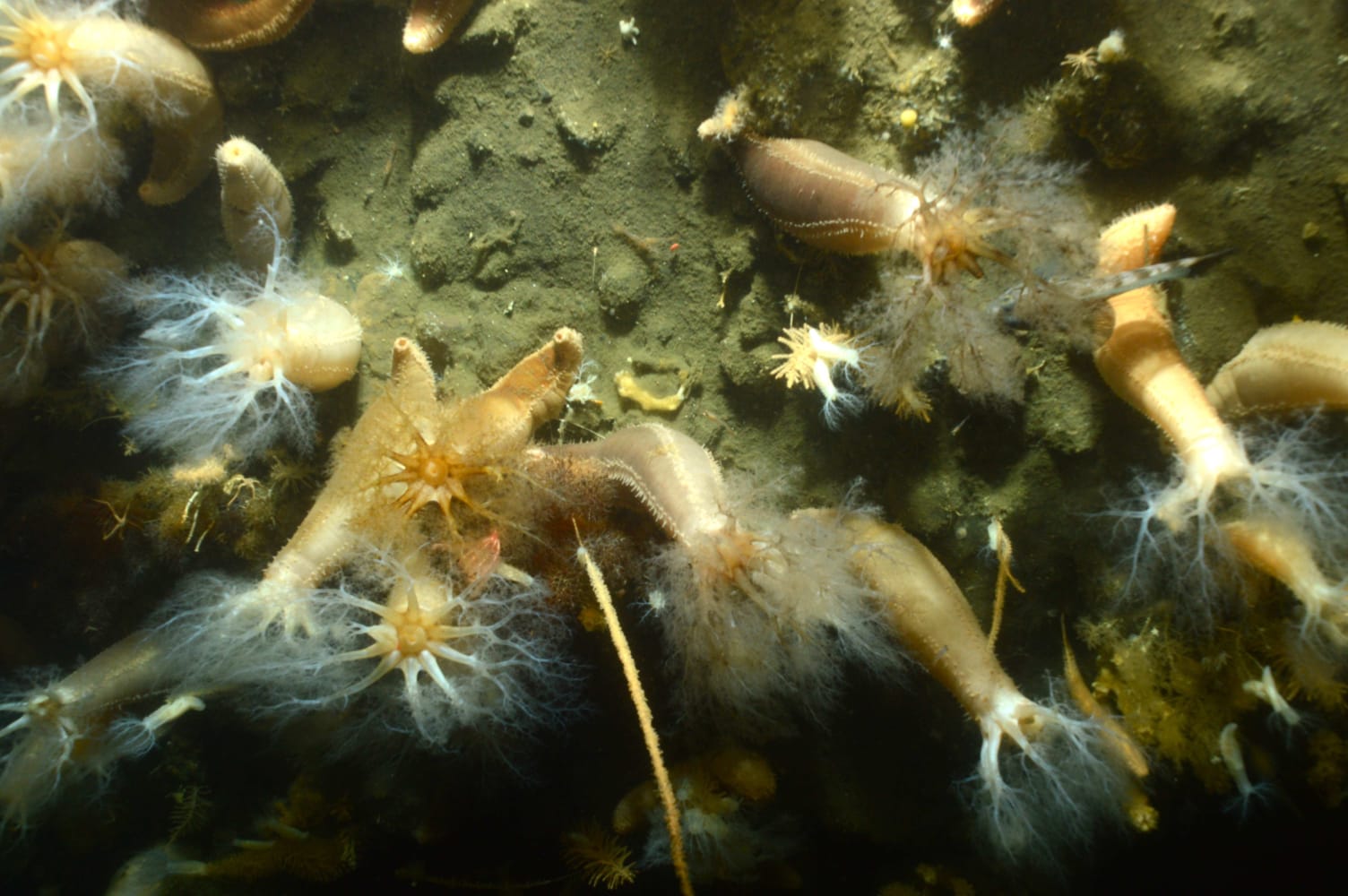
“Underwater at about 100 metres we found astounding fields of filter-feeding sea cucumbers, each about 30cm, filtering phytoplankton and other particles out of the water.”
Dr Hill said no-one on board had seen such dense clusters before.
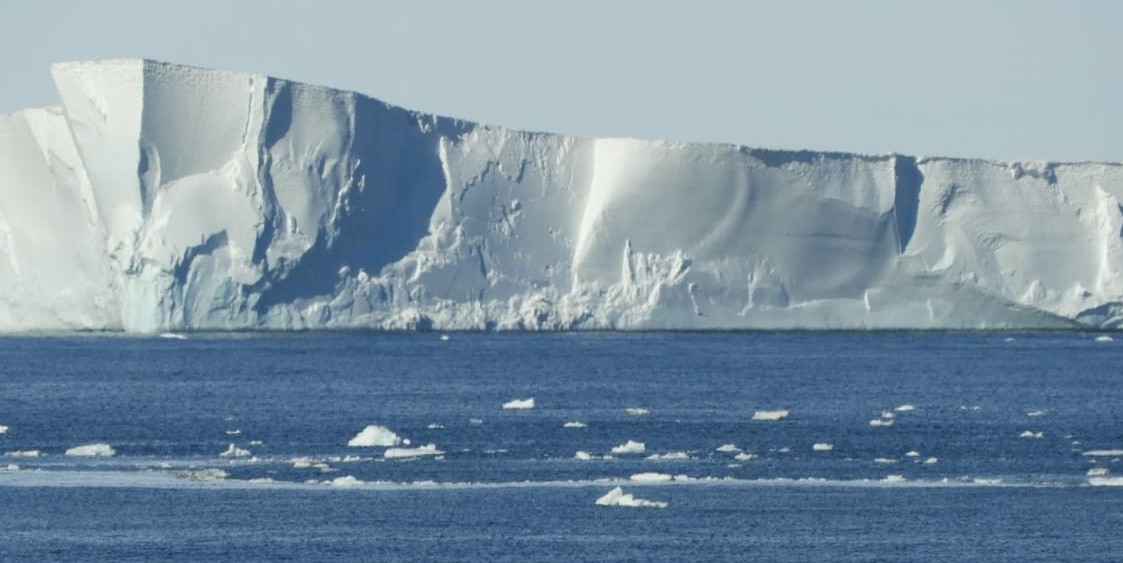
They also visited the Ross Ice Shelf, the largest in Antarctica, about the size of France – and more than 600 kilometres long and about 40 metres high.
“It also extends several hundred metres below the water,” Dr Hill said.
“We were there to collect some oceanographic moorings, but managed to fit in a few imagery transects. The seafloor was deep (about 700 metres), flat and muddy with many dropstones brought down from the land by the glaciers that feed the ice shelf.”
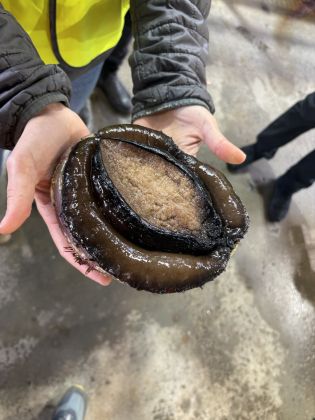
“On the seafloor we found many brittle stars, sea urchins, sea lilies, sea pigs and even the odd octopus.”
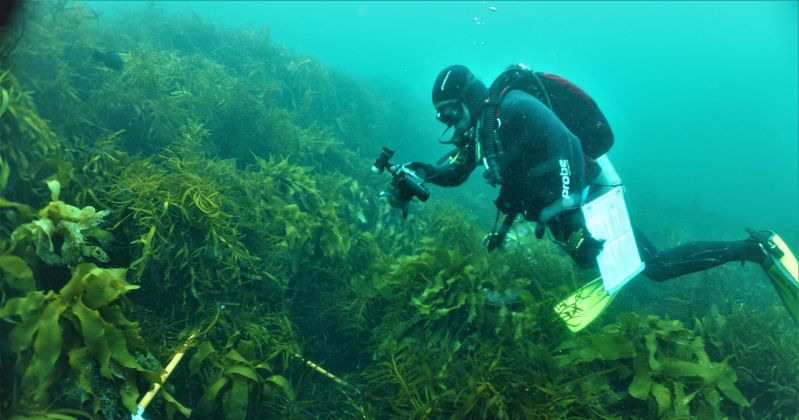
The benthic ecology team is carrying out surveys and sampling that builds on previous voyages. Dr Hill’s research – mapping the seafloor and collecting marine imagery – will also complement Australia’s Denman Marine Voyage (DMV), departing later this month.
“The importance of the mapping rapidly becomes apparent when one sees the seafloor gouges where icebergs had simply ploughed through, erasing anything that can’t get out of the way,” co-Voyage Leaders Dr Craig Stevens and Dr Denise Fernandez (NIWA) said in a recent update.
“Only a few metres apart are communities hundreds of years old, next to an area where everything is less than two years old.”
The region’s unique seafloor ecosystems are known to be closely linked to sea-ice conditions, temperatures and salinity.
The team’s methods include acoustic scanning, high-definition camera surveys, eDNA testing, precision satellite positioning and physical samples from the seafloor, sea life and water. The video is captured by NIWA’s Deep Towed Imaging System (DTIS).
“This whole system lives, and thrives, in a very narrow temperature range, so the potential for major change being caused by a warming ocean and increased meltwater is large,” the update from Dr Stevens and Dr Fernandez said.
“This unique data will help us understand where the ecosystem is at now, and where it’s headed.”
Dr Hill’s research is a collaboration between New Zealand’s National Institute of Water and Atmospheric Research (NIWA), the University of Tasmania (IMAS) and supported through ACEAS. Discover more above the voyage, including a map update and more amazing photos here: Ross Sea “ACTUATE” Voyage 2025 | NIWA
Republished with permission: Australian Centre
for Excellence in Antarctic Science (ACEAS)