


Sophia Jackson has always been passionate about Australian wildlife, but it was a small carnivorous marsupial that finally enticed her to leave her home country of the US and move to Tasmania.
Once widespread across mainland Australia, the eastern quoll is now listed as endangered and survives only in Tasmania.
Through her PhD research at the University of Tasmania, Sophia is hoping to contribute to knowledge about the quoll, and to long-term conservation efforts.
“I'm really excited about being out here because, I really love doing field ecology and being in the field so much. I really love eastern quolls,” she said
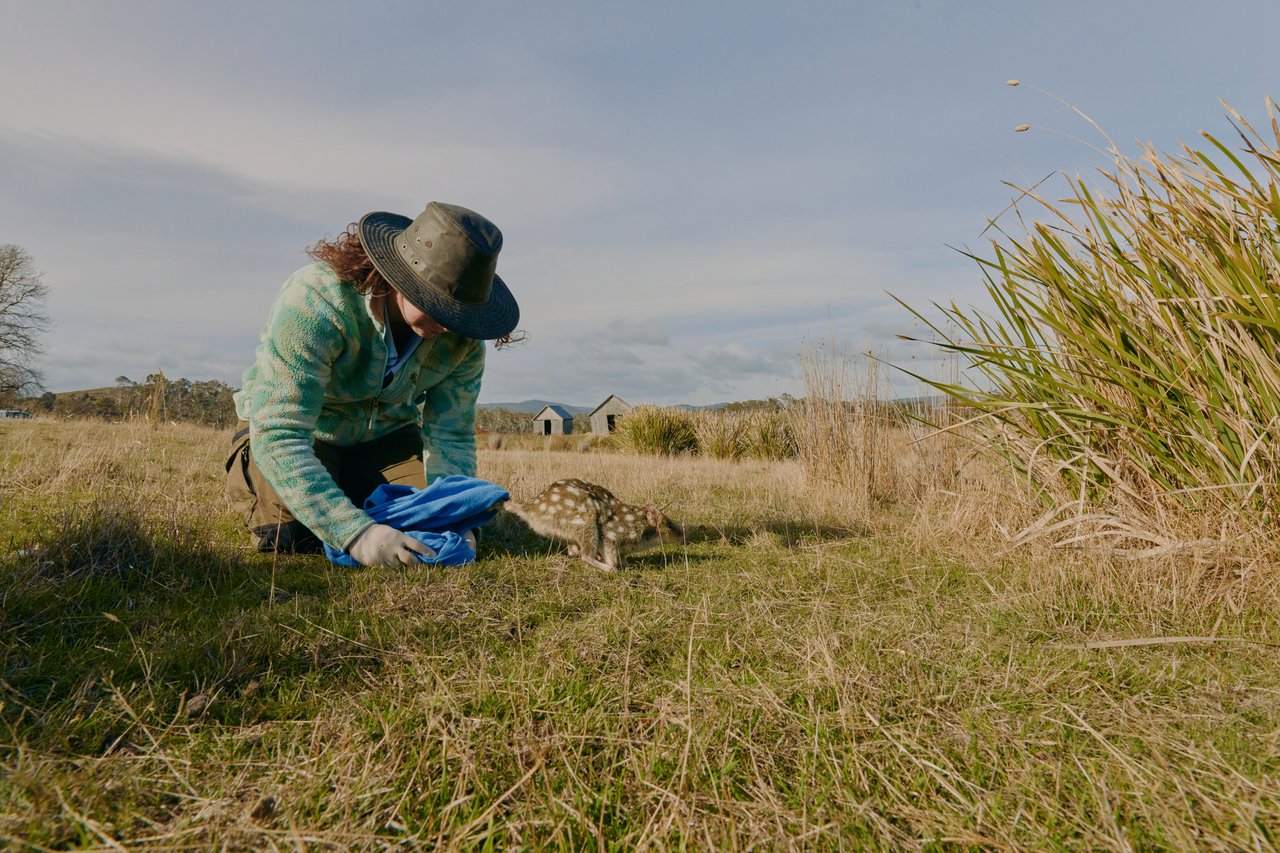
Originally from the US, Sophia moved to Tasmania specifically to pursue her undergraduate study at the University. She was lured not only by access to wild quoll populations, but by the University's enviable reputation in environmental and wildlife science.
Sophia was also impressed by the high level of support she has experienced at the University from her supervisors, and how this has allowed the project to come to life."
I have a really good team of supervisors, who have a huge amount of experience, and are just super, super supportive. And so having the supervisors that I have at the university, has really made this project possible. Having that kind of support is such a game changer," she mentions.
Sophia is also passionate about applying the learnings from her research to protect the species in other populations.
"We're partnered with the Tasmanian Quoll Conservation Program, which is a network of sanctuaries that manages the captive populations to make sure there's good genetic diversity and so that they can use their breeding facilities to supplement these kinds of conservation projects.
"By researching the extinctions and declines in our native species, we develop good, targeted, effective methods to address the conservation crises and extinctions that we're seeing."
Looking ahead, Sophia hopes her research will support a more coordinated approach to management and conservation across Tasmania, as well as potential future translocation projects. She has also received support through the Whitehead Family Honours Scholarship and the Zoology Honours Scholarship over the course of her study.
This extends to creating models of adaptive management that can be applied to declining mammals and species across the country.
“I would really like to be on these kinds of projects that are focusing on figuring out better ways to do management so that our conservation can become more effective."
Study with us. If you are ready to apply, find out more about studying Natural Sciences.