



In a major step for marine conservation, scientists have released 65 captive-raised red handfish into the wild to bolster the declining population near Hobart.
“This moment represents an incredible effort by many people over many years. We’ve given the red handfish the best possible chance of survival, and every release helps us learn more and work towards recovering the species,” said marine ecologist Dr Jemina Stuart-Smith, who co-leads the red handfish research and conservation program at the University of Tasmania’s Institute for Marine and Antarctic Studies (IMAS).
The program is principally funded by national organisation, the Foundation for Australia’s Most Endangered Species (FAME), with support from the Australian Government Department of Climate Change, Energy, the Environment and Water (DCCEEW).
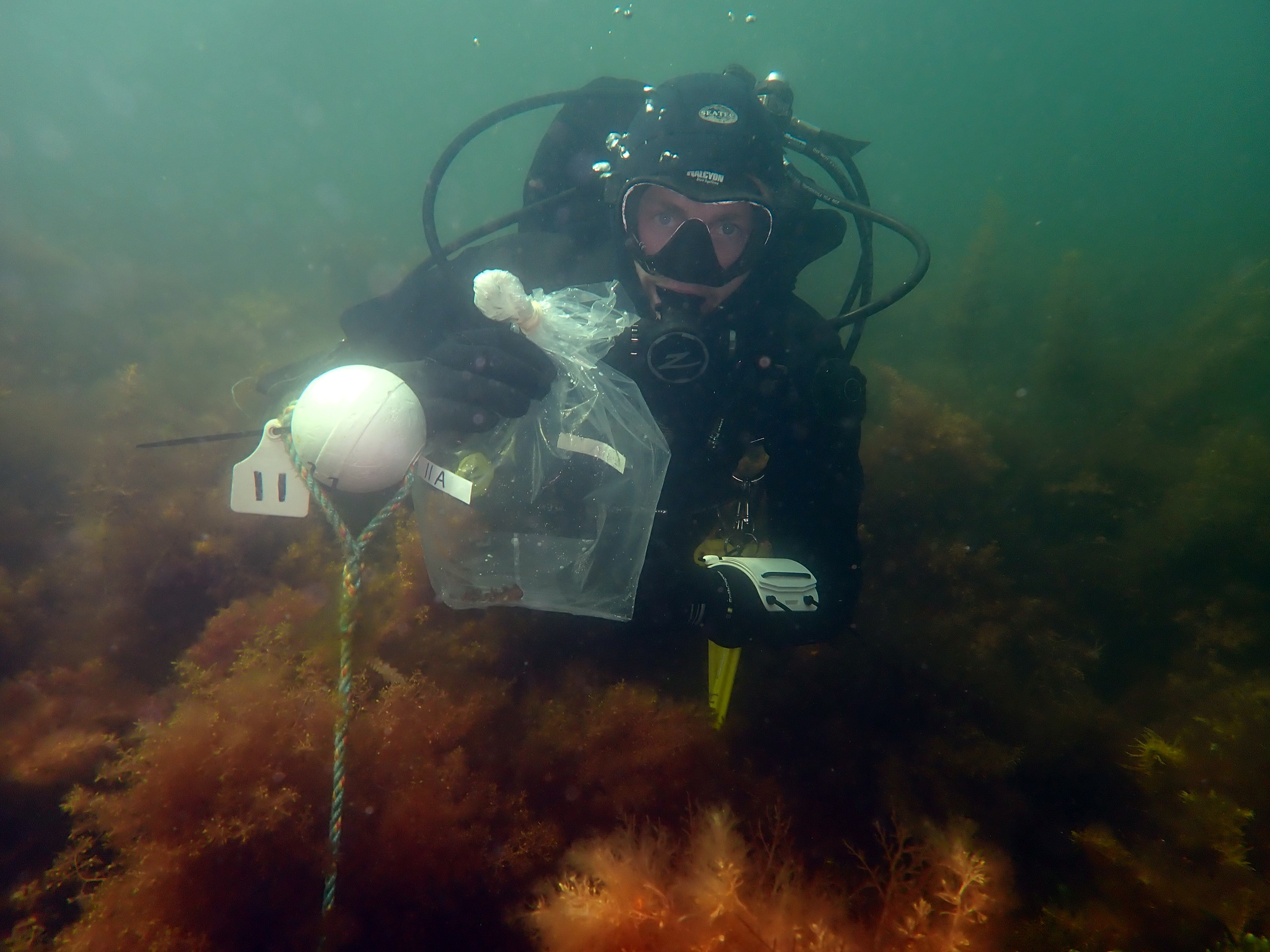
Before releasing the handfish into the wild, scientists have been working to restore their natural habitat and improve the ecological conditions for the species.
“Red handfish are facing many threats, and their extremely limited population and a severely degraded habitat has made them particularly vulnerable to extinction,” Dr Stuart-Smith said.
Associate Professor Andrew Trotter, who leads the conservation breeding program for red handfish at IMAS, said the team was happy to raise the fish in captivity, but excited to see them released to their natural habitat.
“They’re wild animals and belong in the sea,” Associate Professor Trotter said. “It’s very rewarding to see the project enter the next phase, and this is an important step towards the species recovery.”
FAME’s CEO, Tracy McNamara is delighted that their support has made this milestone possible. “This achievement is a testament to the IMAS team, whose dedication is proving that even a species as close to extinction as the red handfish can be given a future,” she said.
“It shows that when you believe in dedicated teams with expertise, great things can happen. FAME is proud to support their efforts and to back bold conservation that delivers lasting recovery for Australia’s most endangered wildlife.”
IMAS scientists will continue monitoring the red handfish in the wild, while the ongoing captive breeding program will allow the release of more individuals to wild populations in the future.
“We’re now focused on regular handfish releases to rebuild the population, combined with a suite of habitat restoration and management at red handfish sites. This approach is critical for the survival of the species and has significant benefits to other species in the area,” Dr Stuart-Smith said.
Threatened Species Commissioner, Dr Fiona Fraser, said the red handfish is one of the 110 priority species under the Australia Government’s Threatened Species Action Plan.
“This is a significant milestone towards the recovery of the Critically Endangered red handfish, and it is great to see this positive outcome from the captive rearing activities we have supported,” Dr Fraser said.
IMAS red handfish population recovery research is principally funded by the Foundation for Australia’s Most Endangered species, with support from the Australian Government Department of Climate Change, Energy, the Environment and Water and the donors who support the Handfish Conservation Project. This important work is carried out in consultation with the National Handfish Recovery Team support and co-funding provided through Department of Natural Resources and Environment Tasmania’s (NRE Tas) Threatened Species Fund, Tasmania’s Seahorse World and Sorell Council.
Fast facts:
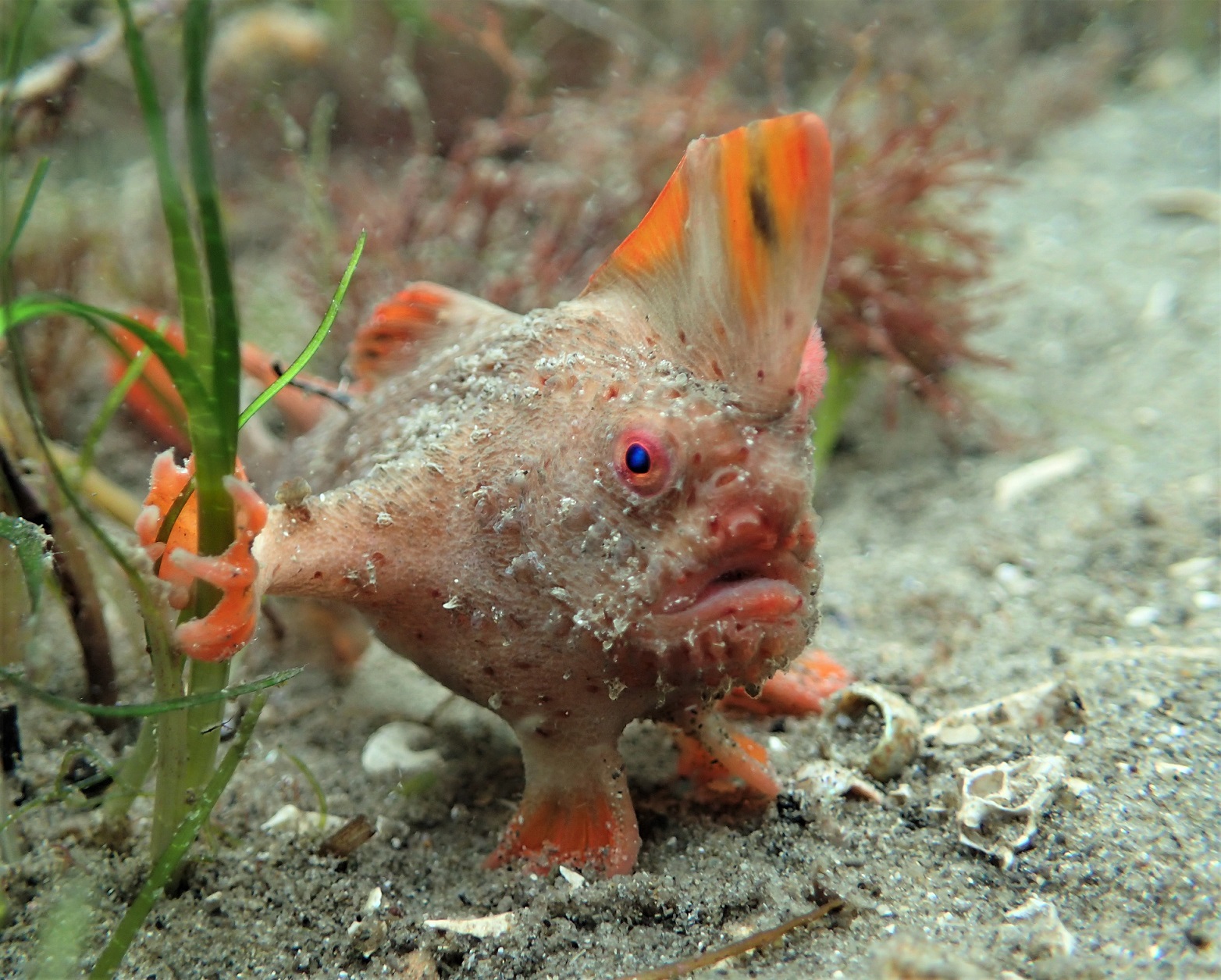
- Red handfish Thymichthys politus is a small Critically Endangered species of anglerfish, usually about 6cm long and varying in colour from bright red to light pink or brown.
- Handfish get their name from their modified pectoral fins which resemble human hands.
- The species is recognised as one of 110 priority species under the Australian Government’s Threatened Species Action Plan 2022-2032.
- There is estimated to be fewer than 250 individuals left in the wild, living in two small patches of rocky reef in Frederick Henry Bay, southeast of Hobart.
- Threats to red handfish: habitat loss and destruction from native sea urchins overgrazing seaweeds, small population size, pollution and siltation, coastal development, human disturbance (boating and diving), and climate change.
- Handfish are vulnerable to disturbance because they have small, fragmented populations (possibly low genetic diversity) due to their limited dispersal (they can’t ‘walk’ to new areas), no planktonic larval stage (young can’t drift to new areas on ocean currents) and small egg clutches requiring vigilant maternal care.
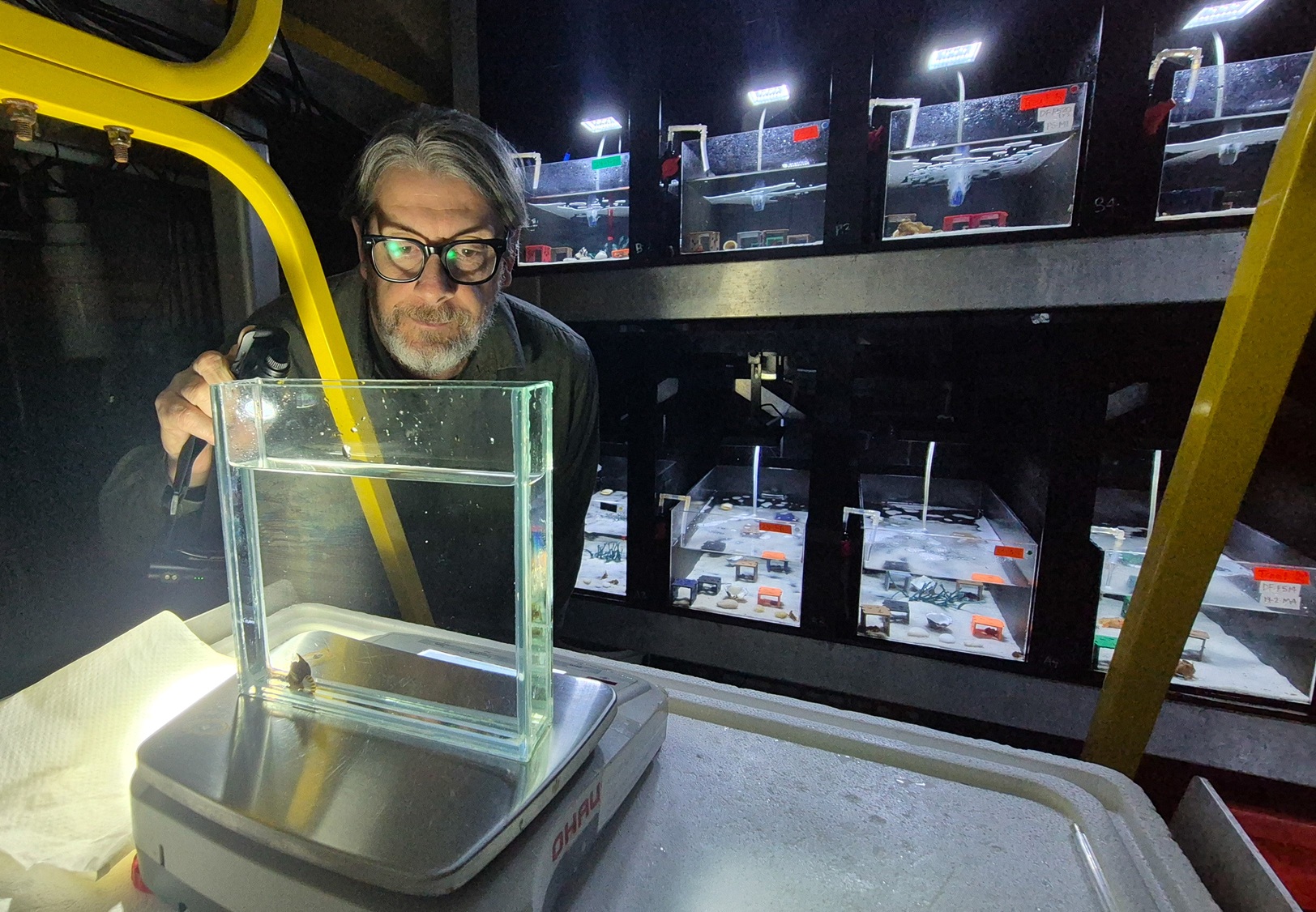
Cover image: IMAS technical officer Julia Hunter inspects and
weighs handfish before release. Credit: Jemina Stuart-Smith