

As a travel professional specialising in expedition cruises, Lauren Jenkins wanted to know more about Antarctica, beyond its remote and stunning natural beauty. Her desire to learn the science that sustains it led her to study at the University of Tasmania’s Institute for Marine and Antarctic Studies (IMAS). This is her story.
As a Polar Travel Specialist (and penguin lover), I often wondered if all the ships making ice landings and sending submarines down or breaking up the ice was okay. I’ve always believed that travel should inspire protection, not just admiration, so I wanted to make sure the people I’m sending to Antarctica are on the ships with purpose – to protect Antarctica.
When I enrolled in the Introduction to Marine and Antarctic Science unit at IMAS, I wanted to understand more than just the beauty of Antarctica. I wanted to learn the science that sustains it.
For over 20 years, I’ve worked in the travel industry, but studying at IMAS has transformed the way I view the world I help people explore.
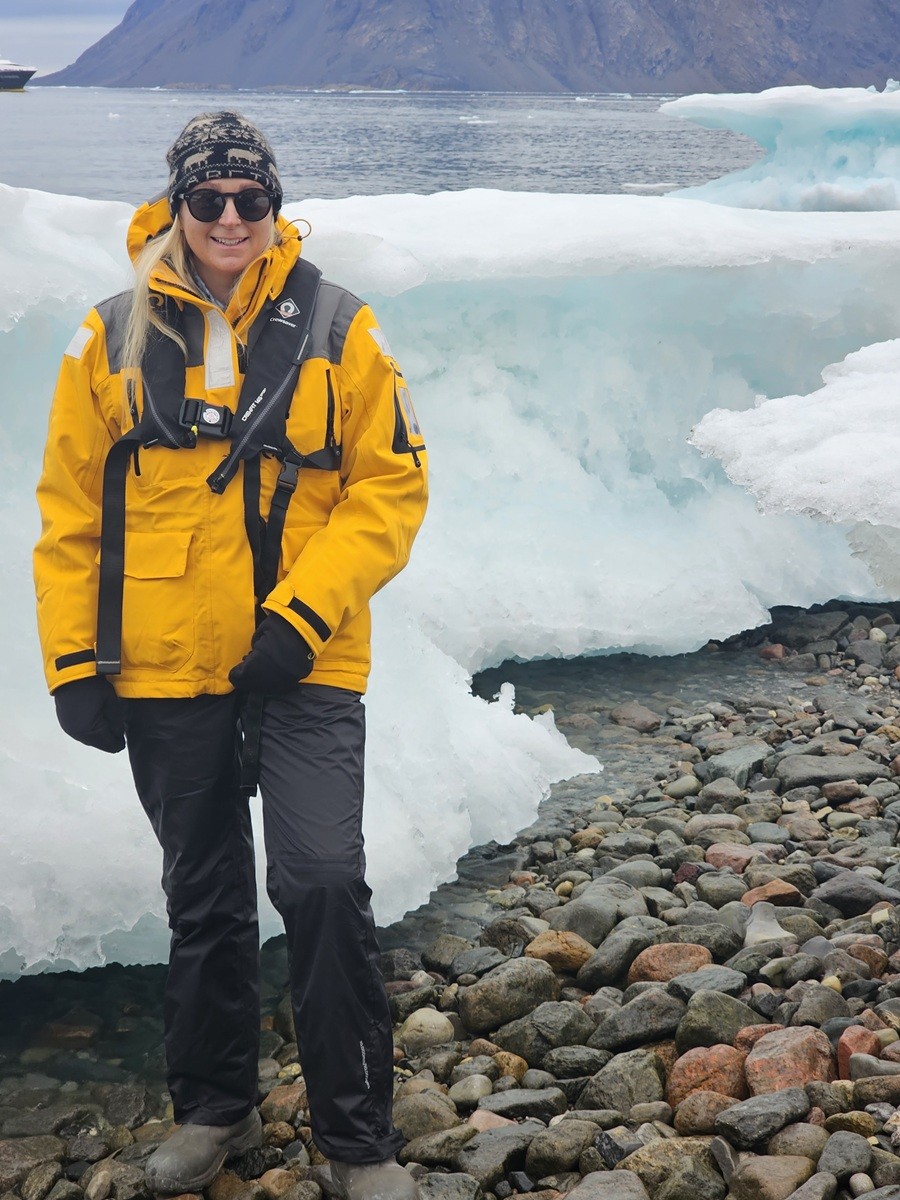
This unit has deepened my understanding of ocean systems, geology, sea-ice dynamics, ecology, and the entire processes that shape the polar ecosystems I talk about daily with my clients.
I now feel better equipped to make the right choices on ships heading down to Antarctica, and my studies have given me the confidence to merge science and tourism through my business, White Horizons Travel.
I now focus on connecting travellers, scientists and storytellers who share a respect for the polar regions. Every voyage I promote is selected with sustainability and education in mind, ensuring guests leave with a deeper appreciation of the environment and the research that protects it.
The knowledge I’ve gained has also influenced the partners I choose to work with. I now prefer to support and send clients with operators such as HX Expeditions and Lindblad Expeditions, who focus on the science and sustainable travel experiences.
For example, HXships feature onboard science centres and they’ve partnered with the University of Tasmania to offer an Antarctica Pre-Departure Course that allows guests to take a deeper dive into Antarctic science and sustainability.
Meanwhile, Lindblad Expeditions actively supports polar research by allowing scientists to use the fleet as a platform to build and foster their research endeavours – and guests can get involved in the advancement of science by participating in a variety of citizen science projects.
These alliances reflect my belief that responsible tourism can directly contribute to conservation and understanding.
My studies at IMAS have encouraged me to communicate science in ways that inspire others – from writing articles and creating client resources, to pitching educational initiatives like Science in Tourism to industry leaders.
Later this year, I’ll travel to Antarctica where I’ll combine my academic learning with firsthand experience, to bring stories of science and sustainability back to my community.
For me, the Introduction to Marine and Antarctic Science wasn’t just an academic milestone, it was the bridge between my profession and my purpose. It showed me that science and travel don’t exist in separate worlds, they work together to protect the one we share.
Because travel should inspire protection, not just admiration.
Banner image: Thinkstock Photos