


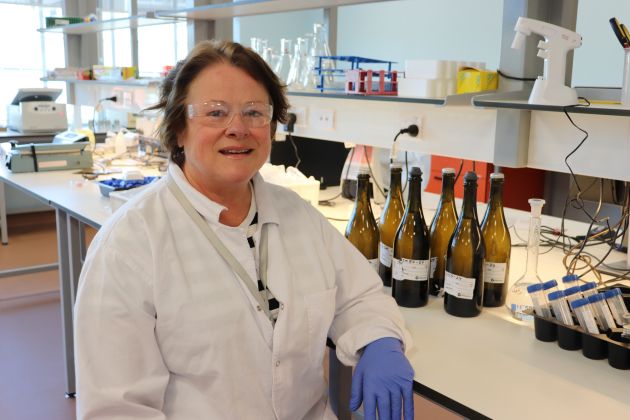

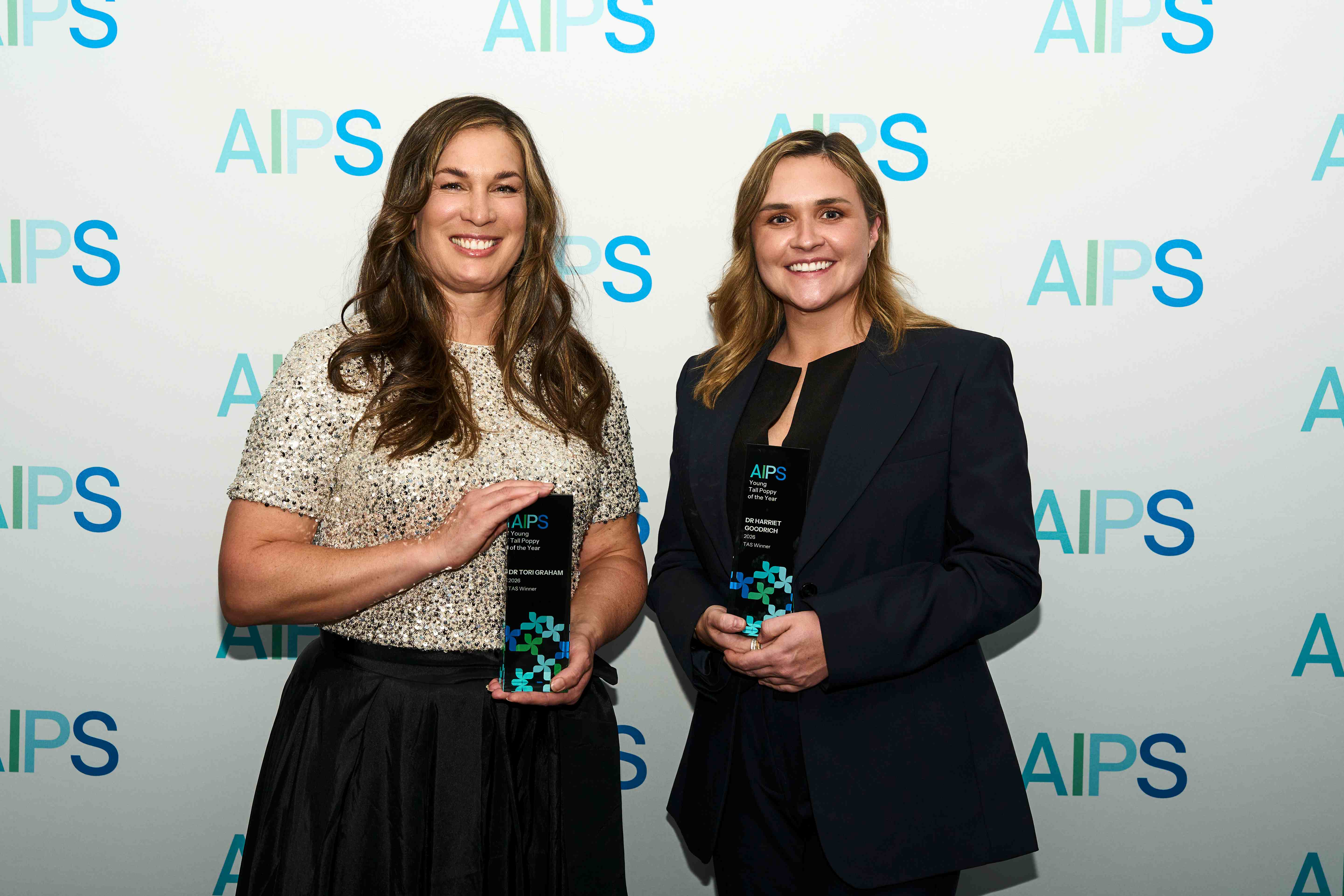
University of Tasmania researchers Dr Harriet Goodrich and Dr Tori Graham have been jointly named the 2026 Young Tall Poppies of the Year for Tasmania.
Dr Goodrich is investigating how fish respond to warming oceans and the stress of capture, while Dr Graham’s research puts people at the heart of efforts to protect biodiversity.
Their honours were announced at the Australian Institute of Policy and Science Summit Gala Dinner in Sydney on Friday, 11 September.
The pair were among five University of Tasmania researchers to receive Young Tall Poppy Science Awards this year. The awards recognise early-to-mid-career researchers who combine scientific achievement with a commitment to engaging and inspiring others.
University of Tasmania Deputy Vice-Chancellor (Research), Professor Nicole Webster, congratulated the researchers.
“We are so proud of Harriet and Tori, whose research is addressing important environmental challenges and helping communities, industries and decision-makers respond,” Professor Webster said.
“Their ability to build knowledge that can shape a better world, and to clearly and enthusiastically share their science with community and other important audiences, gives us confidence that the future of STEM is in good hands.”
Understanding how fish respond to ocean change
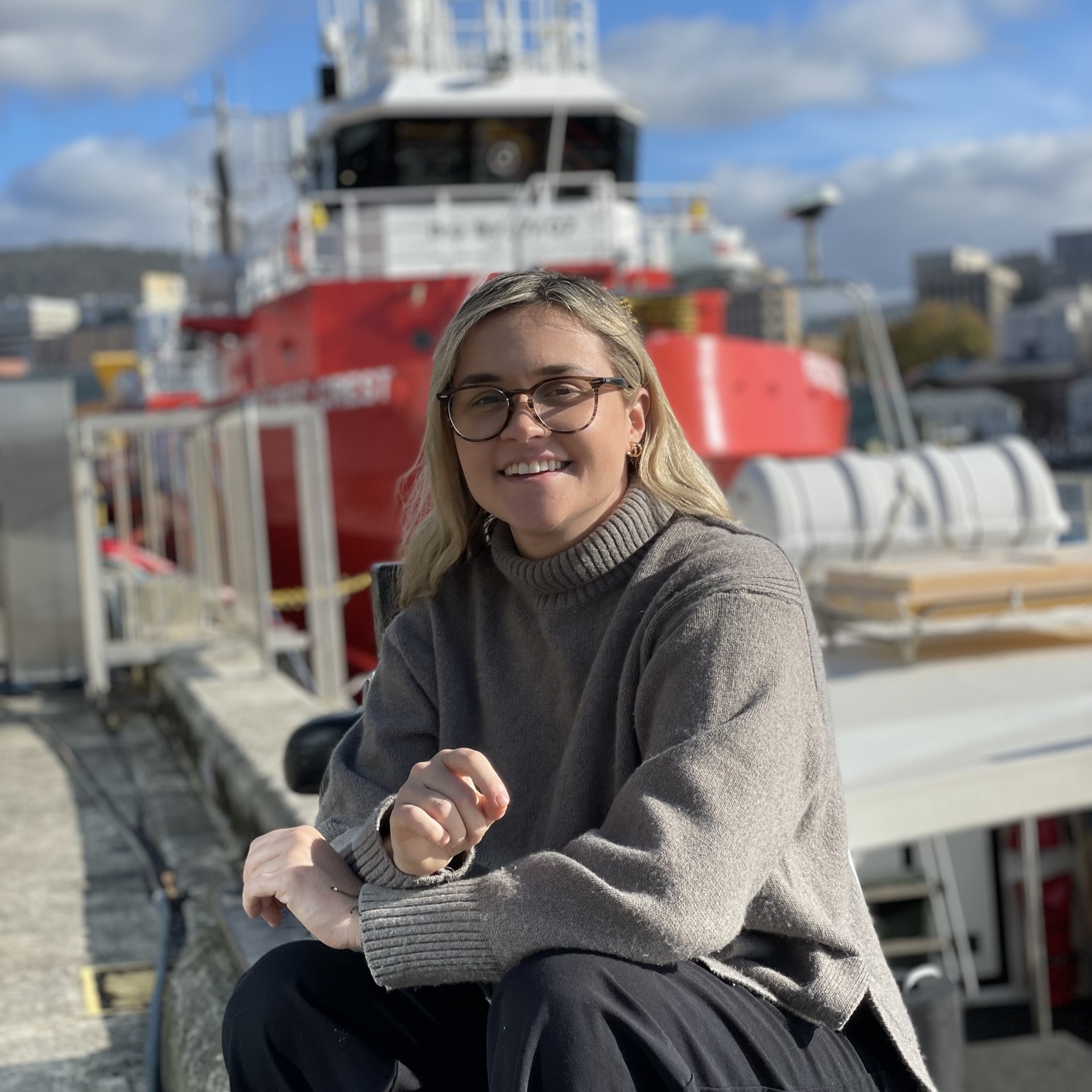
Fish physiologist Dr Goodrich, from the University of Tasmania’s Institute for Marine and Antarctic Studies, studies how fish respond to environmental change and the stress of capture.
Her research looks for signs of these responses in fish metabolism, behaviour, guts, gills, blood, tissues and genes.
This allows scientists to understand not only whether a fish has been affected by warming, low oxygen, feeding or capture, but the biological mechanisms responsible.
The findings can help identify which fish and populations are most vulnerable, predict how they may respond as conditions change and inform decisions about aquaculture, fisheries and conservation.
“I’m super excited to represent lutruwita/Tasmania through this award. It’s a huge win for fish and speaks to the value of curiosity-driven science in understanding how our natural world works, and why that understanding matters for fisheries, aquaculture and marine conservation,” Dr Goodrich said.
Putting people at the heart of conservation
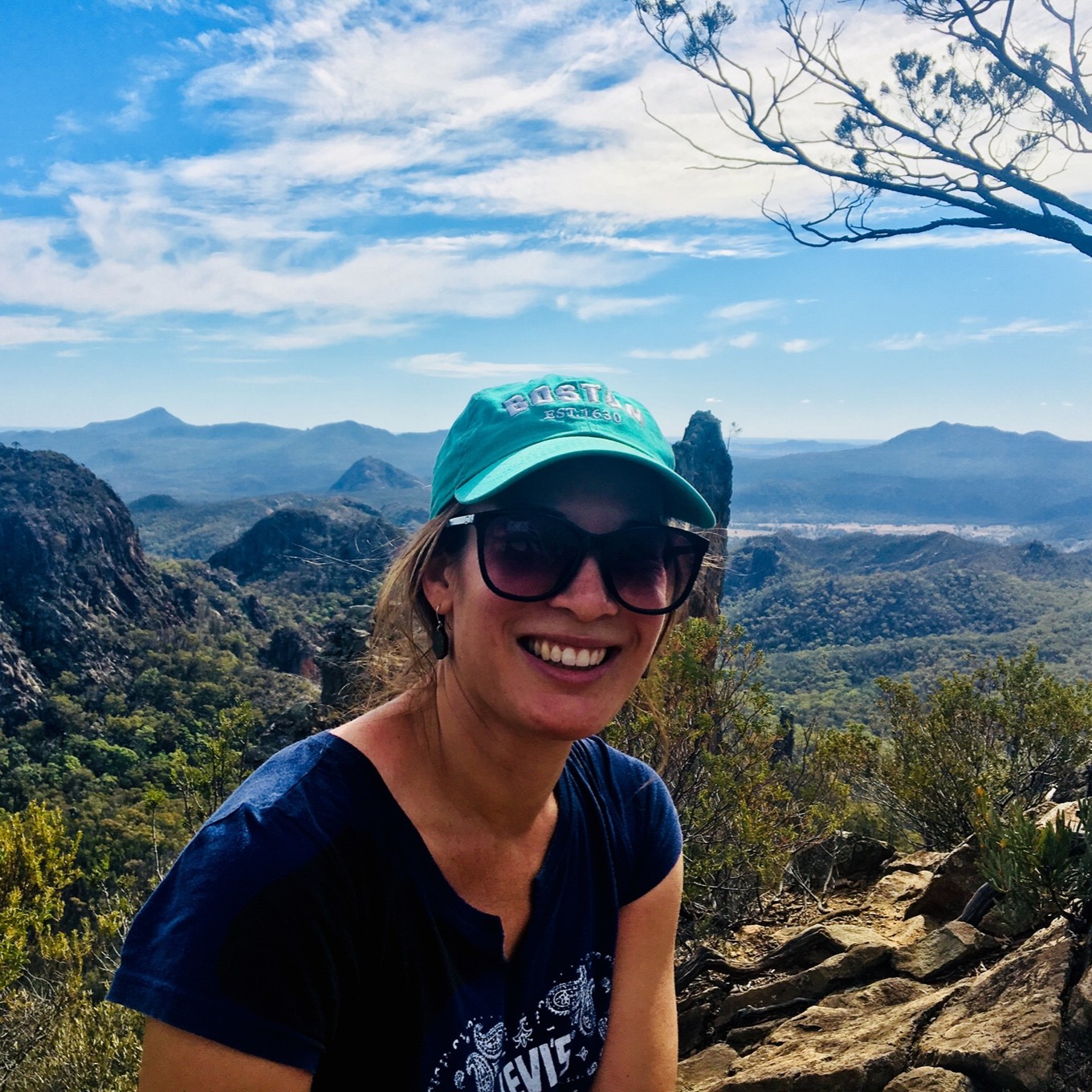
Conservation scientist Dr Graham examines how protected areas and public policy can safeguard biodiversity in a rapidly changing world.
A Postdoctoral Research Fellow in the University of Tasmania’s School of Geography, Planning and Spatial Sciences, Dr Graham brings together conservation science and economics to improve environmental outcomes.
She works with communities, Traditional Owners and governments to understand the environmental, cultural and social effects of policy and find better outcomes for people and nature.
Her research supports more inclusive, effective and community-relevant environmental management in protected areas and beyond.
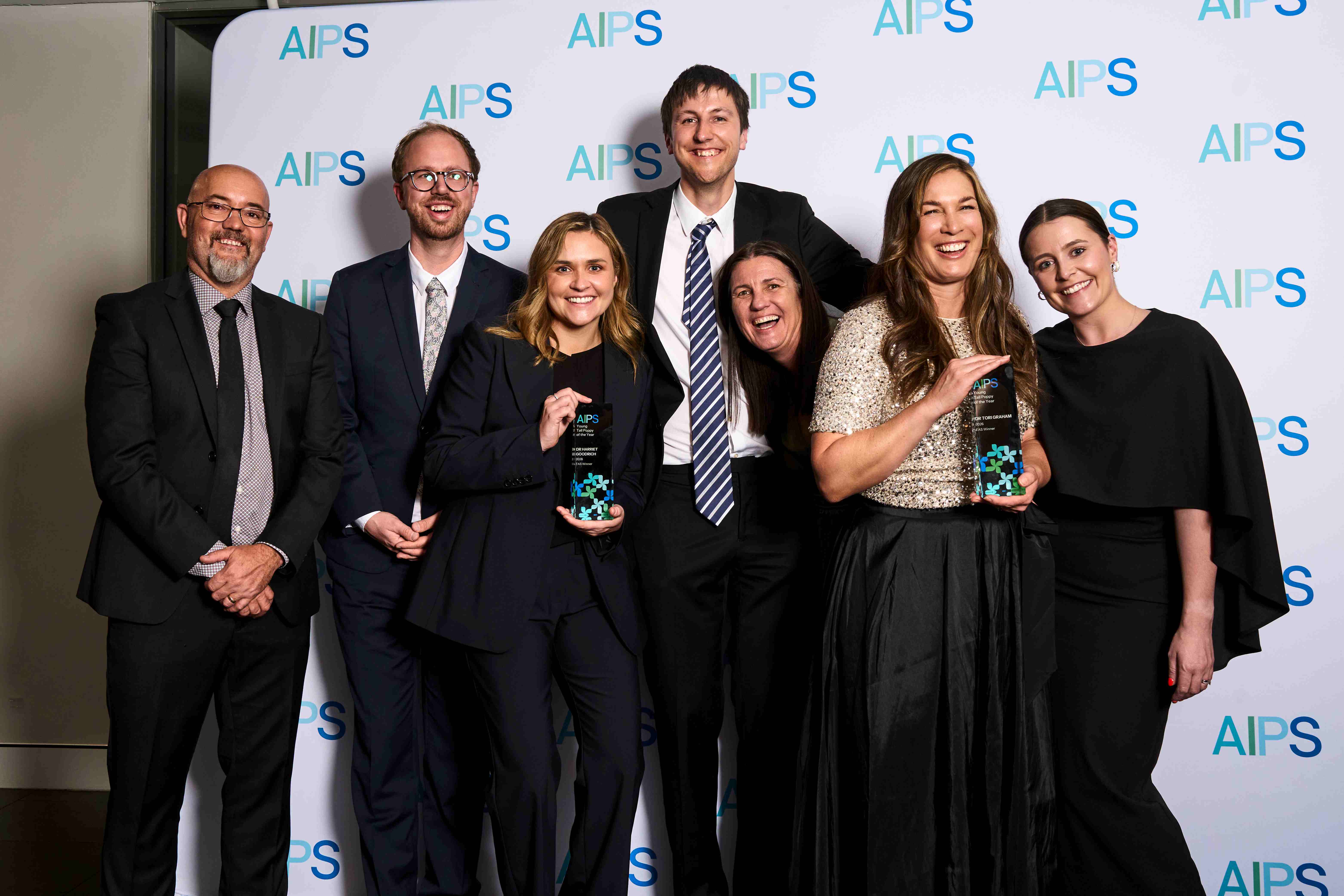
“I’m thrilled to be named Tasmania’s Young Tall Poppy of the Year. Striving to influence environmental policy has been the driving force behind my work, and it is a huge honour to have that impact recognised alongside such talented researchers doing incredibly important work,” Dr Graham said.
“I’m grateful to my mentors, colleagues, community and industry partners, and students, who are all working to safeguard Australia’s unique biodiversity.”
Dean of Research, Sciences and Engineering, Professor Erik Wapstra, said the awards recognised research with scientific and community impact.
“What stood out throughout the selection process was not only the quality of the research, but the passion these researchers have for sharing their work beyond academia,” Professor Wapstra said.
“Harriet and Tori work in very different fields, but both are asking important questions and building strong partnerships around their research.”
“They communicate complex science with clarity and purpose, and that is central to what the Young Tall Poppy awards recognise.”
The University’s other 2026 Young Tall Poppy recipients were Associate Professor Rutger de Zoete, Dr Brooklyn Fraser and Dr Owen Missen.
Created in 1998 by the Australian Institute of Policy and Science, the Young Tall Poppy Science Awards recognise outstanding early-to-mid-career researchers who combine scientific achievement with a passion for communicating science and inspiring others.
The five University recipients will take part in outreach activities with schools, communities and media as Young Tall Poppies.