

In the middle of the Southern Indian Ocean lies a vast volcanic ridge known as the Kerguelen Plateau. At its centre sits Australia’s most remote territory: Heard Island and McDonald Islands (HIMI).
This icy outpost is home to Australia’s only active volcano and its only territorial border with another country, France, via the nearby Kerguelen Islands.
HIMI is a biodiversity hotspot, supporting large populations of seals and penguins, and a unique demersal fish community with endemic species found nowhere else on Earth. In these near-freezing waters, fish have evolved antifreeze-like compounds in their blood to survive.
But HIMI has not escaped human pressures. Historical illegal, unreported and unregulated fishing (IUU), along with climate change, have left their mark. HIMI intersects shifting polar fronts and is a climate change hotspot. Ocean temperatures are rising, currents are changing, and ecological consequences are emerging that need to be understood.
Creating space to recover…
In recognition of the HIMI’s biodiversity value, parts of the area were declared a no-take marine reserve in 2002 and expanded in 2014.
In January 2025, the Australian Government significantly expanded the size of the reserve, and included both no-take and regulated activity zones. This increases protection for key ecosystems, while allowing sustainable use through a multiple-use zonation system that includes both no-take and regulated activity zones.
HIMI supports well-managed, sustainable and lucrative fisheries targeting Mackerel Icefish and the Patagonian toothfish which is highly sought after in top restaurants around the world. But the region’s remoteness, harsh conditions and ocean depth make it difficult to study how fishing and climate change affect fish communities.
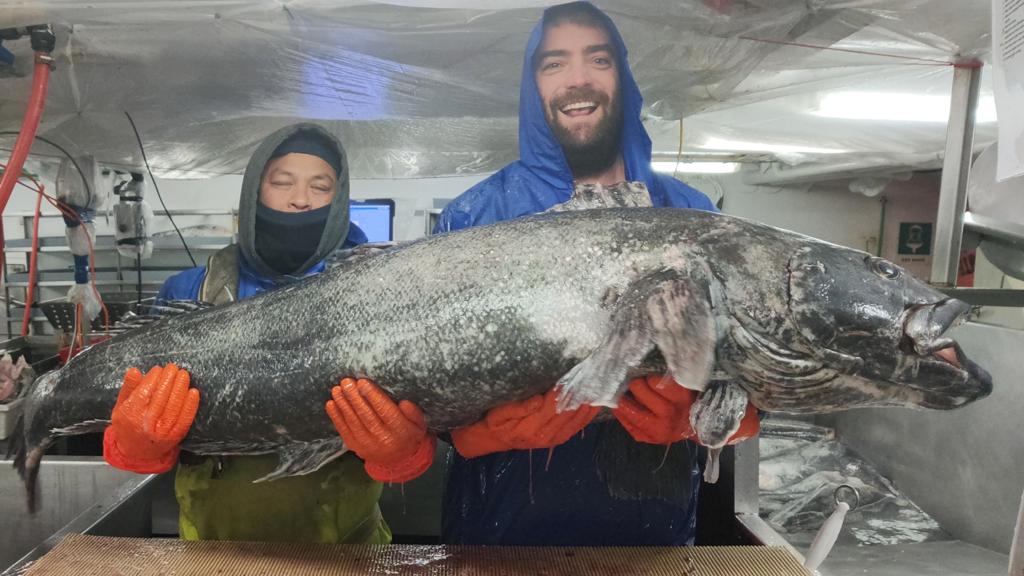
Now a new study published in Global Change Biology, led by the University of Tasmania’s Institute for Marine and Antarctic Studies (IMAS), has analysed two decades of HIMI monitoring data. This revealed that despite a changing ocean, the distribution and abundance of benthic fish species have increased in the area.
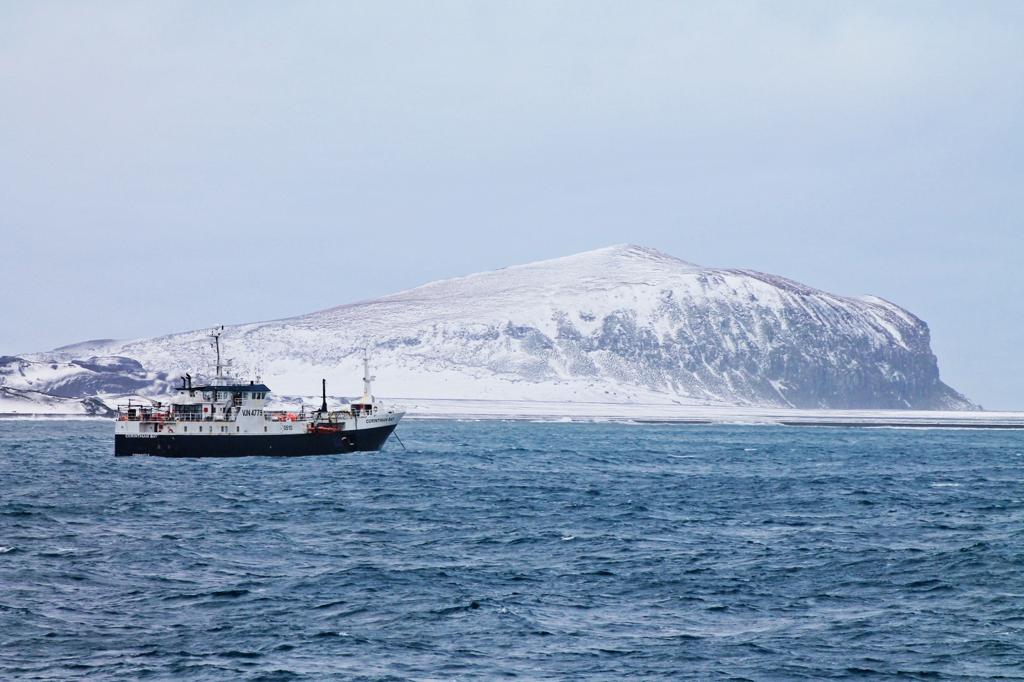
The data has been gathered since the late 1990s through an annual monitoring program called the Random Stratified Trawl Survey (RSTS). Managed by the Australian Government and led by the fishing industry, the program is designed to monitor fish stocks to improve stock assessments.
“While originally focused on commercially targeted species, we used contemporary statistical approaches to model the entire dataset. This meant we could examine how all demersal fish species respond to factors like water temperature, depth, climate and marine reserve status,” said IMAS marine ecologist and lead author, Dr Joel Williams.
“We found that benthic fish species stocks have increased, including species like Eaton’s skate, Grey rockcod, and deep-water Grenadiers which are a by-catch species of particular interest.
“Most strikingly, species richness – the number of species detected in a single sample – more than doubled. So our findings suggest it’s not all doom and gloom and that the numbers of fish species and their distribution are increasing around HIMI.”
“It’s difficult to pinpoint the exact drivers of these increases, but we believe it’s a combination of factors – removing illegal, unreported and unregulated fishing (IUU), changing fishing practices to reduce bycatch, establishing a marine reserve, and possibly climate-driven increases in ocean productivity.”
A joint effort by the Australian and French governments to increase surveillance saw IUU fishing stamped out in the early 2000s, and satellite monitoring and other technologies now help patrol the Southern Ocean.
Managing for conservation
“Although the full impact of IUU fishing is hard to quantify, the region was heavily targeted for its high-value Patagonian toothfish and large catches of species like Marbled rockcod,” Dr Williams said.
“Historically, the HIMI fishery relied on trawling, a method known for high bycatch rates and substantial impacts on benthic habitats
“In 2003, the fishing industry initiated a transition to long-line methods for catching Toothfish – and today, trawl effort in the region is minimal. This reduction would have allowed seafloor habitats to recover and helped fish communities thrive.”
The Australian Fisheries Management Authority (AFMA) oversees Southern Ocean fisheries, including HIMI, under the principles of ecosystem-based management set by the Commission for the Conservation of Antarctic Marine Living Resources (CCAMLR). Each year, AFMA sets total allowable catch limits to ensure sustainability for both target and bycatch species.
Some zones in the HIMI Marine Reserve do not allow any form of fishing or extractive activities, and this no-take status over two decades, plus removing IUU, is likely to have contributed to increases in fish across HIMI.
“There is growing evidence that changing ocean currents are also boosting primary productivity in the area, but how this relates to increases in fish abundance is unknown,” said IMAS quantitative marine ecologist and co-author, Dr Nicole Hill.
“It’s difficult to know what demersal fish populations looked like before human pressures began. So while we can’t say definitively that the community has ‘recovered’, our findings suggest current management is benefiting both biodiversity and fishery sustainability.”
The study highlights the importance of long-term monitoring programs, even in highly isolated regions of the world like Kerguelen Plateau.
“We’re currently planning future work with French colleagues, which will see this important work expanded to the entire Kerguelen Plateau,” said Dr Hill, who set up the original Kerguelen Plateau modelling project with IMAS researcher, Emeritus Professor Craig Johnson, as part of larger Australian Antarctic Science Program-funded project looking at ecological changes in the Southern Ocean.
Fast facts
- Demersal fish are fish that live and feed on or near the bottom of the ocean and can be divided into two main types: strictly benthic fish which can rest on the sea floor such as rays and flounder, and benthopelagic fish which can float in the water column just above the sea floor like Orange roughy and Patagonian toothfish.
- Kerguelen Plateau is one of the largest volcanic plateaus in the world and the largest in the Southern Ocean, and is about 3 000km to the southwest of Fremantle, Western Australia
- Marine protected areas are areas of the ocean that governments set aside and put restrictions on human activity, to avoid damage to marine ecosystems.They help conserve important marine habitats and the marine species that find refuge there.
- The Australian research vessel RV Nuyina has just return from HIMI and will be going back in December this year to conduct multidisciplinary land and sea-based research.
Banner image: Henry Wilson | AFMA