

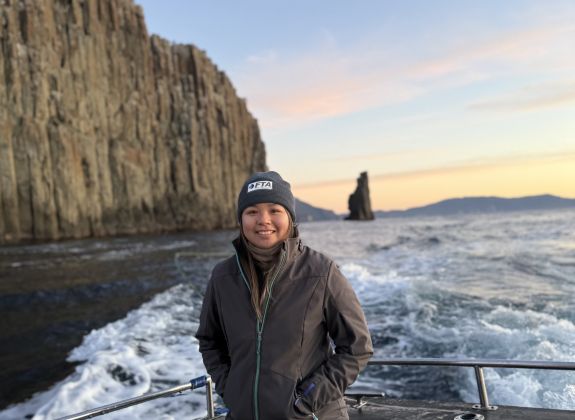


To Tran Phuong Lam Vo (Mia), there was always a reason to put study on hold. Working in her family’s restaurant in Launceston, her days were consumed by the more immediate demands of a small business, from stock deliveries, to staffing issues, and bills.
For a while, Mia wondered if she’d missed her moment. But after five gap years, she eventually said to herself “let’s do this”, and enrolled in a Bachelor of Business.
Realising she could build upon her existing skills, Mia wanted to stop relying on instinct and instead learn why things worked, or why they didn’t.
“I chose UTAS because it felt realistic and grounded,” she said. “I could see how study would fit around my life rather than replace it.
“And the Bachelor of Business made sense because I was already living business every day in our family restaurant. I just didn’t have the framework for it yet.”
Originally intending to focus on management to understand how organisations function, Mia took advantage of the course’s flexibility and decided to pursue a second major in marketing, not thinking too far ahead at the time.
But marketing ended up changing everything for Mia: she discovered a niche where she could thrive.
“It introduced me to behavioural thinking, data, and strategy in a way that really clicked,” she said.
“It wasn’t just about promotion. It was about understanding people and designing systems around how they actually behave.”
Today, she continues to support her family’s restaurant and has also secured employment as a digital marketing officer at the University of Tasmania. By learning universal theories such as consumer behaviour, pricing strategy, operations and segmentation, Mia was prepared to work across both sectors comfortably.
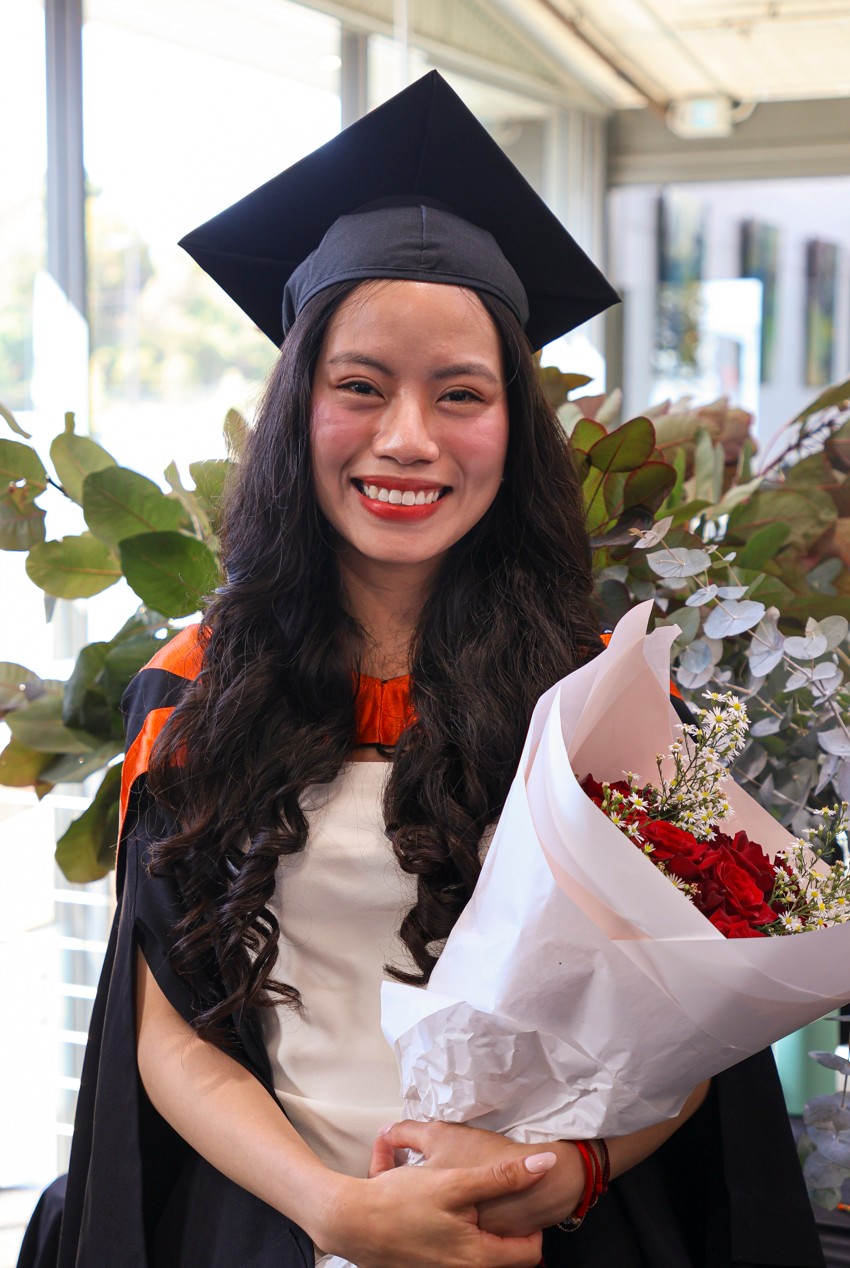
“The biggest surprise was how transferable everything is. At UTAS, I work with structured digital campaigns, budgets, analytics dashboards and long-term strategy. At our family restaurant, the environment is more hands-on and immediate. If something doesn’t work, you feel it quickly. If costs increase, you notice straight away. But the thinking behind decisions is the same.
When I analyse campaign performance at UTAS, I’m using the same principles I use when thinking about menu pricing or customer trends at the restaurant. The size of the business changes, the fundamentals do not.”
Through her studies, Mia discovered that business is often misunderstood, highlighting that it’s not just about profit or corporate offices.
“At its core, business is about making systems work better. It's about helping a small café manage costs so it can stay open. It’s about helping a regional organisation communicate more clearly. It’s about using data so decisions aren’t just based on ‘we’ve always done it this way.’ For Tasmania, that kind of thinking matters.”
With an abundance of opportunity right on Tasmania’s doorstep, Mia believes that by studying in the state, students can make a difference through capability and confidence.
“I think Tasmania is in a really exciting position. We have strong industries, close communities and a lifestyle that a lot of bigger cities are honestly trying to recreate. What makes it powerful is that it’s small enough for your contribution to matter quickly.”
“There’s something genuinely exciting about building your career somewhere you can see the ripple effect. Your network feels real. Your work feels connected. You’re not just one small piece in a huge machine.”