

Growing up as a music student in a Malaysian city, Suqi Lim would never have predicted that she would end up working in maritime logistics.
She started feeling drawn to Tasmania following a family holiday to Hobart in 2014. Initially planning to keep pursuing her studies in music, a change of circumstances in year 12 instead led her to study maritime logistics at the Australian Maritime College (AMC).
“I was drawn to how essential yet overlooked the industry is in everyday life,” she said. “For example, we all rely on mobile phones, but rarely think about the complex global supply chain behind them. That really sparked my interest, and I wanted to be part of that system.”
Suqi went on to study a Bachelor of Business. In 2019, during her second year, she applied for an internship at transport and logistics company DSV, where she gained practical experience in freight forwarding.
Unable to continue the internship due to COVID-19 constraints, she decided to make the most of her circumstances, extending her studies and completing a Bachelor of Global Logistics and Maritime Management with Honours. Three months prior to finishing her honours program, she was invited back to DSV as a part-time employee, before transitioning to full-time after graduation.
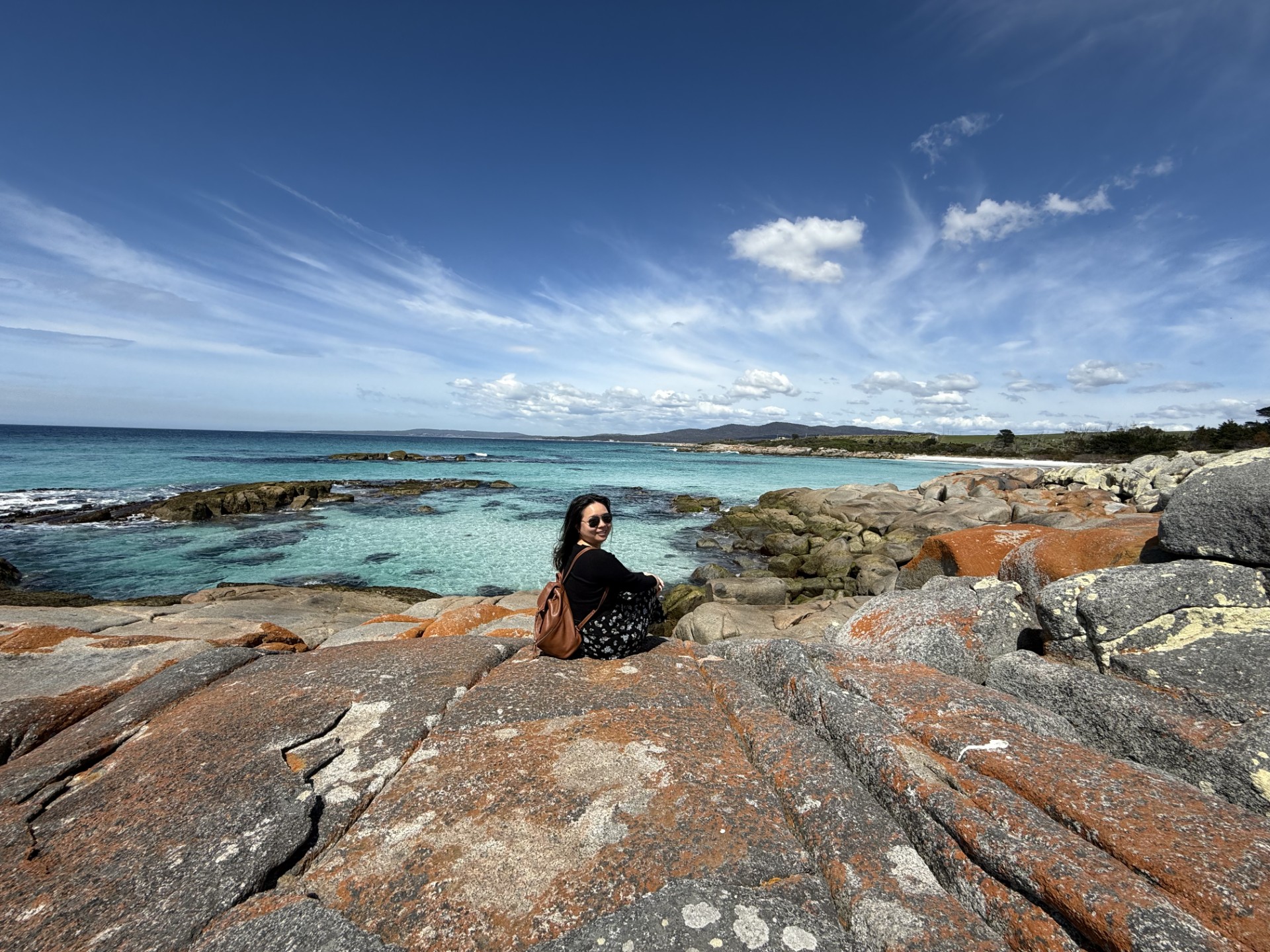
With maritime and logistics management playing an essential role in driving the global economy and facilitating international trade, Suqi sought a course that had a strong focus on preparing students to deal with a wide array of functions, from exporting and importing to port operations, supply chains, and procurement.
“My studies at AMC have helped me gain a deeper and wider understanding of the maritime industry,” Suqi said. “It has given me a strong systems perspective early in my career. I learned how ports, shipping lines, customs, and inland transport all interconnect, which helped me understand the bigger picture instead of focusing on just one task.”
She highlighted that some of the most valuable aspects of her degree – and things she has been able to apply early in her career –are systems thinking and the ability to anticipate issues across the supply chain.
“In freight forwarding, I am consistently looking at options to move products for my clients, taking into consideration the cost, speed, and reliability offered by different transport modes or companies,” she said.
“My degree has trained me to see how those elements connect, helping me identify risks early and undertake a proactive approach. This has been extremely useful especially when dealing with global disruptions, where quick and informed decisions are critical.”
With global trade being a key driver of economic growth, Suqi sees her field as being increasingly important for Tasmania, especially in strengthening its position in global trade.
“Tasmania is known for producing premium, high-quality goods, and global logistics and maritime management is key to protecting and enhancing that value in global markets.
“This discipline can support Tasmanian businesses in improving connectivity and ensuring efficient transport across the supply chain to overcome the geographical challenges.”
A career in global logistics and maritime management is one with a lot of potential, and a path Suqi highly recommends.
“Don’t be intimidated by how complex it seems at first,” she said. “Once you start working, it all begins to make sense, and it’s very rewarding to be part of an industry that keeps global trade moving.
"You’ll be surprised how many doors it can open. It’s a career with endless global opportunities.”
Interested in studying Global Logistics and Maritime Management?
Explore your options at the University of Tasmania.