



For a place not many of us get to, Antarctica has inspired more than its fair share of artistic works.
They include a bookshelf or two of poetry from writers who have visited the frozen continent, physically or imaginatively.
So how much poetry about Antarctica is out there?
“Much more than people would think,” says Professor of Antarctic Studies Elizabeth Leane.
Professor Leane has just written a chapter on the poetry of Antarctica for The Cambridge History of Australian Poetry. It’s emerged from her groundbreaking research project Creative Antarctica, the first comprehensive survey of Antarctic-themed works by Australian artists and writers.
Professor Leane’s interest in literature from the region began with a book on fiction two decades ago, and has continued ever since.
“Along the way I realised just how much poetry - and how much really good poetry - had been written about Antarctica,” she says.
Its authors have ranged from the famous - Pablo Neruda, Les Murray and Dorothy Porter among them – to those heading southwards for less artistic purposes.
“It wasn't uncommon for people travelling to Antarctica with exploring expeditions, or even whaling vessels, in the 19th and early 20th century, to try their hand at poetry, and some of these efforts were published,” Professor Leane says.
The explorer Ernest Shackleton gave a lecture to the London Poetry Society on 'Poetry in Active Life'. More recently, poets have visited Antarctica as part of various writers and artists residencies or with tourist vessels.
“One of my favourite polar poets, Elizabeth Bradfield, is also a polar tour guide,” Professor Leane says.
“But a lot of great poetry about Antarctica is written by people who have not been there.”
Arguably the first work in English that can be called Antarctic literature is Samuel Taylor Coleridge's long ballad The Rime of the Ancient Mariner, published in 1798. By the 19th century, poetry was appearing from writers who had actually travelled to - or close to - the Antarctic regions, including the Australian poet Henry Kendall. Writers also responded to the ‘heroic period’ of exploration with works like Douglas Stewart’s 1944 verse play The Fire on the Snow, about Scott’s last expedition.
“But it is really from the mid-20th century, when environmental consciousness was emerging strongly, and Antarctica was becoming better known to people, that poetry in response to the continent has flourished,” Professor Leane says.
That has come from contemporary writers such as Bill Manhire, Elizabeth Lewis Williams and Caroline Caddy, who have created whole collections of Antarctic poetry.
“One of my personal favourites is by John Russell Rowland, an Australian diplomat as well as a poet,” Professor Leane says. “Simply titled Antarctica: the poem begins: ‘Like the unconscious, it is always there / At the bottom of the world…”
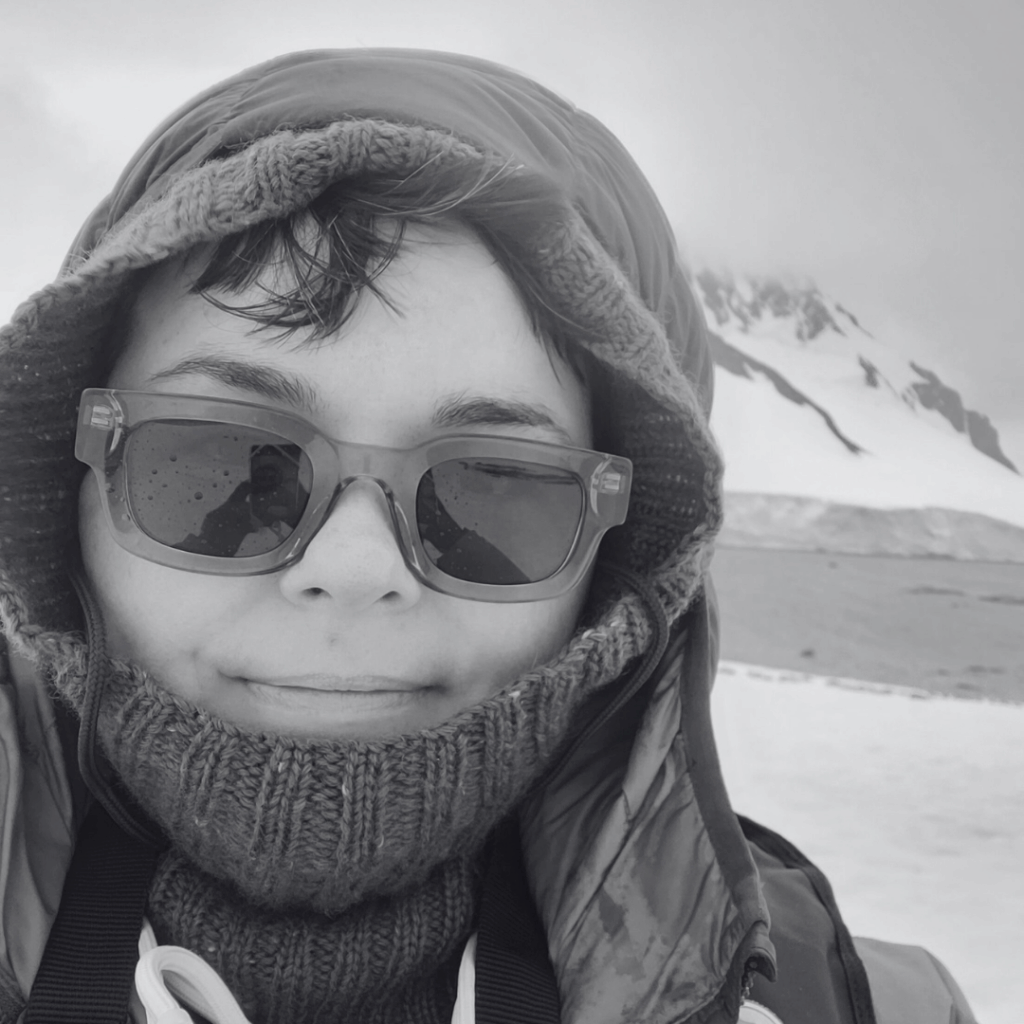
Another of those contemporary poets is University of Tasmania PhD candidate Branwell Roberts. Branwell is writing Antarctic poetry as the creative component of a PhD and recently received a National Library of Australia Scholarship.
Common themes run through these works, Professor Leane says, with poets fascinated by a continent which can seem, on the face of it, to offer little of what literature traditionally relies on.
“There are no permanent human inhabitants, for a start, and at first glance the ice plateau appears flat, white and empty, so the analogy with a blank page in a book is hard to resist,” she says.
“But the unexpected links between Antarctica and the rest of the world fascinate poets. Australian poets, in particular, often explore ancient connections through Gondwana.
“More recently, it has been difficult for poets or any writers to ignore environmental threats, such as climate change.”
Antarctic poetry deserves its own anthology that could be used in schools and universities to provoke discussion and to engage those students who learn better through artistic than scientific approaches, Professor Leane believes.
“I've used poems myself at University to get students in the Bachelor of Antarctic Studies thinking from left field.
“The beauty of poems is that they never mean just one thing, and their meaning is never settled, so they are a great way to start conversations about important issues without telling students what to think.”
Learn more about Creative Antarctica and our Creative Writing courses.