

From diving in seagrass beds to surveying popular Southern Calamari fishing areas, scientists are tracking spawning activity across Tasmania to better understand how this iconic species reproduces.
Since August, researchers from the University of Tasmania’s Institute for Marine and Antarctic Studies (IMAS) have been out in the field following spawning activity to locate southern calamari spawning grounds and monitor calamari egg mops.
“Southern Calamari, which only live for about a year, are one of Tasmania's most popular recreational and commercial fishing species,” said Dr Katerina Charitonidou, who is a research fellow at IMAS.
“The eggs being laid this season will become the fishery of next year.
“Our team is currently tracking Southern Calamari spawning activity across Tasmania to better understand when this iconic species reproduces across Tasmania and the environmental factors that influence the spawning.”
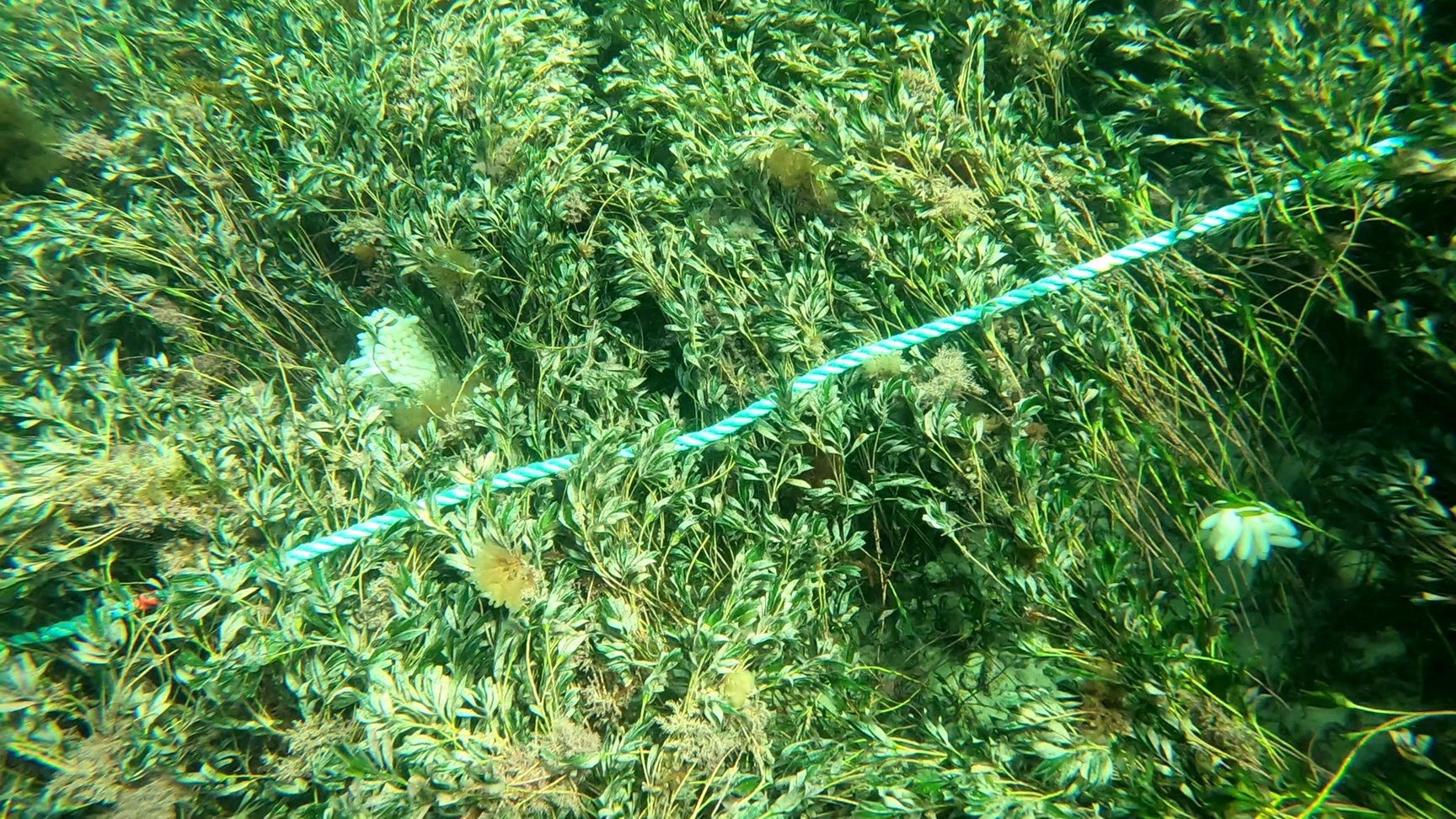
To understand what drives successful spawning, Dr Charitonidou and her team are surveying coastal waters throughout northern and southeastern Tasmania, by using tow-cameras, scuba dive surveys and biological sampling.
“By following spawning activity throughout the season and using historic data, we try to identify when peak spawning occurs,” said Dr Charitonidou.
“This information will help improve our understanding of Southern Calamari spawning dynamics and contribute to sustainable fisheries management.”
The team are also studying female calamari to better understand their reproductive cycle, helping answer important questions about how many eggs they produce, and how spawning varies across Tasmania.
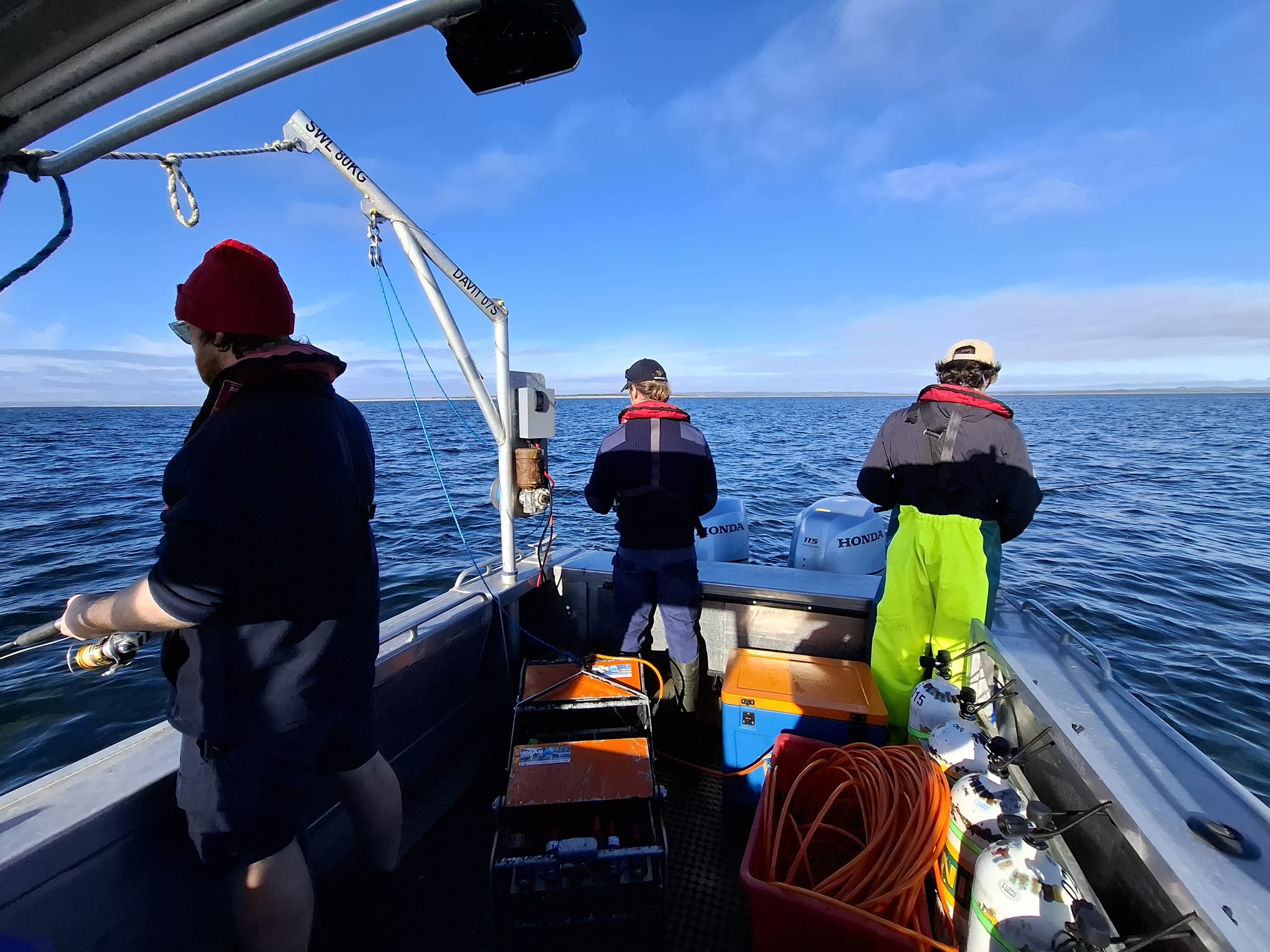
IMAS senior researcher, Dr Katie Cresswell, said the team were interested in hearing from the community who have local knowledge on Southern Calamari.
“Recreational fishers, commercial operators, and coastal communities often have decades of observations about where and when calamari gather and spawn, and where the egg mops are commonly found,” Dr Cresswell said.
“These insights can provide valuable information and help guide future research, especially in determining when the best time for a spawning closure to protect the spawning period and ensure most calamari can spawn and lay their eggs before being harvested.
“Our team would love to hear your stories, observations, and experiences with Southern Calamari around Tasmania. Local knowledge can help maximise calamari egg production, offspring recruitment and population replenishment for the following year.”
Research to improve the sustainability of Tasmania’s Southern Calamari fishery is funded by the Fisheries Research and Development Corporation (FRDC) on behalf of the Australian Government: 2024-07 Data and modelling to better understand environmental and fishery impacts on Southern Calamari stocks in Tasmania and support management decisions
Cover image: IMAS research team monitoring Southern
Calamari egg mops. Photo: William Mather