


As game fishers battle to reel in swordfish, little has been known about how these powerful predators behave during angling – until now.
A new study published in ICES Journal of Marine Science, conducted the first high-resolution analysis of swordfish behaviour during recreational angling.
“Swordfish are increasingly being targeted by recreational fisheries using deep-drop angling techniques in southeast Australia,” said Dr Ciara Willis, lead author and adjunct researcher at the University of Tasmania’s Institute for Marine and Antarctic Studies (IMAS) and a postdoctoral fellow at the Monterey Bay Aquarium Research Institute (MBARI).
“People often see the dramatic end of a swordfish fight at the boat, but until now we’ve had a limited understanding of what these fish are doing underwater during capture.
“We wanted to uncover how swordfish respond to the stress of angling and identify ways anglers might reduce stress and improve post-release survival.”
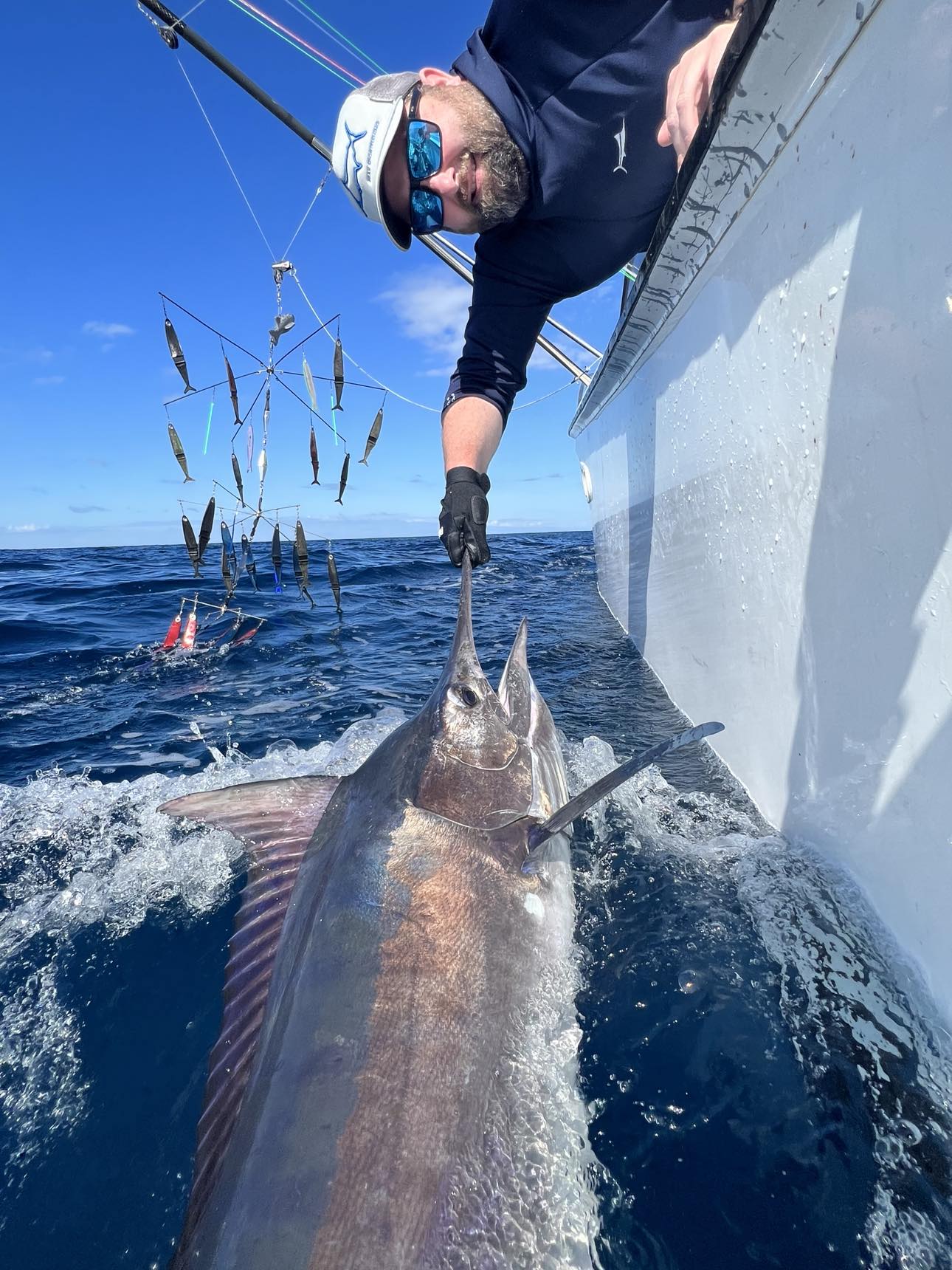
Swordfish caught in southeast Australian waters are typically large individuals and have a lot of control over their movements while engaged in ‘tug-of-war’ with anglers.
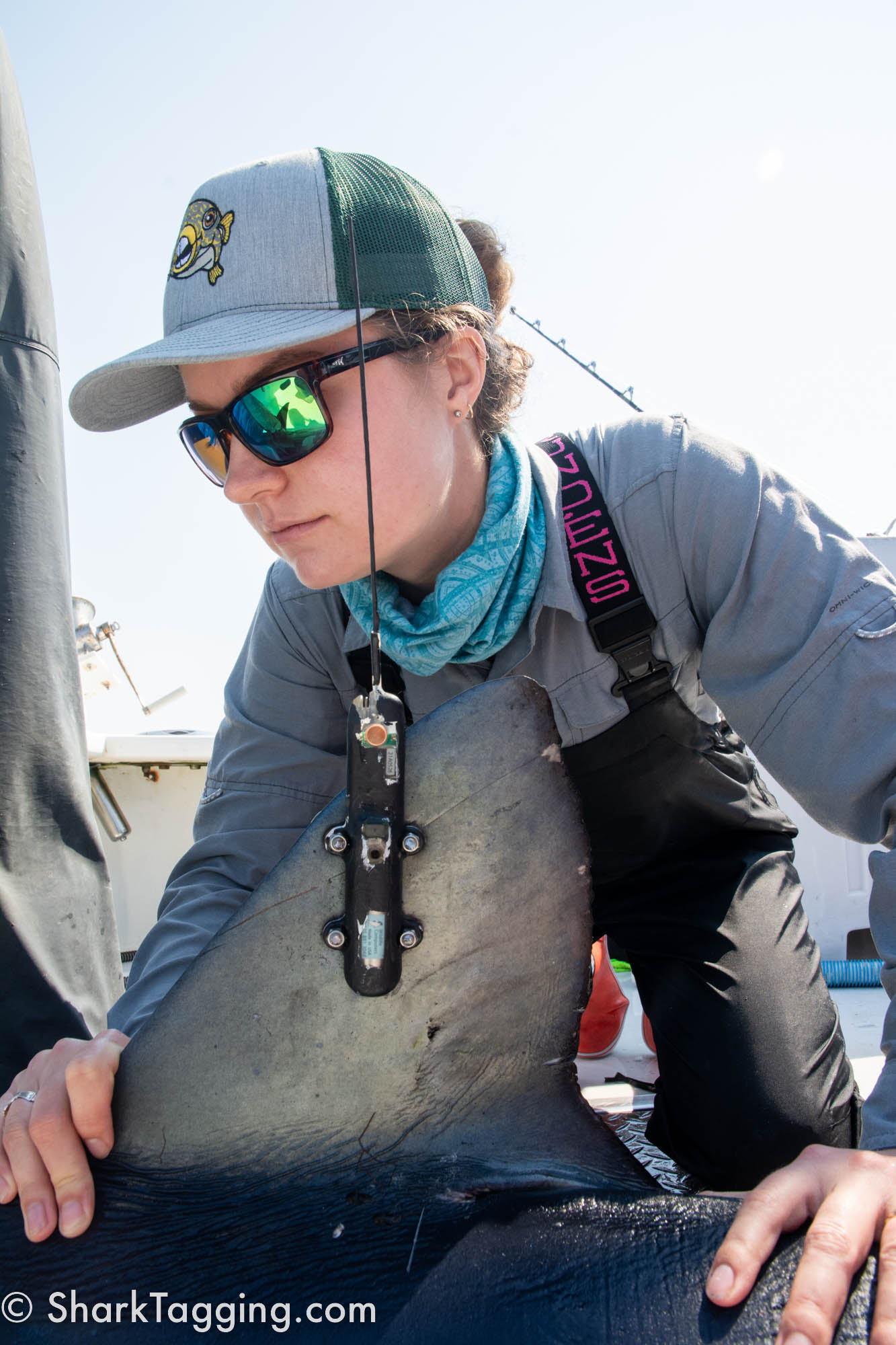
“Using bio-loggers attached to fishing gear during capture events, we found that swordfish showed remarkably consistent behavioural responses after being hooked,” said Dr Willis.
“Fish repeatedly ascended from the deep ocean and positioned themselves around thermal boundaries in the upper water column, suggesting temperature may play an important role in how swordfish cope with the physiological demands of prolonged fights with anglers.”
The study found swordfish exhibited a consistent sequence during capture events, including interacting with bait, rapidly ascending from depths of 400 to 500 metres to the upper water column above the thermocline (the boundary between cold depths and warm surface waters), entering an extended fight and then ultimately either being landed or escaping.
“A fight between swordfish and angler can last for hours – up to eight hours in this study,” Dr Willis said.
“What happens during that fight is going to influence the survival of swordfish in catch-and-release fisheries, and very likely the quality of meat for those taking fish home to the freezer.
“By looking beneath the surface to the fish’s view of the fight, we gain new insight into fight mechanics, exhaustion, and potential opportunities to reduce fight duration in recreational fisheries targeting this large pelagic predator.”
Co-author and director of Fisheries and Aquaculture at IMAS, Professor Sean Tracey, said the findings could help improve recreational fishing practices.
“Our results suggest that reducing fight duration could help minimise physiological stress associated with capture and improve the likelihood of post-release survival in recreational swordfish fisheries,” Professor Tracey said.
“In particular, there may be a sweet spot for anglers right after swordfish ascend to surface waters, when their muscles are still cold from being at depth.
“Retrieval efforts during this window may be more effective than when the fish have warmed up, allowing anglers to land fish quickly without fighting them to exhaustion.”
Research to understand thermocline-associated habitat use and fight dynamics of swordfish during recreational angling events is funded by Fisheries Research and Development Corporation (FRDC) on behalf of the Australian Government: 2015-022 Understanding the movement, behaviour and post-release survival rates of Swordfish to sustainably develop a new large pelagic game fishery off the coast of Tasmania – a pilot study.
Cover photo by Michael Worden on Unsplash