

Having grown-up in the 1950s and 60s in a large working-class family on Tasmania’s North-West Coast, Garth Whitehead was aware that few had the opportunity of a university degree. In fact, it was not even on most people’s radar.
“The main problem facing most families was that of available cash, and a trade was considered a healthy step up for the future,” Garth said.
However, as he set out to Europe as a backpacker in 1970, and made Singapore his home three years later, it became increasingly clear to the Tasmanian-born businessman that jobs and career paths were reserved for those with higher education. He believes that, in most cases, that remains the same today.
Garth said that the closure of major industries on the North-West Coast, and indeed in much of Tasmania, highlighted the difficulty for working class families to afford university and higher education, and laid the foundation for their scholarship support.
Through a family trust, Garth established the Whitehead Family West North-West Scholarship, which has benefited 22 undergraduate students from the West Coast and North-West of Tasmania, including King Island.
“It is our hope that the participating students will use their higher education to give support to the North-West Coast and Tasmania in general and provide skills to local industries.”
Garth Whitehead
In addition, the trust has supported 15 honours students through the Whitehead Family Honours Scholarship. Recipients are encouraged to complete their research on site at the family’s Highland Conservation agricultural properties at either Gunns Plains in North-West Tasmania or Cockatoo Hills in Tasmania’s Central Highlands.
“Our family trust is keen to engage honours students in the appropriate fields to take advantage of our highland properties to enhance their knowledge of that unique environment,” Garth said.
Current honours student Jamil Kay conducts field work on the Cockatoo Hills property where he studies the relationships between trees and the types of fungi associated with tree roots, called mycorrhizal fungi.
The fungi are essential for many plant functions, including nutrient acquisition.
“It’s a symbiotic relationship – the fungi provide nutrients to eucalypt species, and the eucalypts provide sugars from photosynthesis to fungal species. It’s a trade,” Jamil said.
Jamil adds that it’s valuable to have access to a conservation property because researchers need to have a baseline understanding of fungal communities before any disruption from invasion by non-native species such as pines.
Pinus radiata trees bring non-native mycorrhizal fungi, which could be a problem for other plant species, altering their growth rate or survival which can then have an impact on wider ecosystem processes.
Alongside income support, the scholarship has provided important research funding, which has enabled Jamil to purchase research equipment. He hopes to travel to a mainland conference to share knowledge and build on what we know.
The list of other research projects the trust has been able to support to date is impressive.
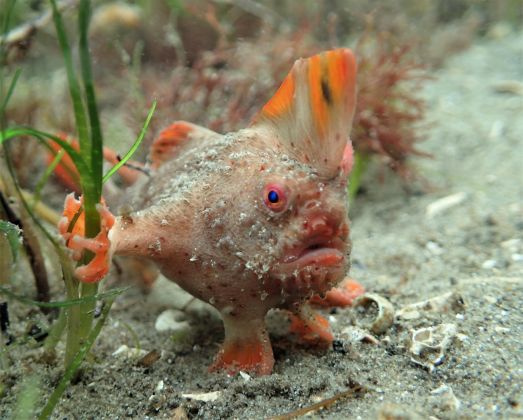
Garth says the family trust has been fortunate in being able to participate in some of the environmental and wildlife issues facing Tasmania, especially the Tasmanian devil program and the wombat mange eradication attempts.
“One highlight has been the participation in the reintroduction of the forester kangaroo to one of our Highland Conservation properties, along with cider gums and certain threatened native grass species,” he said. The kangaroo release was endorsed by the Department of Natural Resources and Environment Tasmania.
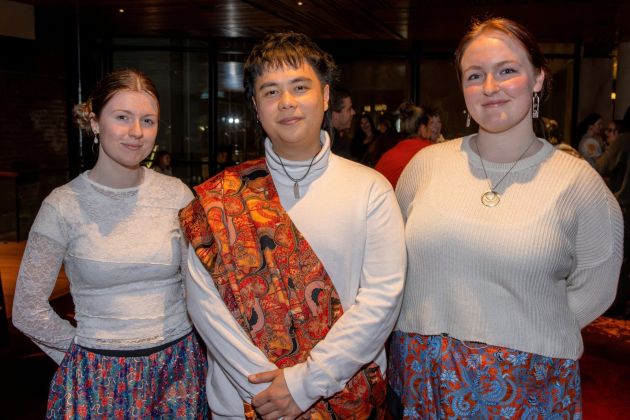
The family trust has also hosted undergraduate studies and the annual First Nation college student ‘Rosny Mob’ trip to Cockatoo Hills.
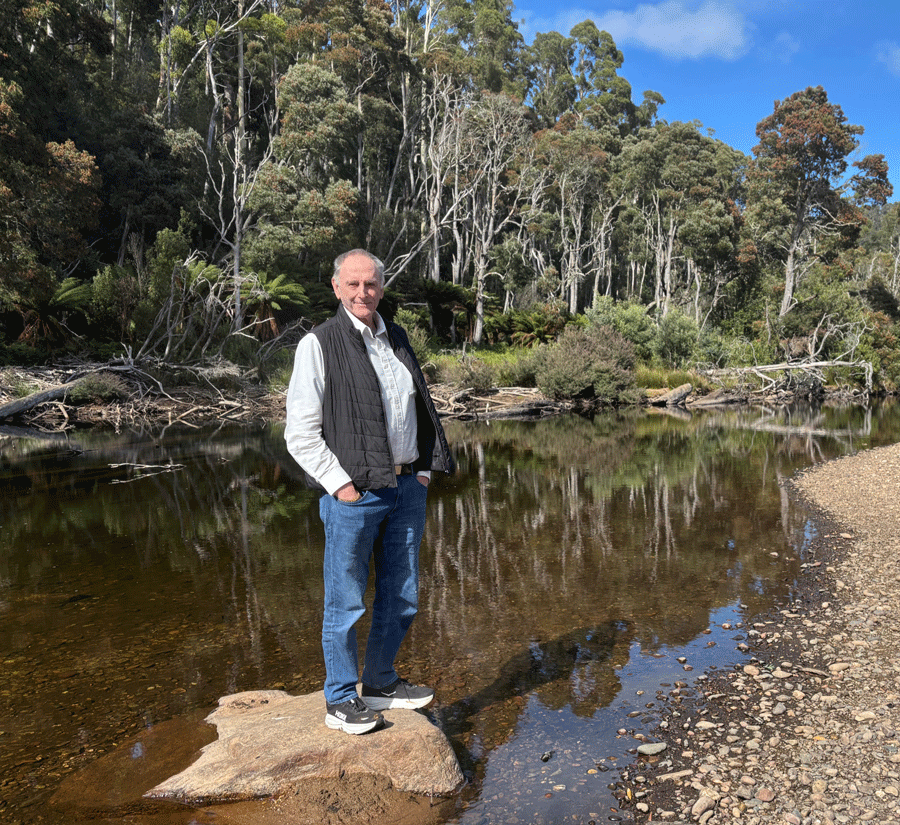
For Garth, coming from Tasmania is a positive part of his family’s story. The rugged environment, serene beauty, excellent food and the Tasmanian people – with their community spirit, general sense of humour and appreciation of life – have all left a strong sense of belonging to the State.
“I have been fortunate to meet many people in Asia who have studied in Tasmania, and indeed Australia,” he said. “It has provided an immediate pathway to conversation, friendships and business networking. It is important for our own population to participate in this education and its benefits.”