


A sheep grazing trial in Northern Tasmania has found that pasture growth can be improved using a regenerative agriculture practice known as cell grazing. The findings were shared at a field day at Evandale on 13 November.
Funded by the Australian Government Future Drought Fund Long-Term Trials Program the Tasmanian Institute of Agriculture (TIA) is half-way through a four-year sheep grazing trial to examine the impact of regenerative grazing on pasture growth and recovery, soil carbon, greenhouse gas emissions and long-term profitability.
A high-density regenerative grazing trial with Merino sheep at Evandale produced nearly double the amount of pasture as conventional grazing, with 900 kilograms of dry matter pasture per hectare.
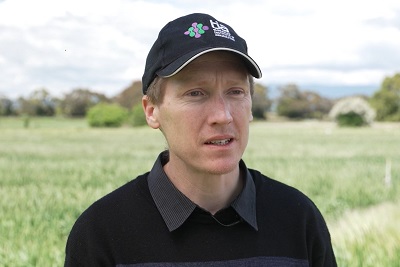
“Regenerative grazing, which is conducted at higher intensities but for short durations and with longer spelling periods than conventional grazing, produced almost twice as much pasture as conventional grazing, with the best results achieved when paddocks were rested for five to six months between grazing,” TIA Professor Matthew Harrison said.
“Results so far indicate regenerative grazing allows more grass to grow, providing more potential feed for livestock without relying on extra fertiliser or irrigation.
“Pasture growth increased significantly compared to conventional grazing where animals are kept in the paddock for long periods and the pasture doesn’t get time to recover.”
An extended spelling regenerative grazing system with a 12-month rest period also outperformed conventional grazing.
Preliminary data also suggests the soil under the rested regenerative paddock stayed more biologically active through the dry summer and autumn, which could have positive implications for greenhouse gas emissions and carbon storage.
Professor Harrison said the project aims to develop farming systems that increase the capacity of farmers to prepare for and respond to drought, extreme weather events and long-term climate change.
The purpose of the trial is to test whether regenerative agriculture improves drought resilience through improvements to pasture recovery and overall production.
The study has also investigated whether drone technology can improve the timeliness of grazing management. Drones have been used to measure pasture growth before and after grazing, showing how much feed livestock had eaten and identifying areas of strong and poor pasture growth.
“This approach can provide information that would normally take a full day of cutting and weighing pasture by hand, saving time and helping farmers better understand their paddocks,” Professor Harrison said.
“Drone imagery is also much more comprehensive than pasture biomass cuts, and can take the guesswork out of feed budgeting.”
Preliminary results have also revealed that soil carbon increased by about 2.9 tonnes per hectare each year. Under conventional stocking it decreased by about 0.9 tonnes per hectare each year. However, soil carbon takes many years to change, so these results can only be viewed as early indications of a longer-term trend.
TIA hosted a field demonstration at the trial site to share the findings so far with Tasmanian farmers and industry. More than 50 people attended.
The field demonstration highlighted alternative grazing systems, and included a project overview, panel discussion, Q&A session and a workshop.
The program is being supported by the University of Melbourne and Charles Sturt University.