

Overview (2027)

Key Information


Duration
Minimum 2 years, up to a maximum of 5 years.


Location
 CRICOS: 106222E
Duration
Minimum 2 years, up to a maximum of 5 years.
Location
Protected areas cover more than 15% of global land, 20% of Australia, and 40% of Tasmania. Effectively managing these landscapes is critical to achieving global conservation and sustainable development goals.
In this course, you will build the knowledge and practical skills needed to work in protected area governance, planning and management. You will explore how protected areas are managed across government, private and community settings, and learn to address complex conservation challenges across terrestrial, freshwater and marine environments.
You will graduate with the skills to plan, manage and lead conservation initiatives across diverse landscapes, with capabilities aligned to international standards recognised by the IUCN World Commission on Protected Areas.
Tasmania offers a unique living laboratory for this work. Within close reach of campus, you can access diverse environments including marine, coastal, wetland, forest and alpine ecosystems. You will learn from internationally recognised experts while studying in one of the most protected and ecologically significant regions in the world.
Double degree
The Bachelor of Natural Environments and Conservation can be taken as a vertical double degree with the Master of Protected Area Conservation. This option provides a clear four year pathway to completing both an undergraduate and postgraduate qualification, building strong scientific knowledge alongside advanced skills to manage and conserve natural places. For information, please see the Bachelor of Natural Environments and Conservation.
- 1 Synthesise theory and contemporary knowledge in protected areas and wider conservation fields to define problems and solutions.
- 2 Develop solutions to a range of complex conservation problems by applying data collection and analysis techniques.
- 3 Manage the design, documentation and resourcing of solutions in diverse conservation workplaces.
- 4 Develop and justify your own positions on conservation across landscapes and within protected areas.
There is practical experience through fieldwork and real-world activities in Tasmania’s unique environments. You will learn in world-leading protected areas, many located within 15 minutes of our Hobart campus. For those studying remotely, online resources and intensive units provide opportunities to visit and take part in key on-ground experiences.
Field-based learning is embedded throughout the course, allowing you to apply governance, planning and management skills directly in natural environments.
Our strong relationships with industry partners support a range of real-world projects and activities. These partners include eco-tourism operators, non-government organisations and government agencies.
You will explore Tasmania’s wilderness by boat, foot and bike, gaining insight from industry professionals and building practical skills across conservation and planning contexts.
This course integrates work experience in several ways.
In your final year, you will complete a professional placement unit (KGA709 Professional Placement), working with conservation organisations to address real-world challenges. You may contribute to activities such as collecting, organising and analysing data on threatened species.
Experiential learning is embedded across core units, giving you hands-on experience in governance, planning and management in real-world environments.
You will also develop technical skills in industry-relevant tools such as Marxan for reserve design and open standards for management planning, helping you graduate with practical, job-ready capabilities.
A choice of elective units allows you to tailor your studies and build expertise in areas such as marine conservation or ecotourism.
Career outcomes
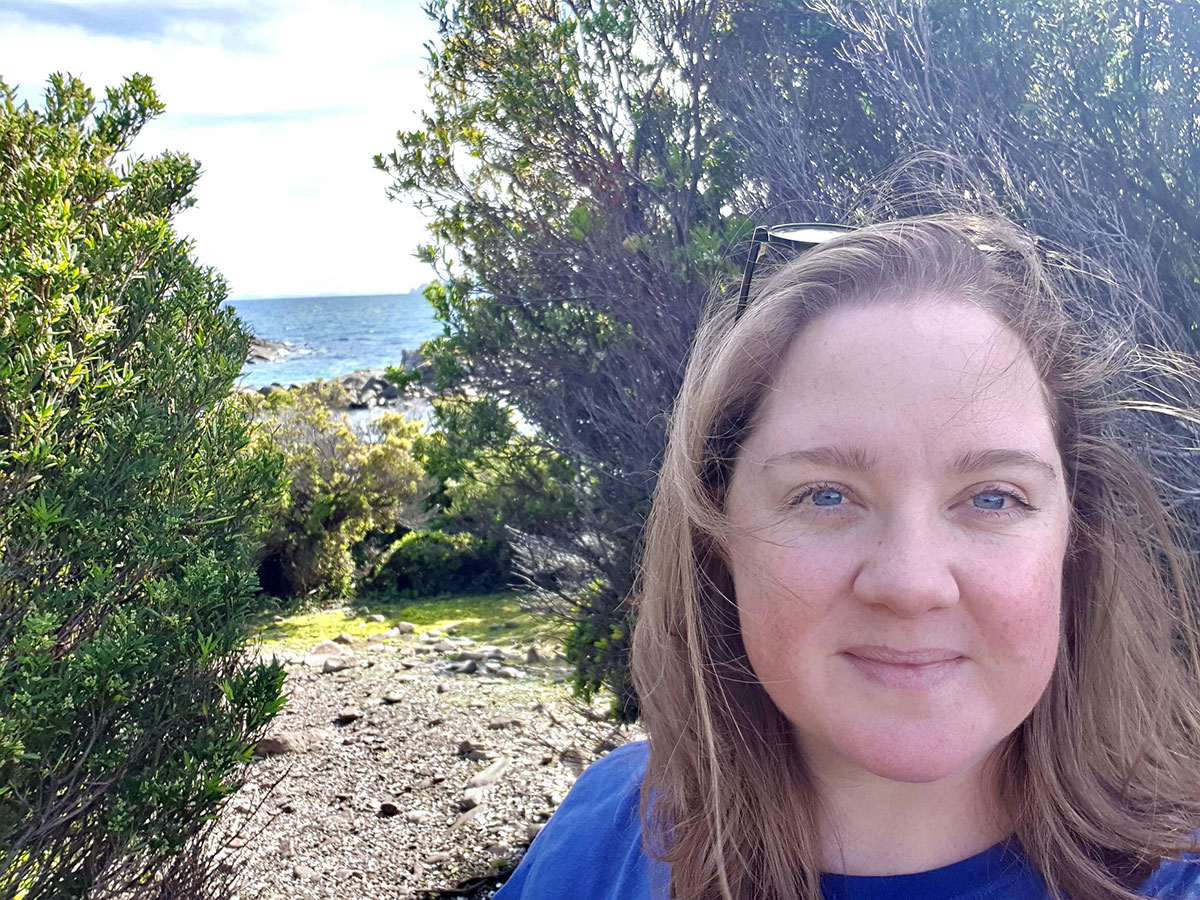
Ashley Fourie
Diverse career opportunities exist across government, private and not-for-profit sectors. Your skills will align with international competencies recognised by the IUCN World Commission on Protected Areas, supporting career pathways in Australia and globally.
You could work across a range of landscapes, from urban and agricultural environments to protected areas focused on recreation and conservation.
Your skills will prepare you for professional and leadership roles in eco-tourism, natural area management, conservation planning, emergency management and natural resource management.
Graduates may work in roles such as:
- Environmental planner
- Environmental manager
- Environmental scientist
- Eco-tourism operator/manager
- Natural resource officer/manager
- Park ranger/manager
- Conservation manager
- Urban services manager
- Environmental consultant
- Ecologist
Course structure
The course is primarily compulsory units, with year two offering a choice in units to Explore Conservation In Tasmania, with electives featuring a range of place based Tasmanian learning experiences. Students can select 25 "choice" credit points with opportunities to explore topics such as Environmental Impact Assessment, Marine and Antarctic Management, or Geospatial Sciences.
If a student meets the requirements for entry into our independent research stream, then the units KGA742 Research Thesis A and KGA743 Research Thesis B will replace KGA703 Professional Research Methods and KGA704 Professional Research Practice. The independent research stream requires a coursework average of 75% or over in the first year of the Master of Protected Area Conservation (full-time equivalent) and approval of a research topic from both a supervisor and the Unit Co-ordinator.
This unit provides students with a practical understanding of key systems for protected area planning and management. Terrestrial, freshwater and marine protected areas are considered. The global context of protected areas is analysed, including issues of definition, scope and governance.…
Credit Points: 25
| Location | Study period | Attendance options | Available to | ||
|---|---|---|---|---|---|
| Hobart | Semester 2 |  |  |  | |
| Online | Semester 2 |  | | | |
- Key:
- On-campus
- Off-Campus
- International students
- Domestic students
View all details for KGA517 Protected Area Planning and Management Systems
Conservation efforts globally are focussed primarily on biodiversity, but geodiversity elements and features such as soils, rivers, mountains and caves provide humans with awe and inspiration, enjoyment, and a wealth of ecosystem and geosystem services. In this unit, you will…
Credit Points: 12.5
| Location | Study period | Attendance options | Available to | ||
|---|---|---|---|---|---|
| Hobart | Semester 1 | | | | |
| Online | Semester 1 | | | | |
- Key:
- On-campus
- Off-Campus
- International students
- Domestic students
View all details for KGA527 Landscape Conservation and Recreation
This unit is essential for those working towards a career managing natural environments and people in protected areas. While protected areas are essential for conserving biodiversity, key threats to biodiversity - fire, weeds, and ferals - operate at landscape scale.…
Credit Points: 25
| Location | Study period | Attendance options | Available to | ||
|---|---|---|---|---|---|
| Hobart | Semester 1 | | | | |
| Online | Semester 1 | | | | |
- Key:
- On-campus
- Off-Campus
- International students
- Domestic students
View all details for KGA529 Conserving Nature in Protected Areas
This unit provides you with the knowledge and practical skills to prepare management plans for protected areas. Particular emphasis will be given to accessing and deploying information; community engagement and collaboration; and developing plans that support an adaptive approach to…
Credit Points: 12.5
| Location | Study period | Attendance options | Available to | ||
|---|---|---|---|---|---|
| Online | Summer | | | | |
- Key:
- On-campus
- Off-Campus
- International students
- Domestic students
In this unit you will develop the knowledge and skills needed to undertake planning for protected area systems. We will explore the frameworks, processes and methods used to identify areas for inclusion in national reserve systems. Students will be asked…
Credit Points: 12.5
| Location | Study period | Attendance options | Available to | ||
|---|---|---|---|---|---|
| Online | Spring | | | | |
- Key:
- On-campus
- Off-Campus
- International students
- Domestic students
This unit is designed to provide students studying at the graduate level with a comprehensive introduction to the fundamentals of spatial information. This unit will introduce students to Geographic Information Systems (GIS) and landscape metrics analysis, with a focus on…
Credit Points: 12.5
| Location | Study period | Attendance options | Available to | ||
|---|---|---|---|---|---|
| Hobart | Semester 1 | | | | |
| Online | Semester 1 | | | | |
- Key:
- On-campus
- Off-Campus
- International students
- Domestic students
View all details for KGG539 Fundamentals of Spatial Information
This unit provides students with an 80-hour unpaid professional placement with government, non-government organisation, or the private sector. The placement offers structured work-integrated learning through participation in defined projects or workplace tasks aligned with the course discipline areas of protected…
Credit Points: 25
| Location | Study period | Attendance options | Available to | ||
|---|---|---|---|---|---|
| Hobart | Semester 2 | | | | |
| Online | Semester 2 | | | | |
- Key:
- On-campus
- Off-Campus
- International students
- Domestic students
Organisations impact, and are impacted by, the societies in which they operate. That is, they are part of a broader social system. Society generally, and different groups of stakeholders specifically, expect an organisation to accept various responsibilities with respect to…
Credit Points: 12.5
| Location | Study period | Attendance options | Available to | ||
|---|---|---|---|---|---|
| Hobart | Semester 1 | | | | |
| Online | Semester 1 | | | | |
- Key:
- On-campus
- Off-Campus
- International students
- Domestic students
View all details for BFA758 Organisational Social Responsibilities
In this unit, you will investigate the global role of marine protected areas (MPAs) in balancing biodiversity conservation and sustainable food production. Using examples worldwide, you will study various MPAs and other types of area-based management - from small fishery…
Credit Points: 12.5
| Location | Study period | Attendance options | Available to | ||
|---|---|---|---|---|---|
| Hobart | Semester 1 | | | | |
- Key:
- On-campus
- Off-Campus
- International students
- Domestic students
This unit introduces legal, administrative, scientific, and social aspects of environmental impact assessment (EIA) using case studies. The unit emphasises the practical aspects of environmental impact assessment in Tasmanian contexts, but environmental impact assessment processes and legislation are similar in…
Credit Points: 25
| Location | Study period | Attendance options | Available to | ||
|---|---|---|---|---|---|
| Hobart | Semester 2 | | | | |
| Online | Semester 2 | | | | |
- Key:
- On-campus
- Off-Campus
- International students
- Domestic students
As more businesses and scientists adopt geographical information systems (GIS), there is increasing demand for graduates with strong skills in collecting, managing, analysing, and visualising spatial datasets. GIS and spatial analysis skills will be indispensable for almost all careers in…
Credit Points: 12.5
| Location | Study period | Attendance options | Available to | ||
|---|---|---|---|---|---|
| Hobart | Semester 2 | | | | |
| Online | Semester 2 | | | | |
- Key:
- On-campus
- Off-Campus
- International students
- Domestic students
View all details for KGG540 Environmental Geographic Information Science B
KSA726 offers an interdisciplinary exploration into the management of marine and Antarctic environments. You will be introduced to the core concepts of governance, policy and management and contemporary management practices with a focus on the science-policy interface. You will explore…
Credit Points: 12.5
| Location | Study period | Attendance options | Available to | ||
|---|---|---|---|---|---|
| Hobart | Semester 2 | | | | |
- Key:
- On-campus
- Off-Campus
- International students
- Domestic students
View all details for KSA726 Marine and Antarctic Environments and their Management
This unit focuses on designing research to solve real problems, and to communicate your findings. You will learn how to design mixed methods research, scope research problems using existing research literature, consider ethical issues in data collection, generate field data,…
Credit Points: 25
| Location | Study period | Attendance options | Available to | ||
|---|---|---|---|---|---|
| Hobart | Semester 2 | | | | |
| Online | Semester 2 | | | | |
- Key:
- On-campus
- Off-Campus
- International students
- Domestic students
This unit provides postgraduate students with the skills and knowledge to undertake policy-based research - a key transferable employability skill. Practical skills development focuses on undertaking research to inform evidence-based policy positions for a topical real-world issue. Upon completing this…
Credit Points: 25
| Location | Study period | Attendance options | Available to | ||
|---|---|---|---|---|---|
| Hobart | Semester 1 | | | | |
| Online | Semester 1 | | | | |
- Key:
- On-campus
- Off-Campus
- International students
- Domestic students
The independent research stream requires a coursework average of 75% or over to be achieved in the first year and approval of a research topic from both a supervisor and the Unit Co-ordinator.
Research and project management skills are core professional competencies. Undertaking a thesis as part of your Masters will equip you with the experience needed to undertake research independently or as part of a team, and the skills to design and…
Credit Points: 25
| Location | Study period | Attendance options | Available to | ||
|---|---|---|---|---|---|
| Hobart | Semester 1 | | | | |
| Semester 2 | | | | ||
| Online | Semester 1 | | | | |
| Semester 2 | | | | ||
- Key:
- On-campus
- Off-Campus
- International students
- Domestic students
Research and project management skills are core professional competencies. Undertaking a thesis as part of your Masters will equip you with the experience needed to undertake research independently or as part of a team, and the skills to design and…
Credit Points: 25
| Location | Study period | Attendance options | Available to | ||
|---|---|---|---|---|---|
| Hobart | Semester 1 | | | | |
| Semester 2 | | | | ||
| Online | Semester 1 | | | | |
| Semester 2 | | | | ||
- Key:
- On-campus
- Off-Campus
- International students
- Domestic students
Entry requirements
Candidates for the Master of Protected Area Conservation shall be qualified for entry if they hold a bachelor degree in any discipline at the University of Tasmania or hold other tertiary qualification(s) deemed by the University to be equivalent for this purpose.
Admission to most postgraduate coursework courses at the University of Tasmania require qualifications equivalent to an Australian bachelor degree. Applicants must achieve the required grade in their qualifying studies, meet any prerequisite subjects, and meet English language requirements to be eligible for an offer.
English Language Requirements
For students who do not meet the English Language Requirement through citizenship or prior studies in English in an approved country, evidence of an approved English language test completed within the last 2 years must be provided. See the English Language Requirements page for more information.
English Language Requirements are: IELTS (Academic) 6.5 (no individual band less than 6.0)
Course Specific Requirements
Candidates for the Master of Protected Area Conservation shall be qualified for entry if they hold a bachelor degree in any discipline at the University of Tasmania or hold other tertiary qualification(s) deemed by the University to be equivalent for this purpose. International applicants who are nationals of and currently reside in a country where English is not the official language require an IELTS of 6.5 with no individual band less than 6.0 or equivalent.
General entry requirements are the same as for the Bachelor of Natural Environments and Conservation, with the following additional requirement:
Progression to Master of Protected Area Conservation
To progress into the Master of Protected Area Conservation component of the course you must attain a Grade Point Average (GPA) of 5 or above (Credit average) in the first 200 credit points of undergraduate study. If you do not meet this GPA requirement you will be able to remain in the Bachelor of Natural Environments and Conservation and complete the single degree. On completion of the Bachelor of Natural Environments and Conservation you may apply to return and commence the Master of Protected Area Conservation.
English Language Requirements
This degree requires an IELTS (Academic) of 6.5 with no individual band less than 6.0 or equivalent.
For students who do not meet the English Language Requirement through citizenship or prior studies in English in an approved country, evidence of an approved English language test completed within the last 2 years must be provided.
See the English Language Requirements page for more information.
General Entry Requirements
General entry requirements are the same as for the Bachelor of Natural Environments and Conservation, with the following additional requirement:
Progression to Master of Protected Area Conservation
To progress into the Master of Protected Area Conservation component of the course you must attain a Grade Point Average (GPA) of 5 or above (Credit average) in the first 200 credit points of undergraduate study. If you do not meet this GPA requirement you will be able to remain in the Bachelor of Natural Environments and Conservation and complete the single degree. On completion of the Bachelor of Natural Environments and Conservation you may apply to return and commence the Master of Protected Area Conservation.
Students in this course may be eligible for a reduction in the volume of learning of:
- up to 100 credit points if they have completed a GradDip Protect (AQF 8) award in a cognate discipline; or
- up to 50 credit points if they have completed a Bachelor (AQF 7) award in a cognate discipline.
Articulation to: Graduates are eligible to apply for a Research Higher Degree program, including PhD.
Fees & scholarships
Domestic students
Commonwealth supported places (CSP) are available for this course. For eligible domestic students, this means your fees will be subsidised by the Australian Government. You’ll only need to pay the student contribution amount for each unit you study within the course.
Commonwealth Supported Place indicative annual fee: $9,612
How is this calculated?
This is an estimate. The calculation is based on the average full-time enrolment for this course in 2026. All figures are indicative only for 2027. Actual tuition fees will depend on specific unit enrolment, and are subject to annual increases each year. You can find the complete fee details for each unit of study on the individual unit pages. The units for this course are found in the course structure section of this page.
These figures do not include other costs such as the Student Services and Amenities Fee (SSAF). For further information, please visit Scholarships, fees and costs.
HECS-HELP loans
You may be able to defer payment of the student contribution amount by accessing a HECS-HELP loan from the Government. If eligible, you’ll only have to pay your tuition fees once you start earning above a specific amount.
Further information on student loans and a CSP eligibility checker can be found at Australian Government Study Assist.
An important note on Youth Allowance and Austudy
The Department of Social Services has approved some accredited and professionally-oriented master’s courses for student payments through Youth Allowance or Austudy. This means if you enrol in one of these courses, you may be eligible for student payments. However, this is not the case for all master’s courses. Please visit Scholarships, fees and costs for further information.
International students
2027 annual international student tuition fee: $42,250 AUD
The standard year of study for this course is 100 credit points.
Indicative total tuition fee for international students: $ 86,613 AUD.
This total tuition fee is indicative only. Please visit fees and costs for further information on how this is calculated.
International students are charged the Student Services and Amenities Fee but this fee is incorporated in the annual rate. International students do not have to make any additional SSAF payments.
Domestic scholarships
For information on general scholarships available at the University of Tasmania, please visit the scholarships website.
International scholarships
The University of Tasmania offers a range of scholarships for full fee-paying international students, designed to recognise academic merit and support access to university study.
For many of our international scholarships you will be automatically assessed when you submit your International Student Application, meaning no separate scholarship application is required. Some scholarships may require additional application steps. Explore our International Scholarships to learn more about available opportunities and application requirements.


Share this page
How can we help?
Do you have any questions about choosing a course or applying? Get in touch.