

Overview (2027)

Key Information


Duration
Minimum 1 Year, up to a maximum of 3 years.


Location
 CRICOS: 113035E
Duration
Minimum 1 year, up to a maximum of 3 years.
Location
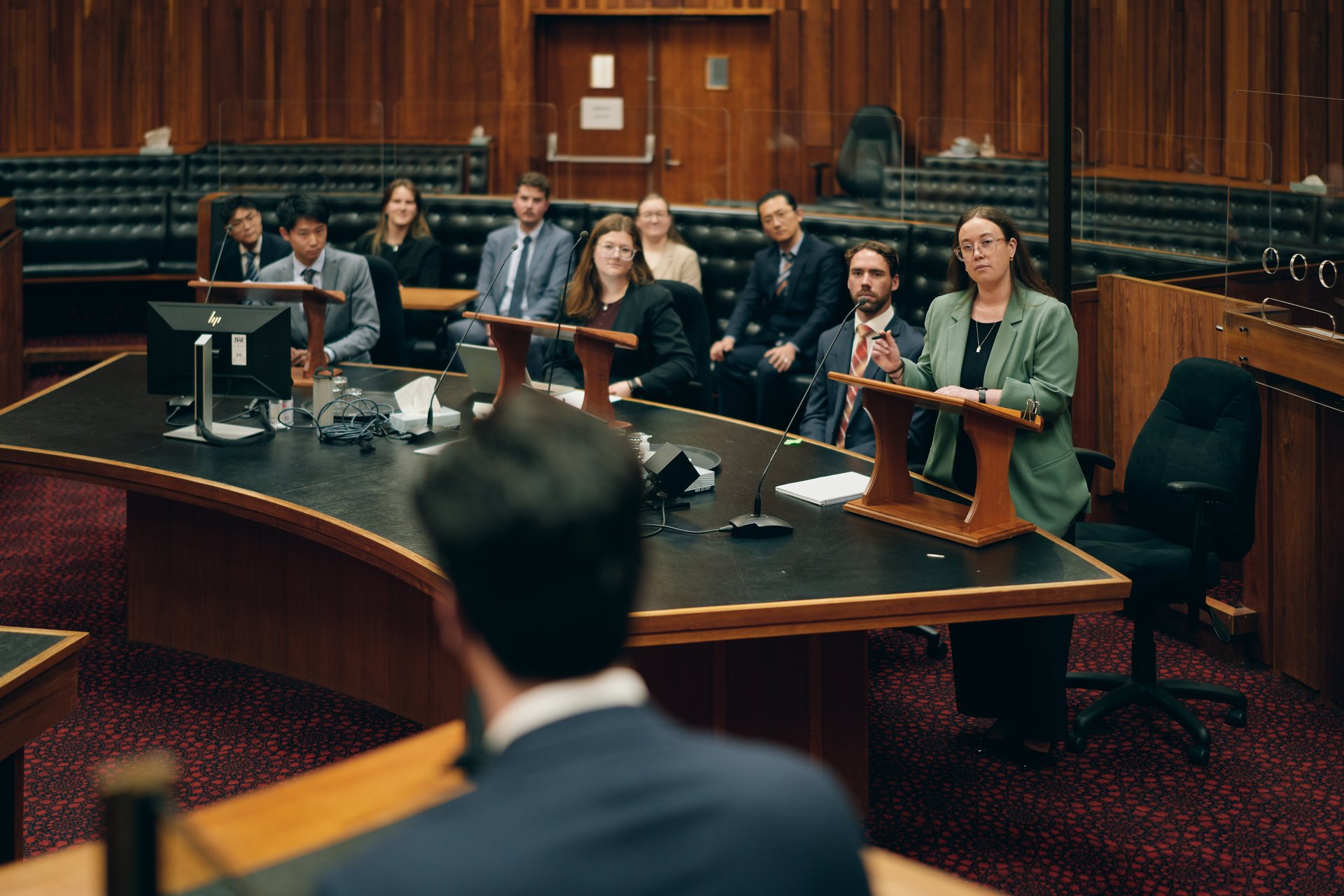
Phoebe Winter
Read more about Phoebe
The Diploma of Legal Studies provides you with the opportunity for exposure to law study without a full commitment to a law degree.
It is suitable both for those who plan pursue a role that could benefit from some legal knowledge, as well as those who already have this as part of their career.
In addition to introductory law units that cover the foundations of law and legal reasoning, you can choose units to target one or more specialist areas relevant to your work (depending on your experience).
There are also avenues for inquiry into areas including international law, human rights and environmental law, to give you a broader understanding of the role of law.
Assessment tasks through the course will enhance your ability to prepare written advice and develop arguments in response to legal problems. This will see you graduating with an understanding of ethical practice with essential skills across legal reasoning, research and effective communication.
- 1 Analyse and interpret legal materials to identify and assess legal problems.
- 2 Prepare basic legal advice to achieve solutions appropriate to local and transnational contexts.
- 3 Work collaboratively and independently to inform the resolution of legal and ethical issues that incorporate diverse perspectives.
- 4 Implement legal research strategies utilising a variety of digital and other resources to inform legal arguments and advice.
- 5 Articulate persuasive arguments, in written and spoken form, to a range of audiences.
Become a Student Ambassador
Improve your communication, teamwork and leadership skills, meet new people, inspire and help others, and developing lasting friendships and networks as a student ambassador. Our ambassadors proudly represent the University throughout Tasmania in schools, at University and community events, and support a range of recruitment and engagement activities.
Though the Student Ambassador Program you will have many opportunities for training and professional development, experience in real-world community engagement and outreach, networking, and public speaking, plus end up with a key point of distinction on your CV.
Sustainability Placement Experience
Gain experience in real-world sustainability through the Sustainability Placement Experience. In this unique program, you’ll apply your skills and university learning to dynamic, industry and community led projects that tackle real sustainability challenges. Open to students from any discipline with available electives, this placement offers the chance to connect your studies with meaningful, practical outcomes that make a difference.
Work Integrated Learning
Tasmania is a place filled with creativity, industry, nature, and adventure. Because we’re the only university in the state, you get close access to the industry leaders, artists, and deep thinkers who are shaping our island. That means learning alongside the very best so you can hone your job skills for a successful career.
Whatever you’re passionate about, we’ll give you a hands-on education and an unforgettable adventure with our work integrated learning opportunities. https://www.utas.edu.au/study/work-integrated-learning
Course structure
The Diploma of Legal Practice requires the completion of 100 credit points comprising:
- 50 credit points of Core units; and
- 50 credit points of Core Option units.
If you are looking to enrol in the Bachelor of Laws after completing the Diploma, you should complete LAW106 Torts as a Core Option unit to ensure a smooth transition into the Bachelor's degree. Another Law-coded or cognate elective unit may be substituted with the permission of the Course Coordinator.
The Diploma of Legal Studies is available to be studied fully online or face-to-face.
Public international law permeates most areas of Australian law and it is therefore essential for law graduates to have a solid grounding in the sources and methodology of international law. This unit develops students' understanding of the sources of international…
Credit Points: 12.5
| Location | Study period | Attendance options | Available to | ||
|---|---|---|---|---|---|
| Cradle Coast | Semester 2 |  |  |  | |
| Hobart | Semester 2 | | | | |
| Launceston | Semester 2 | | | | |
| Online | Semester 2 |  | | | |
- Key:
- On-campus
- Off-Campus
- International students
- Domestic students
This unit introduces you to the fundamental elements of the Australian legal system, including Indigenous legal issues, and explores how they compare with other legal systems around the world. You will learn how the law is made in Australia by…
Credit Points: 12.5
| Location | Study period | Attendance options | Available to | ||
|---|---|---|---|---|---|
| Cradle Coast | Semester 1 | | | | |
| Hobart | Semester 1 | | | | |
| Semester 2 | | | | ||
| Launceston | Semester 1 | | | | |
| Semester 2 | | | | ||
| Online | Semester 1 | | | | |
| Semester 2 | | | | ||
- Key:
- On-campus
- Off-Campus
- International students
- Domestic students
Strong legal reasoning skills are critical to student learning and performance while at law school and eventually to the quality of your legal practice. More broadly, many employers beyond the legal profession consider the ability to solve problems by identifying…
Credit Points: 12.5
| Location | Study period | Attendance options | Available to | ||
|---|---|---|---|---|---|
| Cradle Coast | Semester 1 | | | | |
| Hobart | Semester 1 | | | | |
| Launceston | Semester 1 | | | | |
| Online | Semester 1 | | | | |
- Key:
- On-campus
- Off-Campus
- International students
- Domestic students
View all details for LAW108 Legal Reasoning and Technological Change
Become better prepared to understand concepts of ethics, social responsibility and the law and how these shape individual and collective behaviour in modern society. Sustainable inspirational leadership can only evolve from a legitimate, ethical and socially responsible base. Equally, reputations…
Credit Points: 12.5
| Location | Study period | Attendance options | Available to | ||
|---|---|---|---|---|---|
| Online | Semester 1 | | | | |
- Key:
- On-campus
- Off-Campus
- International students
- Domestic students
View all details for LAW181 Ethics, Social Responsibility and the Law
In this unit you will focus on sociological approaches to crime and the criminal justice system with the objective of understanding research and debates about: (i) the criminal justice system (police, courts, corrections); (ii) patterns of crime (measuring crime victims…
Credit Points: 12.5
| Location | Study period | Attendance options | Available to | ||
|---|---|---|---|---|---|
| Hobart | Semester 2 | | | | |
| Launceston | Semester 2 | | | | |
| Online | Semester 2 | | | | |
- Key:
- On-campus
- Off-Campus
- International students
- Domestic students
This is a foundational unit in Criminology. You will focus on criminological approaches to understanding crime and criminalisation. The unit will introduce various categories of crime (e.g. property crime and violent crime) and debates about what counts as crime and…
Credit Points: 12.5
| Location | Study period | Attendance options | Available to | ||
|---|---|---|---|---|---|
| Hobart | Semester 1 | | | | |
| Launceston | Semester 1 | | | | |
| Online | Semester 1 | | | | |
- Key:
- On-campus
- Off-Campus
- International students
- Domestic students
HIR101 provides students with an overview of the theory and practice of international relations. The unit is divided into two modules. In module one, you will learn about theoretical approaches to the study of IR including introductions to realist, liberal,…
Credit Points: 12.5
| Location | Study period | Attendance options | Available to | ||
|---|---|---|---|---|---|
| Hobart | Semester 2 | | | | |
| Launceston | Semester 2 | | | | |
| Online | Semester 2 | | | | |
- Key:
- On-campus
- Off-Campus
- International students
- Domestic students
View all details for HIR101 Introduction to International Relations
This unit introduces an important area of private law, and examines the historical development and operation of specific Torts including trespass to person, nuisance, negligence, defamation and relevant intersecting laws. It also considers the relationship between various areas of Tort…
Credit Points: 12.5
| Location | Study period | Attendance options | Available to | ||
|---|---|---|---|---|---|
| Cradle Coast | Semester 2 | | | | |
| Hobart | Semester 2 | | | | |
| Launceston | Semester 2 | | | | |
| Online | Semester 2 | | | | |
- Key:
- On-campus
- Off-Campus
- International students
- Domestic students
A unit suitable for both law and non-law students, this unit introduces students to Indigenous people’s experience with the legal system in Australia and selected other jurisdictions (United States, Canada and New Zealand), and the interactions between non-Indigenous and Indigenous…
Credit Points: 12.5
| Location | Study period | Attendance options | Available to | ||
|---|---|---|---|---|---|
| Hobart | Semester 1 | | | | |
| Online | Semester 1 | | | | |
- Key:
- On-campus
- Off-Campus
- International students
- Domestic students
Law and Social Change considers the role that law and lawyers have played in shaping or influencing some of the major ideas, political events and personalities within society and how these factors have, in turn, influenced law and lawyering. It…
Credit Points: 12.5
The ‘blue economy’ of oceans related industries is set for significant expansion in the first half of twenty first century. Australia has one of the largest areas of ocean estate in the world. Tasmania is also are a global centre…
Credit Points: 12.5
| Location | Study period | Attendance options | Available to | ||
|---|---|---|---|---|---|
| Hobart | Semester 2 | | | | |
| Online | Semester 2 | | | | |
- Key:
- On-campus
- Off-Campus
- International students
- Domestic students
View all details for LAW191 Law of the Oceans and the Antarctic
This unit explores some of Australia’s most challenging environmental controversies, and the legal and policy context in which they arise. It uses a range of topical issues and case studies to introduce students to the framework for national and international…
Credit Points: 12.5
| Location | Study period | Attendance options | Available to | ||
|---|---|---|---|---|---|
| Hobart | Semester 2 | | | | |
| Online | Semester 2 | | | | |
- Key:
- On-campus
- Off-Campus
- International students
- Domestic students
View all details for LAW195 Current Issues in Environmental Law and Policy
Entry requirements
Domestic Applicants who have recently completed secondary education
This course uses ATAR and equivalent ranks as part of the admission process.
Applicants are ranked by ATAR and offers made based on the number of places available. Applicants who have recently completed senior secondary studies but have not received an ATAR may still be eligible for admission.
Domestic Applicants with higher education study
- Partially completed an undergraduate course at Diploma level or higher (or equivalent). Applicants must have completed at least one unit of study (equivalent to 12.5 UTAS credit points). If an applicant has failed any units the application may be subject to further review before an offer is made; or
- Completed the UTAS University Preparation Program (or an equivalent qualification offered by an Australian University).
Domestic applicants with VET / TAFE study
To be eligible for an offer, applicants must have completed a Certificate IV (or equivalent) in any discipline.
Domestic Applications on the basis of work or life experience
If you have not successfully completed senior secondary, tertiary or TAFE/VET study, but have relevant work and life experience you can complete a personal competency statement. You may be eligible for an offer if you have work and life experiences that demonstrate a capacity to succeed in this course.
Special consideration
If your ability to access or participate in education has been affected by circumstances beyond your control, you can apply for special consideration as part of your application. We will consider a range of factors for special consideration, including economic hardship, a serious medical condition or disability.
We can only approve applications for special consideration where we are confident that you have the necessary skills and knowledge to succeed in your studies. If your application is not approved, the UTAS admissions team will work with you to find the best alternative pathway to your chosen course. Special consideration is not available for international applicants.
English Language Requirements
This degree requires an IELTS (Academic) of 6.0 (no individual band less than 5.5)
For students who do not meet the English Language Requirement through citizenship or prior studies in English in an approved country, evidence of an approved English language test completed within the last 2 years must be provided. See the English Language Requirements page for more information.
General Entry Requirements
Admission to undergraduate courses at the University of Tasmania requires the completion of qualifications equivalent to a 12th year of education in Australia.
Please review the equivalent undergraduate entry requirements to see the minimum requirement relevant to your country. The ATAR information for this course is located in the “For Domestic Students” section of the entry requirements on this page.
You can also meet the General Entry Requirement for this course with the following qualifications or prior studies:
- Completion of an equivalent AQF Certificate IV or above;
- Partially completed an undergraduate course at Diploma level or higher (or equivalent). Applicants must have completed at least one unit of study (equivalent to 12.5 UTAS credit points). If an applicant has failed any units the application may be subject to further review before an offer is made
Course Specific Requirements
This course does not have any course specific requirements.
The Diploma in Legal Studies articulates into L3C Bachelor of Laws with full credit.
Those students who plan to progress to the Bachelor of Laws are strongly advised to complete LAW106 Torts as a Core Option to allow completion of the Bachelor of Laws within the shortest completion time of 2.5 years if studying full-time.
Detailed admissions information and advice for all undergraduate courses, including comprehensive, course-level student profiles, is available from UTAS Admissions.
Fees & scholarships
Domestic students
Commonwealth supported places (CSP) are available for this course. For eligible domestic students, this means your fees will be subsidised by the Australian Government. You’ll only need to pay the student contribution amount for each unit you study within the course.
Commonwealth Supported Place indicative annual fee: $17,392
How is this calculated?
This is an estimate. The calculation is based on the average full-time enrolment for this course in 2026. All figures are indicative only for 2027. Actual tuition fees will depend on specific unit enrolment, and are subject to annual increases each year. You can find the complete fee details for each unit of study on the individual unit pages. The units for this course are found in the course structure section of this page.
These figures do not include other costs such as the Student Services and Amenities Fee (SSAF). For further information, please visit Scholarships, fees and costs.
HECS-HELP loans
You may be able to defer payment of the student contribution amount by accessing a HECS-HELP loan from the Government. If eligible, you’ll only have to pay your tuition fees once you start earning above a specific amount.
Further information on student loans and a CSP eligibility checker can be found at Australian Government Study Assist.
International students
2027 annual international student tuition fee: $38,950 AUD
The standard year of study for this course is 100 credit points.
Indicative total tuition fee for international students: $ 38,950 AUD.
This total tuition fee is indicative only. Please visit fees and costs for further information on how this is calculated.
International students are charged the Student Services and Amenities Fee but this fee is incorporated in the annual rate. International students do not have to make any additional SSAF payments.
Domestic scholarships
For information on general scholarships available at the University of Tasmania, please visit the scholarships website.
International scholarships
The University of Tasmania offers a range of scholarships for full fee-paying international students, designed to recognise academic merit and support access to university study.
For many of our international scholarships you will be automatically assessed when you submit your International Student Application, meaning no separate scholarship application is required. Some scholarships may require additional application steps. Explore our International Scholarships to learn more about available opportunities and application requirements.

Course year 2027


Share this page
How can we help?
Do you have any questions about choosing a course or applying? Get in touch.