

Overview (2027)

Key Information


Duration
Minimum 1 Year, up to a maximum of 3 years.


Location
This course may not be available to international students. Please see the list of distance courses (i.e. online and taken outside Australia) that are offered to international students
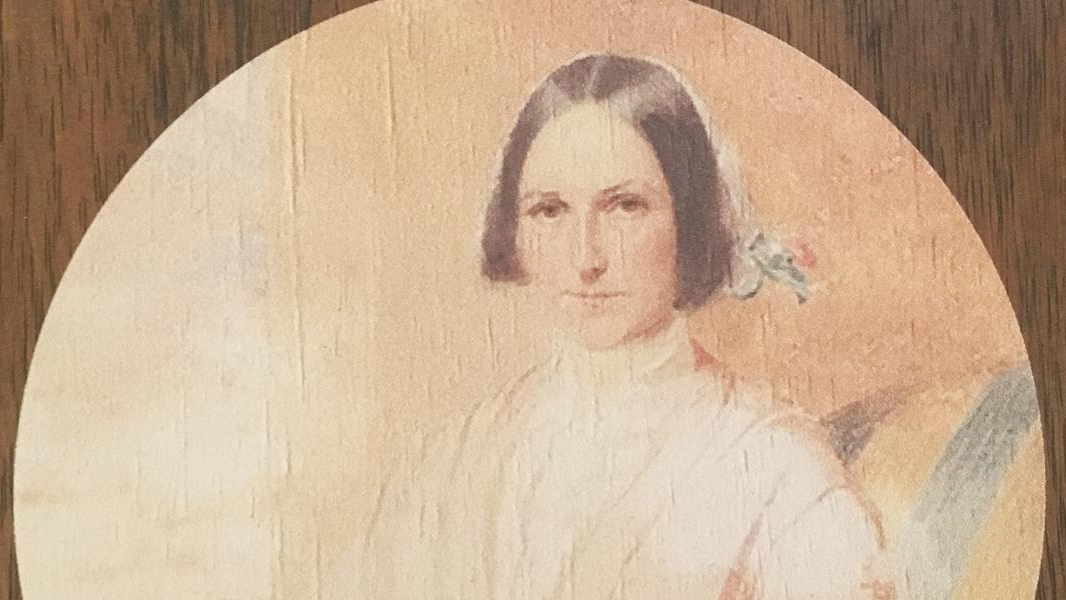
Family history is for everybody. We all have stories in our family tree waiting to be told.
The Diploma of Family History will give you essential knowledge and tools to bring the past to life through tracing your family experiences and understanding the historical forces that shaped them.
Develop the skills and knowledge to share family stories with others. Our Family History course is designed to help you explore your family's past, while also becoming more proficient and comfortable in a digital environment. You'll learn how to undertake historical research while developing your communication and writing skills. Plus, you'll be part of a supportive cohort of family history enthusiasts and experts.
Each unit is taught by specialists in Australian, British, European and Asian histories. As you progress through your course you’ll learn how to research, write and creatively communicate family history. You'll also develop skills to identify, analyse and interpret historical information from a range of family history sources.
You'll learn how to use oral history, family heirlooms and photographs, as well as physical and digital archives to illuminate your family’s past. The Diploma of Family History focuses on understanding individual lives in their wider historical contexts, through investigating the impacts of events such as war, convict transportation, and migration.
Our Family History courses are fully online. You can study these units in any order you choose, but we recommend commencing your course with Introduction to Family History. Many students study one unit per term.
In 2026, our dates will be:
Term 1: 2 Feb – 29 Mar 2026
Term 2: 4 May – 28 Jun 2026
Term 3: 27 Jul – 20 Sep 2026
Term 4: 19 Oct –13 Dec 2026
2027 Start dates
For 2027 there will be four (4) blocks. These new intensive 7-week study periods align with the start and end dates of the 12-week Semesters.
Block 1: 22 Feb – 18 April 2027
Block 2: 26 April – 13 June 2027
Block 3: 05 Jul – 22 August 2027
Block 4: 06 Sept – 24 October 2027
- 1 Locate, identify and analyse relevant historical information from sources available online, in archives, libraries, and family collections, to provide the evidence for family histories.
- 2 Organise family history data and research materials in physical and digital form to facilitate the creation of family histories.
- 3 Evaluate, interpret and use historical information to create family histories in a variety of forms.
- 4 Communicate historical knowledge, ideas and skills accurately, ethically and creatively in a range of contexts.
- 5 Use relevant digital tools and technologies, such as computers, software and the internet, for researching, recording and creating family histories
Become a Student Ambassador
Improve your communication, teamwork and leadership skills, meet new people, inspire and help others, and developing lasting friendships and networks as a student ambassador. Our ambassadors proudly represent the University throughout Tasmania in schools, at University and community events, and support a range of recruitment and engagement activities.
Though the Student Ambassador Program you will have many opportunities for training and professional development, experience in real-world community engagement and outreach, networking, and public speaking, plus end up with a key point of distinction on your CV.
Sustainability Placement Experience
Gain experience in real-world sustainability through the Sustainability Placement Experience. In this unique program, you’ll apply your skills and university learning to dynamic, industry and community led projects that tackle real sustainability challenges. Open to students from any discipline with available electives, this placement offers the chance to connect your studies with meaningful, practical outcomes that make a difference.
Work Integrated Learning
Tasmania is a place filled with creativity, industry, nature, and adventure. Because we’re the only university in the state, you get close access to the industry leaders, artists, and deep thinkers who are shaping our island. That means learning alongside the very best so you can hone your job skills for a successful career.
Whatever you’re passionate about, we’ll give you a hands-on education and an unforgettable adventure with our work integrated learning opportunities. https://www.utas.edu.au/study/work-integrated-learning
Career outcomes
Completing a Diploma of Family History develops skills and knowledge relevant to the following fields:
- family history and genealogical research
- creative writing
- non-fiction writing
- cultural and/or heritage tourism
- local and regional museums
- history and heritage consultancies
- local and community history organisations
- education
- volunteering and community activities
- archives and library information systems
- further studies in history, heritage and related fields
Course structure
To complete the Diploma of Family History you will need to complete eight units worth 12.5 credit points each, for a total of 100 credit points.
- 4 units, or 50 credit points, of Foundation level units, and
- 4 units, or 50 credit points, of Introductory level units.
The Diploma is designed around four terms per year, allowing you to study one unit per term if you intend to complete in two years. Each term we offer at least one Foundation and one Introductory unit. This provides you with the choice to structure your studies around your lifestyle.
While you may complete the units in any order, we strongly recommend commencing your course with HAA003 Introduction to Family History.
Introduction to Family History is designed for people interested in their own family histories or genealogy in general. You will learn how to efficiently plan and accurately record your family history using family history research principles and practices. The unit…
Credit Points: 12.5
| Location | Study period | Attendance options | Available to | ||
|---|---|---|---|---|---|
| Online | Block 1 |  |  |  | |
- Key:
 On-campus
- Off-Campus
- International students
- Domestic students
Who are the most interesting characters on your family tree? Would you like to write their stories to share with other family members, or with a wider audience? Perhaps you have an ancestor who is intriguing because of what you…
Credit Points: 12.5
| Location | Study period | Attendance options | Available to | ||
|---|---|---|---|---|---|
| Online | Block 2 | | | | |
- Key:
- On-campus
- Off-Campus
- International students
- Domestic students
This unit uses the material world, in the form of objects, images and places, to engage with remembering, researching and communicating family history and memories. By looking at homes, human-shaped environments such as gardens, and inherited items both mundane and…
Credit Points: 12.5
| Location | Study period | Attendance options | Available to | ||
|---|---|---|---|---|---|
| Online | Block 4 | | | | |
- Key:
- On-campus
- Off-Campus
- International students
- Domestic students
Convict, prison and court records can provide rich, if sometimes disturbing, evidence of the lives led by our ancestors. This unit draws upon the expertise of leading historians of crime, the law, and convict transportation to guide you through the…
Credit Points: 12.5
| Location | Study period | Attendance options | Available to | ||
|---|---|---|---|---|---|
| Online | Block 3 | | | | |
- Key:
- On-campus
- Off-Campus
- International students
- Domestic students
In this unit, you will work with media professionals to learn the basics of creating a family photo essay, bringing words and images together to communicate family stories. You will hone your writing skills and learn how to create, select,…
Credit Points: 12.5
| Location | Study period | Attendance options | Available to | ||
|---|---|---|---|---|---|
| Online | Block 1 | | | | |
- Key:
- On-campus
- Off-Campus
- International students
- Domestic students
Adventure or romance, tragedy or triumph, legends of extraordinary feats or quiet tales of everyday struggles: what kinds of stories have been told about families in the past and in the present? What literary forms are suitable for writing multi-generational…
Credit Points: 12.5
| Location | Study period | Attendance options | Available to | ||
|---|---|---|---|---|---|
| Online | Block 4 | | | | |
- Key:
- On-campus
- Off-Campus
- International students
- Domestic students
Stories are central to the human experience. Shared family stories contribute to a more complete picture of where we have come from and where we are going. In this unit, you will learn about the role of oral history in…
Credit Points: 12.5
| Location | Study period | Attendance options | Available to | ||
|---|---|---|---|---|---|
| Online | Block 3 | | | | |
- Key:
- On-campus
- Off-Campus
- International students
- Domestic students
Do you have a family ancestor who served as a soldier or nurse in the First World War? Do you have an old family war diary or set of letters in the proverbial attic? Building upon the skills in the…
Credit Points: 12.5
| Location | Study period | Attendance options | Available to | ||
|---|---|---|---|---|---|
| Online | Block 4 | | | | |
- Key:
- On-campus
- Off-Campus
- International students
- Domestic students
Australia is a migrant nation, with a rich and diverse mix of peoples, languages and cultures. In Migrant Families, we trace the journeys of ancestors who migrated to and from Australia and New Zealand, and place their lives in the…
Credit Points: 12.5
| Location | Study period | Attendance options | Available to | ||
|---|---|---|---|---|---|
| Online | Block 2 | | | | |
- Key:
- On-campus
- Off-Campus
- International students
- Domestic students
Entry requirements
We encourage you to apply for the courses you most want to study. If you’re not eligible to enter your chosen course right now, the admissions team will work with you to find the best pathway option.
Enquire online for advice on the application process and the available pathways to study.
Students will need regular access to a desktop computer and the internet.
Domestic applicantsApplicants must meet one of the General Entry Requirements of the University of Tasmania such as completion of Secondary School (or equivalent), previous Higher Education study or previous VET/TAFE Study.
Domestic applicants with work and life experienceIf you have not successfully completed senior secondary, tertiary or TAFE/VET study, but have relevant work and life experience you can complete a personal competency statement. You may be eligible for an offer if you have work and life experiences that demonstrate a capacity to succeed in this course.
Special considerationIf your ability to access or participate in education has been affected by circumstances beyond your control, you can apply for special consideration as part of your application. We will consider a range of factors, including economic hardship, serious medical condition or disability.
We can only approve applications for special consideration where we are confident that you have the necessary skills and knowledge to succeed in your studies. If your application is not approved, the admissions team will work with you to find the best alternative pathway to your chosen course. Special consideration is not available for international applicants.
All international students will need to meet the minimum English Language Requirements, University General Entry Requirements and any course specific requirements such as pre-requisite subjects, if applicable.
English Language Requirements
This degree requires an IELTS (Academic) of 6.0, with no individual band less than 5.5, or a PTE Academic score of 50, with no score lower than 42 or equivalent.
For students who do not meet the English Language Requirement through citizenship or prior studies in English in an approved country, evidence of an approved English language test completed within the last 2 years must be provided. See the English Language Requirements page for more information.
General Entry Requirements
Admission to undergraduate courses at the University of Tasmania requires the completion of qualifications equivalent to a 12th year of education in Australia.
Please review the equivalent undergraduate entry requirements to see the minimum requirement relevant to your country.
You can also meet the General Entry Requirement for this course with the following qualifications or prior studies:
- Completion of an equivalent AQF Certificate IV or above
- Complete or incomplete (minimum 25 credit points) of previous tertiary study at Bachelor level or higher
If you do not meet the minimum requirements, we offer the Foundation Studies Program.
Course Specific Requirements
This course does not have any course specific requirements.
Students completing the Undergraduate Certificate in Family History will receive advance standing for four 12.5 credit point units of the Diploma of Family History.
Detailed admissions information and advice for all undergraduate courses, including comprehensive, course-level student profiles, is available from UTAS Admissions.
Fees & scholarships
Domestic students
Commonwealth supported places (CSP) are available for this course. For eligible domestic students, this means your fees will be subsidised by the Australian Government. You’ll only need to pay the student contribution amount for each unit you study within the course.
Commonwealth Supported Place indicative annual fee: $14,686
How is this calculated?
This is an estimate. The calculation is based on the average part-time enrolment for this course in 2026. All figures are indicative only for 2027. Actual tuition fees will depend on specific unit enrolment, and are subject to annual increases each year. You can find the complete fee details for each unit of study on the individual unit pages. The units for this course are found in the course structure section of this page.
These figures do not include other costs such as the Student Services and Amenities Fee (SSAF). For further information, please visit Scholarships, fees and costs.
HECS-HELP loans
You may be able to defer payment of the student contribution amount by accessing a HECS-HELP loan from the Government. If eligible, you’ll only have to pay your tuition fees once you start earning above a specific amount.
Further information on student loans and a CSP eligibility checker can be found at Australian Government Study Assist.
Domestic scholarships
For information on general scholarships available at the University of Tasmania, please visit the scholarships website.


Share this page
How can we help?
Do you have any questions about choosing a course or applying? Get in touch.