

Overview (2027)

Key Information


Duration
Minimum 0.5 years, up to a maximum of 2 years.


Location
This course may not be available to international students. Please see the list of distance courses (i.e. online and taken outside Australia) that are offered to international students
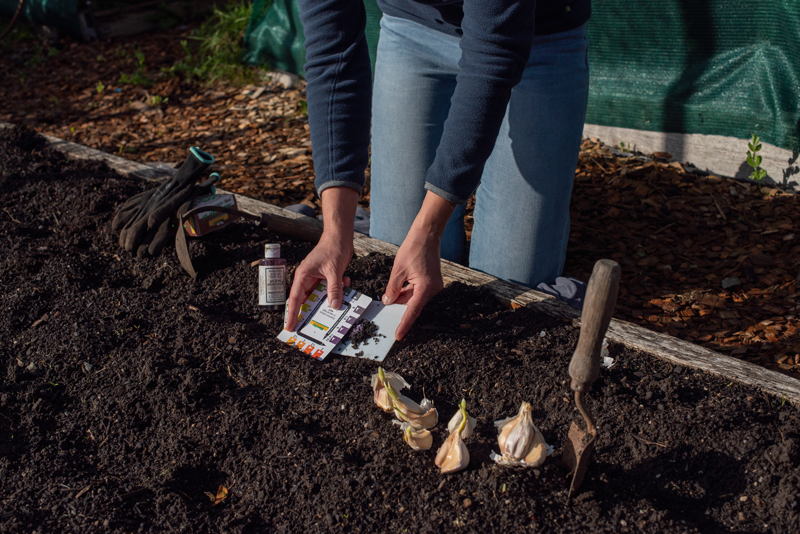
The Undergraduate Certificate in Sustainable Living will help you learn about sustainability on a local, national and international level, and align your studies with what sustainable living means for you. The multi-disciplinary nature of this course draws upon environment and ecology, resource use and design for living and well-being and health to promote sustainable living.
Throughout this course, you’ll learn practical knowledge about sustainability, and how to apply it to in your home, community, business or social enterprise.
The Undergraduate Certificate in Sustainable Living aims to give you a better understanding of your connection to sustainability as an individual, consumer, employee or citizen, and to enable you to make informed personal choices through being able to explain the key elements of sustainable living in contemporary society.
Study without tuition fees in 2027
For domestic students, the Undergraduate Certificate in Sustainable Living is offered with 100% tuition fee scholarship for students commencing in 2027. This means you pay NO tuition fees.
- 1 Compare and contrast divergent perspectives and knowledges of sustainability by reflecting on local sustainability solutions
- 2 Explain how contemporary sustainability approaches can augment day-to-day behaviours and activities of individuals, organisations and communities
The practical experiences of this Certificate will depend on your choice of units. You could be:
- growing a bigger, healthier and more productive garden thanks to your understanding of the Science of Gardening
- using the principles of Sustainable Design for Houses to inform your house renovations, with a focus on improving impact on the environment and your health
- identifying a range of fish species commonly caught in Australian recreational fisheries, as taught in the Science of Fishing unit
- Engaging in your community, exploring your local environment, and much more!
Career outcomes
Upon completing your Undergraduate Certificate of Sustainable Living, you will possess new skills, outlooks on living, and a deeper understanding of sustainability in an ever changing world which will complement your existing career direction.
Careers relating to Sustainable Living are also growing across many industries. If you wish to continue your studies towards a career in sustainability. the Diploma of Sustainable Living is available to help you further your skills and knowledge, further customising your learning journey towards a sustainability path that aligns with your interests.
Course structure
To graduate with the Undergraduate Certificate in Sustainable Living, you must complete the core unit, Communicating Sustainability, along with 3 elective units. We recommend that students who have not recently completed university-level study complete the course part-time. This may be with just 1-2 units initially. We suggest starting with an elective that holds the most interest to help ease back into studying. HEJ111 Communicating Sustainability should then be among the first 4 units studied.
To ensure your Undergraduate Certificate in Sustainable Living experience is tailored to your interests and sequenced to help support your learning, we encourage contacting our Team at DSL@utas.edu.au for personalised academic advice.
Sustainability is a central concept for communities pursuing social and economic goals within ecological limits. Yet the different ways sustainability is defined, communicated and enacted reflects the wide range of underlying values, perspectives and priorities at stake. In this unit,…
Credit Points: 12.5
| Location | Study period | Attendance options | Available to | ||
|---|---|---|---|---|---|
| Online | Semester 1 |  |  |  | |
| Semester 2 | | | | ||
- Key:
 On-campus
- Off-Campus
- International students
- Domestic students
In this online unit, you will develop your understanding of culture and the need for cultural responsiveness and cultural safety. You will begin to see culture in broad terms, and to explore the cultural and social influences that shape your…
Credit Points: 12.5
| Location | Study period | Attendance options | Available to | ||
|---|---|---|---|---|---|
| Online | Semester 1 | | | | |
| Semester 2 | | | | ||
- Key:
- On-campus
- Off-Campus
- International students
- Domestic students
View all details for CZZ104 Living and Working with Cultural Diversity
This unit aims to develop an awareness of environmental and human health impacts of housing in order to inform critical and creative decision-making in the design and renovation of houses. You will explore how housing affects our own health and…
Credit Points: 12.5
| Location | Study period | Attendance options | Available to | ||
|---|---|---|---|---|---|
| Online | Semester 1 | | | | |
| Semester 2 | | | | ||
- Key:
- On-campus
- Off-Campus
- International students
- Domestic students
View all details for KDA101 Introduction to Sustainable Design for Houses
This unit will build on your practical knowledge of sustainable design for houses, expanding your thinking to houses within landscapes - both natural and constructed - and interacting with climate, biodiversity, human health and urban and regional food systems. You…
Credit Points: 12.5
| Location | Study period | Attendance options | Available to | ||
|---|---|---|---|---|---|
| Online | Semester 1 | | | | |
| Semester 2 | | | | ||
- Key:
- On-campus
- Off-Campus
- International students
- Domestic students
View all details for KDA102 Sustainable Design for Houses and Landscapes
Earth is a lively and dynamic planet that is undergoing rapid changes wrought by the activities of humans. In what ways are these changes impacting on us and other species? Are we precipitating another mass extinction; the 6th major mass…
Credit Points: 12.5
| Location | Study period | Attendance options | Available to | ||
|---|---|---|---|---|---|
| Online | Semester 2 | | | | |
- Key:
- On-campus
- Off-Campus
- International students
- Domestic students
Human-induced climate change is the most serious problem currently facing our planet - a global problem with increasingly obvious local impacts. The Intergovernmental Panel on Climate Change (IPCC) has said that the next 10 years will be critical to averting…
Credit Points: 12.5
| Location | Study period | Attendance options | Available to | ||
|---|---|---|---|---|---|
| Online | Semester 1 | | | | |
| Semester 2 | | | | ||
- Key:
- On-campus
- Off-Campus
- International students
- Domestic students
View all details for KGA104 Introduction to the Science of Climate Change
The course of climate has been altered by humans. Swift but carefully considered and designed action to reduce greenhouse gases and our production of them will be essential for minimising the damage to our planet that is occurring due to…
Credit Points: 12.5
| Location | Study period | Attendance options | Available to | ||
|---|---|---|---|---|---|
| Online | Semester 2 | | | | |
- Key:
- On-campus
- Off-Campus
- International students
- Domestic students
The challenge of ensuring adequate and sustainable food production and equitable access to food for a diverse human population in the 21st century is crucial and profoundly complex. This unit helps you contribute to meeting this challenge. The interdisciplinary skills…
Credit Points: 12.5
| Location | Study period | Attendance options | Available to | ||
|---|---|---|---|---|---|
| Online | Semester 1 | | | | |
- Key:
- On-campus
- Off-Campus
- International students
- Domestic students
In this unit, we are going to explore the science underlying what you do in your garden, why your plants respond to your gardening, and how plants grow and reproduce. What we hope that you will gain, is a much…
Credit Points: 12.5
| Location | Study period | Attendance options | Available to | ||
|---|---|---|---|---|---|
| Online | Semester 2 | | | | |
| Trimester | | | | ||
- Key:
- On-campus
- Off-Campus
- International students
- Domestic students
This unit aims to develop your awareness of the ecological processes operating in your garden, to assist informed decision making about garden design and management. You will explore the environmental parameters of your garden (e.g. macro and microclimate, geology, and…
Credit Points: 12.5
| Location | Study period | Attendance options | Available to | ||
|---|---|---|---|---|---|
| Online | Semester 1 | | | | |
| Semester 2 | | | | ||
- Key:
- On-campus
- Off-Campus
- International students
- Domestic students
Biodiversity is a critical component of sustainable living and is central to several of the United Nations Sustainable Development Goals. At a local scale, biodiversity is important for healthy and sustainable living, and due to the complexity of biodiversity issues…
Credit Points: 12.5
| Location | Study period | Attendance options | Available to | ||
|---|---|---|---|---|---|
| Online | Semester 1 | | | | |
| Semester 2 | | | | ||
| Trimester | | | | ||
- Key:
- On-campus
- Off-Campus
- International students
- Domestic students
Living with Fire is a level-100 unit offered as part of the Diploma of Sustainable Living. Fire has shaped the evolution of the world we see around us and is fundamental to life. Yet wildfire can also be devastating to…
Credit Points: 12.5
| Location | Study period | Attendance options | Available to | ||
|---|---|---|---|---|---|
| Online | Semester 1 | | | | |
| Semester 2 | | | | ||
| Trimester | | | | ||
- Key:
- On-campus
- Off-Campus
- International students
- Domestic students
In this unit you will not only learn about the science behind fishing techniques and how these interact with the biology and behaviour of a species, but also how recreational fisheries are sustainably managed and how you can be a…
Credit Points: 12.5
| Location | Study period | Attendance options | Available to | ||
|---|---|---|---|---|---|
| Online | Semester 1 | | | | |
- Key:
- On-campus
- Off-Campus
- International students
- Domestic students
In this unit, you will be introduced to the concept of sustainability starting with the transformations necessary for achieving the 17 United Nations Sustainable Development Goals (SDGs) in a way that organises them into 6 logical groups. You will examine…
Credit Points: 12.5
| Location | Study period | Attendance options | Available to | ||
|---|---|---|---|---|---|
| Online | Semester 1 | | | | |
| Semester 2 | | | | ||
- Key:
- On-campus
- Off-Campus
- International students
- Domestic students
Entry requirements
This Undergraduate Certificate is open to applicants from a broad range of backgrounds.
Domestic Applicants who have recently completed secondary education
- Completed the TCE (or equivalent)
Domestic Applicants with higher education study
- Completed at least one undergraduate unit (equivalent to 12.5 UTAS credit points).
Domestic Applicants with VET / TAFE study
- A completed VET Certificate III or higher
Domestic Applicants with work and life experience
If you have not successfully completed senior secondary, tertiary or TAFE/VET study, but have relevant work and life experience you can complete a personal competency statement. You may be eligible for an offer if you have work and life experiences that demonstrate a capacity to succeed in this course.
Prerequisites Nil
SPECIAL CONSIDERATION
If your ability to access or participate in education has been affected by circumstances beyond your control, you can apply for special consideration as part of your application. We will consider a range of factors for special consideration, including economic hardship, a serious medical condition or disability. We can only approve applications for special consideration where we are confident that you have the necessary skills and knowledge to succeed in your studies. If your application is not approved, the UTAS admissions team will work with you to find the best alternative pathway to your chosen course. Special consideration is not available for international applicants.
How to apply for a credit transfer
Applications for credit can be made in your course application. Find out more information about how to apply for a credit transfer/advanced standing at Recognition of Prior Learning.
Talk to us on 13 8827 or enquire online about your credit transfer.
Students completing the Undergraduate Certificate in Sustainable Living will receive advanced standing for four 12.5 credit point units of the Diploma of Sustainable Living.
Detailed admissions information and advice for all undergraduate courses, including comprehensive, course-level student profiles, is available from UTAS Admissions.
Fees & scholarships
Domestic students
Commonwealth supported places (CSP) are available for this course. For eligible domestic students, this means your fees will be subsidised by the Australian Government. You’ll only need to pay the student contribution amount for each unit you study within the course.
Commonwealth Supported Place indicative annual fee: $4,119
How is this calculated?
This is an estimate. The calculation is based on the average full-time enrolment for this course in 2026. All figures are indicative only for 2027. Actual tuition fees will depend on specific unit enrolment, and are subject to annual increases each year. You can find the complete fee details for each unit of study on the individual unit pages. The units for this course are found in the course structure section of this page.
These figures do not include other costs such as the Student Services and Amenities Fee (SSAF). For further information, please visit Scholarships, fees and costs.
HECS-HELP loans
You may be able to defer payment of the student contribution amount by accessing a HECS-HELP loan from the Government. If eligible, you’ll only have to pay your tuition fees once you start earning above a specific amount.
Further information on student loans and a CSP eligibility checker can be found at Australian Government Study Assist.
Domestic scholarships
The Undergraduate Certificate of Sustainable Living is available with 100% HECS and SSAF fee scholarship for eligible domestic students commencing study in 2027. This means you can have NO fees to pay.
Fee scholarship details
For domestic students commencing study in 2027, we are pleased to offer this degree with a 100% HECS and SSAF fee scholarship. This scholarship is not available for OUA students.
Eligibility
This scholarship is valid for students admitted and commencing this course in 2027 provided the following eligibility criteria are met. If you are eligible, the HECS and SSAF scholarship will be automatically applied upon enrolment. This scholarship is valid for units offered in 2027 only.
- You are an Australian citizen or permanent resident (i.e. eligible for a Commonwealth Supported Place [CSP]).
- You are enrolled in the Undergraduate Certificate of Sustainable Living and commence study 2027.
- You must be enrolled in a minimum of one unit and must remain enrolled until after the University Census Date relevant to the semester of study. If you are on an approved Leave of Absence (LOA), you are exempt from this requirement for the duration of your approved LOA.
- To retain this fee scholarship, you must engage with your enrolled units. If you have not engaged and receive a result of AN (Absent deemed failed) for all enrolled units in a given study period, will not retain the scholarship/discount from the following study period onward. You cannot then apply to have the scholarship/discount reinstated.
- Not be excluded from the course based on academic progress or misconduct.
If I'm eligible, when will my scholarship be applied?
If eligible, we will endeavour to apply your scholarship within 14 days of your enrolment, and it will be applied no later than census day of your commencing study period. This can mean that between your enrolment and the scholarship being applied, you may see the full unit cost, including SSAF, reflected in eStudent.
If you have questions about your enrolment or scholarship, please contact us at course.info@utas.edu.au.
For information on general scholarships available at the University of Tasmania, please visit the scholarships website.
Continuing students
If you are a continuing student, please contact UniConnect for fee scholarship information relevant to your enrolment.


Share this page
How can we help?
Do you have any questions about choosing a course or applying? Get in touch.