
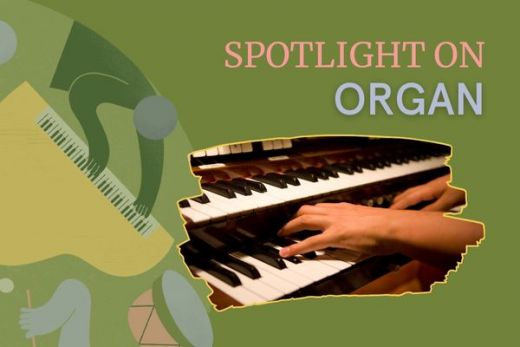
Ever tried patting your head and rubbing your stomach? Playing the organ can sometimes feel like that! It's an incredibly rewarding challenge to play and requires a unique set of skills.
The Organ Syllabus helps you build upon your keyboard knowledge to learn and apply the skills needed to transform you into an organist.
What sort of pieces are in the Syllabus?
You'll choose your exam program for the set Lists, which include a broad range of genres, styles, and periods. These Lists include works specially written to develop specific techniques and feature popular and well known organ works from pre-baroque through to twentieth century.
What's involved in an Organ exam?
There are two types of exams you can do: Comprehensive and Repertoire. Just as it suggests, a Comprehensive exam involves demonstrating your learnings across a comprehensive set of components. You'll prepare your program of music and technical work, answer questions on general knowledge, and be tested on aural and sight-reading. The Technical Work includes scales and arpeggios but delves deeper into skills to set organists up for success, such as pedal exercises and transposition.
Alternatively, you could do a Repertoire exam, where you perform only your pieces, demonstrating your technique and knowledge through the repertoire. Flexibility exists to choose a range of genres and styles through the set lists, and option of Own Choice works broadens your choices even further (Repertoire exams only). As long as the piece is the same standard and educational value as your Grade, you can choose pretty much anything. Repertoire Exams are a great way to get a practice run at your TCE or UTAS exams. Repertoire exams are available across all syllabuses except Band.
In addition to AMEB qualifications, you'll receive constructive feedback and guidance to help in guiding your final preparations for your future performance goals.
How does the Organ Syllabus differ from the Piano Syllabus?
The Organ syllabus commences at Grade 3, with learners expected to already have a minimum keyboard standard of AMEB Grade 5 Piano. The Piano Syllabus is an excellent starting point if you're wanting to transition to the Organ and the technical facility you develop will support you to focus on the specifics and nuances of playing the organ, rather than learning notes and rhythms from scratch. At this time, the Organ syllabus doesn't have a Certificate of Performance exam to cap off Level 2.
Where do I do my organ exam? What instrument will I use?
That's up to you. Each instrument has its own features and limitations so we're happy to send an Examiner to you (and your organ) so you can show off your skills just as you've been practicing them.
We recommend consulting the Syllabus in preparing for your exam, particularly as it contains instrument requirements.
What other resources are available?
All of our syllabuses outline the objectives and requirements for each exam so that's always the best place to start. We also have practice books to help you with your aural and sight-reading skills. Head to your favourite local music retailer or the AMEB Online Shop for these and more.
Can I get TCE Points for an Organ exam?
Yes you can! And that goes for any AMEB syllabus. In fact, all practical exams are eligible for TCE bonus points from Grade 4 onwards, as well as Theory Grade 2+.
I have more questions.
That's great! We'd love to help with those. Please feel free to browse the other great sources of information on our website or get in touch to find out more.
