
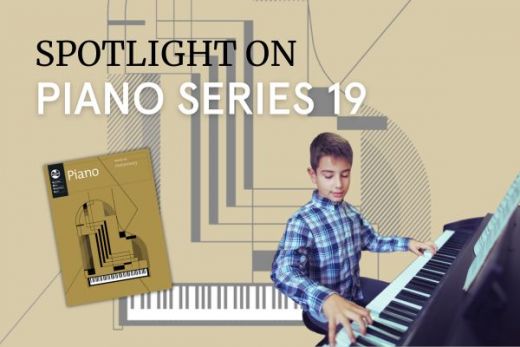
As a piano learner or teacher, there's a HUGE amount of great repertoire to choose from. But what if someone had already done the hard work to find engaging, fun, enjoyable, and varied pieces, and popped them in a book that was specially graded so they'd both challenge and support any stage of development? You're in luck - that's exactly what these Piano Grade books are!
Series 19 features:
- Grade books from Preliminary to Grade 8
- Handbooks for Levels 1 and 2
- Teacher pack, including all publications at a discount (grab them before they're sold out!).
- No changes to the Syllabus, other than to add these fantastic new pieces to the Lists.
What's in a Grade book?
Music! These books contain a selection of pieces that cover a variety of genres and compositional periods. As the name suggests, the books are linked to Grades. Each book has its own learning stage - the Grade - that aligns neatly to our Piano Syllabus. That means that, if you're learning at a Grade 2 standard, then you'll find lots of fantastic pieces in the Grade 2 Grade book that will suit your capability. The Grade books are available from Preliminary to Grade 8 and each include at least one piece from each of the Syllabus Lists - you could select your whole exam program from one Grade book! This isn't just convenient but much cheaper than shopping around for lots of single pieces.
What styles of pieces are included?
So many! Every period is included from renaissance and baroque through classical and romantic to contemporary classical. There are pieces featuring loads of great traditional classical plus jazz, ragtime, rock, and folk music. Learners will also love the character pieces which feature descriptive titles to get their imagination inspired.
What else will I find in the Grade books?
It's a wonderfully diverse selection of music so you'll find a lot of gems, including works by Australian and female composers. Each Grade book also has something for those looking for extension and challenge. The pieces also offer a platform through which to introduce and refine the specific techniques that are gradually introduced throughout the Piano Syllabus.
What are the Handbooks for?
Handbooks are a complete guide to the General Knowledge section AMEB Comprehensive exams. They include detailed analyses and information about historical, biographical and interpretative elements of each piece in the corresponding Grade books, plus a glossary of key terms. Whether you're doing a Comprehensive or Repertoire exam, this is a fantastic resource to help you fully explore, understand, and realise the music within the notes.
Who was this handy person who picked the music?
Angela Turner. The acclaimed Australian pianist and educator is in demand as a performer, adjudicator, and presenter. She is an AMEB Examiner and has previously worked on repertoire selections for Series 18 Level 1, Syllabus Manual Lists, and duet selections for the Piano Collaborative Syllabus. Angela returns as the Principal Keyboard Syllabus Consultant for Series 19, bringing her wealth of experience and enthusiasm for all genres of piano music. Angela pored over hundreds of works to select a set of pieces that packs a punch.
How do the Grade books come together?
Angela spent a year reviewing and selecting repertoire. Over multiple iterations to satisfy licencing agreements, she was finally able to add fingerings, markings, and editing. She then wrote the teaching notes, which constitutes over 30,000 words! While this all takes a lot of time, it afforded time to refine the selection and road test pieces on students and teachers. Overall, about 30,000 pieces were considered for the selection of just 130.
Angela was driven to find pieces that:
- are engaging for students
- Teachers would love to hear (over and over again).
- Some things that teachers have seen before (for comfort).
- Some things that probably haven't been seen before but are valid and worthy of inclusion.
- Celebrate diversity.*
- Educational merit was at the very forefront of all of this.
*In celebrating diversity, Series 19 is possibly the most diverse selection of composers in a Grade book Series ever. 23 different nationalities are represented, reflecting the multicultural population of Australia. The first ever Vietnamese composer has been published in a Grade book, and a bonus work was even included to enable greater representation of Australian and women composers. In fact, 45% of works in List D are by Australians. This includes a fabulous work by Brenda Gifford, a Yuin composer, which has been commissioned through AMEB's First Nations Composers' Program.
Secondly, Angela aimed to:
- Bring new freshness and energy to the Syllabus.
- Respect the classical heritage but bring some of the abundant joy that the Piano for Leisure Syllabus is known for.
- Connect technical exercises to the pieces.
And, just because she wanted to take it to the next level, Angela even went as far as to look for relationships between composers, such as how students and children lead us directly from Bach, through Mozart and Beethoven, to today.
Do I have to use a Grade book to do my exam?
Not at all. Like most of our publications, they're resources designed to help you with your learning goals but they're not essential reading. Except for the Syllabus, of course - that's definitely going to be something you want to check to ensure you've prepared everything you need for your exam.
Can I get TCE bonus points for a Piano exam?
Yes you can! And that goes for any AMEB exam, including all Rockschool and PAA syllabuses. In fact, all practical exams are eligible for TCE bonus points from Grade 4 onwards, as well as Theory Grade 2+.
When can I do a Piano exam?
If you'd like to do a face-to-face exam, we offer exams in five sessions each year: Session 1 is generally just before the end of term 1; Session 2 is through June and July; Session 3 is in August (Private venue in Burnie only); Session 4 in September; and Session 5 is across October and November. Alternatively, you can record a Video Exam absolutely any time that suits you. To find out more about exam dates, head to our Exam information page.
I have more questions.
That's great! We'd love to help with those. Please feel free to browse the other great sources of information on our website or get in touch to find out more.
