

Build a secure health career, right here at home
Health professionals are essential to Tasmania’s future. If you’ve been considering a new path, there is a place for you in Tasmania’s growing healthcare workforce, and we can help get you there.
You don’t need to have it all figured out. We’re here to help you get started.
Whether you're returning to study, changing careers, or just exploring your options, we offer flexible entry pathways and full support to help you succeed, even if university feels unfamiliar or out of reach.
Let us help you on your journey

Study where you live and work
Study close to home, where local experience leads to local employment.

Be a part of Tasmania’s future
Studying health here means building your career while supporting the communities you care about.

Offering support from your first enquiry to graduation
Study with the confidence that support is always available.
Explore your future in health
Not sure where to start? Answer a few questions below, selecting all that apply, and we’ll contact you to help with anything you need.
Prefer to speak to someone? Book a phone call.
What’s motivating you to explore study right now?
(Click on an option to select / unselect all that apply)
Do you already have relevant experience or qualifications?
(Click on an option to select / unselect all that apply)
Are there any concerns or things you might need help with?
(Click on an option to select / unselect all that apply)
How would you prefer we contact you?
(Click on an option to select)
Tasmania’s in-demand health careers
Learn about key roles across Tasmania’s health sector, what you’ll do in each job, and the courses that prepare you for those careers.
Counsellors support others through tough times, helping with relationships, grief, stress, and more. You’ll learn how to listen, guide, and make a difference.
What you’ll do:
- Build skills in communication and empathy
- Learn practical counselling techniques
- Support individuals and families in your community
Where it can take you:
- Counselling and mental health services
- Community and social services
- Health and disability support
- Education and training
- Human resources and business application
- Justice, policy and planning
How to get started:
A great starting point
The Diploma of Counselling is designed as an introductory course and a good place to start if you’re new to counselling.
Become a registered counsellor
To become a register counsellor you will then need to complete the Graduate Diploma of Counselling.
Keep studying
If you're interested in further study, you can progress with credit into the Bachelor of Psychological Science.

Pharmacists are trusted health professionals who give advice, prepare medicines, and support people in staying well - especially in regional communities.
What you’ll do:
- Learn how medications work and how to use them safely
- Talk with patients and explain treatments
- Work in pharmacies, hospitals, or health centres
- Collaborate with doctors, nurses, and other healthcare providers to improve patient outcomes.
Where it can take you: A trusted role with strong job security
- Community and hospital pharmacies
- Government agencies (e.g. Therapeutic Goods Administration)
- Military services
- Aged care and general practice clinics
- Aboriginal health services
- Academia, research, and pharmaceutical industry
- Specialist areas such as oncology, emergency medicine, mental health, sports medicine, and more.
How to get started:
If you have completed year 12, you can apply directly into the Bachelor of Pharmacy with Honours. Please note there are some subject prerequisites, but we can help you with this when you apply.
If you have not completed year 12, get started with the Diploma of Pharmacy Studies.
Student stories
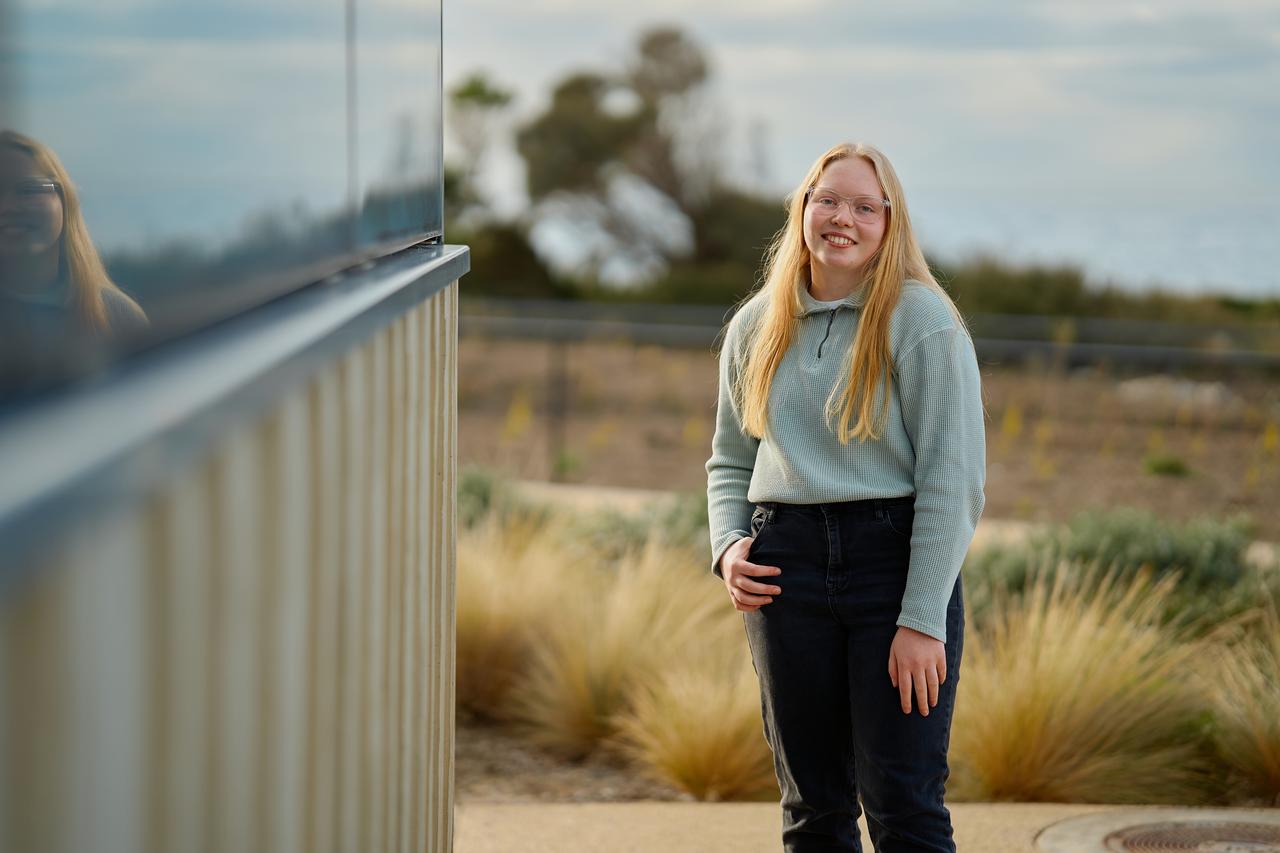
Iris finds a path to pharmacy without moving away from home
Iris chose pharmacy because of the job opportunities and her ambition to have a career in health and medicine.
I especially wanted to study in Burnie, and that was a really big part of the decision as well, being able to stay close to family here, and home.
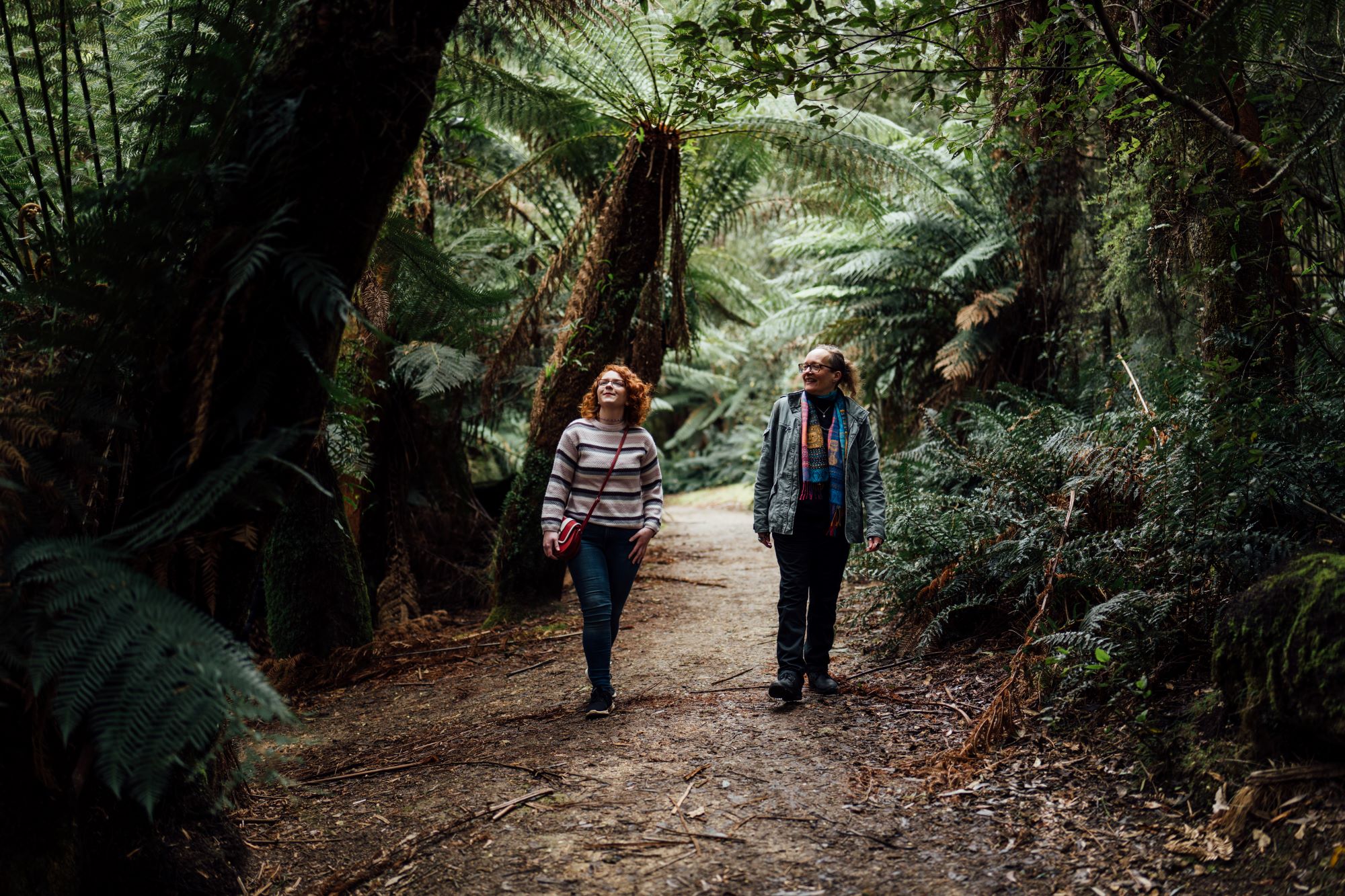
Social workers support people through life’s challenges - from housing and health to family and safety. You’ll be a voice for change and a guide for those who need it.
What you’ll do:
- Learn how to support people in crisis
- Understand social systems and services
- Work in schools, hospitals, or community organisations
Where it can take you:
- Child, youth and family support
- Mental health and wellbeing
- Community and social services
- Policy, research and advisory roles
- Case management and support services
- Project and program coordination
How to get started:
If you have a year 12 qualification or a Diploma, you can move straight into the Bachelor of Social Work with Honours.
Otherwise, you can get started with the Diploma of University Studies (Social Work).
Student stories
Motherhood pushed Miranda toward studying a Bachelor of Social Work.
She describes the experience as a life-changing journey, driven by compassion, lived experience, and the dream of creating a better future for her daughter.
I want to advocate for people who might not have a voice. Helping others access support and feel seen, that’s the kind of impact I want to make.

Psychologists help people improve their mental health and wellbeing. You’ll learn how the mind works and how to support others through life’s challenges.
What you’ll do:
- Study the human brain and behaviour
- Learn how to support mental health
- Prepare for roles in professional psychology, research, or further study
Where it can take you:
- Counselling and mental health services
- Community and social services
- Health and disability support
- Education and training
- Human resources and business application
- Justice, policy and planning
Demand for Psychologists is projected to increase by 29.8% by 2033, according to Jobs and Skills Employment Projections.
How to get started:
You can start with the Diploma of University Studies (Psychology) or move straight into the Bachelor of Psychological Science
Interested in Creative Arts and Health? Engagement with the creative arts can bring joy, restore self-confidence, improve mental and physical wellbeing and contribute to improving the quality of life for everyone.
Learn more about Pathways to becoming an AHPRA registered Psychologist at the University of Tasmania (PDF 57.3 KB)

Nurses are the backbone of our health system. Whether you're working in aged care, hospitals, or community health, nursing offers a stable career with real impact.
What you’ll do:
- Learn practical skills in real-life settings
- Work with patients of all ages
- Help people feel safe, supported, and cared for
Where it can take you:
A stable job with strong demand across Tasmania, Australia and the world. Nurses work in a wide range of areas including:
- Hospitals including emergency medicine, operating rooms, paediatrics, and midwifery
- Community health including in schools and child health clinics
- Specialist clinics including cancer clinics, renal clinics, rehabilitation, and cosmetic nursing
- Rural and remote healthcare
- Aged care
- Disability and rehabilitation services
- GP Clinics
- Nursing education, administration and research.
How to get started:
If you have a year 12 qualification or a CertIV you can move straight into the Bachelor of Nursing as a three-year or two-year accelerated course.
Otherwise you can get started with the Diploma of University Studies (Nursing Foundation Studies) our 1-year pathway course.
Student stories
Kasey studied a Bachelor of Nursing
Driven by her passion for helping others – and growing up surrounded by others in healthcare – Kasey Marshall said she felt nursing was always her calling.
I had a really lovely patient and I was just helping them, and they were being so thankful. It was the first time the nurses had seen them smile in a while and I could see them brightening up and it just opened my eyes. And I was like, this is definitely it for me.
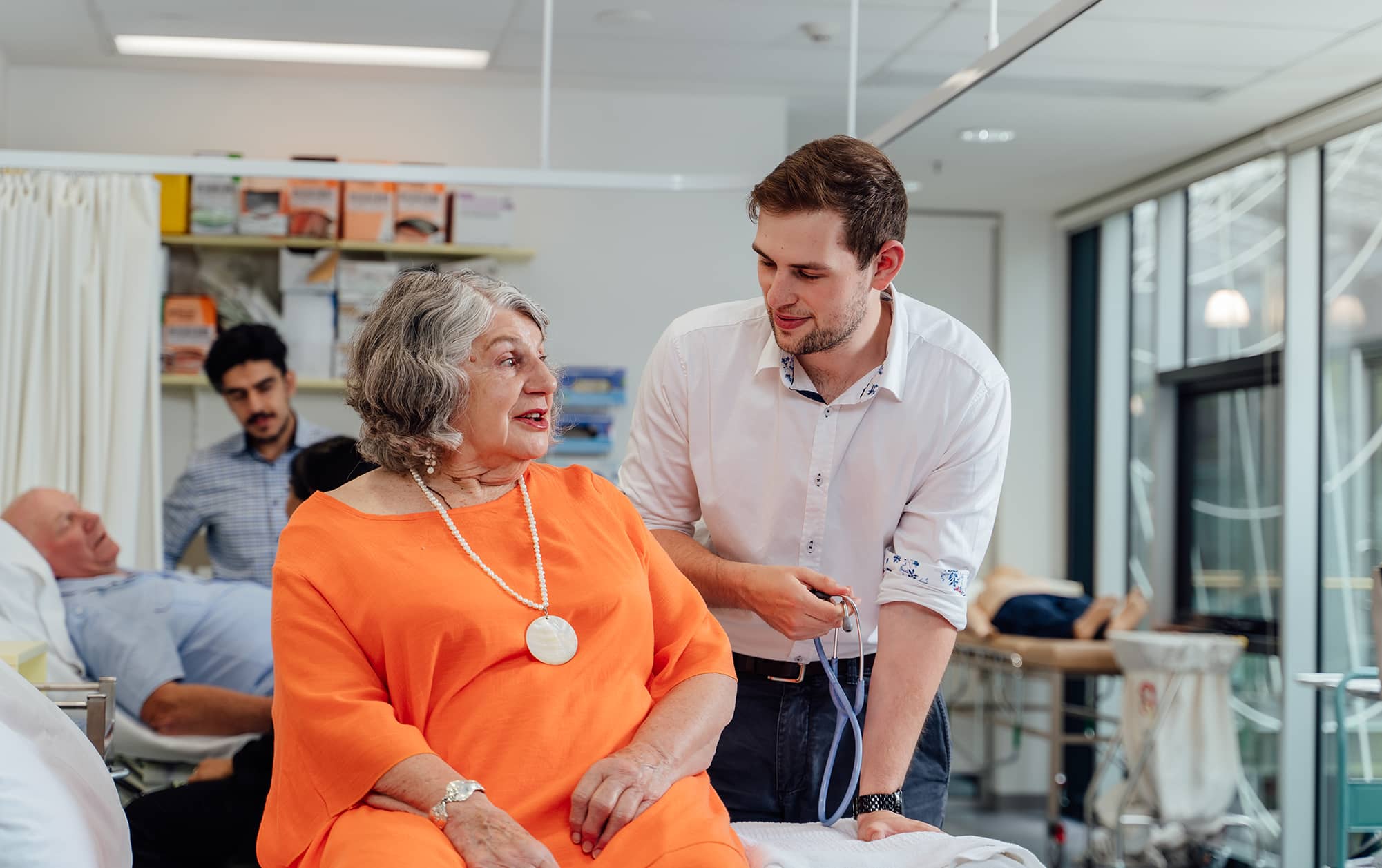
Doctors in regional areas are more than healthcare providers—they’re leaders, problem-solvers, and trusted members of the community.
What you’ll do:
- Learn how the body works and how to treat illness
- Train in hospitals and clinics
- Build strong relationships with patients
Where it can take you:
- General practice, emergency care, or specialist medicine
- A long-term career with deep community impact
How to get started:
Check the Bachelor of Medical Science and Doctor of Medicine course page for entry requirements.
Our Tasmanian Rural Training Stream facilitates entry of Tasmanian rural applicants to the BMedScMD and recognises our commitment to building a healthcare workforce for all Tasmania.
Find out more about Bachelor Medical Science and Doctor of Medicine
Student stories
Studying medicine on the Cradle Coast
Meet Jemma, one of our medicine students who is studying at the Rural Clinical School in Burnie.
At the Rural Clinical School in Burnie you get a lot more hands-on experience, and more one-on-one time with the tutors.
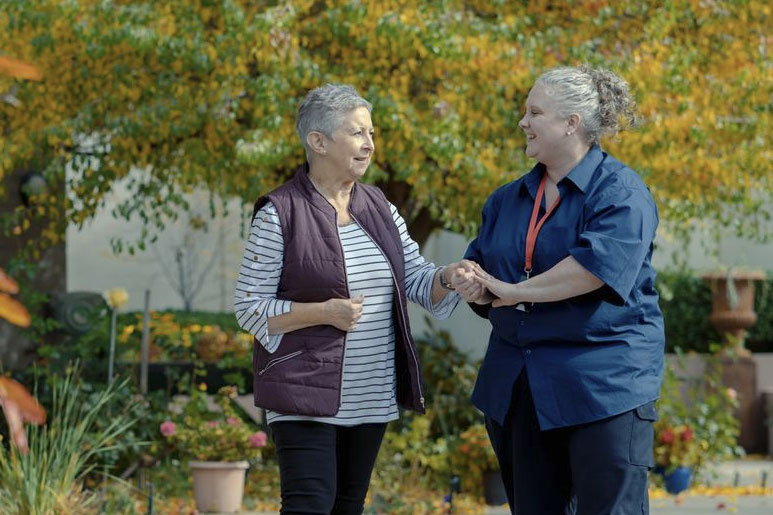
Dementia care professionals help improve quality of life for people with dementia and their carers. You’ll learn how to provide compassionate, informed support.
What you’ll do:
- Understand dementia and its impacts
- Learn practical care strategies
- Support families and aged care teams
Where it can take you:
- Aged care
- Community health
- Support services
- Dementia consultancy, education and training
How to get started:
You can get started with the Diploma of Dementia Care - it's fully online and offered with a 100% tuition fee scholarship. This means you pay NO tuition fees.
If you're interested in further study, you can progress with credit into with the Bachelor of Dementia Care.
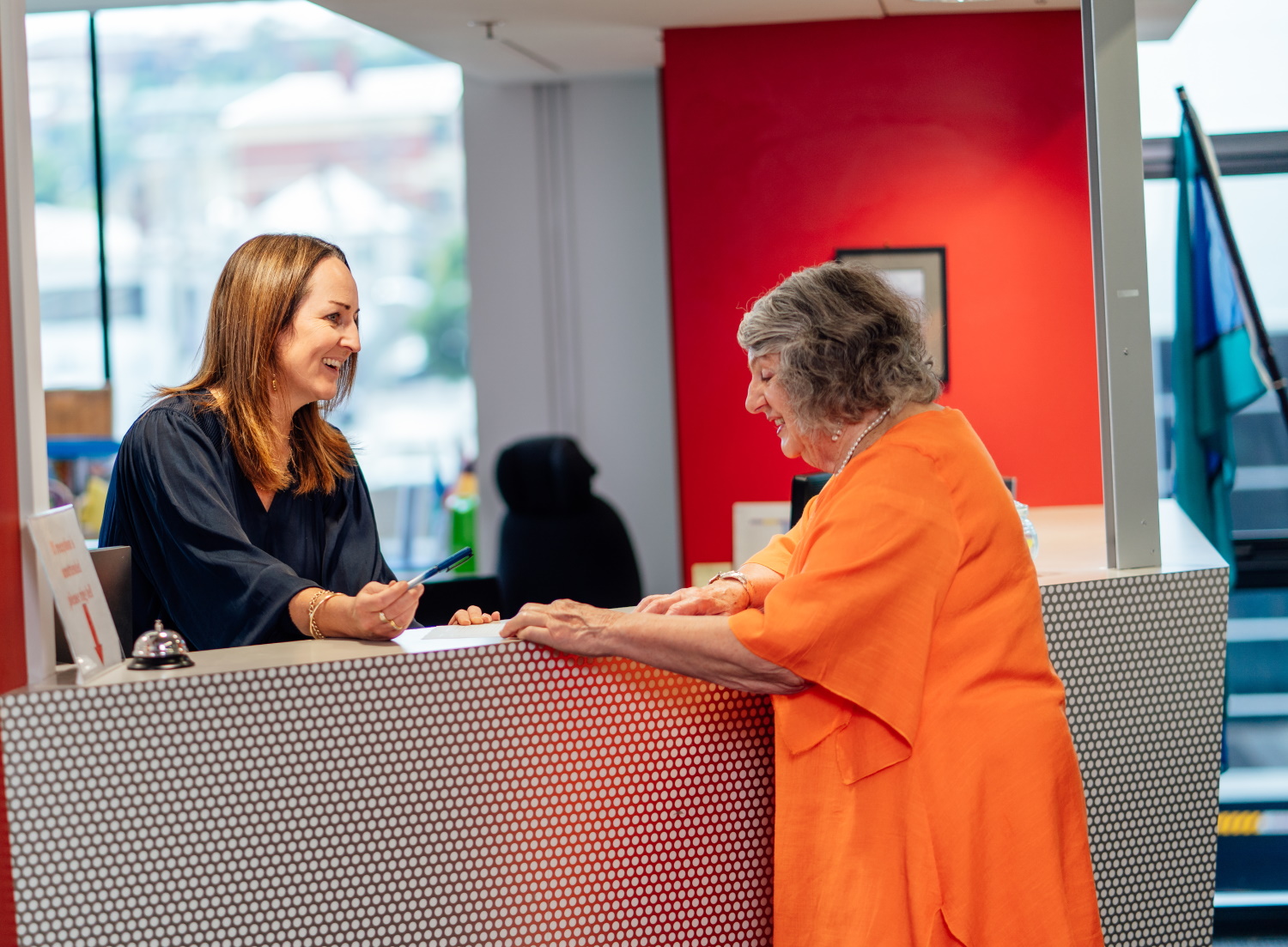
Allied health and support workers help people live healthier lives through rehabilitation, care coordination, and community services.
What you’ll do:
- Learn practical health and care skills
- Support people with disabilities, injuries, or chronic conditions
- Work in teams across health and community settings
Where it can take you:
- Health and community support roles
- Community engagement
- Project and administrative roles
- Policy, planning and advocacy
How to get started:
Complete the Undergraduate Certificate in Community Support as a starting point and move on to the Diploma of Applied Health and Community Support.
You’ll learn how the human body functions at a molecular and cellular level and how scientific discoveries translate into real-world medical advances.
What you’ll do:
- Study human biology, disease processes, and biomedical science
- Learn laboratory, analytical, and research skills
- Explore how research leads to new diagnostics, treatments, and therapies
- Build a strong foundation for honours, postgraduate study, or research careers
Where it can take you:
- Medical and biomedical research
- Laboratory science and diagnostics
- Pharmaceutical and biotechnology industries
- Public health and medical innovation
- Research institutes and universities
- Further study in medicine, research, or allied health fields
Demand for biomedical and medical researchers is strong, driven by advances in medical technology, ageing populations, and ongoing global health challenges.
How to get started: If you have a year 12 qualification or a Diploma, you can move straight into the Bachelor of Biomedicine.
Otherwise, you can get started with the Diploma of University Studies.
You can also work towards a Master of Laboratory medicine through the all-new Bachelor of Biomedicine/Master of Laboratory Medicine double degree, where you can graduate with both degrees in just four years.
Turn your experience into a qualification
Have previous, transferable skills? Use your existing experience to step into study with confidence and gain a health qualification that strengthens your career options across Tasmania’s hospitals, community services and regional health settings.
If you’ve already completed some relevant study, you may be eligible to apply for credit that counts towards the requirements of the degree you’re applying for. Recognised prior learning can reduce the number of units you need to complete, helping you save time, lower study costs, and focus on learning areas that are new to you.
Your background doesn’t just help you get started, it also makes studying easier. Real world experience gives you a solid foundation to understand new concepts faster, connect theory with practise, and stay motivated as you build on what you already know.
Shaping a creative future in health and wellbeing.
Creative practice has always been a grounding force for Linda Crispin.
When she needs to clear her head or refocus, she turns to drawing and painting, something that’s shaped both her personal life and professional direction.
Studying online allowed her to combine her lived experience of mental health, interest in the ageing brain and passion for community connection with health‑focused creative study, shaping new and purposeful goals for her creative future.
Make a difference close to home
Studying health in Tasmania means making a real impact in your own community, whether you’re in Queenstown, Burnie, Launceston or Hobart. Our graduates support patients, families and communities across the state every day in hospitals, aged care, primary health, mental health and community services. Many began their journey balancing work, family and community responsibilities, just like you, and today they’re strengthening Tasmania’s health workforce and supporting the people around them.
Learn more about their journeys
Supporting you to study

Scholarships, fees and costs
Costs should never be a barrier to university. University can seem expensive, but we have plenty of ways to make it affordable and accessible.
Learn more

Our accommodation
We have a range of on-campus accommodation available to students. All of our accommodation is in high demand, so now is a good time to consider your options.
Learn more

Glossary
Confused by words and terms used by universities? Don't be! Here is our friendly guide to help. And remember, you can always contact us for more information.
View glossary
Supporting you to study
Scholarships, fees and costs
Costs should never be a barrier to university. University can seem expensive, but we have plenty of ways to make it affordable and accessible.
Learn more
Our accommodation
We have a range of on-campus accommodation available to students. All of our accommodation is in high demand, so now is a good time to consider your options.
Learn more
Glossary
Confused by words and terms used by universities? Don't be! Here is our friendly guide to help. And remember, you can always contact us for more information.
View glossary
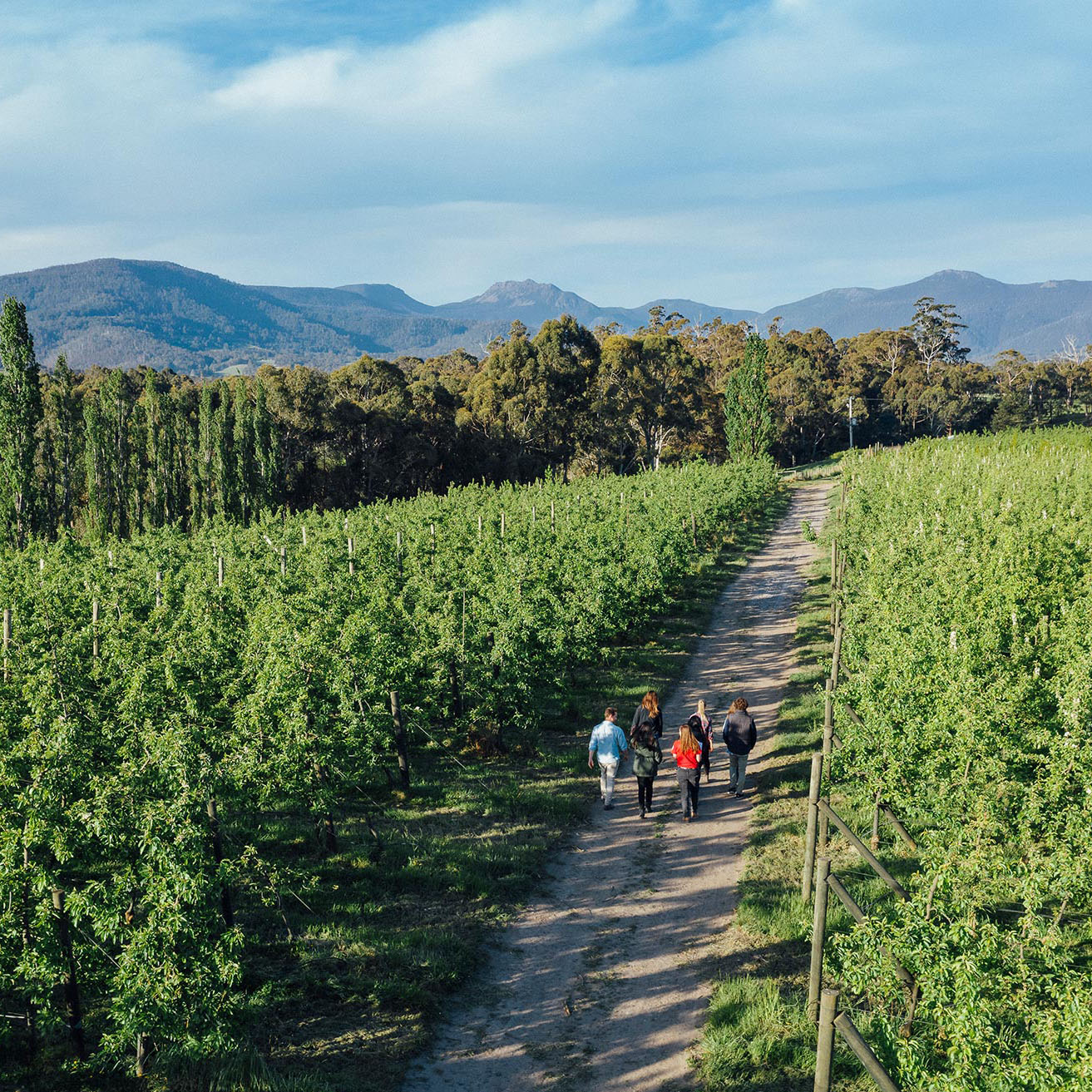
Take the next step
Applying to study with us is free using our simple online form.
Find out how to apply, to get started.
We encourage you to apply for the courses you most want to study. If you're not eligible to enter your chosen course right now, our admissions team will work with you to find the best pathway option.
If you would like help applying, please enquire with our friendly team. You can even set up an appointment to be guided through the process.
Take the next step
Applying to study with us is free using our simple online form.
Find out how to apply to get started.
We encourage you to apply for the courses you most want to study. If you're not eligible to enter your chosen course right now, our admissions team will work with you to find the best pathway option.
If you would like help applying, please enquire with our friendly team. You can even set up an appointment to be guided through the process.
Take the next step
Applying to study with us is free using our simple online form.
Find out how to apply to get started.
We encourage you to apply for the courses you most want to study. If you're not eligible to enter your chosen course right now, our admissions team will work with you to find the best pathway option.
If you would like help applying, please enquire with our friendly team. You can even set up an appointment to be guided through the process.