

When Katie first encountered agriculture, it wasn’t through family farming traditions or a rural upbringing.
It was during a gap year in Africa, while volunteering on community development projects, that she recognised agriculture as something far broader than she had imagined.
“I realised there was no better way to foster community, enhance ecosystems, and develop economies than through the strategic application of agriculture,” Katie said.
Originally from Hobart, Katie considered studying agriculture on the mainland. She ultimately chose to return home, drawn by Tasmania’s diverse agricultural landscape and the close connection between study and industry.
In 2013, she enrolled in the Bachelor of Agricultural Science in the Tasmanian Institute of Agriculture at the University of Tasmania, graduating in 2016 before completing a one-year honours thesis in 2017.
She majored in sustainable agriculture and food production, with a particular interest in soil science and plant sciences, complementing her studies with geology electives that deepened her understanding of the landscapes shaping Tasmania’s farming systems. Katie admits her early perception of agriculture leaned toward the romantic.
“It’s easy to picture rolling hills, open fields, and sunset tractor rides,” she said. “But agriculture is much more demanding than that.”
Much of Katie’s learning took place beyond the classroom. In Tasmania, agricultural environments and communities are all within easy reach, making fieldwork a central part of the degree. Soil science excursions, in particular, helped her connect theory to real-world landscapes and understand how land is managed across different contexts.
The course also provided strong links to industry. Guest lecturers, work experience requirements and industry exposure gave Katie a clearer sense of the range of careers available and helped her refine her interests. Along the way, she built professional relationships that felt genuine and practical.
For students without a traditional farming background, these connections can make all the difference, turning study into a pathway into the industry.
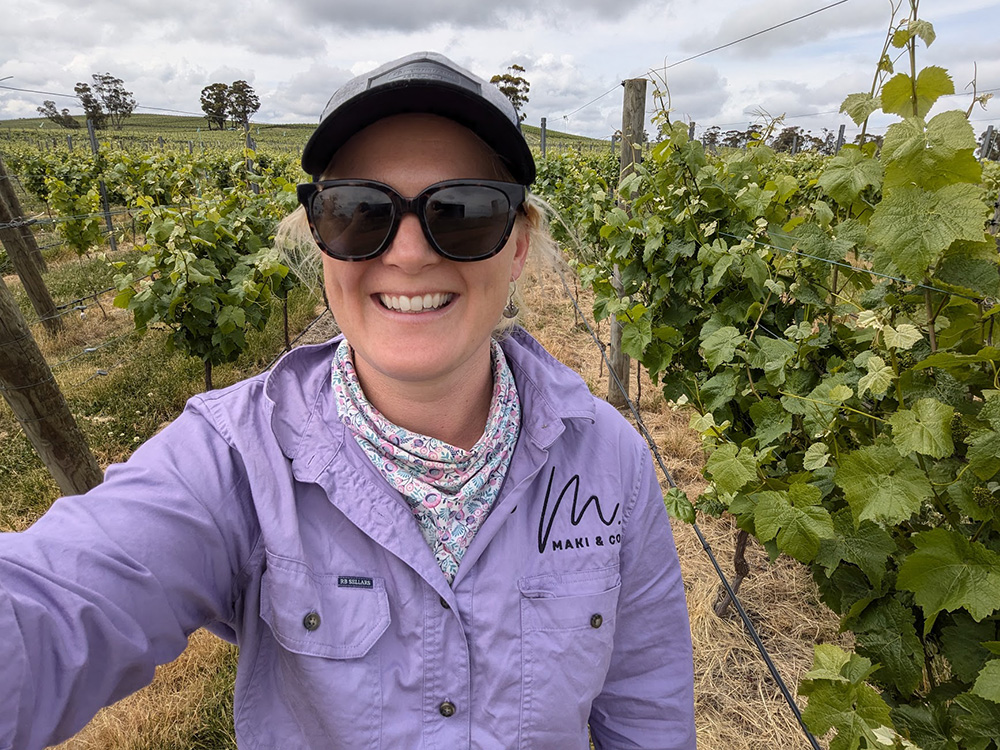
Katie’s career path didn’t follow a straight line. She started work in hydroponic berry production, gaining experience in high-intensity horticulture. It gave her experience in labour, pest and disease management, and irrigation skills that proved invaluable for the next step in her career: viticulture.
That transition was driven by her long-standing love of wine and her desire to return to working with soil. She also found herself drawn to the seasonal rhythm of vineyards, and admired working with people who put their heart and soul into a crop all season.
“I find the seasonality of viticulture incredibly rewarding. I particularly enjoy the preparation period and the palpable energy that surrounds vintage.”
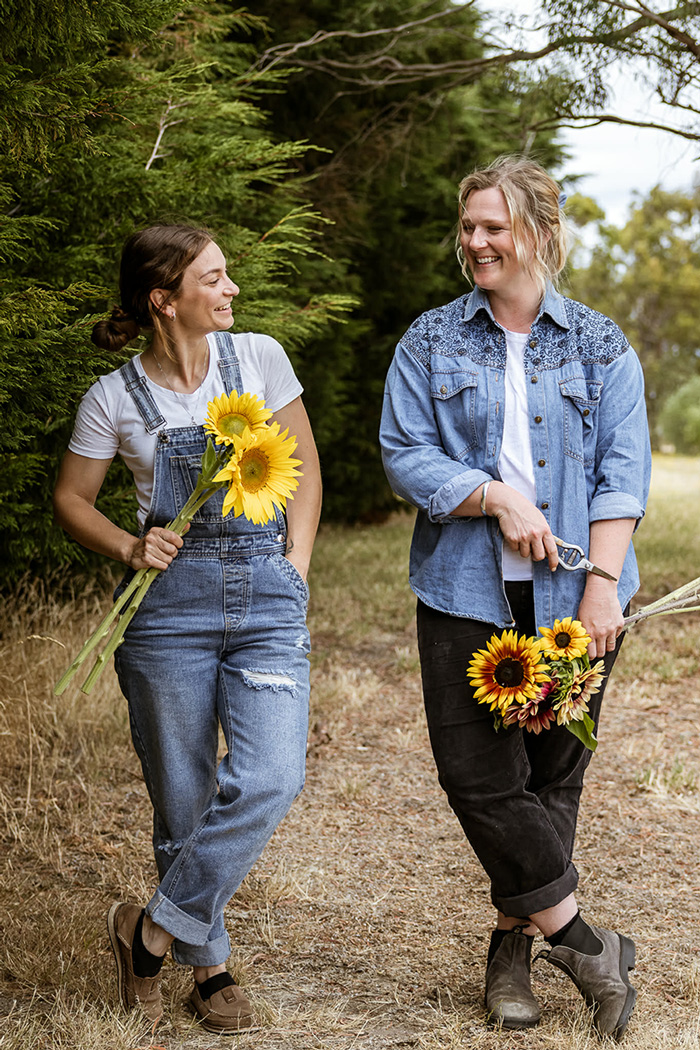
Alongside her professional role, Katie runs Lunar Bloem, a seasonal flower-growing project she co-founded with business partner Amy. The venture has allowed her to expand her agricultural skills into new territory, while learning the realities of running a small business.
“You don't have to possess every necessary skill yourself,” she said. “You simply have to start, and the people who have the complementary skills will join you.”
For Katie, Tasmania remains an ideal place to study and work in agriculture, offering diversity, strong networks, and accessibility for those without a traditional farming background. She credits organisations like Wine Tasmania, and the state’s close-knit industry, for supporting her growth.
Her advice to current and future students is simple: get involved. She recommends seeking out work experience, talking to people, and understanding the challenges facing the industry.
“Make yourself known. Go get in the room or the paddock, so to speak.”
Looking ahead, Katie is continuing to deepen her knowledge, season by season.
“I’m simply excited to keep learning, trying, and experimenting in the next seasons to come.”
Associate professor and course coordinator for Bachelor of Agricultural Science Kara Barry says, “The aspects that Katie enjoyed so much about her study are still an important part of the courses today, including field work, excursions and strong links to industry. In 2027 we offer a revised 3-year Bachelor of Agricultural Science from Hobart, which includes an industry placement unit and a research experience unit. We have also introduced a new 3-year course, Bachelor of Agriculture and Agribusiness from Launceston.
A highlight of that course is that it includes a full semester with an extended industry placement and online units in agribusiness, that can be studied in any location. That means you can do a placement anywhere. We look forward to guiding more students like Katie to explore the exciting career opportunities in agriculture and agribusiness.”