

Overview (2027)

Key Information


Duration
Minimum 2 years, up to a maximum of 5 years.


Location
 CRICOS: 059006G
Duration
Minimum 2 years, up to a maximum of 5 years.
Location
Mia Larsen and Lachlan Sutton share what it’s like to study the Master of Architecture at the University of Tasmania, including their experiences of the course and studying in Tasmania.
The Master of Architecture is an accredited professional course that provides advanced education in architecture and serves as the principal pathway to becoming a practising architect. Building on an undergraduate architecture degree, the course develops the professional, design and technical skills you'll need for a career in architecture.
At the heart of the course are project-based design studios and our Learning by Making approach, where you'll explore architecture through design, materials and fabrication. Studying in Tasmania provides a distinctive setting to consider how architecture responds to place, community and environmental challenges, while developing your understanding of contemporary and emerging theories, technologies and practices.
Your design studios are complemented by study in Professional Practice, Advanced Technologies and Design Research, with opportunities to tailor your studies to your interests and career goals. You'll complete a research-led final project supported by professional and academic leaders in small studio groups, preparing you to contribute thoughtfully and confidently to the architectural profession.
Our facilities
Our home is an award-winning refurbished railway workshop on the Inveresk campus in the heart of Launceston.
Architecture at the University of Tasmania has outstanding purpose-built studio and workshop facilities with cutting-edge technology for learning, researching and creating.
See the spaces, facilities and equipment you’ll use while studying Architecture.
Ready to explore your study options?
Book an online one-on-one appointment with our course coordinator to discuss any course-related questions and explore how the Master of Architecture can support your study and career goals.
- 1 Justify decisions in architectural practice with professional accountability and social-ecological responsibility.
- 2 Engage and collaborate with diverse participants and audiences in the generation, communication and procurement of architectural projects.
- 3 Apply professional knowledge, skills and techniques with mastery and judgement in situating work within historical, contemporary and future disciplinary contexts.
- 4 Conceptualise and realise design propositions for complex architectural projects by synthesising and critically evaluating multiple and divergent design priorities.
- 5 Plan and execute a substantial self-directed architectural design research project employing appropriate methods of inquiry and evidence-based argument.
Learning-by-Making
The program’s celebrated Learning-by-Making tradition embeds material experimentation into the curriculum. This is supported by a fully-equipped and staffed digital fabrication workshop, including 3D printers, laser cutters, CNC routers, a six-axis robot, and a suite of Hologram headsets for mixed-reality design and fabrication, which complements a full workshop suite of equipment suitable for fine timber fabrication.
Our community and industry partnerships give you opportunities to work on real-world projects. Recent collaborations have included projects with art and music festivals, health and education providers, social enterprises and charities, environmental organisations, and scientific research projects.
Watch the video to see the spaces, facilities and equipment that support your practical learning in Architecture.
Inveresk Design Forum
Our Inveresk Design Forum is a public lecture program that brings our students into contact with a broad range of architects and designers working across scales, from the urban to the object. Invited guests share their insights into past, present and future projects. In addition to complementing the core curriculum, these sessions provide an opportunity for our students to build networks between peers, practice and the community.
Work-Integrated Learning electives provide opportunities for direct experience with leading enterprises in architectural design and construction, building product manufacturers, and cultural organisations. Students can also devise their own work opportunities within this framework and count their experience towards their degree.
‘I participated in two research internships which opened my eyes to broader issues affecting the built environment in Tasmania and enabled me to work with and present to a variety of stakeholders and clients.’
Rachel Englund – Master of Architecture graduate.
The Master of Architecture is an externally accredited degree.
This course is accredited by the Board of Architects of Tasmania, and the Architects Accreditation Council of Australia.
Graduates may meet the requirements for registration as an Architect with the applicable Australian Sate and Territory Architect Registration Board. There may be additional requirements for registration beyond the completion of the course.
For further registration requirements, please visit the Board of Architects of Tasmania website.
If you have any queries about the accreditation process, please contact us for further information.
The Master of Architecture degree is recognised by the Australian Institute of Architects (AIA), the professional body representing architects in Australia, as fulfilling the academic requirements for full membership. Recognition by the AIA offers opportunities for international recognition of the professional qualification.
For further membership requirements, please visit the AIA website.
Career outcomes
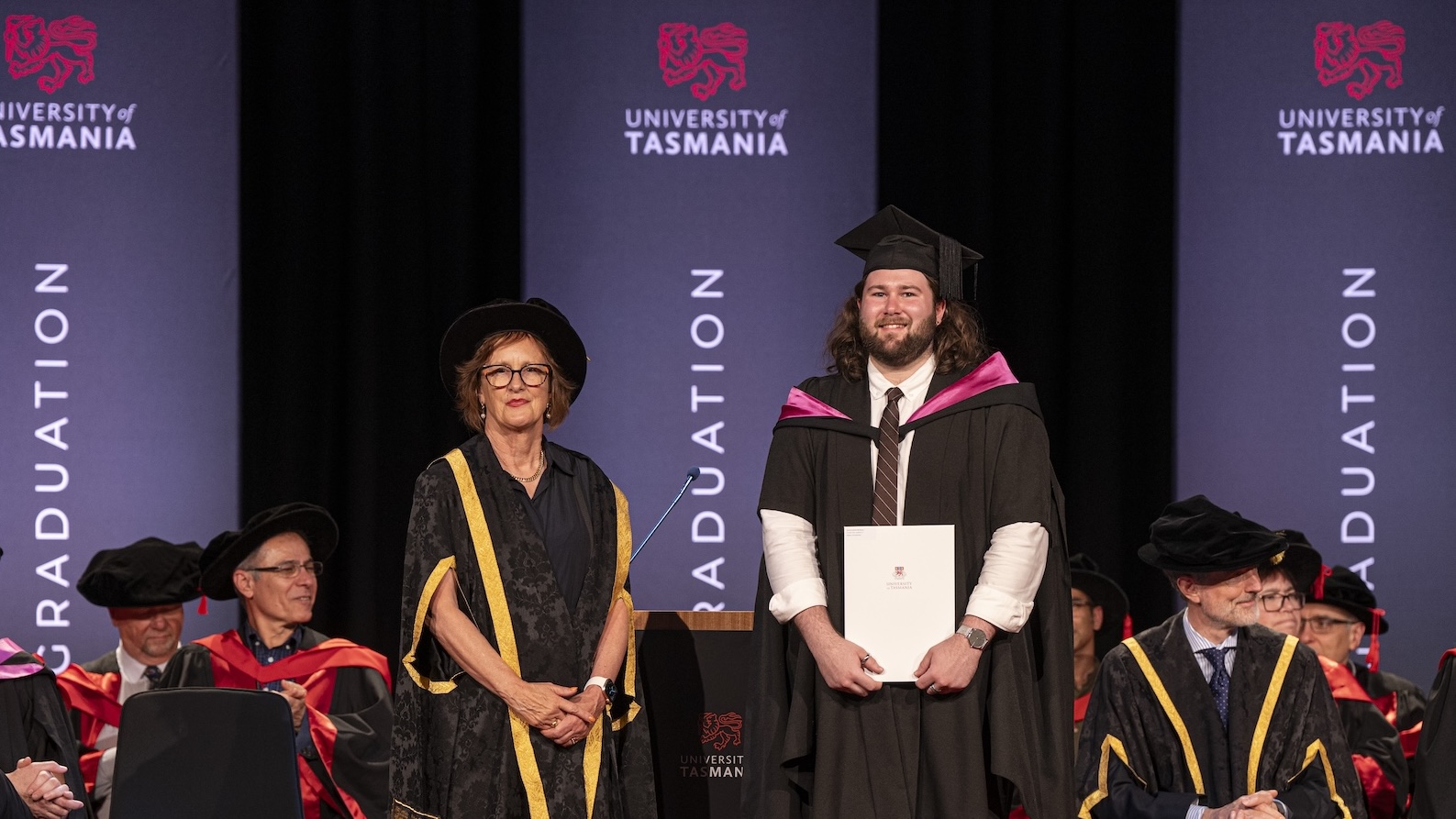
David Dal Busco, Master of Architecture graduate
The accredited professional education provided by the Master of Architecture degree equips graduates with the required competencies to become core members of the architectural profession, working in firms and organisations involved in the definition, design, realisation, and stewardship of buildings, urban spaces, interiors, and the broader built environment.
More broadly, the lateral problem-solving skills and creative powers developed through the degree – including design thinking, spatial intelligence, visual literacy, digital fluency, and effective communication skills – are highly transferable and resistant to automation, empowering graduates to navigate a future economic landscape disrupted by technology. Ultimately, it is the values of critical thinking, civic responsibility, ecological consciousness, and aesthetic imagination instilled through our architectural education that furnish the fundamental capacity for reshaping the world for the better.
Graduates of the Master of Architecture degree are globally mobile, equipped to embark on stimulating careers across industries and fields both established and emerging, often located at the intersection of design and the environment. These include:
- Architectural design and construction
- Interiors and environmental branding
- Heritage preservation and adaptive reuse
- Urban design, planning, and placemaking
- Humanitarian architecture and post-disaster reconstruction
- Forensic architecture and urban activism
- Healthcare architecture and therapeutic environments
- Sustainability design and assessment
- Project and facility management
- Architectural photography, criticism, and writing
- Design curation, education, and research
- Architectural education and research
Course structure
Master of Architecture has twelve core units that cover four streams - design, technology, theory and Work Integrated Learning Students must complete first year units in any stream to progress to final year. Mid-year entry allows flexibility for part time study to facilitate students gaining practice experience.
The course structure is comprised of 200 points, with 8 x 12.5% units, 4 x 25% units.
Research in architecture takes place for a variety of reasons: from architectural professionals using targeted research to find answers to novel problems on a building or design project to specialised researchers identifying and addressing abstract questions to create generalisable new…
Credit Points: 12.5
| Location | Study period | Attendance options | Available to | ||
|---|---|---|---|---|---|
| Launceston | Semester 1 |  |  |  | |
- Key:
- On-campus
 Off-Campus
- International students
- Domestic students
View all details for KDA408 Architectural Research Approaches
Studios in the Master of Architecture emphasise professionalism, critical and rigorous design thinking, knowledge of contemporary and emergent theories, technologies and practices, and the development of skills for a diversity of future careers in architecture. The Urban Futures Studio positions…
Credit Points: 25
| Location | Study period | Attendance options | Available to | ||
|---|---|---|---|---|---|
| Launceston | Semester 1 | | | | |
- Key:
- On-campus
- Off-Campus
- International students
- Domestic students
Studios in the Master of Architecture emphasise professionalism, critical and rigorous design thinking, knowledge of contemporary and emergent theories, technologies and practices, and the development of skills for a diversity of future careers in architecture. Global Studio: Indigenous knowledges explores practices…
Credit Points: 12.5
| Location | Study period | Attendance options | Available to | ||
|---|---|---|---|---|---|
| Launceston | Semester 2 | | | | |
- Key:
- On-campus
- Off-Campus
- International students
- Domestic students
Advanced Technologies investigates the implications of emerging shifts within the Architecture Engineering and Construction (AEC) industry that foster the technological transformation of design workflows, computational processes, material engagement, environmental performance, fabrication tools, and construction methodologies. Through research, case studies, and…
Credit Points: 12.5
| Location | Study period | Attendance options | Available to | ||
|---|---|---|---|---|---|
| Launceston | Semester 2 | | | | |
- Key:
- On-campus
- Off-Campus
- International students
- Domestic students
Sustainable Cultures asks students to research and interrogate typical paradigms of architectural production to support sustainable and respectful approaches to practice. You will be asked to engage with professional, academic, and Australian Indigenous sources of knowledge in rigorous ways, gaining…
Credit Points: 12.5
| Location | Study period | Attendance options | Available to | ||
|---|---|---|---|---|---|
| Launceston | Semester 2 | | | | |
- Key:
- On-campus
- Off-Campus
- International students
- Domestic students
Sustainable Technologies investigates the implications of various design strategies, materials, construction systems, and procurement methods for planetary and environmental health. Through research, case studies, and hypothetical projects you will evaluate the environmental impacts of buildings and components and justify environmentally…
Credit Points: 12.5
| Location | Study period | Attendance options | Available to | ||
|---|---|---|---|---|---|
| Launceston | Semester 1 | | | | |
- Key:
- On-campus
- Off-Campus
- International students
- Domestic students
Professional Studies introduces key principles of professional practice in architecture. A curated program of guest speakers by eminent practitioners locally, nationally and internationally, exposes you to a diversity of organisations and practices within architecture and the building industry. You will…
Credit Points: 12.5
| Location | Study period | Attendance options | Available to | ||
|---|---|---|---|---|---|
| Launceston | Semester 2 | | | | |
- Key:
- On-campus
- Off-Campus
- International students
- Domestic students
Advanced Design Research provides you with the opportunity to undertake in-depth research in design with a focus on areas of research strength in Architecture & Design including environment and sustainability, regional urbanism, advanced materials design (including timber), design for health,…
Credit Points: 25
| Location | Study period | Attendance options | Available to | ||
|---|---|---|---|---|---|
| Launceston | Semester 1 | | | | |
- Key:
- On-campus
- Off-Campus
- International students
- Domestic students
Studios in the Master of Architecture emphasise professionalism, critical and rigorous design thinking, knowledge of contemporary and emergent theories, technologies and practices, and the development of skills for a diversity of future careers in architecture. Integrated Studio focuses on the…
Credit Points: 25
| Location | Study period | Attendance options | Available to | ||
|---|---|---|---|---|---|
| Launceston | Semester 1 | | | | |
- Key:
- On-campus
- Off-Campus
- International students
- Domestic students
Studios in the Master of Architecture develop capacities essential to the discipline and practice of architecture. With Integration Studio, Proposition Studio is one of two final-year Studio units that provide keystones to architectural learning at university. Proposition Studio culminates the…
Credit Points: 25
| Location | Study period | Attendance options | Available to | ||
|---|---|---|---|---|---|
| Launceston | Semester 2 | | | | |
- Key:
- On-campus
- Off-Campus
- International students
- Domestic students
Design WIL (Work Integrated Learning) units provide you with the opportunity to undertake an immersive study experience related to your own interests and professional development goals. You can undertake a broad range of study opportunities including: internships in design-related businesses…
Credit Points: 12.5
| Location | Study period | Attendance options | Available to | ||
|---|---|---|---|---|---|
| Launceston | Semester 1 | | | | |
| Semester 2 | | | | ||
- Key:
- On-campus
- Off-Campus
- International students
- Domestic students
Design WIL (Work Integrated Learning) units provide you with the opportunity to undertake an immersive study experience related to your own interests and professional development goals. You can undertake a broad range of study opportunities including: internships in design-related businesses…
Credit Points: 12.5
| Location | Study period | Attendance options | Available to | ||
|---|---|---|---|---|---|
| Launceston | Semester 1 | | | | |
| Semester 2 | | | | ||
- Key:
- On-campus
- Off-Campus
- International students
- Domestic students
Entry requirements
To be eligible for the Master of Architecture you require a Bachelor of Architecture and Built Environments, or an equivalent three-year undergraduate degree in Architecture.
Eligibility is subject to achieving a minimum credit average (60%) across all core subjects in the final year of the undergraduate degree. Students may also be asked to attend an interview and/or submit a portfolio of their work from their previous studies.
If you have any questions, please contact us for further information.
Course participation requirementsThis course includes compulsory Work Integrated Learning (professional experience placements). In order to participate in placements, all students must:
- Complete a Safe to Practice Agreement declaring they have the medical, physical or psychological capacity to safely participate in professional experience practice.
Admission to most postgraduate coursework courses at the University of Tasmania require qualifications equivalent to an Australian bachelor degree. Applicants must achieve the required grade in their qualifying studies, meet any prerequisite subjects, and meet English language requirements to be eligible for an offer.
English Language Requirements
For students who do not meet the English Language Requirement through citizenship or prior studies in English in an approved country, evidence of an approved English language test completed within the last 2 years must be provided. See the English Language Requirements page for more information.
English Language Requirements are: IELTS (Academic) 6.0 (no individual band less than 6.0)
Course Specific Requirements
To be eligible for the Master of Architecture you require a Bachelor of Architecture and Built Environments (previously called the Bachelor of Environmental Design), or an equivalent three-year undergraduate degree in Architecture.
Eligibility is subject to achieving a minimum credit average (60%) across all core subjects in the final year of the undergraduate degree. Students may also be asked to attend an interview and/or submit a portfolio of their work from their previous studies.
COURSE PARTICIPATION REQUIREMENTS
This course includes compulsory Work Integrated Learning (professional experience placements). In order to participate in placements, all students must:
- Complete a Safe to Practice Agreement declaring they have the medical, physical or psychological capacity to safely participate in professional experience practice.
If you have incomplete M.Arch studies you can apply for a credit/advanced standing as part of the standard online application process for this degree.
Find out more information about how to apply for credit /advanced standing at Recognition of Prior Learning, or contact us on 1300 363 864 or enquire online.
Students completing the Bachelor of Architecture and Built Environments with a major in Architecture and a minimum credit average (60%) across all core subjects in the final year are eligible for entry into the Master of Architecture.
If you successfully complete this course, you may be eligible to apply for a range of other postgraduate courses including Graduate Certificates and Graduate Diplomas and Masters by coursework and research. Filter the Course list by Postgraduate to view the current courses available.
Fees & scholarships
Domestic students
Commonwealth supported places (CSP) are available for this course. For eligible domestic students, this means your fees will be subsidised by the Australian Government. You’ll only need to pay the student contribution amount for each unit you study within the course.
Commonwealth Supported Place indicative annual fee: $9,536
How is this calculated?
This is an estimate. The calculation is based on the average full-time enrolment for this course in 2026. All figures are indicative only for 2027. Actual tuition fees will depend on specific unit enrolment, and are subject to annual increases each year. You can find the complete fee details for each unit of study on the individual unit pages. The units for this course are found in the course structure section of this page.
These figures do not include other costs such as the Student Services and Amenities Fee (SSAF). For further information, please visit Scholarships, fees and costs.
HECS-HELP loans
You may be able to defer payment of the student contribution amount by accessing a HECS-HELP loan from the Government. If eligible, you’ll only have to pay your tuition fees once you start earning above a specific amount.
Further information on student loans and a CSP eligibility checker can be found at Australian Government Study Assist.
An important note on Youth Allowance and Austudy
The Department of Social Services has approved some accredited and professionally-oriented master’s courses for student payments through Youth Allowance or Austudy. This means if you enrol in one of these courses, you may be eligible for student payments. However, this is not the case for all master’s courses. Please visit Scholarships, fees and costs for further information.
International students
2027 annual international student tuition fee: $43,950 AUD
The standard year of study for this course is 100 credit points.
Indicative total tuition fee for international students: $ 90,098 AUD.
This total tuition fee is indicative only. Please visit fees and costs for further information on how this is calculated.
International students are charged the Student Services and Amenities Fee but this fee is incorporated in the annual rate. International students do not have to make any additional SSAF payments.
Domestic scholarships
Scholarships for domestic students
Each year, the University offers more than 900 awards to students from all walks of life, including those who have achieved high academic results; those from low socio-economic backgrounds; students with sporting ability; students undertaking overseas study; and students with a disability.
For information on general scholarships available at the University of Tasmania, please visit Scholarships, fees and costs.
Applications for most awards commencing in Semester 1 open at the beginning of August and close strictly on 31 October in the year prior to study.
Scholarships for international students
There is a huge range of scholarships, bursaries and fee discounts available for international students studying at the University of Tasmania. For more information on these, visit International scholarships.
International scholarships
The University of Tasmania offers a range of scholarships for full fee-paying international students, designed to recognise academic merit and support access to university study.
For many of our international scholarships you will be automatically assessed when you submit your International Student Application, meaning no separate scholarship application is required. Some scholarships may require additional application steps. Explore our International Scholarships to learn more about available opportunities and application requirements.


Share this page
How can we help?
Do you have any questions about choosing a course or applying? Get in touch.