

Overview (2027)

Key Information


Duration
Minimum 2 years, up to a maximum of 5 years.


Location
 CRICOS: 107498B
Duration
Minimum 2 years, up to a maximum of 5 years.
Location

Preyanka Pandiyan
Global Logistics and Supply Chain Management Student
In the evolving global business economy, businesses enhance and transform their logistics and supply chain systems to gain a competitive advantage.
With global supply chains constantly evolving and expanding, understanding how to develop and implement sustainable, effective, and efficient logistics and supply chain management strategies is key to the success of businesses in many industries. The Master of Global Logistics and Supply Chain Management is designed for people who seek professional careers in logistics and supply chain management, which are in high demand globally across various industries.
This degree will prepare you with knowledge of theories, concepts, principles, and practices in logistics and supply chain management to make informed decisions in a real-world global context. It also develops graduates’ skills in business analytics and optimisation to develop solutions for a range of complex issues faced by businesses and enhance their logistics and supply chain performance.
The two-year master’s course is a nested program that includes entry and exit awards for the Graduate Certificate in Global Logistics and Supply Chain Management and the Graduate Diploma of Global Logistics and Supply Chain Management. The pathway courses provide you with the flexibility and choice to match your employment prospects and career/learning progression with your personal goals and circumstances.
- 1 Design and implement logistics and supply chain processes to improve business outcomes.
- 2 Critically evaluate logistics and supply chain solutions to complex problems in a global business environment
- 3 Conduct a research or industry-based project to advance the knowledge and practices of global logistics and supply chain management.
- 4 Manage communications across organisational teams, customers and business partners to support business outcomes in local and global contexts.
In the final year of your master’s, you’ll act as a strategic policy advisor to a real-world company in the JNB728 Industry Research Project. Working under the guidance and supervision of research academic staff, you’ll undertake a knowledge management-based assessment of an enterprise of your choosing. Your findings will demonstrate your competency to undertake rigorous and independent research and discuss the managerial implications relevant to the maritime, transport, logistics, and related fields.
We maintain close links with prospective employers and industry associations to ensure you can access opportunities that support your career development. We will connect you with professionals from the maritime and logistics industries through various events such as guest speakers and industry forums. The Maritime & Logistics Management Industry Forum provides a medium for students to speak with senior managers from Tasmanian and interstate companies such as TasPorts, Agility Logistics, Toll Group, Australian National Lines (ANL), Oldendorff Carriers, and Patrick Stevedore. In addition to networking with industry professionals, attending events will also enable you to learn about the scope of employment prospects available to those who graduate with AMC’s Bachelor of Global Logistics and Maritime Management.
The University of Tasmania is integrated into all areas of industry locally, nationally, and internationally, whether through research or work placement programs. Talk to your course coordinator about finding an opportunity to participate in work experience, placement, or extracurricular activities during your degree.
The Chartered Institute of Logistics and Transport Australia (CILTA)
Career outcomes
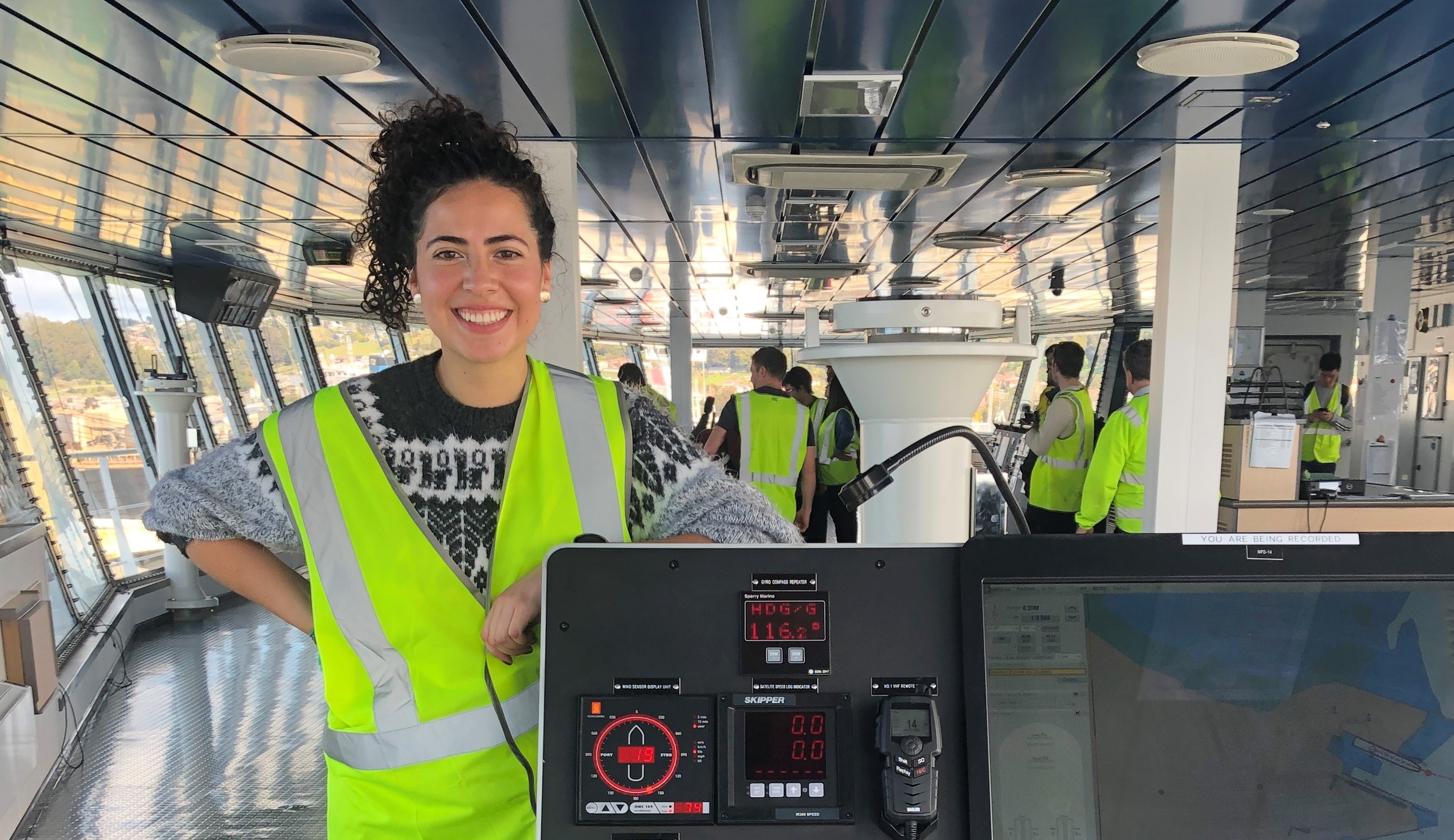
Lorena Solis
Global Logistics and Supply Chain Management Alumni
The maritime and logistics industries underpin international business and world trade. They are a key element in sustainable development, and are tightly interconnected with human society: physically, socially and economically.
As such, it is critical that they are managed by highly trained individuals and teams who can lead the development, implementation and control of sound contemporary management practices.
Our Global Logistics and Supply Chain Management courses prepare students for management and senior administrative careers in private enterprises, industry organisations and governments. As a graduate of this program, you can be confident that the skills, knowledge and networks you’ve acquired through study will allow you to succeed in a diverse range of areas: commercial shipping, ports and terminals, transport, transport policy and administration, freight forwarding, exporting and importing, logistics and supply chains, and other elements of international business.
Employment outlook for maritime professionals is growing, with skilled graduates in global demand.
- National Employment projections in Marine Transport professionals is expected to grow 14.9% between now and 2033.^
- More than 15,000 jobs are expected to be created in Australia as part of the continuous Naval Shipbuilding Program over the coming decades.^^
Course structure
The Master of Global Logistics and Supply Chain Management (MGlobLogSCM) includes the following options:
- 2-year (16 unit) MGlobLogSCM - this is the default course option for students who have not completed prior study or work experience in a related (cognate) area.
- 1.5-year (12 unit) MGlobLogSCM - this is the default course option for students who have completed prior study or work experience in a related (cognate) area
A cognate undergraduate degree would be in the same or related area eg, maritime management, maritime operation, logistics management, supply chain management, and business management; or any Bachelor degree with a major in business, logistics management, and supply chain management Cognate industry experience would be in the fields of maritime, transport, logistics and supply chain.
All students will have the flexibility of developing their research training through either a dissertation or an Industry project.
Business Continuity Management is the holistic management process that identifies potential threats to an organisation and the likely impacts to business operations that may be caused if those threats materialise. This fully online unit provides you with a thorough understanding…
Credit Points: 12.5
| Location | Study period | Attendance options | Available to | ||
|---|---|---|---|---|---|
| Online | Semester 2 |  |  |  | |
- Key:
 On-campus
- Off-Campus
- International students
- Domestic students
This unit provides students with a framework for understanding the field of international trade. The unit examines the environment for international trade and investment, particularly political, social, economic, technological, environmental and other factors that influence strategic firm-level plans and senior…
Credit Points: 12.5
| Location | Study period | Attendance options | Available to | ||
|---|---|---|---|---|---|
| Launceston | Semester 1 | | | | |
| Online | Semester 1 | | | | |
- Key:
- On-campus
- Off-Campus
- International students
- Domestic students
This unit introduces you to the concepts, applications and practice of management. You will be introduced to the fundamentals of management that are vital for the successful operation of any business. You will be exposed to a widely accepted body…
Credit Points: 12.5
| Location | Study period | Attendance options | Available to | ||
|---|---|---|---|---|---|
| Launceston | Semester 1 | | | | |
| Online | Semester 1 | | | | |
- Key:
- On-campus
- Off-Campus
- International students
- Domestic students
The aim of this unit is to introduce you to the type of financial information that you, as a manager, can expect to receive and to the techniques that you can use to analyse this information for decision making and…
Credit Points: 12.5
| Location | Study period | Attendance options | Available to | ||
|---|---|---|---|---|---|
| Launceston | Semester 2 | | | | |
| Online | Semester 2 | | | | |
- Key:
- On-campus
- Off-Campus
- International students
- Domestic students
This unit provides an applied approach to the key components of integrated logistics systems, such as procurement, inventory management and transport, whilst also viewing the system holistically. The strategic focus of the unit enables analysis of impacts on logistics activities…
Credit Points: 12.5
| Location | Study period | Attendance options | Available to | ||
|---|---|---|---|---|---|
| Launceston | Semester 1 | | | | |
| Online | Semester 1 | | | | |
- Key:
- On-campus
- Off-Campus
- International students
- Domestic students
This unit aims to expose you to contemporary management practices in ports. The design of this unit is suited to meet the needs of students at different stages in their careers and at different levels in their organisations. You will…
Credit Points: 12.5
| Location | Study period | Attendance options | Available to | ||
|---|---|---|---|---|---|
| Launceston | Semester 1 | | | | |
| Online | Semester 1 | | | | |
- Key:
- On-campus
- Off-Campus
- International students
- Domestic students
Supply Chain Management has been identified by the business community as a key discipline which can generate significant cost savings, improve customer value and be used effectively to gain a sustainable competitive advantage. To a casual observer, supply chain management…
Credit Points: 12.5
| Location | Study period | Attendance options | Available to | ||
|---|---|---|---|---|---|
| Launceston | Semester 2 | | | | |
| Online | Semester 2 | | | | |
- Key:
- On-campus
- Off-Campus
- International students
- Domestic students
This unit provides students with the fundamental and advanced concepts, tools and skills needed to understand the emerging role of business analytics and operations research in organizations. Emphasis would be given to problems in maritime logistics and transport, retailing and…
Credit Points: 12.5
| Location | Study period | Attendance options | Available to | ||
|---|---|---|---|---|---|
| Launceston | Semester 2 | | | | |
| Online | Semester 2 | | | | |
- Key:
- On-campus
- Off-Campus
- International students
- Domestic students
View all details for JNB635 Business Analytics and Operations Research
Procurement plays a pivotal role in supply chains by acting as the bridge between an organization and its suppliers, ensuring that the right materials, services, and products are sourced efficiently and cost-effectively. JNB637 Strategic Procurement Management provides an in-depth exploration…
Credit Points: 12.5
| Location | Study period | Attendance options | Available to | ||
|---|---|---|---|---|---|
| Launceston | Semester 1 | | | | |
| Online | Semester 1 | | | | |
- Key:
- On-campus
- Off-Campus
- International students
- Domestic students
View all details for JNB637 Strategic Procurement Management
Inventory management and warehousing play a vital role in providing high service levels to customers while minimising costs in global logistics and supply networks. JNB639 Warehousing and Inventory Management provides a comprehensive review of decisions involved in warehouse design and…
Credit Points: 12.5
| Location | Study period | Attendance options | Available to | ||
|---|---|---|---|---|---|
| Launceston | Semester 2 | | | | |
| Online | Semester 2 | | | | |
- Key:
- On-campus
- Off-Campus
- International students
- Domestic students
View all details for JNB639 Warehousing and Inventory Management
The rapid growth of e-commerce in recent years, coupled with increasing urbanization, has impacted all dimensions of freight logistics and led to a considerable increase in freight movements in urban areas. JNB738 e-Commerce Logistics Management covers various topics including e-commerce…
Credit Points: 12.5
| Location | Study period | Attendance options | Available to | ||
|---|---|---|---|---|---|
| Launceston | Semester 1 | | | | |
| Online | Semester 1 | | | | |
- Key:
- On-campus
- Off-Campus
- International students
- Domestic students
The aim of this unit is to provide an introduction to shipping markets, and to illustrate the strategies, principles and practice of commercial ship management. The unit is arranged in 12 modules. Ship chartering and charterparties are essential elements of…
Credit Points: 12.5
| Location | Study period | Attendance options | Available to | ||
|---|---|---|---|---|---|
| Launceston | Semester 2 | | | | |
| Online | Semester 2 | | | | |
- Key:
- On-campus
- Off-Campus
- International students
- Domestic students
This unit introduces you to concepts and principles of maritime law, with special emphasis on the carriage of goods by sea. However, we will also deal with other traditional aspects of maritime law - salvage, general average, maritime liens, admiralty…
Credit Points: 12.5
| Location | Study period | Attendance options | Available to | ||
|---|---|---|---|---|---|
| Launceston | Semester 2 | | | | |
| Online | Semester 2 | | | | |
- Key:
- On-campus
- Off-Campus
- International students
- Domestic students
Discover how a truck driver reinvented the shipping industry! This unit introduces both the theory and practice of strategic management, with a focus on strategic thinking and decision-making within a networked industry. Creative, conceptual application of strategic management theory is…
Credit Points: 12.5
| Location | Study period | Attendance options | Available to | ||
|---|---|---|---|---|---|
| Launceston | Semester 1 | | | | |
| Online | Semester 1 | | | | |
- Key:
- On-campus
- Off-Campus
- International students
- Domestic students
Research Methods is designed to serve both theoretical and practical purposes. The unit begins by introducing the principles of project management followed by the philosophy, logic and nature of research and then each of the major research activities. Research Methods…
Credit Points: 12.5
| Location | Study period | Attendance options | Available to | ||
|---|---|---|---|---|---|
| Launceston | Semester 1 | | | | |
| Online | Semester 1 | | | | |
- Key:
- On-campus
- Off-Campus
- International students
- Domestic students
The Dissertation units are designed to provide high-level business research skills to final year students who have a personal interest in research. The dissertation builds on a number of disciplines studied in the program and on the awareness of issues…
Credit Points: 12.5
| Location | Study period | Attendance options | Available to | ||
|---|---|---|---|---|---|
| Launceston | Semester 1 | | | | |
| Semester 2 | | | | ||
| Online | Semester 1 | | | | |
| Semester 2 | | | | ||
- Key:
- On-campus
- Off-Campus
- International students
- Domestic students
The Dissertation units are designed to provide high-level business research skills to final year students who have a personal interest in research. The dissertation builds on a number of disciplines studied in the program and on the awareness of issues…
Credit Points: 12.5
| Location | Study period | Attendance options | Available to | ||
|---|---|---|---|---|---|
| Launceston | Semester 1 | | | | |
| Semester 2 | | | | ||
| Online | Semester 1 | | | | |
| Semester 2 | | | | ||
- Key:
- On-campus
- Off-Campus
- International students
- Domestic students
The Dissertation units are designed to provide high-level business research skills to final year students who have a personal interest in research. The dissertation builds on a number of disciplines studied in the program and on the awareness of issues…
Credit Points: 12.5
| Location | Study period | Attendance options | Available to | ||
|---|---|---|---|---|---|
| Launceston | Semester 1 | | | | |
| Semester 2 | | | | ||
| Online | Semester 1 | | | | |
| Semester 2 | | | | ||
- Key:
- On-campus
- Off-Campus
- International students
- Domestic students
Research Methods is designed to serve both theoretical and practical purposes. The unit begins by introducing the principles of project management followed by the philosophy, logic and nature of research and then each of the major research activities. Research Methods…
Credit Points: 12.5
| Location | Study period | Attendance options | Available to | ||
|---|---|---|---|---|---|
| Launceston | Semester 1 | | | | |
| Online | Semester 1 | | | | |
- Key:
- On-campus
- Off-Campus
- International students
- Domestic students
International Maritime Policy will bring you into contact with different issues, including legal, regulatory and policy issues, in contemporary integrated oceans management. The underlying theme is one of integrated policy, planning and management covering all uses of the sea. The…
Credit Points: 12.5
| Location | Study period | Attendance options | Available to | ||
|---|---|---|---|---|---|
| Launceston | Semester 2 | | | | |
| Online | Semester 2 | | | | |
- Key:
- On-campus
- Off-Campus
- International students
- Domestic students
The unit introduces students to the digitalisation of maritime supply chains and the strategies, technologies, and data practices reshaping how shipping, ports, terminals, freight forwarders, warehousing, and landside transport operate and connect. Building on students' existing study and experience in…
Credit Points: 12.5
| Location | Study period | Attendance options | Available to | ||
|---|---|---|---|---|---|
| Launceston | Semester 1 | | | | |
| Online | Semester 1 | | | | |
- Key:
- On-campus
- Off-Campus
- International students
- Domestic students
View all details for JNB701 Maritime Supply Chain Digitalisation
This subject provides students with advanced knowledge and practical skills to manage projects across industries and complexity levels. It covers key areas including planning, organising, coordinating, risk management, stakeholder engagement, and performance evaluation. Students will develop critical thinking and problem-solving…
Credit Points: 12.5
| Location | Study period | Attendance options | Available to | ||
|---|---|---|---|---|---|
| Launceston | Semester 2 | | | | |
| Online | Semester 2 | | | | |
- Key:
- On-campus
- Off-Campus
- International students
- Domestic students
Entry requirements
- An undergraduate degree from an Australian higher education institution or the equivalent standard in any other institutions; or
- A Graduate Certificate or Graduate Diploma; or
- A qualification of AQF Level 6 or equivalent and a minimum of three years managerial working experience.
The duration of the program will depend on your background (see Course Structure tab). Holders of a cognate undergraduate degree or two years work experience are eligible for advanced standing (i.e. normally 4 x transition units included in the course) reducing the course duration and number of units required to be completed.
A cognate undergraduate degree would be in the same or related area eg, maritime management, maritime operation, logistics management, supply chain management, and business management; or any Bachelor degree with a major in business, logistics management, and supply chain management
Cognate industry experience would be in the fields of maritime, transport, logistics and supply chain.
- An undergraduate degree from an Australian higher education institution or the equivalent standard in any other institutions; or
- A Graduate Certificate or Graduate Diploma; or
- A qualification of AQF Level 6 or equivalent and a minimum of three years managerial working experience.
- International students with English as a second language will need to have an IELTS score of 6.0, with no band less than 6.0.
The duration of the program will depend on your background (see Course Structure tab). Holders of a cognate undergraduate degree or two year work experience are eligible for advanced standing (i.e. normally 1 semester of credit) and hence, a reduced duration (1.5 years).
A cognate undergraduate degree would be in the same or related area eg, maritime management, maritime operation, logistics management, supply chain management, and business management; or any Bachelor degree with a major in business, logistics management, and supply chain management
Cognate industry experience would be in the fields of maritime, transport, logistics and supply chain.
Students in this course may be eligible for a reduction in the volume of learning of:
- up to 100 credit points if they have completed a Bachelor Honours (AQF 8) award in a cognate discipline; or
- up to 50 credit points if they have completed a Bachelor (AQF 7) award in a cognate discipline.
Cognate disciplines for the Master of Global Logistics and Supply Chain Management are maritime management, maritime operation, logistics management, supply chain management, and business management, or any Bachelor degree with a major in business, logistics management, and supply chain management.
The Graduate Certificate in Global Logistics and Supply Chain Management, the Graduate Diploma of Global Logistics and Supply Chain Management, and the Master of Global Logistics and Supply Chain Management form an articulated sequence of awards for which full credit is granted in the higher level award for all corresponding coursework completed in the lower level award of the articulated sequence.
Fees & scholarships
Domestic students
This is a full-fee course, which means you’ll need to pay the full amount for your studies. Commonwealth Supported Places are not available in this course.
Your tuition fees will depend on specific unit enrolment, and are subject to annual increases each year. You can find the complete fee details for each unit of study on the individual unit pages. The units for this course are found in the course structure section of this page.
Detailed information for domestic students, including the Student Services and Amenities Fee (SSAF), is available at Scholarships, fees and costs.
FEE-HELP loans
You may be able to fund all or part of your tuition fees by accessing a FEE-HELP loan from the Australian Government. FEE-HELP is a loan scheme that assists domestic full-fee students to pay for University, which is repaid through the Australian Tax System once you earn above a repayment threshold. This means you’ll only have to start repaying the loan once you start earning above a specific amount.
Further information on HELP loans can be found at Australian Government Study Assist.
An important note on Youth Allowance and Austudy
The Department of Social Services has approved some accredited and professionally-oriented master’s courses for student payments through Youth Allowance or Austudy. This means if you enrol in one of these courses, you may be eligible for student payments. However, this is not the case for all master’s courses. Please visit Scholarships, fees and costs for further information.
International students
2027 annual international student tuition fee: $39,950 AUD
The standard year of study for this course is 100 credit points.
Indicative total tuition fee for international students: $ 81,898 AUD.
This total tuition fee is indicative only. Please visit fees and costs for further information on how this is calculated.
International students are charged the Student Services and Amenities Fee but this fee is incorporated in the annual rate. International students do not have to make any additional SSAF payments.
Domestic scholarships
For information on general scholarships available at the University of Tasmania, please visit Scholarships, fees and costs.
International scholarships
The University of Tasmania offers a range of scholarships for full fee-paying international students, designed to recognise academic merit and support access to university study.
For many of our international scholarships you will be automatically assessed when you submit your International Student Application, meaning no separate scholarship application is required. Some scholarships may require additional application steps. Explore our International Scholarships to learn more about available opportunities and application requirements.

Course year 2027


Share this page
How can we help?
Do you have any questions about choosing a course or applying? Get in touch.