

Start studying in February or July!

Only course of its kind in the Southern Hemisphere
Our Healthcare in Remote and Extreme Environments is the only one of its kind in the Southern Hemisphere, giving you the knowledge and skills to work in the toughest environments.

Learn from experts in the field
Learn from professionals who are actively working in remote and extreme healthcare at one of only two universities in the world offering this program.

Flexible study options
Study completely online, or choose elective units that include hands-on workshops or fieldwork. Along the way, you’ll build skills in research, teamwork, project management, and more.
Study options
Choose to complete the Graduate Certificate in Remote and Extreme Environments fully online or undertake elective units in Expedition Medicine that involve in-person practical components. Our course has been designed with and for the realities of the busy working health professional and is offered part-time to study at your pace.
This fully online unit was designed to complement Operational Aspects of Healthcare in Remote and Extreme Environments. We look at cold, high altitude, desert, maritime, underwater and aerospace as the five key extreme environments, though given the origin of this program it won’t surprise you to discover that we focus more on “cold” and “high” than we do on the others.
We start with the challenges of living and working in each environment, and then look at relevant physics and physiology in that environment (you can’t care for people effectively if you don’t start with that) before moving on to patho-physiology and clinical care of common problems. As always the focus is that of the clinician in a remote site providing frontline care.
This fully online and predominantly non-clinical unit provides a foundation for designing and running a healthcare facility in an austere setting. It looks at some concepts and that underpin how healthcare is delivered differently and uses case studies that showcase solutions to some of the difficulties faced.
The unit starts by considering the concepts of “remote” and “extreme” and the types of populations to be found there. It then moves on to look at topics such as leadership, management and teamwork, disaster planning, evacuation, telehealth, and point of care testing, before finishing with additional non-medical knowledge and skills to allow you to thrive in extreme environments.
This unit focuses on the key skills and knowledge you need to deliver safe, high-quality healthcare in different community settings. You’ll explore legal and ethical responsibilities, advanced diagnostic reasoning, and clinical decision-making models, all grounded in evidence-based practice. By building on your existing skills, the unit helps you understand how to assess patients, make effective decisions, and work with teams to provide the best possible care.
This unit is an intensive, residential course providing practical skills to support the online units offered in the program. It commences with a focus on basic knowledge and skills in the following domains: expedition preparation and planning, wilderness emergency medical response, search and rescue, remote area communications, navigation, steep terrain rescue, use of stretchers and splints, and cold injury and high-altitude medicine.
We also offer an eight-day intensive and practical residential short course in partnership with the Australian Antarctic Division as stand-alone offering.
Explore how health systems worldwide address complex challenges to improve equity, quality, efficiency, and sustainability in health and social care. This unit takes a systems-thinking approach, examining structures, financing, and resilience while emphasising critical analysis. You'll compare global health systems and assess their relevance to Australia, gaining insights into the role of context in shaping healthcare solutions. By the end, you'll be equipped to evaluate and contribute to improving health systems for diverse populations.
In this online unit, you’ll learn about the factors that characterise an environment as extreme. You’ll consider how individuals and groups can manage distress in these environments and enhance resilience. Extreme environments considered include Antarctica, outer space, military operations, disaster sites, and cults. In this unit, you will examine how intrapersonal, interpersonal, and organisational factors influence the challenges posed by extreme environments.
Aerospace medicine is a growing sub-specialty. This unit is developed in collaboration with the Australasian Society of Aero-space Medicine (ASAM), focusing on the environmental challenges and technological adaptations for survival in space. It explores the physiological and patho-physiological responses of humans in space, and applies principles of space analogue research to inform the development of solutions to long-term space travel.
Gain a comprehensive introduction to the principles and practice of epidemiology, focusing on how data informs health care and human services. This unit explores disease distribution, study design, causality, and critical appraisal of research, with real-world applications to issues like mental health, cancer screening, and substance addiction. You'll develop essential skills in data analysis, scientific evaluation, and critical thinking, preparing you for research, health planning, and policy development.
Discover the scope of modern public health and its role in addressing the social, political, and economic factors shaping health outcomes. This unit explores the social and economic determinants of health, equity in health standards, and strategies for empowering communities to tackle health challenges. Through theoretical and practical learning, you'll critically examine health outcomes across diverse communities and gain insights into effective public health practices.
Gain foundational knowledge and skills in leadership within health and human service (H&HS) organisations. This unit explores leadership theories and practical techniques for leading yourself, teams, and organisations, with a focus on the H&HS sector. It prepares you for further leadership development in the program.
This unit equips you with the skills to respond to communicable disease outbreaks and public health incidents. You’ll learn outbreak investigation steps, data assessment, risk communication, and control interventions. The unit uses local examples and encourages drawing on your own workplace experiences. It’s available online, with optional workshops in Semester 2 for practical learning.
This unit equips you with essential skills for healthcare practice in remote and extreme environments, where you’ll perform tasks typically handled by other healthcare professionals. You’ll gain practical knowledge in areas such as plain radiography, point-of-care ultrasound, regional anaesthesia, physiotherapy, and dentistry.
This unit covers governance, clinical governance, and risk management in health and human services. You’ll learn to implement frameworks that ensure safety, quality, and risk management in care delivery. Through practical applications, you'll develop leadership skills to improve outcomes, foster a culture of safety, and drive continuous improvement in your workplace.
Learn how systems thinking helps us tackle complex public health challenges by understanding the connections between different factors affecting health. This unit introduces key concepts and practical methods for applying systems thinking to improve population health, from local to global contexts. You’ll explore how these methods can inform policy decisions and contribute to solving complex health issues across various disciplines in the health and community sectors.
Course options
Graduate Certificate in | Short course in | ||
|---|---|---|---|
Total 4 units (50 credit points)
Commonwealth Supported Places available Domestic students will be offered a Commonwealth Supported Place, significantly reducing the cost of your degree |
Total 8 units (100 credit points)
Commonwealth Supported Places available Domestic students will be offered a Commonwealth Supported Place, significantly reducing the cost of your degree |
Total 12 units (120 credit points)
Commonwealth Supported Places available Domestic students will be offered a Commonwealth Supported Place, significantly reducing the cost of your degree | Expedition Medicine can be undertaken as a standalone unit or as an elective unit within the Graduate Certificate in Healthcare in Remote and Extreme Environments (HREE). This eight-day intensive and practical residential course is now being offered by the University of Tasmania in partnership with the Australian Antarctic Division as stand-alone course. |
 Minimum 1 Year,
 Online
Graduate Certificate in Healthcare in Remote and Extreme Environments |
|---|
Total 4 units (50 credit points)
|
Research options
A research degree is an advanced study program that gives you an opportunity to deeply explore a topic of your choice.
Research degree candidates have naturally inquiring minds and a passion for solving problems and advancing humanity.
An example of a PhD research projects currently underway within the Healthcare in Remote and Extreme Environments field is;
Aerospace Cardiology and Program Development: Aligning Cardiovascular Expertise with Aviation Industry Needs
The PhD will define and develop the role of cardiovascular specialists in aviation medicine, addressing a critical gap between industry needs and clinical expertise. Despite the critical importance of cardiovascular health for operational performance and aircrew safety, there is limited guidance on how cardiologists and related specialists can contribute effectively within aerospace medicine. The goal of this research is to fill that gap.
If you are interested in exploring ideas, visit research degrees to learn more.
Student stories
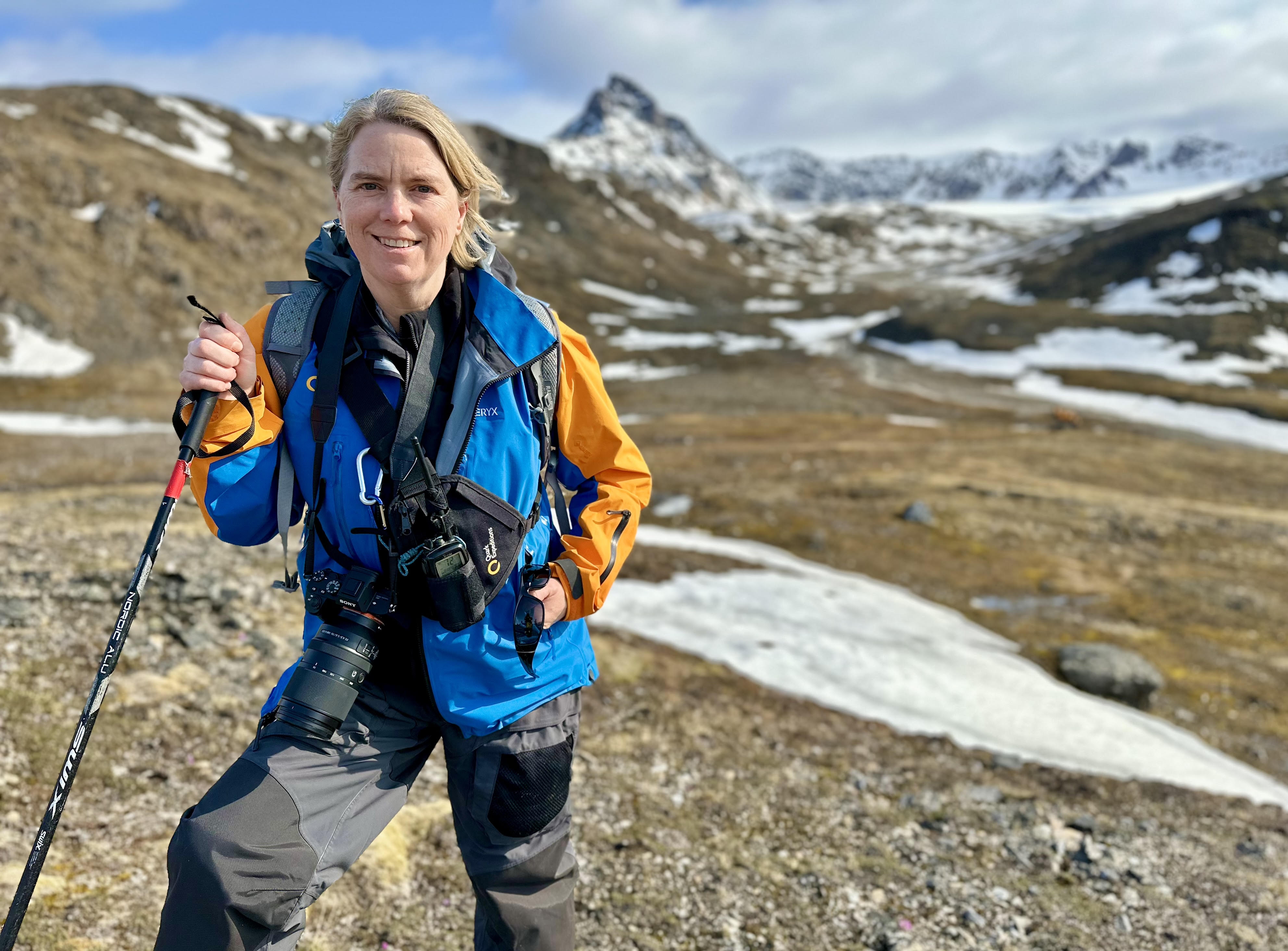
Expertise in extreme environment medicine recognised
Dr Alicia Tucker has been honoured as a Fellow of the The Academy of Extreme Environment Medicine in recognition of her expertise in managing health and medical care in some of the most challenging environments on Earth (and beyond!)
Her career journey is extraordinary: from serving as a Ships Physician in Antarctica and the Arctic, to undertaking space medicine training with NASA - National Aeronautics and Space Administration and the ESA - European Space Agency.
Healthcare at the Extreme - ‘Carnage on Kili’
Working in healthcare in remote and extreme environments presents significant challenges, even for the most seasoned professionals.
This webinar features a case study from Kilimanjaro. Our team from the Healthcare in Remote and Extreme Environments course will share their firsthand experience on managing patient care in environments that are beyond the optimal range for human survival.
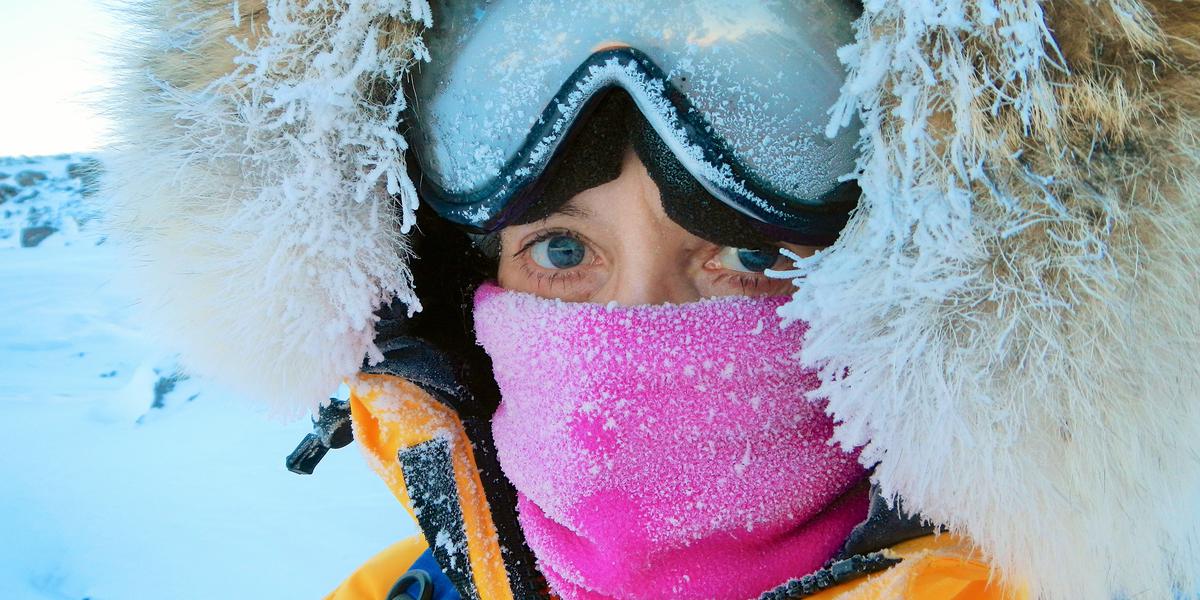
Extreme study in healthcare
"There’s no triple zero down there. We are the fire brigade, we are the search and rescue service. These are ordinary people. Plumbers, mechanics, chefs. We ask people to step right outside their normal environments and take on these emergency services roles There’s a lot of professional challenges and psychological challenges to get into that mindset that you have to be prepared to meet any situation that might occur."
Useful information

Partner scholarships available
We offer generous scholarships for employees of our many partner organisations.
Search for your employer

Key dates
When starting uni, there are important dates to be aware of. These include Orientation, the start of semester, and census dates.
View key dates

Support
Need help? Our friendly team are here to guide you through the entire process. You can even book in a one-on-one session to enrol in your units.
Enquire
Take the next step
Applying to study with us is free using our simple online form.
Find out how to apply, to get started.
Whether you're contemplating the next step in your career, seeking a change, or looking to consolidate your experience with a qualification, a postgraduate degree will give you a competitive edge.
If you would like help applying, please enquire with our friendly team. You can even set up an appointment to be guided through the process.
Take the next step
Applying to study with us is free using our simple online form.
Find out how to apply to get started.
Whether you're contemplating the next step in your career, seeking a change, or looking to consolidate your experience with a qualification, a postgraduate degree will give you a competitive edge.
If you would like help applying, please enquire with our friendly team. You can even set up an appointment to be guided through the process.