

Overview (2027)

Key Information


Duration
Minimum 3 years, up to a maximum of 7 years.


Location
Duration
Minimum 3 years, up to a maximum of 7 years.
Location
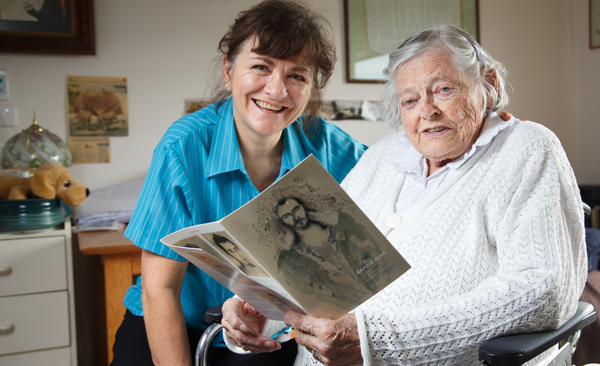
Lead the change in dementia care – study online, your way
Are you passionate about making a real difference in the lives of people living with dementia? Whether you're just starting out, already working in health or aged care, or simply curious about this growing field, Australia's first degree in dementia care is designed with you in mind.
Offered fully online and open to both domestic and international students, this course gives you the flexibility to study from anywhere, at your own pace. There are no exams, no face-to-face classes, and no workplace placements required.
With dementia becoming increasingly common, there’s never been a more important time to build specialised knowledge in this area. You’ll gain practical, up-to-date insights that can be applied in community settings, hospitals, aged care facilities and beyond.
Developed by the Wicking Dementia Research and Education Centre, this course is backed by global leaders in dementia education with a mission to transform the understanding of dementia worldwide.
Choose your path
- Diploma of Dementia Care – 8 units (up to 3 years)
- Bachelor of Dementia Care – 24 units (up to 7 years)
You can study part-time (1–2 units) or full-time (3–4 units) each semester, with around 10 hours of study per unit per week. Assessments are spread throughout the semester and may include quizzes, discussion boards, essays, reports or presentations.
Dedicated student advisers are available throughout your studies to provide support and guidance whenever you need it.
- 1 Apply knowledge of the biology of the nervous system to explain dementia pathology and symptoms across its trajectory
- 2 Evaluate the multidisciplinary evidence for dementia risk reduction and approaches to optimise the health and social care of people living with dementia
- 3 Evaluate and design collaborative, person centred approaches to inclusion, support and care of diverse people living with dementia and their families
- 4 Propose evidence-based strategies to share knowledge and influence improvements to dementia care
- 5 Evaluate how evidence is generated and translated into health and social care for older people including those living with dementia
Career outcomes
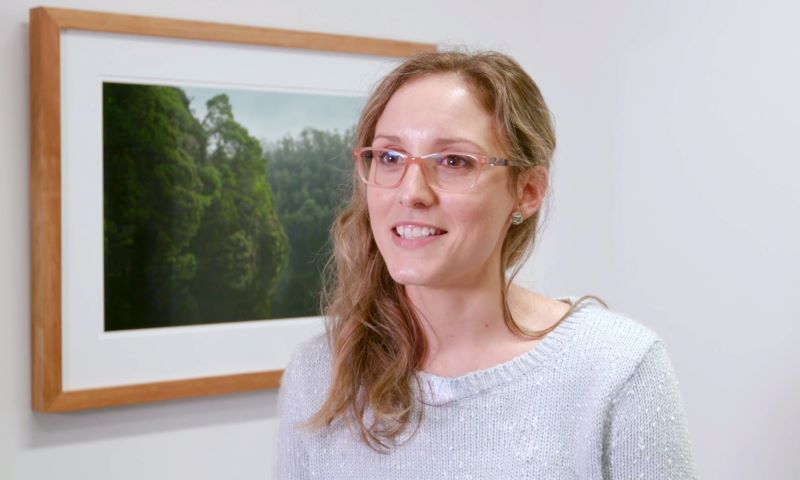
Emma Elaine, Bachelor of Dementia Care student
Over 430,000 Australians are currently living with dementia; this number increases every year. The impact on communities, families, governments and health professionals will be significant as these numbers increase.
Our workforce is currently ill equipped to help care for such large numbers of people living with dementia – by 2050, it is estimated that there will be over 900,000 people in Australia living with dementia. Graduates from this course may find work in a range of career paths such as in the aged care industry in both the public and private sectors, or as a pathway to undertaking further study in graduate health programs.
Some of the careers projected to grow in into the year 2034 include:*
31.9% Aged and Disabled Carers
19.6% Health and Welfare Support Workers
20.6% Special Care Workers
Individuals with backgrounds in healthcare, community service and allied health professionals, may find study in this course advantageous – and opportunities for Recognition of Prior Learning (or credit) are available.
There are a growing number of leadership and case management positions in dementia care, which require qualifications higher than aged care certificates. Leadership roles, and specialist positions in the aged care sector are increasingly calling for tertiary level qualifications such as the Dementia Care Program.
The Diploma and Associate Degrees are particularly relevant to aged care workers and health professionals wishing to develop their skills and knowledge in dementia. The Bachelor Degree offers additional learning about research and the understanding of how evidence may be translated into clinical care practice.
* Jobs and Skills Australia Employment Projections, May 2024 - May 2034
Course structure
There are three graduation points available in the Dementia Care Program, each available as part-time or full-time:
- Diploma (8 units, completed over a maximum of 3 years)
- Associate Degree (16 units, completed over a maximum of 5 years)
- Bachelor Degree (24 units, completed over a maximum of 7 years)
To enrol in the Dementia Care Program
- You must be willing to devote approximately 10 hours per week for each unit of study
- You must be able to access a computer, current software and a reliable connection to the internet
The Bachelor of Dementia Care requires the completion of 300 credit points comprising:
- 200 credit points of core units
- 100 credit points of electives units, or an optional major
Note that the 100 credit points of elective units can be used in two quite different ways, the choice is yours:
- Study 100 credit points of elective units - you can choose to enrol in any unit available as an elective (some units do have prerequisites which must be met, but many do not)
or
- Study a 100 credit point major. A major is an area of focus in your degree. You can choose the Ageing Studies and Services major (see below), a major from another area, or you can choose to study our Sustainability major. The University is deeply committed to building sustainable futures and that is why we've made the Sustainability major readily available in most courses. For details see the Bachelor of Science. Or find out more at What is a Major?
Neuroscience is the study of how the nervous system works, how the cells of the nervous system are organised and how they develop and change in the presence of common disease conditions, including dementia. You will learn about the structure…
Credit Points: 12.5
| Location | Study period | Attendance options | Available to | ||
|---|---|---|---|---|---|
| Online | Semester 1 |  |  |  | |
| Semester 2 | | | | ||
- Key:
 On-campus
- Off-Campus
- International students
- Domestic students
This introductory unit will explore the physical and cognitive changes that occur during the ageing process, and age-related pathological changes that can lead to diseases that cause dementia. This unit will introduce fundamental neuroscience concepts in the healthy adult, ageing…
Credit Points: 12.5
| Location | Study period | Attendance options | Available to | ||
|---|---|---|---|---|---|
| Online | Semester 1 | | | | |
| Trimester | | | | ||
- Key:
- On-campus
- Off-Campus
- International students
- Domestic students
This unit provides an overview of the journey through dementia from the perspective of people with dementia and those who provide care and support to them. Students will learn about ways to identify and respond to needs that arise on…
Credit Points: 12.5
| Location | Study period | Attendance options | Available to | ||
|---|---|---|---|---|---|
| Online | Semester 1 | | | | |
- Key:
- On-campus
- Off-Campus
- International students
- Domestic students
View all details for CAD104 Principles of Supportive Care for People With Dementia
In this unit you will examine demographic trends in the ageing population along with social and cultural determinants of health and how these factors continue to shape the needs of older people in society. You will investigate how these needs…
Credit Points: 12.5
| Location | Study period | Attendance options | Available to | ||
|---|---|---|---|---|---|
| Online | Semester 1 | | | | |
- Key:
- On-campus
- Off-Campus
- International students
- Domestic students
View all details for CAD115 Health Services for an Ageing Population
In this unit you will gain knowledge of modifiable and non-modifiable risk factors for dementia, and of contemporary strategies to dementia therapies. You will be introduced to varied approaches to supporting quality of life for people with dementia, including community-based…
Credit Points: 12.5
| Location | Study period | Attendance options | Available to | ||
|---|---|---|---|---|---|
| Online | Semester 2 | | | | |
- Key:
- On-campus
- Off-Campus
- International students
- Domestic students
View all details for CAD116 Introduction to Therapeutic Approaches for Dementia
This unit addresses the importance of communicating effectively and positively with people who have cognitive impairment and/or a diagnosis of dementia, and with those who provide support and care. You will learn about how the changes associated with dementia affect…
Credit Points: 12.5
| Location | Study period | Attendance options | Available to | ||
|---|---|---|---|---|---|
| Online | Semester 1 | | | | |
- Key:
- On-campus
- Off-Campus
- International students
- Domestic students
View all details for CAD117 Effective Communication for Dementia Care
Profound and damaging changes occur in the brain as a result of the diseases and conditions that cause dementia. Understanding these changes is vital for providing appropriate person-centred care, developing new therapeutics and preventing disease. This unit delves into the biological basis of dementia, exploring four common diseases causing…
Credit Points: 12.5
| Location | Study period | Attendance options | Available to | ||
|---|---|---|---|---|---|
| Online | Semester 1 | | | | |
- Key:
- On-campus
- Off-Campus
- International students
- Domestic students
This intermediate unit will examine pharmacological and non-pharmacological approaches to symptom minimisation and care for people living with dementia. Students will be required to complete tasks translating knowledge into practice and demonstrate understanding of the underlying evidence for the treatment…
Credit Points: 12.5
| Location | Study period | Attendance options | Available to | ||
|---|---|---|---|---|---|
| Online | Semester 2 | | | | |
- Key:
- On-campus
- Off-Campus
- International students
- Domestic students
View all details for CAD202 Therapeutic Approaches for Dementia
This unit provides an overview of contemporary palliative care principles. You will learn about the underpinnings of palliative care practices, with a particular focus on such practices for people with dementia and the people close to them. A core consideration…
Credit Points: 12.5
| Location | Study period | Attendance options | Available to | ||
|---|---|---|---|---|---|
| Online | Semester 2 | | | | |
- Key:
- On-campus
- Off-Campus
- International students
- Domestic students
Nutrition and hydration are vital for health and wellbeing and an important focus for people diagnosed with dementia to maintain strength, social engagement and quality of life. Limited access to healthy foods, and difficulties with swallowing can lead to malnutrition,…
Credit Points: 12.5
| Location | Study period | Attendance options | Available to | ||
|---|---|---|---|---|---|
| Online | Semester 1 | | | | |
- Key:
- On-campus
- Off-Campus
- International students
- Domestic students
View all details for CAD205 Nutrition, Dysphagia and Dementia
Dementia is one of the most significant public health challenges worldwide. As populations age and the number of people living with dementia continues to grow, the need for effective prevention strategies becomes increasingly urgent. With no cure in sight, this…
Credit Points: 12.5
| Location | Study period | Attendance options | Available to | ||
|---|---|---|---|---|---|
| Online | Semester 1 | | | | |
- Key:
- On-campus
- Off-Campus
- International students
- Domestic students
View all details for CAD207 Can Dementia Be Prevented? From Evidence to Action
This unit builds on first year knowledge on the national and international frameworks underpinning the delivery of aged and dementia care services, policies and models. By critically engaging with the evidence bases supporting policy, you will learn to critique contemporary…
Credit Points: 12.5
| Location | Study period | Attendance options | Available to | ||
|---|---|---|---|---|---|
| Online | Semester 2 | | | | |
- Key:
- On-campus
- Off-Campus
- International students
- Domestic students
View all details for CAD208 Dementia Policy and Care Coordination
Research grounded in lived experience can deepen understanding and improve care practices for older people and people living with dementia. Drawing on key qualitative approaches used in ageing and dementia research, you will examine how people’s voices, narratives, and everyday…
Credit Points: 12.5
| Location | Study period | Attendance options | Available to | ||
|---|---|---|---|---|---|
| Online | Semester 1 | | | | |
- Key:
- On-campus
- Off-Campus
- International students
- Domestic students
Dementia care must reflect the diversity of the people who live with the condition. This unit explores dementia through the experiences of diverse and seldom heard communities whose voices and needs are not always well recognised in mainstream services. You…
Credit Points: 12.5
| Location | Study period | Attendance options | Available to | ||
|---|---|---|---|---|---|
| Online | Semester 1 | | | | |
- Key:
- On-campus
- Off-Campus
- International students
- Domestic students
View all details for CAD306 Understanding Dementia in Diverse Communities
Positive change in dementia care is shaped by the interaction between evidence, policy, and practice. In this advanced unit, you will examine how these three domains work together to improve the quality of dementia care. You will explore the concept…
Credit Points: 12.5
| Location | Study period | Attendance options | Available to | ||
|---|---|---|---|---|---|
| Online | Semester 2 | | | | |
- Key:
- On-campus
- Off-Campus
- International students
- Domestic students
View all details for CAD307 From Evidence to Change in Dementia Care
Dementia friendly societies are designed to support people to live well with dementia through a range of integrated social, environmental and physical strategies. This advanced level unit explores the challenges of building dementia friendly societies with, and for people living…
Credit Points: 12.5
| Location | Study period | Attendance options | Available to | ||
|---|---|---|---|---|---|
| Online | Semester 2 | | | | |
- Key:
- On-campus
- Off-Campus
- International students
- Domestic students
Students are required to successfully complete 8 units which comprises of the following:
25 credit points in Year 1;
25 credit points in Year 2 and
50 credit points in Year 3.
This unit examines how ageing is a social construct. You will examine how ageing and older age are influenced by factors other than biological ageing alone, from global and local perspectives. You will examine and critique social attitudes towards ageing,…
Credit Points: 12.5
| Location | Study period | Attendance options | Available to | ||
|---|---|---|---|---|---|
| Online | Semester 1 | | | | |
- Key:
- On-campus
- Off-Campus
- International students
- Domestic students
This unit will explore how biological processes lead to diseases and ill-health, as well as dying and death. Chronic illness will be a particular focus of this unit, with students exploring some of the chronic illnesses and associated risk factors…
Credit Points: 12.5
| Location | Study period | Attendance options | Available to | ||
|---|---|---|---|---|---|
| Online | Semester 2 | | | | |
- Key:
- On-campus
- Off-Campus
- International students
- Domestic students
This unit will provide a critical examination of the state and complexity of the Australian health and social care system as it relates to older adults. You will become adept at accessing online and other resources provided to support aged…
Credit Points: 12.5
| Location | Study period | Attendance options | Available to | ||
|---|---|---|---|---|---|
| Online | Semester 2 | | | | |
- Key:
- On-campus
- Off-Campus
- International students
- Domestic students
This unit will examine key concepts around mental health and wellbeing of older adults. You will examine how different mental health conditions and adjustment concerns impact older adults. The unit will explore attitudes and stereotypes around mental health and wellbeing…
Credit Points: 12.5
| Location | Study period | Attendance options | Available to | ||
|---|---|---|---|---|---|
| Online | Semester 2 | | | | |
- Key:
- On-campus
- Off-Campus
- International students
- Domestic students
View all details for CAD210 Mental Health and Wellbeing in Older Adults
This unit will involve students selecting a research topic related to ageing or dementia for a major assignment and related presentation. The subject area will be negotiated with the academic staff contributing to the unit, and will involve a literature…
Credit Points: 12.5
| Location | Study period | Attendance options | Available to | ||
|---|---|---|---|---|---|
| Online | Trimester | | | | |
- Key:
- On-campus
- Off-Campus
- International students
- Domestic students
View all details for CAD304 Negotiated Project in Ageing and Dementia
This unit aims to broaden students understanding of the Australia Health Care System and its operation. It provides the opportunity for students to critically analyse and review the current and emerging challenges in health care delivery. Weekly topics will explore…
Credit Points: 12.5
| Location | Study period | Attendance options | Available to | ||
|---|---|---|---|---|---|
| Online | Trimester | | | | |
- Key:
- On-campus
- Off-Campus
- International students
- Domestic students
View all details for CXA309 Health Services and Health Informatics
The world needs more effective leaders to respond to the myriad of challenges we face, across every discipline and sphere of life. The task of leading was once associated with senior management, but everyone has the potential to exercise leadership…
Credit Points: 12.5
| Location | Study period | Attendance options | Available to | ||
|---|---|---|---|---|---|
| Melbourne Study Centre | Semester 2 | | | ||
| Hobart | Semester 2 | | | | |
| Hong Kong Universal Ed | Semester 2 | | | ||
| Launceston | Semester 2 | | | | |
| Online | Semester 2 | | | | |
| Shanghai Ocean University | Shanghai Semester 1 | | | ||
- Key:
- On-campus
- Off-Campus
- International students
- Domestic students
Research is providing increasing evidence for the positive benefits of engagement with the arts for individual and community wellbeing at all stages of life and can provide a non-pharmaceutical adjunct to health interventions. This unit explores case studies of successful…
Credit Points: 12.5
| Location | Study period | Attendance options | Available to | ||
|---|---|---|---|---|---|
| Online | Semester 1 | | | | |
- Key:
- On-campus
- Off-Campus
- International students
- Domestic students
This unit explores historical and current case studies of creative arts practitioners from a range of cultural contexts living with physical or mental illness and the ways this is reflected or subsumed in their work. This engagement with creative work…
Credit Points: 12.5
| Location | Study period | Attendance options | Available to | ||
|---|---|---|---|---|---|
| Online | Semester 2 | | | | |
- Key:
- On-campus
- Off-Campus
- International students
- Domestic students
View all details for FXA302 Perspectives of the Arts on Health and Wellbeing
The public policy arena presents a complex framework of actors, politics, instruments, and practices. This unit examines the broad range of theories, models, influences, and players that shape the development of Australian public policy. It aims to equip students with…
Credit Points: 12.5
| Location | Study period | Attendance options | Available to | ||
|---|---|---|---|---|---|
| Hobart | Semester 2 | | | | |
| Online | Semester 2 | | | | |
- Key:
- On-campus
- Off-Campus
- International students
- Domestic students
Entry requirements
We encourage you to apply for the courses you most want to study. If you’re not eligible to enter your chosen course right now, the admissions team will work with you to find the best pathway option.
Enquire online for advice on the application process and the available pathways to study.
Domestic applicants who recently completed secondary educationApplicants are ranked by ATAR and offers made based on the number of places available. We anticipate that the lowest ATAR that will receive an offer for this course in 2027 will be ATAR 50.
Applicants who have recently completed senior secondary studies but have not received an ATAR may still be eligible for admission. We will consider your subject results on a case-by-case basis when we assess your application.
To be eligible for an offer, applicants must have:
- Partially completed an undergraduate course at Diploma level or higher (or equivalent). Applicants must have completed at least two units of study (equivalent to 25 UTAS credit points). If an applicant has failed any units the application may be subject to further review before an offer is made; OR
-
Completed the UTAS University Preparation Program (or an equivalent qualification offered by an Australian University).
Applicants without senior secondary, tertiary or VET / TAFE study can complete a personal competency statement. Applicants may be eligible for an offer if they have relevant work and / or life experiences which demonstrate a capacity to succeed in this course.
Domestic applicants with VET/TAFE studyTo be eligible for an offer, applicants must have completed a Certificate III (or equivalent) or higher in any discipline.
SPECIAL CONSIDERATIONIf your ability to access or participate in education has been affected by circumstances beyond your control, you can apply for special consideration as part of your application. We will consider a range of factors for special consideration, including economic hardship, a serious medical condition or disability.
We can only approve applications for special consideration where we are confident that you have the necessary skills and knowledge to succeed in your studies. If your application is not approved, the admissions team will work with you to find the best alternative pathway to your chosen course. Special consideration is not available for international applicants.
COURSE PARTICIPATION REQUIREMENTSThis course is delivered fully online, therefore you must be able to access a computer, have current software and a reliable connection to the internet.
All international students will need to meet the minimum English Language Requirements, University General Entry Requirements and any course specific requirements such as pre-requisite subjects, if applicable.
English Language RequirementsThis degree requires an IELTS (Academic) of 6.5, with no individual band less than 6.5, or a PTE Academic score of 58, with no score lower than 58 or equivalent.
For students who do not meet the English Language Requirement through citizenship, evidence of an approved English language test completed within the last 2 years must be provided. See the English Language Requirements page for more information.
General Entry RequirementsAdmission to undergraduate courses at the University of Tasmania requires the completion of qualifications equivalent to a 12th year of education in Australia.
Please review the equivalent undergraduate entry requirements to see the minimum requirement relevant to your country. The ATAR information for this course is located in the “For Domestic Students” section of the entry requirements on this page.
You can also meet the General Entry Requirement for this course with the following qualifications or prior studies:
- Completion of an equivalent AQF Certificate III or above
- Complete or incomplete (minimum 25 credit points) of previous tertiary study at Bachelor level or higher
Students must have access to a computer, reliable internet connection, webcam, headset and microphone.
Applications for credit can be made in your course application. Find out more information about how to apply for a credit transfer/advanced standing at Recognition of Prior Learning.
Enquire online about your credit transfer.
1. Students having initiated study at UTAS or another Australian University, towards a complete or incomplete degree, may apply for credit (Advanced Standing) where successful completion of equivalent units can be demonstrated.
2. Students having initiated study at UTAS towards a complete or incomplete Diploma of Dementia Care (M1D) or Diploma of Ageing Studies and Services (M1A), may apply for credit (Advanced Standing) where successful completion of equivalent units can be demonstrated, or with discretion of the Course Coordinator.
B. Articulation from BDemCare Interim Completion/Exit Points:1. There will be an exit point after completion of 8 Units (Diploma of Dementia Care), such that the award is consistent with the Diploma of Dementia Care (M1D).
2. There will be an exit point after completion of 16 Units (Associate Degree in Dementia Care). Upon completion: Successful completion of the BDemCare with a GPA of no less than credit average, may be considered for entry to an honours or other coursework programs, including the Masters of Dementia, which may then lead to Research Higher Degree options.
N/A
Detailed admissions information and advice for all undergraduate courses, including comprehensive, course-level student profiles, is available from UTAS Admissions.
Fees & scholarships
Domestic students
Commonwealth supported places (CSP) are available for this course. For eligible domestic students, this means your fees will be subsidised by the Australian Government. You’ll only need to pay the student contribution amount for each unit you study within the course.
Commonwealth Supported Place indicative annual fee: $10,942
How is this calculated?
This is an estimate. The calculation is based on the average full-time enrolment for this course in 2026. All figures are indicative only for 2027. Actual tuition fees will depend on specific unit enrolment, and are subject to annual increases each year. You can find the complete fee details for each unit of study on the individual unit pages. The units for this course are found in the course structure section of this page.
These figures do not include other costs such as the Student Services and Amenities Fee (SSAF). For further information, please visit Scholarships, fees and costs.
HECS-HELP loans
You may be able to defer payment of the student contribution amount by accessing a HECS-HELP loan from the Government. If eligible, you’ll only have to pay your tuition fees once you start earning above a specific amount.
Further information on student loans and a CSP eligibility checker can be found at Australian Government Study Assist.
International students
2027 annual international student tuition fee: $15,250 AUD
The standard year of study for this course is 100 credit points.
Indicative total tuition fee for international students: $ 48,076 AUD.
This total tuition fee is indicative only. Please visit fees and costs for further information on how this is calculated.
International students are charged the Student Services and Amenities Fee but this fee is incorporated in the annual rate. International students do not have to make any additional SSAF payments.
Domestic scholarships
For information on general scholarships available at the University of Tasmania, please visit the scholarships website.
International scholarships
The University of Tasmania offers a range of scholarships for international students, designed to recognise academic merit and support access to university study.
For many of our international scholarships, you will be automatically assessed when you submit your International Student Application, so no separate scholarship application is required. Some scholarships may require additional application steps. Explore our International Scholarships to learn more about available opportunities and application requirements.
Additional costs
In addition to course costs, students may be subject to other costs related to study at university including:
- Text books and stationery
- Accommodation
- Student Services and Amenities Fee


Share this page
How can we help?
Do you have any questions about choosing a course or applying? Get in touch.