

Overview (2027)

Key Information


Duration
Minimum 3 years, up to a maximum of 7 years.


Location
 CRICOS: 002715D
Duration
Minimum 3 years, up to a maximum of 7 years.
Location
When you think about a world without music, the silence is deafening. As old as humanity itself, music is the soundtrack to our lives.
From your first year of study, you will take part in a vibrant concert and events program and explore diverse musical styles and genres through performance and creation. Use your elective zone to skill up in another area, consider a double degree to broaden your career possibilities, or go on an overseas exchange program to extend your global outlook. The possibilities are huge.
Studying music from our island campus of Tasmania teaches you to embrace diversity, connections and ingenuity, leading to a rewarding future in music. Your degree is built around a Music Practice stream, in which you develop your individual skills in a specialisation of your choice:
- Classical Performance
- The Classical Performance major offers a strong foundation for a life enriched by music. Whether you aspire to become a professional performer, music teacher, arts administrator or researcher, or simply want to deepen your instrumental or vocal skills, this program supports your goals in a structured and inspiring environment. Coordinator: Associate Professor Arabella Teniswood-Harvey
- Classical Composition
- The Classical Composition major is designed for students who want to explore and refine their creative voice through writing music for a wide range of instruments, ensembles and settings. By the end of your degree, you’ll have developed a portfolio of original, notated pieces that showcase your skills in pitch, rhythm, harmony, form and instrumentation. Coordinator: Associate Professor Maria Grenfell
- Film Scoring and Music for Media
- The Film Scoring and Music for Media major is designed for students who want to compose, produce, and deliver music for screen, games, and digital media. This program offers a focused, creative, and supportive environment that prepares you for a professional career in media music. Coordinator: Dr Matthew Boden
- Jazz and Popular Music Performance
- The Jazz and Popular Music Performance major offers you the opportunity to immerse yourself in a wide range of contemporary music styles and genres. With a strong focus on both vocal and instrumental performance, this major is designed to prepare you for a creative career in today’s music industry. Coordinator: Mr Alistair Dobson
- Music Technology
- The Music Technology major offers a comprehensive and forward-thinking education in sound, music production and audio technology, preparing you for a dynamic career in the professional music and audio industries. Based at the Hedberg, (Hobart) a $110 million state of the art creative facility, this major gives you unrivalled access to cutting-edge infrastructure and expert mentorship in a collaborative and supportive environment. Coordinator: Mr Stewart Long
- Songwriting
- This major is designed for aspiring songwriters who want to develop their creative voice while gaining the technical, collaborative and professional skills needed to thrive in today’s music industry. Through weekly songwriting classes, you’ll explore the core elements of songwriting including lyric and melody writing, harmony and song structure. You’ll engage with a wide variety of genres and styles, helping you become a versatile and confident writer. Coordinator: Jacky Collyer
You also have the unique option to combine two specialisations, or two different instruments within a single specialisation, with the Dual Practice stream.
Choosing Dual Practice offers a unique opportunity to develop your creative voice across two areas of musical expertise. Whether you want to grow as a multi-instrumentalist, refine your performance and recording skills, or compose music in a variety of styles, this flexible major equips you to become a versatile and well-rounded music specialist. Coordinator: Alistair Dobson
Tasmania provides a unique backdrop for exploring both current and historical cultural contexts of music. Discover how place, spectacle, politics and the future borrow from and influence music, letting your interests drive the creation of new works and projects. To help you realise ideas and prepare you for the ever-changing musical landscape, you will pick up essential skills in recording, digital production, arranging, project management and an awareness of the music industry.
Course information webinar
Tuesday 20th October, 5:00pm - 6:00pm (AEDT)
Explore the Bachelor of Music and discover how you can develop your creative practice, build industry-ready skills and prepare for a career in music and audio.
Hear from Jonathan Wallis, Director of the Conservatorium of Music, as we explore the available specialisations, course structure, performance and production opportunities, facilities at The Hedberg, and potential career pathways. We’ll also discuss applications, fees, scholarships and other key information, with an opportunity to ask questions.
Go boldly into your creative future at The Hedberg
It all happens from The Hedberg - the home of music here in Hobart. Leverage the building’s ground-breaking technical capability and generous studio spaces to improve the scale and complexity of your work. Sit in on a professional multi-room recording session, discover how variable acoustics are used as a compositional tool, or explore the production workflow of a visiting producer in a masterclass.
From year one, you will take part in a vibrant public concert program across the Hedberg’s incredible venues and spaces — and outside in Tasmania’s thriving arts scene.
Through access to exclusive creative collaborations with Fine Arts, Media, and Theatre and Performance students you will build close creative networks, test working relationships, and leverage your accomplishments to generate future opportunities. Find yourself working with Tasmania’s left-field festivals, creating scores for diverse creative projects, or soaking up inspiration together on a field trip overseas.
This degree can be combined to form a double degree. Study what you want, explore your options and find out how you can accelerate your career
- 1 Apply and adapt specialist music skills and contextual knowledge to creative and scholarly practice
- 2 Define and resolve complex musical problems applying core theoretical, analytic and practical skills to contextual inquiry and creative outcomes
- 3 Collaborate through performance and/or project work and interdisciplinary engagement to generate outcomes for public circulation
- 4 Apply project management skills, and creative inquiry to produce distinctive creative music practice and/or music-related scholarship
- 5 Exercise self-reflection, judgement and responsibility in developing artistic practice and individual learning, in response to diverse professional, social and/or cultural contexts.
All new, purpose-built facilities for collaboration, rehearsing, performing, and recording
The Hedberg is our exciting new, state-of-the-art building that takes the University of Tasmania boldly into the creative future, giving music and creative arts students a world-class learning space and bringing students, staff, industry and community together. The site features a wide range of facilities and the latest technology to support your musical learning and performance journey, that are also utilised by multi-disciplinary researchers and the musical industry.
As an incubator for place-based creative activity, you can realise your creative vision from forming a concept and taking it to the audience, through performance or recording. Along the way, engage with professional musicians, take part in internationally acclaimed festivals, and build a portfolio of work practice, research, partnerships and engagement.
One-on-one tuition
Music students experience one-on-one tuition in many streams and build strong working relationships with staff, students and industry. Be a part of Tasmanian’s intimate and internationally recognised creative community. This all occurs at the Hedberg, which provides you with access to some of the world's most cutting edge music learning spaces and technology, attracting international talent and expertise to the space.
Learn beyond the classroom
Studying in Tasmania, our whole Island becomes your campus. Speak with your unit coordinator about how you can gain practical experience by volunteering in research initiatives, becoming an ambassador, or taking part in a work experience program.
Study overseas at one of our partner institutions
Our international exchange program offers opportunities to study at universities around the world, and it counts towards your degree. Exchange can allow you to have an affordable educational and cultural experience in a foreign country for a semester, or a full year. To facilitate this, we offer a range of scholarships and financial assistance. You may also be eligible for OS-HELP Loans or scholarship funding to assist with airfares, accommodation and other expenses.
For more information please visit Learning Abroad.
Become a Student Ambassador
Improve your communication, teamwork and leadership skills, meet new people, inspire and help others, and developing lasting friendships and networks as a student ambassador. Our ambassadors proudly represent the University throughout Tasmania in schools, at University and community events, and support a range of recruitment and engagement activities. Through the Student Ambassador Program you will have many opportunities for training and professional development, experience in real-world community engagement and outreach, networking, and public speaking, plus end up with a key point of distinction on your CV.
Work with festival and industry leaders
Students have the opportunity to take part in internationally acclaimed festivals. Students, hear from and work with professional musicians through partnerships with the Tasmanian Symphony Orchestra and visiting artists. Many staff still play active roles in the music industry, giving students unique access to our thriving Tasmanian music scene.
Career outcomes
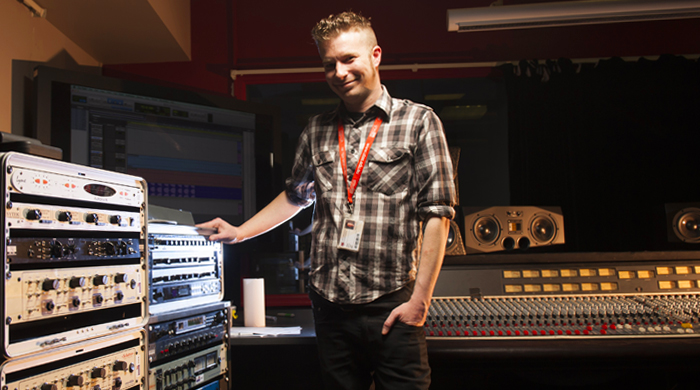
Julian Black
Bachelor of Music graduate
The Bachelor of Music gives you the tools to create your own future confidently, immersed in creativity and innovation. These are some of the top industries and careers projected to grow in the next five years.
- 9.1% Music Professionals
- 8% Performing Arts Technicians
*National Skills Commission ten year projections from May 2024-May 2034.
Get more from your degree
Double Degree
A double degree allows you to pursue your career and follow your passion at the same time. When you graduate, you’ll have a set of skills that will really set you apart. Our Music students have paired a Bachelor of Music with a range of different options including a Bachelor of Science, a Bachelor of Business, and a Bachelor of Information and Communication Technology. What would you like to do?
Complementary major - Sustainability
As part of our commitment to sustainability, we have created a complementary, optional major available across most of our flexible bachelor's degrees. In the major, explore interdisciplinary knowledge and skills that underpin the development of sustainable societies and solutions. Informed by international and local research, practice, and theory, this major allows you to develop specialist expertise across the physical and social sciences and humanities, emphasising student-led and problem-based learning. It provides the frameworks for developing sustainability oriented solutions in a range of fields and is relevant to a wide range of careers.
Learn more at Where study meets sustainability
Becoming a Secondary School Teacher
If you're interested in becoming a secondary teacher in music, you'll need to complete a bachelor's degree in the relevant area and then apply for a Master of Teaching. This is an accredited program.
Postgraduate study
If you successfully complete this course, you may be also be eligible to apply for a range of other postgraduate courses including graduate certificates and graduate diplomas and master's by coursework and research. Filter the course list by Postgraduate to view the current courses available.
Course structure
The Bachelor of Music, requires the completion of 300 credit points comprising:
- 100 credit points of Core units
- a 100 credit point major in Music Practice and;
- 100 credit points of Elective units, or an optional major, such as a major in Sustainability.
In your Core units you will complete 50 credit points at Introductory level (100) and 50 credit points at Intermediate (200) level. The units forming your core can be found in the schedule below, and the sequence you can take them in the course planner.
A major is an area of focus in your degree. In the Bachelor of Music you will complete a major in Music Practice. Find out more at What is a Major?
You may complete most units from across the University as an Elective, including additional units in music (such as Ensemble Skills units) and the creative arts, or a major from another course.
The University is deeply committed to building sustainable futures which is why we've made our Sustainability major readily available in most of our courses. If you want to complete this major, you'll find it under your Electives options when you go to enrol, and you can add it to your study plan yourself. To find out more about the Sustainability major, check the Bachelor of Science.
To select a major from another area, such as from the Bachelor of Business, Fine Arts or Science, you'll need to contact a Student Advisor via U Connect. They'll guide you through adding this to your study plan, and make sure it fits with the rest of your course plan.
For help on how to find and choose your Elective units, see What are Elective units?
Course Planner
You can find your course planner here. Your course planner gives you a visual representation of your course and will help you plan which units to enrol in and when.
For course planners from previous years, refer to the handbook entry for that year.
This unit focuses on your major area of musical expression and practice and accommodates a diversity of specialisations. Music Practice is central and crucial to developing the core technical and artistic skills necessary for the creation and realisation of musical…
Credit Points: 12.5
| Location | Study period | Attendance options | Available to | ||
|---|---|---|---|---|---|
| Hobart | Semester 1 |  |  |  | |
- Key:
- On-campus
 Off-Campus
- International students
- Domestic students
Building on your initial introduction to the core elements of your music practice, this unit enables you to consolidate the core technical and artistic skills necessary for the creation and realisation of musical works through practical and productive engagement and…
Credit Points: 12.5
| Location | Study period | Attendance options | Available to | ||
|---|---|---|---|---|---|
| Hobart | Semester 1 | | | | |
| Semester 2 | | | | ||
- Key:
- On-campus
- Off-Campus
- International students
- Domestic students
This unit will challenge you to extend your music practice. From the foundation of core technical and artistic skills you have previously developed, you will explore elements of musicianship, making informed and reflective decisions about how to apply these skills…
Credit Points: 12.5
| Location | Study period | Attendance options | Available to | ||
|---|---|---|---|---|---|
| Hobart | Semester 1 | | | | |
| Semester 2 | | | | ||
- Key:
- On-campus
- Off-Campus
- International students
- Domestic students
Expanding your musicianship skills and enabling the development of the aesthetic judgement is a central focus of this unit. This is crucial for the creation and realisation of maturing musical work which you will demonstrate by focusing on communication with…
Credit Points: 12.5
| Location | Study period | Attendance options | Available to | ||
|---|---|---|---|---|---|
| Hobart | Semester 1 | | | | |
| Semester 2 | | | | ||
- Key:
- On-campus
- Off-Campus
- International students
- Domestic students
Continuing to extend the musicianship skills and aesthetic judgement that you are beginning to embody in this unit you will explore and innovate in the context of your developing individual artistic voice. Throughout this unit you will be required to…
Credit Points: 12.5
| Location | Study period | Attendance options | Available to | ||
|---|---|---|---|---|---|
| Hobart | Semester 1 | | | | |
| Semester 2 | | | | ||
- Key:
- On-campus
- Off-Campus
- International students
- Domestic students
In this unit you will experiment in your creative work with boldness and originality and broaden and deepen your individual artistic voice while exhibiting applied contextual knowledge and self-reflection. Throughout this unit you will be required to utilise critical thinking…
Credit Points: 12.5
| Location | Study period | Attendance options | Available to | ||
|---|---|---|---|---|---|
| Hobart | Semester 1 | | | | |
| Semester 2 | | | | ||
- Key:
- On-campus
- Off-Campus
- International students
- Domestic students
In this capstone unit you will develop and undertake your own self-directed project in any field of musical activity. Negotiated with and overseen by teaching staff, your tailored experience provides an exciting opportunity to bring together everything you have learned…
Credit Points: 12.5
| Location | Study period | Attendance options | Available to | ||
|---|---|---|---|---|---|
| Hobart | Semester 2 | | | | |
- Key:
- On-campus
- Off-Campus
- International students
- Domestic students
In this unit you will undertake small exploratory performance-based projects through a laboratory-style experience. You will investigate various skills and strategies essential to realise identified projects collaboratively or individually fora public audience. You will critically reflect on your experience. Experimental…
Credit Points: 12.5
| Location | Study period | Attendance options | Available to | ||
|---|---|---|---|---|---|
| Hobart | Semester 1 | | | | |
| Launceston | Semester 1 | | | | |
- Key:
- On-campus
- Off-Campus
- International students
- Domestic students
This unit addresses the communication needs of students, current and intending professionals required to speak in presentation contexts. Participants will experience specific vocal and physical skills in the presentation of dynamic and highly focused material and tasks. Various delivery techniques…
Credit Points: 12.5
| Location | Study period | Attendance options | Available to | ||
|---|---|---|---|---|---|
| Hobart | Winter | | | | |
- Key:
- On-campus
- Off-Campus
- International students
- Domestic students
Research is providing increasing evidence for the positive benefits of engagement with the arts for individual and community wellbeing at all stages of life and can provide a non-pharmaceutical adjunct to health interventions. This unit explores case studies of successful…
Credit Points: 12.5
| Location | Study period | Attendance options | Available to | ||
|---|---|---|---|---|---|
| Online | Semester 1 | | | | |
- Key:
- On-campus
- Off-Campus
- International students
- Domestic students
This unit explores historical and current case studies of creative arts practitioners from a range of cultural contexts living with physical or mental illness and the ways this is reflected or subsumed in their work. This engagement with creative work…
Credit Points: 12.5
| Location | Study period | Attendance options | Available to | ||
|---|---|---|---|---|---|
| Online | Semester 2 | | | | |
- Key:
- On-campus
- Off-Campus
- International students
- Domestic students
View all details for FXA302 Perspectives of the Arts on Health and Wellbeing
You will be assigned to a work placement in a government, private, or not-for-profit organisation approved by the University. As part of your internship you will, where opportunity allows, contribute to the production, publication and presentation of creative content, while…
Credit Points: 12.5
| Location | Study period | Attendance options | Available to | ||
|---|---|---|---|---|---|
| Hobart | Semester 1 | | | | |
| Semester 2 | | | | ||
- Key:
- On-campus
- Off-Campus
- International students
- Domestic students
In Tasmania, our vibrant arts and cultural calendar includes MOFO and Dark MOFO, Ten Days on the Island, and Beaker Street. In this unit, you will learn about the role of festivals, open days, street fairs and other events in…
Credit Points: 12.5
This unit introduces you to music and cultural expression in the Australian context. You will explore the breadth and distinctiveness of Australian music, investigate and discuss a diverse range of musical works, contemporary and historical, and create your own musical…
Credit Points: 12.5
| Location | Study period | Attendance options | Available to | ||
|---|---|---|---|---|---|
| Hobart | Semester 1 | | | | |
- Key:
- On-campus
- Off-Campus
- International students
- Domestic students
Music festivals, films and genres such as stadium rock and contemporary circus exemplify how music and the visual combine for spectacular effect. In this unit, through the exploration of a diverse range of contemporary and historical musical works, concepts and…
Credit Points: 12.5
| Location | Study period | Attendance options | Available to | ||
|---|---|---|---|---|---|
| Hobart | Semester 2 | | | | |
- Key:
- On-campus
- Off-Campus
- International students
- Domestic students
This is the second of three units designed to develop key practical and theoretical skills relating to the practice of music required for today’s creative musician. You will engage in a variety of learning environments and activities aimed at developing…
Credit Points: 12.5
| Location | Study period | Attendance options | Available to | ||
|---|---|---|---|---|---|
| Hobart | Semester 2 | | | | |
- Key:
- On-campus
- Off-Campus
- International students
- Domestic students
This is the first of three units designed to establish key practical and theoretical skills relating to the practice of music required for today’s creative musician. You will establish essential literacies through integrated music theory and musicianship training using relevant…
Credit Points: 12.5
| Location | Study period | Attendance options | Available to | ||
|---|---|---|---|---|---|
| Hobart | Semester 1 | | | | |
- Key:
- On-campus
- Off-Campus
- International students
- Domestic students
This is the third unit designed to consolidate key practical and theoretical skills relating to the practice of music required for today’s creative practitioner. You will further develop essential literacies through integrated music theory and musicianship training and apply them…
Credit Points: 12.5
| Location | Study period | Attendance options | Available to | ||
|---|---|---|---|---|---|
| Hobart | Semester 1 | | | | |
- Key:
- On-campus
- Off-Campus
- International students
- Domestic students
This unit focusses on the interrelationship between music and politics by exploring aspects such as musical activism, propaganda, censorship and the underground. You will investigate the creation, reception and transmission of music from diverse styles, cultures, periods and global perspectives…
Credit Points: 12.5
| Location | Study period | Attendance options | Available to | ||
|---|---|---|---|---|---|
| Hobart | Semester 1 | | | | |
- Key:
- On-campus
- Off-Campus
- International students
- Domestic students
What will it mean to be a musician in the future? How might music continue to evolve and adapt to change? How will audiences of the future access their preferred genre? Who will fund music production and consumption? Will live…
Credit Points: 12.5
| Location | Study period | Attendance options | Available to | ||
|---|---|---|---|---|---|
| Hobart | Semester 2 | | | | |
- Key:
- On-campus
- Off-Campus
- International students
- Domestic students
Collaborative work is integral to working in and with the creative and cultural industries. This unit encourages you to take supported creative risks and introduces you to work-integrated learning methods and practices. Over the course of the semester, you will…
Credit Points: 12.5
| Location | Study period | Attendance options | Available to | ||
|---|---|---|---|---|---|
| Hobart | Semester 2 | | | | |
| Launceston | Semester 2 | | | | |
- Key:
- On-campus
- Off-Campus
- International students
- Domestic students
Entry requirements
We encourage you to apply for the courses you most want to study. If you’re not eligible to enter your chosen course right now, the admissions team will work with you to find the best pathway option.
Enquire online for advice on the application process and the available pathways to study.
This course does not use ATAR as part of the assessment process.
To be eligible for an offer, domestic applicants from all educational backgrounds must:
- Meet the University’s General Entry Requirements based on your prior studies and experience; and
- If applying from within Tasmania, successfully complete an audition and interview in person on-campus in Hobart; or
- If applying from interstate, successfully complete an audition by submitting a private internet link, USB, CD or DVD of your audition repertoire in lieu of a live audition in Hobart, and interview over the phone/internet.
- Auditions commence Monday 27 November and continue through December, late January and February.
Learn more about the audition process in the Audition Information Guide (PDF 1.6 MB) or call 1300 363 864 or enquire online.
We recommend pre-tertiary TASC subjects in music at the senior secondary level or equivalent, but this is not a prerequisite for admission. AMEB qualification of Grade 7 (performance) and Grade 5 (theory) may be advantageous in some specialisations, but not a prerequisite for admission.
Special consideration
If your ability to access or participate in education has been affected by circumstances beyond your control, you can apply for special consideration as part of your application. We will consider a range of factors, including economic hardship, serious medical condition or disability.
We can only approve applications for special consideration where we are confident that you have the necessary skills and knowledge to succeed in your studies. If your application is not approved, the UTAS admissions team will work with you to find the best alternative pathway to your chosen course. Special consideration is not available for international applicants.
All international students will need to meet the minimum English Language Requirements, University General Entry Requirements and any course specific requirements such as pre-requisite subjects, if applicable.
English Language RequirementsThis degree requires an IELTS (Academic) of 6.0, with no individual band less than 5.5, or a PTE Academic score of 50, with no score lower than 42 or equivalent.
For students who do not meet the English Language Requirement through citizenship or prior studies in English in an approved country, evidence of an approved English language test completed within the last 2 years must be provided. See the English Language Requirements page for more information.
General Entry RequirementsAdmission to undergraduate courses at the University of Tasmania requires the completion of qualifications equivalent to a 12th year of education in Australia.
Please review the equivalent undergraduate entry requirements to see the minimum requirement relevant to your country. The ATAR information for this course is located in the “For Domestic Students” section of the entry requirements on this page.
If you do not meet the minimum requirements, we offer the Foundation Studies Program.
Course Specific RequirementsAll students must also successfully complete an audition by submitting a private internet link, USB, CD or DVD of your audition repertoire in lieu of a live audition in Hobart, and interview over the phone/internet. If applying from within Tasmania, you may be able to successfully complete an audition and interview in person on-campus in Hobart.
If you do not meet the General Entrance Requirements, there are alternate entry pathways to the Bachelor of Music:
Detailed admissions information and advice for all undergraduate courses, including comprehensive, course-level student profiles, is available from UTAS Admissions.
Fees & scholarships
Domestic students
Commonwealth supported places (CSP) are available for this course. For eligible domestic students, this means your fees will be subsidised by the Australian Government. You’ll only need to pay the student contribution amount for each unit you study within the course.
Commonwealth Supported Place indicative annual fee: $9,645
How is this calculated?
This is an estimate. The calculation is based on the average full-time enrolment for this course in 2026. All figures are indicative only for 2027. Actual tuition fees will depend on specific unit enrolment, and are subject to annual increases each year. You can find the complete fee details for each unit of study on the individual unit pages. The units for this course are found in the course structure section of this page.
These figures do not include other costs such as the Student Services and Amenities Fee (SSAF). For further information, please visit Scholarships, fees and costs.
HECS-HELP loans
You may be able to defer payment of the student contribution amount by accessing a HECS-HELP loan from the Government. If eligible, you’ll only have to pay your tuition fees once you start earning above a specific amount.
Further information on student loans and a CSP eligibility checker can be found at Australian Government Study Assist.
International students
2027 annual international student tuition fee: $40,250 AUD
The standard year of study for this course is 100 credit points.
Indicative total tuition fee for international students: $ 126,888 AUD.
This total tuition fee is indicative only. Please visit fees and costs for further information on how this is calculated.
International students are charged the Student Services and Amenities Fee but this fee is incorporated in the annual rate. International students do not have to make any additional SSAF payments.
Domestic scholarships
Domestic Students
Each year, the University offers more than 900 awards including scholarships, bursaries and prizes to students from all walks of life, including those who have achieved high academic results; those from low socio-economic backgrounds; students with sporting ability; students undertaking overseas study; and students with a disability. Applications for most awards commencing in Semester 1 open at the beginning of August and close strictly on 31 October in the year prior to study.
Find out more about Scholarships & Prizes available.
International scholarships
The University of Tasmania offers a range of scholarships for international students, designed to recognise academic merit and support access to university study.
For many of our international scholarships you will be automatically assessed when you submit your International Student Application, meaning no separate scholarship application is required. Some scholarships may require additional application steps. Explore our International Scholarships to learn more about available opportunities and application requirements.


Share this page
How can we help?
Do you have any questions about choosing a course or applying? Get in touch.