

Overview (2027)

Key Information


Duration
Minimum 3 years, up to a maximum of 7 years.


Location
 CRICOS: 002342F
Duration
Minimum 3 years, up to a maximum of 7 years.
Location
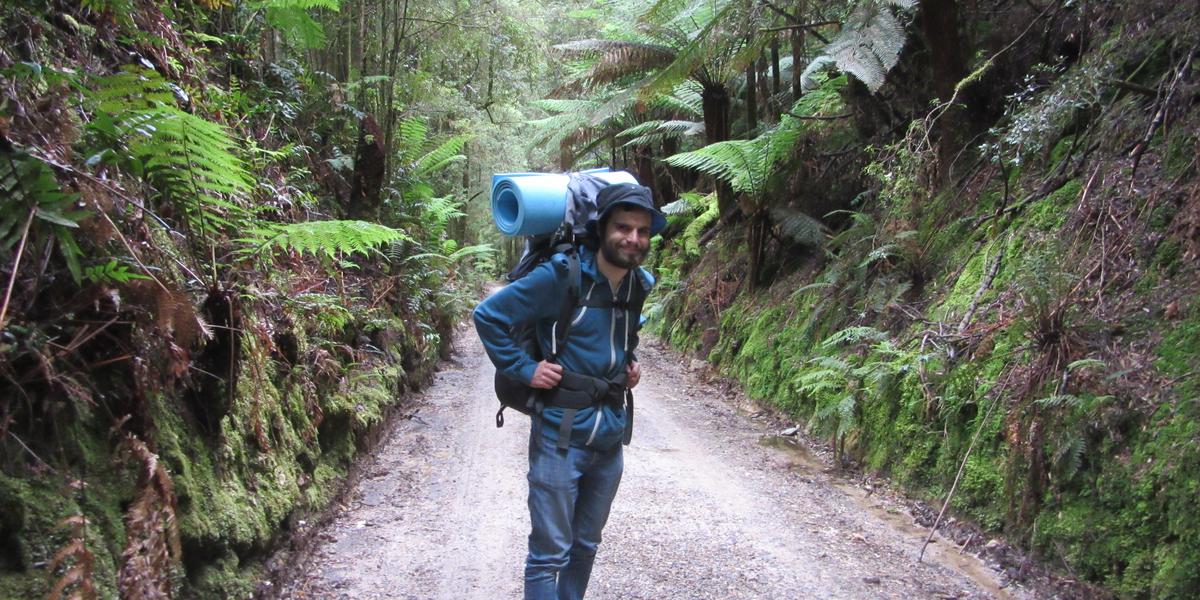
Peter Legg, Economics Graduate
Economics explores how people and societies make decisions, use important resources, and respond to incentives. Studying with us, you can follow your passion and shape the world. You’ll learn to solve economic and financial challenges faced by industry, government, and society.
Our applied Economics course focuses on current issues in Tasmania and beyond. Your studies will cover a range of topics, including international trade, conservation and management of natural resources, sustainable energy, contemporary business strategy, and social issues such as crime, housing, and health. You’ll also gain a deep understanding of how decisions are made by individuals, firms, and governments.
The Bachelor of Economics with Honours degree allows students who have completed a Bachelor of Economics degree, a year of study to develop a body of knowledge in a specific context as further preparation to undertake professional work and/or as a pathway for Masters degree or Doctorate in the future.
This degree can be combined to form a double degree. Study what you want, explore your options and find out how you can accelerate your career.
Course information webinar
Tuesday 13th of October, 5:00pm - 6:00pm (AEDT)
Explore the Bachelor of Business and Bachelor of Economics and discover how these degrees can prepare you to navigate changing industries, markets and global challenges.
During this webinar, we’ll cover course structure, study options, real-world learning and career pathways across business, economics, finance, marketing, management and more. We’ll also discuss applications, fees, scholarships and other key information, with an opportunity to ask questions.
- 1 Collect, analyse and interpret data combined with the application of a broad theoretical and practical knowledge of economics to make evidence-based decisions.
- 2 Communicate economic reasoning, knowledge, ideas and empirical evidence in ways appropriate to the audience, purpose and context.
- 3 Critically evaluate economic problems and assess policy issues, using a broad range of economic tools.
- 4 Collaboratively interact with peers to reflect on ethical issues and the potential differential impacts of economic policies across local, national or international economies.
UniGO: Global Opportunity Program
Immerse yourself in sustainability projects within the Southeast Asian context with a fully-funded study experience in either Indonesia, Malaysia or Vietnam. This elective unit allows you progress your degree faster by gaining 25 credit points while travelling for three weeks over your summer break. Plus, we’ll pay for your travel costs.
Learn more at UniGO: Global Opportunity Program
Become a Student Ambassador
Improve your communication, teamwork and leadership skills, meet new people, inspire and help others, and developing lasting friendships and networks as a student ambassador. Our ambassadors proudly represent the University throughout Tasmania in schools, at University and community events, and support a range of recruitment and engagement activities.
Through the Student Ambassador Program you will have many opportunities for training and professional development, experience in real-world community engagement and outreach, networking, and public speaking. Plus, end up with a key point of distinction on your CV
Study overseas at one of our partner institutions
Our exchange program allows you to spend up to a year of your degree studying overseas. We have over 150 exchange partners throughout Europe, North America, and Asia. Tuition fees at the host university are waived, and all your studies can be recognised as part of your degree. A range of scholarships and financial support options are available to help with costs.
Learn more at Learning abroad
Designed to equip you with valuable industry connections, alongside job-ready skills and experience, the University of Tasmania’s Business Placement Program expands your career horizons while forming valuable relationships with organisations and industry leaders. Our placement team will arrange your placement, where you’ll work on a business-related project throughout the semester in an area of your choice, whether in government, non-profit, private, or another specific business environment.
Career outcomes
As an Economics graduate, you’ll have the opportunity to work in a range of occupations and industries. Employers highly value economic literacy and analytical skills, making you a sought-after candidate. Through your studies, you’ll gain job-specific skills in your chosen area of focus, preparing you for a wide variety of careers. These include roles in international development, health, environment, business, banking, finance, public policy, inter-governmental affairs, and diplomacy.
Here are some of the careers projected to grow into 2034*:
- Intelligence and Policy Analysts: 25.9%
- Policy and Planning Managers: 21.5%
- Economist: 28.4%
*National Skills Commission ten year projections from May 2024-May 2034.
Postgraduate study
If you successfully complete this course, you may be also be eligible to apply for a range of other postgraduate courses including Graduate Certificates and Graduate Diplomas and Masters by coursework and research.
For example, the Graduate Certificate in Behavioural Insights utilises concepts taught within the Bachelor of Economics with insights from psychology and behavioural sciences. Studying the Graduate Certificate in Behavioural Insights provides you with an industry-leading understanding of why people think and act in certain way and will prepare you to make game-changing decisions that result in better outcomes for individuals, business, and society.
Course structure
To graduate from the Bachelor of Economics, you must satisfactorily complete 300 credit points of study comprising:
- A minimum of 100 credit points of Core units from the list in the Schedule;
- At least one approved 100 credit point Major from the list in the Schedule; and
- 100 credit points of Elective units or an elective major, such as a major in Sustainability.
The additional 100 credit points can be used to complete a (i) second disciplinary major*, if available, (ii) a sustainability major, or (iii) another major from across the institution*
*To enrol in a second disciplinary major, or a major outside your discipline, please contact a Student Advisor via Uconnect.
A major is an area of focus in your degree. During your studies, you’ll choose an area that interests you, and then study a group of units related to that area.
Please note: the Society and Environment major is not available for selection in 2027 while it is undergoing a review.
Traditional economics portrays decision making as rational deliberation that computes optimal choices based on well-defined objectives and perfect information. In reality, limited information and cognition as well as certain features of the human psychology often result in decisions that deviate…
Credit Points: 12.5
| Location | Study period | Attendance options | Available to | ||
|---|---|---|---|---|---|
| Hobart | Semester 1 |  |  |  | |
| Online | Semester 1 |  | | | |
- Key:
- On-campus
- Off-Campus
- International students
- Domestic students
View all details for BEA106 Introduction to Behavioural Economics
BEA111 introduces the key concepts in economics, both microeconomics and macroeconomics. It demonstrates how these concepts can be used to describe and explain the decisions of businesses and individuals and their reactions to world events, social and economic change and…
Credit Points: 12.5
| Location | Study period | Attendance options | Available to | ||
|---|---|---|---|---|---|
| Cradle Coast | Semester 1 | | | | |
| Melbourne Study Centre | Semester 1 | | | ||
| Hobart | Semester 1 | | | | |
| Hong Kong Universal Ed | Semester 1 | | | ||
| Launceston | Semester 1 | | | | |
| Online | Semester 1 | | | | |
| Shanghai Ocean University | Shanghai Semester 2 | | | ||
- Key:
- On-campus
- Off-Campus
- International students
- Domestic students
View all details for BEA111 Introduction to Markets and the Economy
BEA121 Economic Policy in Action expands upon the key microeconomic and macroeconomic concepts introduced in BEA111 Introduction to Markets and the Economy. The first module of the unit focusses on extending the macroeconomics in BEA111 to consider international trade, exchange…
Credit Points: 12.5
| Location | Study period | Attendance options | Available to | ||
|---|---|---|---|---|---|
| Hobart | Semester 2 | | | | |
| Online | Semester 2 | | | | |
- Key:
- On-campus
- Off-Campus
- International students
- Domestic students
BEA140 Data Analysis for Business is a foundation unit in business statistics and the mathematics of finance, and is a core unit in the Bachelor of Economics (BEc) and Bachelor of Business (BBus) degrees. It is also a nominated elective…
Credit Points: 12.5
| Location | Study period | Attendance options | Available to | ||
|---|---|---|---|---|---|
| Cradle Coast | Semester 2 | | | | |
| Melbourne Study Centre | Semester 2 | | | ||
| Hobart | Semester 2 | | | | |
| Hong Kong Universal Ed | Semester 2 | | | ||
| Launceston | Semester 2 | | | | |
| Online | Semester 2 | | | | |
| Shanghai Ocean University | Shanghai Semester 1 | | | ||
- Key:
- On-campus
- Off-Campus
- International students
- Domestic students
BEA200 Public Policy and Welfare shows how economic theory can be directly applied to explain the behaviour of individuals and help solve the decisions that policymakers face. The unit introduces and uses the neoclassical theory of consumer behaviour to initially…
Credit Points: 12.5
| Location | Study period | Attendance options | Available to | ||
|---|---|---|---|---|---|
| Hobart | Semester 1 | | | | |
| Online | Semester 1 | | | | |
- Key:
- On-campus
- Off-Campus
- International students
- Domestic students
This unit builds on an understanding of microeconomic concepts in order to provide you with an introduction to several widely-applied economic evaluation and impact-assessment methods. Informing decision-makers about how best to allocate scarce resources is a key role for economists…
Credit Points: 12.5
| Location | Study period | Attendance options | Available to | ||
|---|---|---|---|---|---|
| Hobart | Semester 2 | | | | |
| Online | Semester 2 | | | | |
- Key:
- On-campus
- Off-Campus
- International students
- Domestic students
This unit uses contemporary economic frameworks to explain the long-term economic performance of economies. It examines the role of capitalism, population growth, capital accumulation, technology, innovation, political systems, and institutions in shaping the standard of living in countries. Students who…
Credit Points: 12.5
| Location | Study period | Attendance options | Available to | ||
|---|---|---|---|---|---|
| Hobart | Semester 2 | | | | |
| Online | Semester 2 | | | | |
- Key:
- On-campus
- Off-Campus
- International students
- Domestic students
The goal of the unit is to develop a thorough understanding of basic econometric methods so that the student can, at the end of this unit:Critically evaluate empirical studies in economics and finance which involve use of simple econometric techniques…
Credit Points: 12.5
| Location | Study period | Attendance options | Available to | ||
|---|---|---|---|---|---|
| Hobart | Semester 1 | | | | |
| Online | Semester 1 | | | | |
- Key:
- On-campus
- Off-Campus
- International students
- Domestic students
Understand contemporary economics and develop the analytical and problem-solving skills required to be a successful professional. Students are prepared for success in business and industry including key growth industries in Tasmania and beyond: energy, agriculture, and business strategy. You’ll be equipped with in-demand skills from businesses, Local, State, and Commonwealth government agencies as well as a range of consulting firms and non-government industry organisations.
Ever wondered how businesses out-maneuver competitors, politicians negotiate deals, or even how social norms evolve? Game Theory provides powerful tools to understand these strategic interactions, where your actions affect others, and theirs affect you. In this unit, you'll learn the…
Credit Points: 12.5
| Location | Study period | Attendance options | Available to | ||
|---|---|---|---|---|---|
| Hobart | Semester 2 | | | | |
| Online | Semester 2 | | | | |
- Key:
- On-campus
- Off-Campus
- International students
- Domestic students
View all details for BEA104 Game Theory for Business and Social Sciences
The study of international economics provides students with a balance of both micro and macro view of economics in a global perspective. The emphasis on international trade, investment and monetary related issues provide students the required analytical tools to understand…
Credit Points: 12.5
| Location | Study period | Attendance options | Available to | ||
|---|---|---|---|---|---|
| Hobart | Semester 1 | | | | |
| Online | Semester 1 | | | | |
- Key:
- On-campus
- Off-Campus
- International students
- Domestic students
Sustainable development constitutes the most urgent policy challenge we face today: How can we enable individuals to make choices and behave in ways that benefit both themselves and future generations? This unit equips students with the practical tools of behavioural…
Credit Points: 12.5
| Location | Study period | Attendance options | Available to | ||
|---|---|---|---|---|---|
| Hobart | Semester 2 | | | | |
| Online | Semester 2 | | | | |
- Key:
- On-campus
- Off-Campus
- International students
- Domestic students
View all details for BEA203 Applied Behavioural Economics for Business and Policy
The aim of this unit is to introduce students to the economic theory of business strategy and its implications for modern markets. The foundation theories of monopoly and perfect competition are reviewed, and their implications for markets are analysed. A…
Credit Points: 12.5
| Location | Study period | Attendance options | Available to | ||
|---|---|---|---|---|---|
| Hobart | Semester 1 | | | | |
| Online | Semester 1 | | | | |
- Key:
- On-campus
- Off-Campus
- International students
- Domestic students
In this unit, students are introduced to applying economic principles to agriculture, agribusiness, and related markets. Students will apply economic principles to study issues in food production and food security. Content will include topics in farm management and organisation, the…
Credit Points: 12.5
| Location | Study period | Attendance options | Available to | ||
|---|---|---|---|---|---|
| Hobart | Semester 1 | | | | |
| Online | Semester 1 | | | | |
- Key:
- On-campus
- Off-Campus
- International students
- Domestic students
Energy is a key input for a well-functioning economy and is essential for maintaining our modern way of life. Energy influences many dimensions of our economic and social lives. Ensuring future responsible (sustainable) and equitable access to affordable energy is…
Credit Points: 12.5
| Location | Study period | Attendance options | Available to | ||
|---|---|---|---|---|---|
| Hobart | Semester 2 | | | | |
| Online | Semester 2 | | | | |
- Key:
- On-campus
- Off-Campus
- International students
- Domestic students
This unit uses a contemporary macroeconomic modelling framework to analyse the role of fiscal and monetary policies on economic outcomes. The study of fiscal policy includes the role of stimulus during recessions, and the impact and consequences of government expenditures…
Credit Points: 12.5
| Location | Study period | Attendance options | Available to | ||
|---|---|---|---|---|---|
| Hobart | Semester 1 | | | | |
| Online | Semester 1 | | | | |
- Key:
- On-campus
- Off-Campus
- International students
- Domestic students
In today's rapidly changing world, the ability to make informed decisions about the future is more important than ever, and this unit offers students the essential knowledge and techniques to make informative forecasts and to succeed in decision-making activities in…
Credit Points: 12.5
| Location | Study period | Attendance options | Available to | ||
|---|---|---|---|---|---|
| Melbourne Study Centre | Semester 2 | | | ||
| Hobart | Semester 2 | | | | |
| Online | Semester 2 | | | | |
- Key:
- On-campus
- Off-Campus
- International students
- Domestic students
View all details for BEA342 Forecasting for Economic Decision-Making
Are you interested in finding economic solutions to make a positive impact on society and the environment? This major teaches you about contemporary economics with an applied focus on social and public policy. You will learn about issues facing the world today, including environmental management and resource economics, the economics of social issues including crime and education, regional development, and other issues in public policy. Graduates gain a set of skills and experiences valued by businesses, consulting firms, government, and non-government agencies.
Economics of Social Issues applies economic principles to study contemporary social issues, including: the distribution of wealth and income, poverty and inequality, gender differences, altruism, crime and corruption, gambling, and housing. These social issues are analysed by looking at the…
Credit Points: 12.5
| Location | Study period | Attendance options | Available to | ||
|---|---|---|---|---|---|
| Hobart | Semester 1 | | | | |
| Online | Semester 1 | | | | |
- Key:
- On-campus
- Off-Campus
- International students
- Domestic students
This unit introduces students to the idea of ecosystem services by exploring the benefits that nature provides for people. Whether these benefits are traded in markets or occur in non-market settings, the ecosystem service framework is key to sustainable management…
Credit Points: 12.5
| Location | Study period | Attendance options | Available to | ||
|---|---|---|---|---|---|
| Hobart | Semester 2 | | | | |
| Online | Semester 2 | | | | |
- Key:
- On-campus
- Off-Campus
- International students
- Domestic students
Sustainable development constitutes the most urgent policy challenge we face today: How can we enable individuals to make choices and behave in ways that benefit both themselves and future generations? This unit equips students with the practical tools of behavioural…
Credit Points: 12.5
| Location | Study period | Attendance options | Available to | ||
|---|---|---|---|---|---|
| Hobart | Semester 2 | | | | |
| Online | Semester 2 | | | | |
- Key:
- On-campus
- Off-Campus
- International students
- Domestic students
View all details for BEA203 Applied Behavioural Economics for Business and Policy
Practical, public policy-orientated lectures and tutorials in this unit explore the practical issues of resource management using international, Australian and Tasmanian case studies. There will be specific focus on the sustainable yield of fisheries and the management of forests for…
Credit Points: 12.5
| Location | Study period | Attendance options | Available to | ||
|---|---|---|---|---|---|
| Hobart | Semester 1 | | | | |
| Online | Semester 1 | | | | |
- Key:
- On-campus
- Off-Campus
- International students
- Domestic students
Economics of Health and Wellbeing applies economic concepts to the study of healthcare and wellbeing from a variety of different perspectives. Students will apply economic principles to study health issues from the perspective of individuals, businesses, healthcare organisations and the…
Credit Points: 12.5
View all details for BEA311 Economics of Health and Wellbeing
Energy is a key input for a well-functioning economy and is essential for maintaining our modern way of life. Energy influences many dimensions of our economic and social lives. Ensuring future responsible (sustainable) and equitable access to affordable energy is…
Credit Points: 12.5
| Location | Study period | Attendance options | Available to | ||
|---|---|---|---|---|---|
| Hobart | Semester 2 | | | | |
| Online | Semester 2 | | | | |
- Key:
- On-campus
- Off-Campus
- International students
- Domestic students
This unit presents the economics of place and the economic value of placemaking. It explores how people choose the places where they want to live; considering whether the choice of where to live comes first and after the search of…
Credit Points: 12.5
View all details for BEA316 Economics of Place: Culture, Communities and Opportunities
This unit examines a range of contemporary economic issues shaping the development of regional and rural areas. Students will apply economics principles to study regional growth, urbanisation, international trade, migration and development policy. Students will study the complex tradeoffs between…
Credit Points: 12.5
View all details for BEA317 Regional Development in a Global Context
Your electives can be used to add breadth to your degree, by exploring a variety of different subject areas from across the University in areas such as Health, Business, Science, Creative Arts and Humanities and Social Sciences. Alternatively, you can deepen your engagement with specific subject areas, for example, by completing additional units in the same discipline as your major or related fields. You can also use this space to complete an optional 2nd major which may be from your current course or a major from another course*. Please contact U.Connect@utas.edu.au if you need more information or if you want to add a 2nd major to your study plan. *Some exclusions apply. Not all majors can be taken by students in different courses.
We want your study experience with us to be as smooth as possible and we know that choosing from lists and lists of electives can sometimes be overwhelming!
The guides and links below are presented to help you navigate all of these options and find the electives that are best for you.
Find the answer to your question - ASK US
My enrolment in the Student Portal
Please don't hesitate to get in touch with our team at UConnect if you need any help.
Entry requirements
We encourage you to apply for the courses you most want to study. If you are not eligible to enter your chosen course right now, the UTAS admissions team will work with you to find the best pathway option.
Enquire online for advice on the application process and the available pathways to study at UTAS.
Schools Recommendation Program
Australian year 12 students can apply for this course via our Schools Recommendation Program (SRP). Rather than an ATAR, your application is based on a recommendation by your school teachers. This can factor in your year 11 results, an assessment of your capabilities, and other considerations.
Through the SRP, you can receive and accept an offer prior to completing year 12. You will still need to finish your year 12 studies – including any exams – to commence your studies.
If you don’t receive an offer for this course through the Schools Recommendation Program, you will be re-assessed for a higher preference offer once your ATAR is released.
Domestic applicants who recently completed secondary education
Applicants are ranked by ATAR and offers are made based on the number of places available. In 2026, the lowest ATAR to receive an offer into this course was 68.25 The lowest ATAR to receive an offer may change from year to year based on the number of applications we receive.
Applicants who have recently completed senior secondary studies but have not received an ATAR may still be eligible for admission. We will consider your individual subject results on a case-bycase basis when we assess your application.
Domestic applicants with higher education study
To be eligible for an offer, you must have:
-
To be eligible for an offer, applicants must have:
- Partially completed an undergraduate course at Diploma level or higher (or equivalent). Applicants must have completed at least two units of study (equivalent to 25 University of Tasmania credit points). If an applicant has failed any units, the application may be subject to further review before an offer is made; OR
- Completed the University of Tasmania University Preparation Program (or an equivalent qualification offered by an Australian university).
Domestic applicants with VET / TAFE study
To be eligible for an offer, you must have completed a completed Certificate IV or higher (or equivalent) in any discipline.
Domestic applicants with work and life experience
Applicants without senior secondary, tertiary or VET / TAFE study can complete a personal competency statement.
Applicants may be eligible for an offer if they have relevant work and / or life experiences which demonstrate a capacity to succeed in this course.
SPECIAL CONSIDERATION
We believe university education should be an option for everyone, no matter your background. If your ability to access or participate in education has been affected by circumstances beyond your control, you can apply for special consideration as part of your application. We will consider a range of factors, including economic hardship, a serious medical condition, or disability.
We can only approve applications for special consideration if we are confident that you have the necessary skills and knowledge to succeed in your studies. If your application is not approved, the University admissions team will work with you to find the best alternative pathway to your chosen course. Special consideration is not available for international applicants.
All international students will need to meet the minimum English Language Requirements, University General Entry Requirements and any course specific requirements such as pre-requisite subjects, if applicable.
English Language Requirements
This degree requires an IELTS (Academic) of 6.0, with no individual band less than 5.5, or a PTE Academic score of 50, with no score lower than 42 or equivalent.
For students who do not meet the English Language Requirement through citizenship or prior studies in English in an approved country, evidence of an approved English language test completed within the last 2 years must be provided. See the English Language Requirements page for more information.
General Entry Requirements
Admission to undergraduate courses at the University of Tasmania requires the completion of qualifications equivalent to a 12th year of education in Australia.
Please review the equivalent undergraduate entry requirements to see the minimum requirement relevant to your country. The ATAR information for this course is located in the “For Domestic Students” section of the entry requirements on this page.
You can also meet the General Entry Requirement for this course with the following qualifications or prior studies:
- Completion of an equivalent AQF Certificate IV or above
- Complete or incomplete (minimum 25 credit points) of previous tertiary study at Diploma level or higher.
If you do not meet the minimum requirements, we offer the Foundation Studies Program and X1B International First Year Diploma (Business).
Course Specific Requirements
This course does not have any course specific requirements.
You may be eligible for advanced standing (i.e. credit) in this degree if you:
- Have completed an award such as a Diploma or Advanced Diploma from the University or another institution;
- Are currently studying another Bachelor degree at the University or at another institution;
- Have completed a Bachelor degree at the University or an equivalent award from another institution.
How to apply for credit
You can apply for a credit/advanced standing as part of the online application process.
Completion of the Bachelor of Economics may qualify you for admission, and in some cases advanced standing on the basis of your prior learning in a cognate study area, to a Postgraduate Coursework Degree at UTAS or elsewhere.
For example, you may wish to further your studies in one of the following courses:
Domestic Applicants
International Applicants
Detailed admissions information and advice for all undergraduate courses, including comprehensive, course-level student profiles, is available from UTAS Admissions.
Fees & scholarships
Domestic students
Commonwealth supported places (CSP) are available for this course. For eligible domestic students, this means your fees will be subsidised by the Australian Government. You’ll only need to pay the student contribution amount for each unit you study within the course.
Commonwealth Supported Place indicative annual fee: $15,601
How is this calculated?
This is an estimate. The calculation is based on the average full-time enrolment for this course in 2026. All figures are indicative only for 2027. Actual tuition fees will depend on specific unit enrolment, and are subject to annual increases each year. You can find the complete fee details for each unit of study on the individual unit pages. The units for this course are found in the course structure section of this page.
These figures do not include other costs such as the Student Services and Amenities Fee (SSAF). For further information, please visit Scholarships, fees and costs.
HECS-HELP loans
You may be able to defer payment of the student contribution amount by accessing a HECS-HELP loan from the Government. If eligible, you’ll only have to pay your tuition fees once you start earning above a specific amount.
Further information on student loans and a CSP eligibility checker can be found at Australian Government Study Assist.
International students
2027 annual international student tuition fee: $38,450 AUD
The standard year of study for this course is 100 credit points.
Indicative total tuition fee for international students: $ 121,214 AUD.
This total tuition fee is indicative only. Please visit fees and costs for further information on how this is calculated.
International students are charged the Student Services and Amenities Fee but this fee is incorporated in the annual rate. International students do not have to make any additional SSAF payments.
Domestic scholarships
For information on general scholarships available at the University of Tasmania, please visit Scholarships, fees and costs.
International scholarships
The University of Tasmania offers a range of scholarships for full fee-paying international students, designed to recognise academic merit and support access to university study.
For many of our international scholarships you will be automatically assessed when you submit your International Student Application, meaning no separate scholarship application is required. Some scholarships may require additional application steps. Explore our International Scholarships to learn more about available opportunities and application requirements.

Course year 2027


Share this page
How can we help?
Do you have any questions about choosing a course or applying? Get in touch.