

Overview (2027)

Key Information


Duration
Minimum 5 years, up to a maximum of 7 years.


Location
 CRICOS: 107736D
Duration
Minimum 5 years, up to a maximum of 7 years.
Location
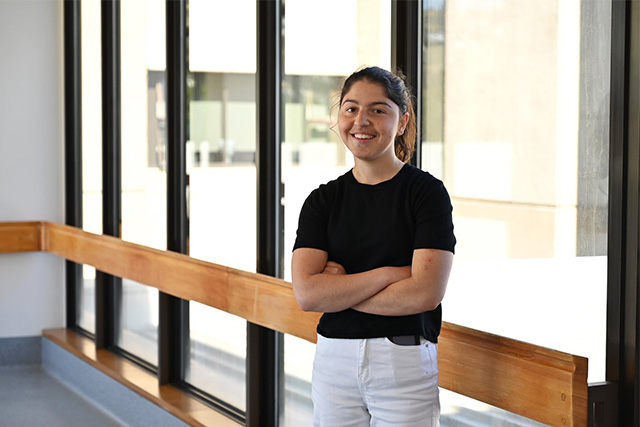
Study medicine with expert faculty, gain clinical experience in real healthcare settings, and develop the skills needed to become a confident, capable doctor. Graduate ready to work in hospitals and clinics, and pursue further medical training.
The combined degree*, the Bachelor of Medical Science and Doctor of Medicine, will prepare you to take a front-line leadership role as a doctor in health care delivery. Be challenged to use your knowledge and skills to help people and make a real difference to Tasmania and the world by contributing to positive health outcomes and improving health care systems at local, national and global levels.
Medicine is a fascinating and rewarding career, with endless variety. In addition to clinical care, you can make a difference with your involvement in medical research, biomedical technology, public health, medical education, and health policy.
You can apply to study toward your medical degree at one or more of Tasmania’s campuses - Hobart, Launceston, or the Cradle Coast - just order your preferences on your application according to where you would most like to study.
The Medicine Program is accredited by the Australian Medical Council.
Application closing dates are strictly applied and late applications will not be accepted.
Please note that the Medicine Program is not part of the Schools Recommendation Program.
Learn more about a career in medicine, the available study options, and our clinical schools by visiting our Medicine Page.
*Note, you will receive one testamur for the combined degree.
- 1 Integrate knowledge of medical sciences to practice evidence-based medicine.
- 2 Perform skilled, patient-centred medical assessment, treatment, management, and preventative care as part of a multidisciplinary health care team.
- 3 Work collaboratively with health systems and diverse populations to build healthy sustainable communities.
- 4 Act in accordance with the ethical and professional responsibilities of a medical practitioner and show leadership to influence positive changes in culture and practice.
- 5 Advance medical knowledge through professional practice and/or research.
From the very beginning of your course, you’ll gain first-hand experience through professional experience placements. Your course will combine case-based learning with a range of opportunities to expand your knowledge and skills.
During your first and second years, your studies will take place on campus. You'll also have contact with patients by engaging in activities at a range of health-care settings, with an emphasis on community and rural learning.
In your third, fourth and fifth years, you'll be based at clinical schools in Hobart, Launceston, or at our Rural Clinical School in Burnie. You'll have opportunities for extensive clinical placements as well as electives in areas of interest. You’ll learn alongside other health professionals, developing team skills and a multidisciplinary approach to care.
By the time you’ve completed your course, you’ll have the skills and knowledge to begin supervised practice as an intern in Australia or New Zealand.
All students enrolling in Health courses which include a professional experience placement component, laboratory and/or field activity are required to establish and maintain their capacity to practice safely via Safety in Practice Requirements compliance documentation.
Please see the Safety in Practice information on this page for further details.
Professional Experience Placement (PEP) is a key part of our medicine program, giving you the chance to apply your learning in real healthcare settings and understand the roles of health professionals in Australia.
In Years 1 and 2, you'll take part in short placements and community visits, including rural health and family-focused programs.
From Year 3, clinical placements become central to your learning:
- Year 3: placements in general medicine and primary care.
- Year 4: placements in surgery, paediatrics, obstetrics and gynaecology, and psychiatry.
- Year 5: placements in general practice, emergency, acute care, medicine, surgery, and aged care.
You'll also complete elective placements and a Professional Practice Project.
Career outcomes
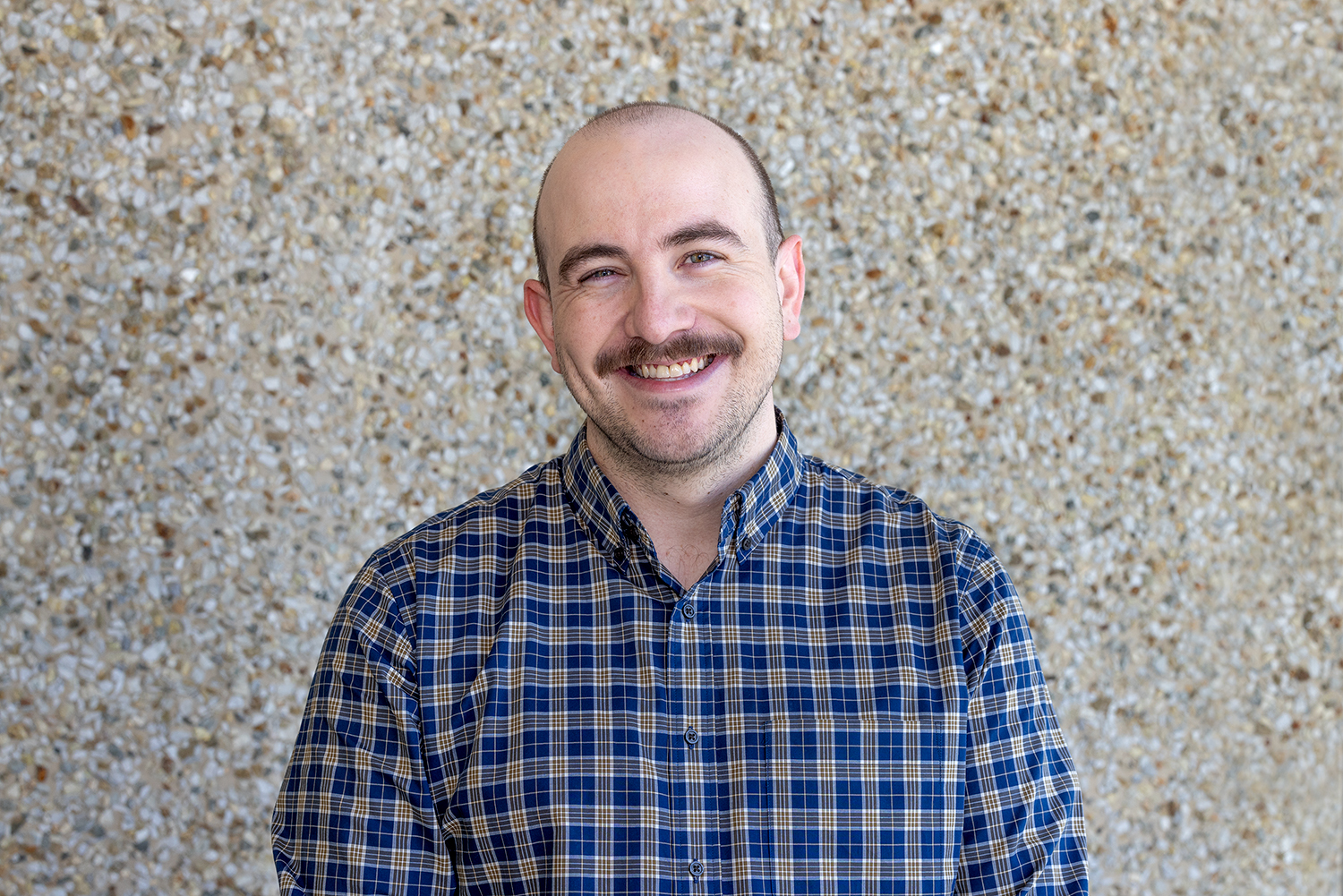
Dr Lewis Johnson
Medicine Graduate
Once you've completed the Medicine Program, you'll be eligible to apply for provisional registration to undertake training in an approved hospital as an intern.
On successful completion of your internship, you can apply for general registration as a Medical Practitioner in Australia and New Zealand. You'll also be able to choose an area of specialisation in which to develop your future career.
Graduates can apply to specialise in a wide variety of fields such as general practice, internal medicine, surgery, obstetrics and gynaecology, paediatrics, pathology, anaesthesia, radiology or psychiatry.
Graduates may also become medical administrators in hospitals or government departments or develop academic careers which include teaching and medical research.
The Tasmanian Rural and Regional Training Hub
The Tasmanian Rural and Regional Training Hub is one of 26 hubs established by the Australian Government to expand postgraduate medical training opportunities in rural and regional communities. The Hub supports doctors by providing internship and specialist training opportunities in Northwest Tasmania, enabling them to advance their careers without leaving the region and attracting more doctors to live, train and work in the area. This helps improve access to quality healthcare for people living in rural and regional Tasmania
Course structure
Students must successfully complete 500 credit points which comprises of:
- 300 credit points from the Bachelor of Medical Science; and
- 200 credit points from the Doctor of Medicine
The Bachelor of Medical Science component of the Bachelor of Medical Science / Doctor of Medicine requires the successful completion of 300 credit points.
This foundations unit will give students a framework on which to base their undergraduate medical studies. This includes the structural and functional organisation of the human body, beginning with the study of biomolecules and cells, the classification and types of…
Credit Points: 50
| Location | Study period | Attendance options | Available to | ||
|---|---|---|---|---|---|
| Cradle Coast | Semester 1 |  |  |  | |
| Hobart | Semester 1 | | | | |
| Launceston | Semester 1 | | | | |
- Key:
- On-campus
 Off-Campus
- International students
- Domestic students
This second foundations unit describes the normal structure and function of the musculoskeletal and nervous systems, common musculoskeletal and rheumatological diseases, antimicrobial and antiviral therapies, and laboratory diagnosis of infectious disease. Clinical cases focus on the bones, joints, muscles, and…
Credit Points: 50
| Location | Study period | Attendance options | Available to | ||
|---|---|---|---|---|---|
| Cradle Coast | Semester 2 | | | | |
| Hobart | Semester 2 | | | | |
| Launceston | Semester 2 | | | | |
- Key:
- On-campus
- Off-Campus
- International students
- Domestic students
CAM201 has a focus on the cardiovascular and respiratory systems and the basic medical sciences are taught in parallel with clinically focussed material which includes issues relating to population health, health systems and ethics and professionalism. The second year will…
Credit Points: 50
| Location | Study period | Attendance options | Available to | ||
|---|---|---|---|---|---|
| Cradle Coast | Semester 1 | | | | |
| Hobart | Semester 1 | | | | |
| Launceston | Semester 1 | | | | |
- Key:
- On-campus
- Off-Campus
- International students
- Domestic students
View all details for CAM201 Fundamentals of Clinical Science 1
CAM202 builds on preceding units by introducing the student to the gastrointestinal, renal, and reproductive systems. Students will explore clinical conditions associated with these systems and develop an understanding of the relevant basic medical sciences in the context of common…
Credit Points: 50
| Location | Study period | Attendance options | Available to | ||
|---|---|---|---|---|---|
| Cradle Coast | Semester 2 | | | | |
| Hobart | Semester 2 | | | | |
| Launceston | Semester 2 | | | | |
- Key:
- On-campus
- Off-Campus
- International students
- Domestic students
View all details for CAM202 Fundamentals of Clinical Science 2
CAM304 continues medical science teaching and introduces clinical rotations that continue across the year. The fundamentals of systems-based clinical science in CAM304 includes neuroscience, anatomy, endocrinology and pathology. Students commence clinical rotations in hospital and community settings, integrating their scientific…
Credit Points: 50
| Location | Study period | Attendance options | Available to | ||
|---|---|---|---|---|---|
| Cradle Coast | Half Year Period 1 | | | | |
| Hobart | Half Year Period 1 | | | | |
| Launceston | Half Year Period 1 | | | | |
- Key:
- On-campus
- Off-Campus
- International students
- Domestic students
View all details for CAM304 Fundamentals of Clinical Science 3
CAM305 strengthens the foundations for healthcare practice through a clinical lecture series focusing on multisystem health problems, as well as areas of specialised interest in clinical medicine. Students consider examples of complex multisystem health problems related to metabolic disorders, immune…
Credit Points: 50
| Location | Study period | Attendance options | Available to | ||
|---|---|---|---|---|---|
| Cradle Coast | Half Year Period 2 | | | | |
| Hobart | Half Year Period 2 | | | | |
| Launceston | Half Year Period 2 | | | | |
- Key:
- On-campus
- Off-Campus
- International students
- Domestic students
The Doctor of Medicine component of the Bachelor of Medical Science / Doctor of Medicine requires the successful completion of 200 credit points.
This unit, along with Unit 4B, is an integrated Clinical Placement year. Students are placed in a range of clinical placements. Student learning outcomes are organised to deliver the Australian Medical Council (AMC) medical graduate outcomes. Additionally, during this Unit…
Credit Points: 50
| Location | Study period | Attendance options | Available to | ||
|---|---|---|---|---|---|
| Cradle Coast | Half Year Period 1 | | | | |
| Hobart | Half Year Period 1 | | | | |
| Launceston | Half Year Period 1 | | | | |
- Key:
- On-campus
- Off-Campus
- International students
- Domestic students
This unit, along with Unit 4A, is an integrated Clinical Placement year. Students are placed in a range of clinical placements. Student learning outcomes are organised to deliver the Australian Medical Council (AMC) medical graduate outcomes. Additionally, during this Unit…
Credit Points: 50
| Location | Study period | Attendance options | Available to | ||
|---|---|---|---|---|---|
| Cradle Coast | Half Year Period 2 | | | | |
| Hobart | Half Year Period 2 | | | | |
| Launceston | Half Year Period 2 | | | | |
- Key:
- On-campus
- Off-Campus
- International students
- Domestic students
This unit, along with 5B, is an integrated Clinical Placement year. Students are placed in a range of clinical placements. Student learning outcomes are organised to deliver the Australian Medical Council, AMC, medical student outcomes. This unit is integrated with…
Credit Points: 50
| Location | Study period | Attendance options | Available to | ||
|---|---|---|---|---|---|
| Cradle Coast | Half Year Period 1 | | | | |
| Hobart | Half Year Period 1 | | | | |
| Launceston | Half Year Period 1 | | | | |
- Key:
- On-campus
- Off-Campus
- International students
- Domestic students
This unit, along with 5A, is an integrated Clinical Placement year. Students are placed in a range of clinical placements. Student learning outcomes are organised to deliver the Australian Medical Council, (AMC), medical student outcomes. This unit is integrated with…
Credit Points: 50
| Location | Study period | Attendance options | Available to | ||
|---|---|---|---|---|---|
| Cradle Coast | Half Year Period 2 | | | | |
| Hobart | Half Year Period 2 | | | | |
| Launceston | Half Year Period 2 | | | | |
- Key:
- On-campus
- Off-Campus
- International students
- Domestic students
Entry requirements
Applications open 1st August 2026 and close 11:59 pm 30th September 2026 AEST. Apply directly to UTAS via the online portal (www.utas.edu.au/study/apply).
For enquiries contact course.info@utas.edu.au
Application closing dates are strictly applied and late applications will not be accepted.
Admission to the BMedScMD is highly competitive and achieving the minimum entry requirements does not guarantee an offer of a place for this course.
BMedScMD is not part of the Schools Recommendation Program.
Admissions Quota informationCampus offerings:
From 2026, the Medicine Program is offered at Cradle Coast, Launceston and Hobart campuses.
Applicants who meet the entry requirements are ranked and offers are made separately to each campus based on the number of places available at each location.
Rural Quota:
The University of Tasmania BMedScMD has a quota of 50% domestic rural students, (MM2-7 locations), including 25% from MM3-7 locations.
Applicants who have lived in a Modified Monash Model (MM 2-7) (www.health.gov.au/resources/apps-and-tools/health-workforce-locator/app) rural area of Australia for 5 consecutive years or 10 cumulative years may be eligible to have their application considered through the rural application process (RAP) and relevant subquotas.
Refer to the Rural Application Process (RAP) webpage for further information www.utas.edu.au/health/study/medicine/rural-application-process
Tasmanian Quota:
At least 75% of domestic places will be offered to Tasmanians, which is defined as:
- School leaver applicants who have completed a Tasmanian Certificate of Education (TCE) or International Baccalaureate (IB) at a Tasmanian High School or Secondary College within 5 years of the course commencement date.
- Applicants with previous tertiary study who: 1. are currently resident in Tasmania and have lived in Tasmania for five or more consecutive years: OR 2. have lived in Tasmania for ten or more cumulative years and have lived in Tasmania not more than ten years prior to the date of course commencement.
Tasmanian Rural Training Stream: (Cradle Coast Campus only)
Twenty (20) domestic places are held for applicants applying through the Tasmanian Rural Training Stream. This Stream facilitates entry of Tasmanian rural applicants to the BMedScMD and recognises our commitment to building a healthcare workforce for all Tasmania.
Places in this Stream are open to all domestic applicants and are assessed on the same criteria (ATAR/UCAT for school leaver applicants and GPA/GAMSAT for graduate entry pathway applicants) – see Admission Requirements.
Offers will be prioritised based on the following Tiers:
Tier 1: Tasmanian Rural Training Stream geographical footprint residents, defined as applicants living in all Tasmanian MM3-7 locations, as well as Tasmanian postcodes beginning with 73(XX) and 72(XX)
Tier 2: applicants living in other Tasmanian MM2 areas
Tier 3: applicants living in interstate MM3-7 areas
Tier 4: applicants living in interstate MM1-2 areas
Acceptance of a place in the Tasmanian Rural Stream will require a written commitment from you to complete all years of your BMedScMD course at the Cradle Coast campus (Burnie) and associated training sites. Additional scholarships and accommodation opportunities are available to students in this Stream. More details are available here: www.utas.edu.au/health/about-us/tasmanian-school-of-medicine/tasmanian-rural-training-stream
Admission Requirements
Applicants must be at least 17 years of age at 1st February in the year of course commencement.
Schools Recommendation Program
BMedScMD is not part of the Schools Recommendation Program.
Applicants who have recently completed secondary education
- Applications from school leavers are considered on the basis of ATAR or ATAR-equivalent scores and a valid UCAT ANZ score.
- The number of offers made is based on the number of places available.
- This course uses ATAR and ATAR-equivalent scores (within 5 years of the course commencement date) as the primary ranking method for the admission process. The minimum ATAR, including any adjustment for rural status is 95. This is the minimum adjusted ATAR needed for an application to be considered. ATAR adjustment factors are available to rural school leaver applicants via the Rural Application Process (RAP). The maximum RAP adjustment is five ATAR points. Applicants must meet all other eligibility criteria.
- All applicants require a valid UCAT ANZ score. Groups of applicants with the same ATAR will be ranked by using the UCAT ANZ score as a secondary ranking method. UCAT ANZ results are valid for the current university admission cycle ONLY. Therefore, a UCAT ANZ score can only be used for university admission in the year following the test. UTAS uses the combined scores of the 3 cognitive subtests of the UCAT ANZ test (i.e. the first 3 sections, excluding the situational judgement test).
- Satisfactory achievement in Tasmanian Senior Secondary Chemistry (CHM415115) or equivalent within the last five years is a pre-requisite. If this pre-requisite has not been met, applicants are required to successfully complete a UTAS foundation Chemistry unit before admission to the course.
- Satisfactory achievement in Year 12 English within the last five years is a pre-requisite. Accepted English courses include: ENG315117 English, ENL315114 English Literature, ENW315114 English Writing, English Inquiry Level 3 (ENT315124), or English Studio Level 3 (ENS315124), or equivalent as approved by the Course Coordinator. English courses that are NOT accepted include: EAL315115/EAL315120 Year 12 EAL/D (English as an Additional Language or Dialect) or equivalent.
- The ISAT (International Student Admission Test) and MCAT (Medical College Admission Test) are NOT accepted for domestic applicants.
Domestic applicants must not have previously commenced tertiary study, meaning they must have no recorded results within an AQF Level 5 Higher Education Diploma or above. Recorded results are any academic grades issued after the census date, unless a withdrawal without academic penalty has been granted.
Applicants with previous higher education study
- Applications are considered on the basis of GPA (calculated on all tertiary study, AQF 7 and higher) and GAMSAT score
- Completed Bachelor level degree (AQF Level 7) or higher from any Australian higher education provider, or equivalent overseas qualification, no more than 10 years prior to course commencement, or
- Australian or equivalent overseas qualification with current general registration ongoing for the last 5 years with the Australian Health Practitioners Regulation Agency (AHPRA), National Alliance of Self-Regulating Professions (NASRHP) or Australian Veterinarian State Registration Authority
- The minimum unweighted GPA needed for an application to be considered is 5.25. GPA for the first complete Bachelor degree is calculated at the completion of that degree. If applicants have undertaken any additional tertiary study, an average GPA is calculated for all tertiary study (at Bachelor degree level or higher). A completed Masters by Research degree is awarded a 0.2 points bonus to the overall GPA. A completed PhD is awarded a 0.4 points bonus to the overall GPA.
- Applicants must have a minimum score of 50 in all three sections of GAMSAT (gamsat.acer.org). The test sittings accepted are the same as those used by GEMSAS. gemsas.edu.au/guides/medicine
A pathway exists for applicants completing the Bachelor of Medical Research (BMedRes-53E) in the year prior to course commencement. GAMSAT admission test scores are not required for these applicants.
- In the year prior to commencement in the Medicine Program, applicants must have completed the BMedRes at the University of Tasmania.
- The minimum cumulative percentage average score required for an application to be considered is 65% at completion of the BMedRes.
- Selection rank for this pathway is based on cumulative percentage average score from units contributing to award of the BMedRes.
- Rural and Tasmanian quotas do not apply to the BMedRes pathway.
- Students completing the BMedRes in 2026 or later should contact the Tasmanian School of Medicine (via course.info@utas.edu.au) for advice.
For entry to the BMedScMD from 2027, there will be a quota for applicants who have completed the Bachelor of Biomedicine (BBiomed) at the University of Tasmania.
- In the year prior to commencement in the Medicine Program, applicants must have completed the M3X BBiomed at the University of Tasmania. This includes students enrolled in a vertical double degree have completed all academic requirements for the M3X exit award in the year prior to commencement. Students successful in receiving an offer for BMedScMD will have this offer conditional on requesting and receiving the M3X exit award. Students who complete the full vertical double degree are not included in the BBiomed quota and may apply through the general graduate entry pathway.
- Applications will be considered on the basis of GPA and GAMSAT score.
- The minimum unweighted GPA needed for an application to be considered is 5.25. GPA will be calculated from units studied at the University of Tasmania that contribute to the award of the BBiomed.
- Applicants must have a minimum score of 50 in all three sections of GAMSAT (gamsat.acer.org). The test sittings accepted are the same as those used by GEMSAS gemsas.edu.au/guides/medicine
- Rural and Tasmanian quotas do not apply.
Aboriginal Entry Pathway
An Aboriginal Entry Pathway exists to facilitate access for Aboriginal and Torres Strait Islander applicants to enter the Medicine Program. www.utas.edu.au/health/study/medicine/aboriginal-entry-application-process
Applicants with previous VET / TAFE study
This course does not admit students on the basis of VET/TAFE study.
Applications on the basis of work or life experience
This course does not accept applications based on work or life experience.
The University of Tasmania does not conduct interviews during selection for the Medicine Program.
Applicants who have completed a Medicine degree overseas are NOT ELIGIBLE for entry.
Applicants who have been excluded from a medical degree at another institution are NOT ELIGIBLE for entry.
BONDED MEDICAL PROGRAM
The Bonded Medical Program provides domestic students with a Commonwealth Supported Place (CSP) in a medical course at an Australian university in return for a commitment to work in eligible regional, rural and remote areas for a specified period after completion of their medical course. This commitment is referred to as a Return of Service Obligation (RoSO).
UTAS is required by the Commonwealth Government to enrol approximately 30% of BMedScMD domestic students each year into the Bonded Medical Program. Offers of bonded places are made to domestic applicants who have recently completed secondary education, as well as those with previous higher education study. Please note that the Bonded Medical Program does not provide scholarships.
Please access further information about the Bonded Medical Program available at www.health.gov.au/our-work/bonded-medical-program
SPECIAL CONSIDERATION
If your ability to access or participate in education has been affected by circumstances beyond your control, you may be eligible to apply for special consideration as part of your application. We will consider a range of factors for special consideration, including economic hardship, serious medical condition or disability. We only approve applications for special consideration where we are confident that you have the necessary skills and knowledge to succeed in your studies. For example, for the BMedScMD, we cannot waive any of the subject prerequisite requirements.
COURSE PARTICIPATION REQUIREMENTS
This course includes compulsory work placements. All students must meet the course Safety in Practice Requirements before their first placement. These include a National Police Record Check, Working with Vulnerable People Registration, and completion of a first aid certificate. The Safety in Practice requirements are completed separately to the course admission application.
Application closing dates - for International students ONLY:
Offer Round 1: 30 May 2026
Offer Round 2: 31 July 2026
Offer Round 3: 30 September 2026
Offer Round 4: 30 November 2026
Application closing dates for each round are strictly applied and late applications will not be accepted.
Admission to the BMedScMD is highly competitive and achieving the minimum entry requirements does not guarantee an offer of a place for this course.
Applications that are not successful in a round will be held over for consideration in the next offer round. Offers will be made within two (2) weeks of the stated closing dates until all available places are filled.
Admission Requirements
Applicants must be at least 17 years of age at 1st February in the year of course commencement.
Applicants who have recently completed secondary education
Applications are considered on the basis of ATAR or equivalent rank and ISAT or MCAT or UCAT-ANZ score
- This course uses ATAR and equivalent ranks (within 5 years of the course commencement date) as part of the admission process. The minimum ATAR is 90, or equivalent. Please refer to the UTAS ATAR equivalence table as a guide to minimum scores: www.utas.edu.au/__data/assets/pdf_file/0007/1548682/University_of_Tasmania_ATAR_Equivilance-Table_20211001.pdf
- Aggregates and averages of grades will include prerequisite subjects.
- Applicants must meet all other eligibility criteria.
This course uses clinical aptitude test scores as part of the admission process.
International student applicants must sit one of the following clinical aptitude tests.
All test results must be provided by the relevant application closing date to be considered for entry.
- ISAT Test (isat.acer.org)
- Applicants must achieve an overall total score of at least 170, with a minimum of 165 in both sections - Critical Reasoning and Quantitative Reasoning.
- MCAT Test (students-residents.aamc.org/taking-mcat-exam/taking-mcat-exam)
- A minimum score of 491 is required, from a test taken within the last five years.
- UCAT-ANZ Test (ucat.edu.au)
- Applicants require a valid UCAT ANZ total score in the 50th percentile or above. This is the minimum UCAT ANZ score needed for an application to be considered. UCAT ANZ results are valid for the current university admission cycle ONLY. Therefore, a UCAT ANZ score can only be used for university admission in the year following the test. UTAS uses the combined scores of the 3 cognitive subtests of the UCAT ANZ test (i.e. the first 3 subtests, excluding the situational judgement test).
Applicants with previous higher education study
- International applicants for the BMedScMD may have undertaken previous tertiary study, but will be assessed for eligibility based on ATAR equivalence, admissions test results, and required prerequisites.
- An admission pathway exists for applicants completing the Bachelor of Medical Research (53E) in the year prior to course commencement. Admissions test scores are not required for these applicants.
- For entry to the BMedScMD from 2027: the BMedRes pathway will transition to a quota within the general graduate entry pathway for applicants who have completed the Bachelor of Biomedicine (BBiomed) at the University of Tasmania, and will include international applicants. GAMSAT admission test scores will be required for these applicants.
- Overseas medical degrees cannot be used for admission to this course.
- Applicants who have been excluded from a medical degree at another institution are NOT ELIGIBLE for entry.
Applicants with previous VET / TAFE study
This course does not admit students on the basis of VET/TAFE study.
Applications on the basis of work or life experience
This course does not accept applications based on work or life experience.
Prerequisites
CHM415115 Chemistry (or equivalent). Chemistry must have been completed within the last 5 years and equivalence can be one of the following:
Successful completion of UTAS Introduction to Chemistry Unit(KRA161);
OR
Successful completion of Unilearn Chemistry (UNL21); OR a passing grade for Level 100 or higher (i.e. first year university unit) at any Australian or New Zealand University. Alternative chemistry units may be accepted if approved by the Course Coordinator.
English Language Requirements apply
- IELTS (Academic) Overall 7.0 (target no band less than 7.0), within the last 24 months; or
- TOEFL (iBT) 100 (no skill below: Reading 25; Listening 25; Speaking 23; Writing 27) within the last 24 months; or
- PTE Academic 65 with no score lower than 65 within the last 24 months; or
- Successful completion* of a minimum of 24 months of full time secondary or degree studies within the previous 48 months at institutions in Australia, New Zealand, UK, US, Canada, or Singapore, or past academic instruction in programs taught and regulated by institutions in Australia, New Zealand, UK, US, Canada, or Singapore, and delivered in countries not considered to be English speaking; or
- UTAS Access-English Level 7–70% (no individual score less than 70%) OR equivalent.
*Pass grades must have been achieved in more than 50% of enrolments in all semesters.
COURSE PARTICIPATION REQUIREMENTS
This course includes compulsory work placements. All students must meet the course Safety in Practice Requirements before their first placement. These include a National Police Record Check, Working with Vulnerable People Registration, and completion of a first aid certificate. The Safety in Practice requirements are completed separately to the course admission application.
Applications for credit can be made in your course application. Find out more information about how to apply for a credit transfer/advanced standing at Recognition of Prior Learning.
Enquire online about your credit transfer.
M3O Bachelor of Medical Science is an exit award for students who wish to exit the course after completion of the first three years.
Detailed admissions information and advice for all undergraduate courses, including comprehensive, course-level student profiles, is available from UTAS Admissions.
Fees & scholarships
Domestic students
Commonwealth supported places (CSP) are available for this course. For eligible domestic students, this means your fees will be subsidised by the Australian Government. You’ll only need to pay the student contribution amount for each unit you study within the course.
Commonwealth Supported Place indicative annual fee: $13,558
How is this calculated?
This is an estimate. The calculation is based on the average full-time enrolment for this course in 2026. All figures are indicative only for 2027. Actual tuition fees will depend on specific unit enrolment, and are subject to annual increases each year. You can find the complete fee details for each unit of study on the individual unit pages. The units for this course are found in the course structure section of this page.
These figures do not include other costs such as the Student Services and Amenities Fee (SSAF). For further information, please visit Scholarships, fees and costs.
HECS-HELP loans
You may be able to defer payment of the student contribution amount by accessing a HECS-HELP loan from the Government. If eligible, you’ll only have to pay your tuition fees once you start earning above a specific amount.
Further information on student loans and a CSP eligibility checker can be found at Australian Government Study Assist.
International students
2027 annual international student tuition fee: $92,950 AUD
The standard year of study for this course is 100 credit points.
Indicative total tuition fee for international students: $ 513,607 AUD.
This total tuition fee is indicative only. Please visit fees and costs for further information on how this is calculated.
International students are charged the Student Services and Amenities Fee but this fee is incorporated in the annual rate. International students do not have to make any additional SSAF payments.
Domestic scholarships
Domestic Students
Each year the University of Tasmania administers an estimated $7 million in scholarships to students from all walks of life, including those who have achieved high academic results; those from low socio-economic backgrounds; students with sporting ability; students undertaking overseas study; and students with a disability.
Applications for most awards commencing in Semester 1 open at the beginning of August and close strictly on 31 October in the year prior.
For more information on scholarships and to view the full range of scholarships available to you, head to the Scholarships website.
International scholarships
The University of Tasmania offers a range of scholarships for full fee-paying international students, designed to recognise academic merit and support access to university study.
For many of our international scholarships you will be automatically assessed when you submit your International Student Application, meaning no separate scholarship application is required. Some scholarships may require additional application steps. Explore our International Scholarships to learn more about available opportunities and application requirements.


Share this page
How can we help?
Do you have any questions about choosing a course or applying? Get in touch.