

Overview (2027)

Key Information


Duration
Minimum 3 years, up to a maximum of 7 years.


Location
 CRICOS: 102912M
Duration
Minimum 3 years, up to a maximum of 7 years.
Location
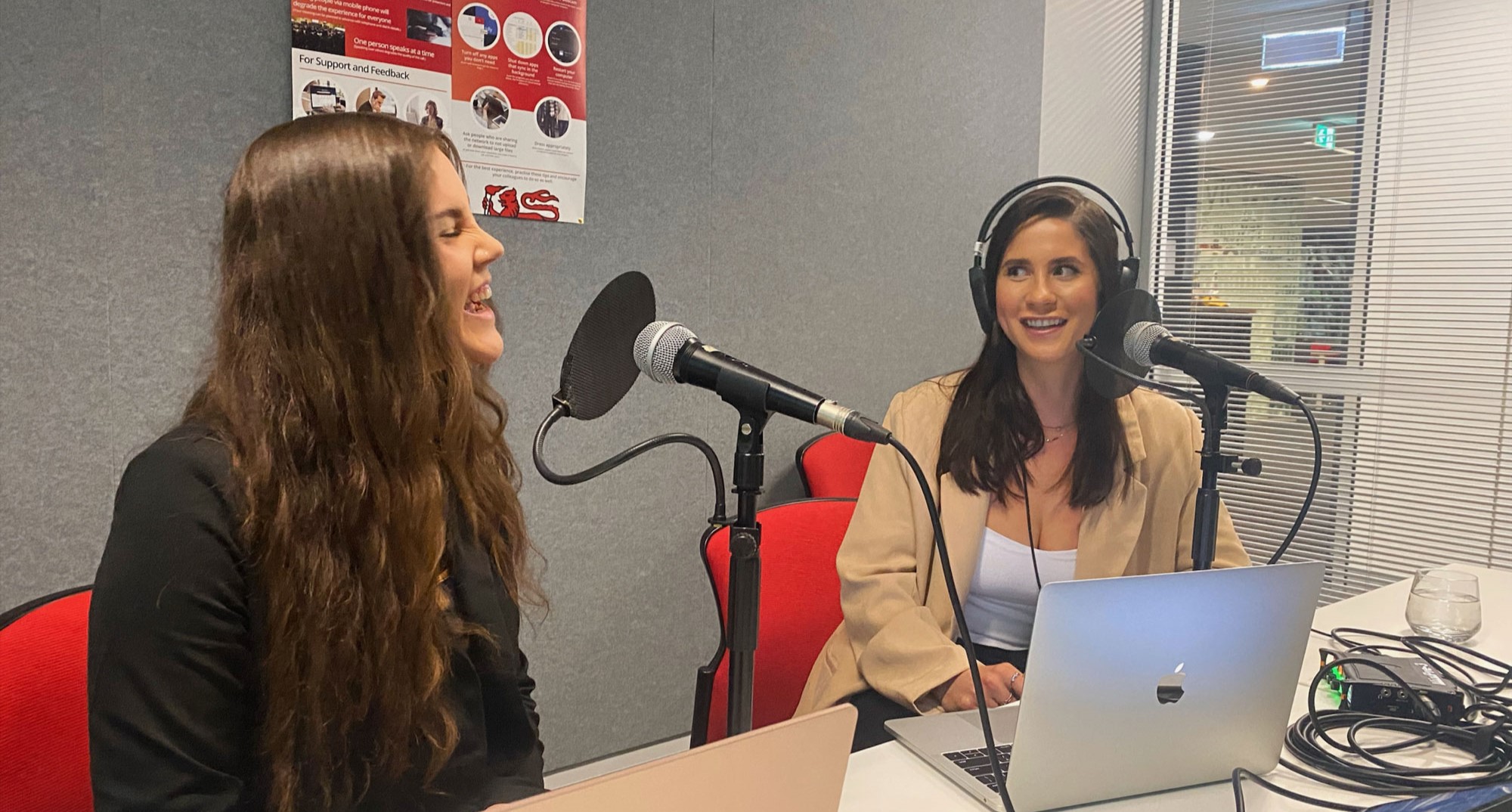
Does your curiosity and creativity drive you to ask questions, to listen to your community, and to share stories? If so, our Media and Communication course is the right fit for you.
As media and communications practitioners, we are employed across every industry to create and manage messages, to solve problems, and to raise awareness. We deal with the critical issues of the day, every day.
Our field is dynamic, undergoing constant technological change in the context of societal upheaval. Remaining up-to-speed with issues and technologies is central to our role, not only in helping diverse audiences understand complex information, but in bringing them into the conversation.
Communicating clearly, compellingly, and ethically is our superpower. This specially designed course will provide you with a highly supportive and personal learning experience, tailor-made to equip you with the skills, knowledge, and experience required to succeed in a wide range of careers.
Our Media School is based at the Hedberg, a state-of-the-art performance venue in the centre of Hobart City. Working alongside your academic teachers and mentors, you will share facilities with media, performing arts, and film.
This degree can be combined to form a double degree. Study what you want, explore your options and find out how you can accelerate your career.
- 1 Undertake media and communications research and practice across diverse and dynamic professional contexts
- 2 Select and apply appropriate communication methods and technologies for a wide range of cultural and disciplinary contexts.
- 3 Analyse and evaluate contemporary issues in media and communications to contribute to creative, ethical, and effective solutions to local, regional, and global challenges for individuals, communities, and ecosystems.
- 4 Communicate complex concepts, data, and ideas using diverse modes of communication that reflect cultural competency and principles of social and environmental responsibility.
Building your professional portfolio
From day one, you will begin building a professional portfolio. You will be encouraged to take risks and learn from experience. Our degree includes several units focused on designing and producing projects such as documentaries and narrative films, podcasts, and brand communication. You will also get your hands on industry-standard equipment. With the support of industry practitioners and lecturers, you will create a portfolio that demonstrates your accomplishments and professional potential to prospective employers.
Experience the creative curriculum
Students studying the Bachelor of Fine Arts, Bachelor of Music, or Bachelor of Media and Communication complete two Creative Curriculum units as part of their degree. This gives you the opportunity to create and share work with the public, build industry connections, undertake field trips,complete an industry placement, and build experience in work-integrated learning.
Study overseas at one of our partner institutions
Our international exchange program offers opportunities to study at universities around the world, and it counts towards your degree. Exchange can allow you to have an affordable educational and cultural experience in a foreign country for a semester, or a full year. To facilitate this, we offer a range of scholarships and financial assistance. You may also be eligible for OS-HELP Loans or scholarship funding to assist with their airfares, accommodation and other expenses..
Alternative Virtual Exchange Opportunities can be found on our Virtual Overseas Experiences tab. For more information please contact Global.Mobility@utas.edu.au
Find out more about Student Exchange.
Become a Student Ambassador
Improve your communication, teamwork and leadership skills, meet new people, inspire and help others, and developing lasting friendships and networks as a student ambassador. Our ambassadors proudly represent the University throughout Tasmania in schools, at University and community events, and support a range of recruitment and engagement activities. Through the Student Ambassador Program you will have many opportunities for training and professional development, experience in real-world community engagement and outreach, networking, and public speaking, plus end up with a key point of distinction on your CV.
Industry Placements and Media Internships
Our Media program offers exciting opportunities for students to engage in workplace experience and to build a professional portfolio, while being mentored by seasoned practitioners.
Industry placements and internships allow you to critically reflect on the skills and knowledge you develop throughout your studies. This experience also allows you to build a network of peers and industry contacts. We will connect you with a range of local and interstate placement providers, including digital, print and broadcast media, PR agencies, government departments, and private and not-for-profit organisations.
Career outcomes

Eleanor Robb, Media and Communications graduate
Media and communication graduates are sought after ‘sense-makers’ in a confusing world.
You’ll be employed to create and manage messaging, solve problems, raise awareness and share stories. A degree in Media and Communication will prepare you to work in fast-paced and dynamic communications roles across a multitude of fields, dealing with critical issues of the day, every day. You’ll become a strategic and creative forward thinker with the ability to prepare content for a range of channels and audiences.
Whether you are interested in becoming an investigative journalist, a ministerial advisor or a campaign manager, you will graduate with the vital capabilities and entrepreneurial mind-set you need to adapt and grow in your chosen field.Whatever your chosen medium or platform, you’ll have the
confidence and initiative to create media that speaks to your audience.
24% Advertising and Marketing professionals
21.5% Policy and Planning Managers
20.4% Journalist
*National Skills Commission ten year projections from May 2024-May 2034.
Postgraduate study
The Bachelor of Media and Communication with Honours is a specialised one-year course that enables to pursue your passion for a project or research topic. An Honours degree opens up opportunities in the competitive job market and provides a pathway to an academic career. You'll develop superior project management skills and advanced knowledge of research methodologies.
You may also be eligible to apply for a range of other postgraduate courses including Graduate Certificates and Graduate Diplomas and Masters by coursework and research.
Course structure
The Bachelor of Media and Communication requires the completion of 300 credit points, including:
- 200 credit points of Core units and;
- 100 credit points of Elective units or an elective major, such a major in Sustainability.
In your core units you will complete 75 credit points at Introductory level, 75 credit points at Intermediate level and 50 credit points at Advanced level. The units forming your core can be found in the schedule below, and the sequence you can take them in the course planner.
You may complete most units from across the University as an Elective. The elective space gives you flexibility to broaden your studies across multiple areas in the University, such as Sustainability, Business, Science and Creative Arts or specialise your course in areas closely related to media and communication. There is also an opportunity to complete an entire major in your elective space. It is your choice.
The University is deeply committed to building sustainable futures which is why we've made our Sustainability major readily available in most of our courses. If you want to complete this major, you'll find it under your Electives options when you go to enrol, and you can add it to your study plan yourself. To find out more about the Sustainability major, check the Bachelor of Science.
To select a major from another area, such as from the Bachelor of Business, Fine Arts or Science, you'll need to contact a Student Advisor via U Connect. They'll guide you through adding this to your study plan, and make sure it fits with the rest of your course plan.
For help on how to find and choose your Elective units, see What are Elective units?
Course Planner
Your course planner gives you a visual representation of your course and will help you plan which units to enrol in and when.
For course planners from previous years, refer to the handbook entry for that year.
From the newsroom to the live stream, the news industry combines top-level communication skills with the ability to evaluate and synthesise knowledge for large audiences. In this unit, you will be introduced to both the theoretical and practical dimensions of…
Credit Points: 12.5
| Location | Study period | Attendance options | Available to | ||
|---|---|---|---|---|---|
| Hobart | Semester 2 |  |  |  | |
- Key:
- On-campus
 Off-Campus
- International students
- Domestic students
It is vital for emerging media practitioners to understand the complex ways that contemporary industries operate on local, regional, national and global scales, and how these industries intersect with audiences, cultures and communities. With a focus on ethical issues including equity,…
Credit Points: 12.5
| Location | Study period | Attendance options | Available to | ||
|---|---|---|---|---|---|
| Hobart | Semester 1 | | | | |
- Key:
- On-campus
- Off-Campus
- International students
- Domestic students
Advocacy or the ability to influence decisions within political, economic, and social institutions is perhaps one of the most powerful ways in which public relations today influences the world. Success for any brand, business, government or social enterprise relies on…
Credit Points: 12.5
| Location | Study period | Attendance options | Available to | ||
|---|---|---|---|---|---|
| Hobart | Semester 2 | | | | |
- Key:
- On-campus
- Off-Campus
- International students
- Domestic students
View all details for HEJ115 The Campaign: Advocacy and Public Relations
Digital technologies such as platforms and apps have an influence on contemporary life, culture, how we form communities, and professional and interpersonal communication. This unit will introduce you to perspectives on cloud-based technologies, digital imaging, gaming and virtual reality platforms.…
Credit Points: 12.5
| Location | Study period | Attendance options | Available to | ||
|---|---|---|---|---|---|
| Hobart | Semester 1 | | | | |
- Key:
- On-campus
- Off-Campus
- International students
- Domestic students
Emerging media professionals must have the skills to communicate through a range of media channels, including audio and video production for a variety of platforms. This unit introduces you to the audio and video production skills you need to go…
Credit Points: 12.5
| Location | Study period | Attendance options | Available to | ||
|---|---|---|---|---|---|
| Hobart | Semester 1 | | | | |
- Key:
- On-campus
- Off-Campus
- International students
- Domestic students
View all details for HEJ140 Making Media: Filming, Editing and Design
In this unit, you are invited to engage with Indigenous realities through an Indigenous lens. Using the key concept of Lifeworld, you will journey into Indigenous ways of knowing, being and doing, with a particular focus on the perspectives and…
Credit Points: 12.5
| Location | Study period | Attendance options | Available to | ||
|---|---|---|---|---|---|
| Hobart | Semester 2 | | | | |
| Launceston | Semester 2 | | | | |
| Online | Semester 2 | | | | |
- Key:
- On-campus
- Off-Campus
- International students
- Domestic students
View all details for HOS113 Introducing Indigenous Lifeworlds
Collaborative work is integral to working in and with the creative and cultural industries. This unit encourages you to take supported creative risks and introduces you to work-integrated learning methods and practices. Over the course of the semester, you will…
Credit Points: 12.5
| Location | Study period | Attendance options | Available to | ||
|---|---|---|---|---|---|
| Hobart | Semester 2 | | | | |
| Launceston | Semester 2 | | | | |
- Key:
- On-campus
- Off-Campus
- International students
- Domestic students
Never before has science communication been so important to public understanding and policy. This unit will establish an understanding of the practical and theoretical aspects in science communication studies. It brings together an overview of professional public science communication, including…
Credit Points: 12.5
| Location | Study period | Attendance options | Available to | ||
|---|---|---|---|---|---|
| Hobart | Semester 1 | | | | |
- Key:
- On-campus
- Off-Campus
- International students
- Domestic students
View all details for HEJ210 Professional Science Communication
Media and communications technologies provide us with the tools to engage audiences with immersive and interactive experiences. In this unit, you will expand your understanding of digital cultures, transmedia project development, ethical considerations of user-generated media content and application of…
Credit Points: 12.5
| Location | Study period | Attendance options | Available to | ||
|---|---|---|---|---|---|
| Hobart | Semester 1 | | | | |
- Key:
- On-campus
- Off-Campus
- International students
- Domestic students
To be successful in the dynamic media and communications industry, emerging practitioners need to adopt what we call an entrepreneurial mindset. This unit combines creative practice with business acumen to equip you to develop this mindset. You will develop a…
Credit Points: 12.5
| Location | Study period | Attendance options | Available to | ||
|---|---|---|---|---|---|
| Hobart | Semester 2 | | | | |
- Key:
- On-campus
- Off-Campus
- International students
- Domestic students
View all details for HEJ241 Media and Communications Entrepreneurship
Risk and crisis are defining features of contemporary life, and organisations and communities are increasingly planning for climate crises, including strategies for communicating risk and change. Crisis communications and management are relevant to all media content creators. You will learn…
Credit Points: 12.5
| Location | Study period | Attendance options | Available to | ||
|---|---|---|---|---|---|
| Hobart | Semester 2 | | | | |
- Key:
- On-campus
- Off-Campus
- International students
- Domestic students
How do screen and audio texts communicate powerful and meaningful stories for their audiences? This unit introduces you to the fundamentals of dynamic storytelling for both the screen and audio industries. With a special focus on scriptwriting for film and…
Credit Points: 12.5
| Location | Study period | Attendance options | Available to | ||
|---|---|---|---|---|---|
| Hobart | Semester 1 | | | | |
- Key:
- On-campus
- Off-Campus
- International students
- Domestic students
View all details for HEJ246 Storytelling for Screen and Sound
In this unit you will collate a portfolio or research project that showcases your skills and knowledge to industry and/or prepare you for higher degree research. You may demonstrate media production, collaborative practice, and project management skills to produce a…
Credit Points: 25
| Location | Study period | Attendance options | Available to | ||
|---|---|---|---|---|---|
| Hobart | Semester 2 | | | | |
- Key:
- On-campus
- Off-Campus
- International students
- Domestic students
How do emerging technologies and communication practices integrate into society? This unit invites you to consider the speculative environment for emerging and new media. We consider how new media technologies and their uses encounter legal and ethical issues, and the…
Credit Points: 12.5
| Location | Study period | Attendance options | Available to | ||
|---|---|---|---|---|---|
| Hobart | Semester 2 | | | | |
- Key:
- On-campus
- Off-Campus
- International students
- Domestic students
In this unit you will undertake small exploratory performance-based projects through a laboratory-style experience. You will investigate various skills and strategies essential to realise identified projects collaboratively or individually fora public audience. You will critically reflect on your experience. Experimental…
Credit Points: 12.5
| Location | Study period | Attendance options | Available to | ||
|---|---|---|---|---|---|
| Hobart | Semester 1 | | | | |
| Launceston | Semester 1 | | | | |
- Key:
- On-campus
- Off-Campus
- International students
- Domestic students
This unit addresses the communication needs of students, current and intending professionals required to speak in presentation contexts. Participants will experience specific vocal and physical skills in the presentation of dynamic and highly focused material and tasks. Various delivery techniques…
Credit Points: 12.5
| Location | Study period | Attendance options | Available to | ||
|---|---|---|---|---|---|
| Hobart | Winter | | | | |
- Key:
- On-campus
- Off-Campus
- International students
- Domestic students
Research is providing increasing evidence for the positive benefits of engagement with the arts for individual and community wellbeing at all stages of life and can provide a non-pharmaceutical adjunct to health interventions. This unit explores case studies of successful…
Credit Points: 12.5
| Location | Study period | Attendance options | Available to | ||
|---|---|---|---|---|---|
| Online | Semester 1 | | | | |
- Key:
- On-campus
- Off-Campus
- International students
- Domestic students
This unit explores historical and current case studies of creative arts practitioners from a range of cultural contexts living with physical or mental illness and the ways this is reflected or subsumed in their work. This engagement with creative work…
Credit Points: 12.5
| Location | Study period | Attendance options | Available to | ||
|---|---|---|---|---|---|
| Online | Semester 2 | | | | |
- Key:
- On-campus
- Off-Campus
- International students
- Domestic students
View all details for FXA302 Perspectives of the Arts on Health and Wellbeing
You will be assigned to a work placement in a government, private, or not-for-profit organisation approved by the University. As part of your internship you will, where opportunity allows, contribute to the production, publication and presentation of creative content, while…
Credit Points: 12.5
| Location | Study period | Attendance options | Available to | ||
|---|---|---|---|---|---|
| Hobart | Semester 1 | | | | |
| Semester 2 | | | | ||
- Key:
- On-campus
- Off-Campus
- International students
- Domestic students
In Tasmania, our vibrant arts and cultural calendar includes MOFO and Dark MOFO, Ten Days on the Island, and Beaker Street. In this unit, you will learn about the role of festivals, open days, street fairs and other events in…
Credit Points: 12.5
Entry requirements
We encourage you to apply for the courses you most want to study. If you’re not eligible to enter your chosen course right now, the admissions team will work with you to find the best pathway option.
Enquire online for advice on the application process and the available pathways to study.
Schools Recommendation Program
Australian year 12 students can apply for this course via our Schools Recommendation Program (SRP). Rather than an ATAR, your application is based on a recommendation by your school teachers. This can factor in your year 11 results, an assessment of your capabilities, and other considerations.
Through the SRP, you can receive and accept an offer prior to completing year 12. You will still need to finish your year 12 studies – including any exams – to commence your studies.
If you don’t receive an offer for this course through the Schools Recommendation Program, you will be re-assessed for a higher preference offer once your ATAR is released.
Domestic Applicants who have recently completed secondary education
Applicants are ranked by ATAR and offers made based on the number of places available. In 2026, the lowest ATAR to receive an offer into this course was 54.35. The lowest ATAR to receive an offer may change from year to year based on the number of applications we receive.
Applicants who have recently completed senior secondary studies but have not received an ATAR may still be eligible for admission. We will consider your individual subject results on a case-by-case basis when we assess your application.
For all other majors, please refer to Alternative entry pathways below.
Domestic applicants with higher education study
To be eligible for an offer, applicants must have:
- Partially completed an undergraduate course at Diploma level or higher (or equivalent). Applicants must have completed at least two units of study (equivalent to 25 UTAS credit points at 100-level or above). If an applicant has failed any units the application may be subject to further review before an offer is made; or
- Completed the UTAS University Preparation Program (or an equivalent qualification offered by an Australian University).
Domestic applicants with VET / TAFE study
To be eligible for an offer, applicants must have completed a Certificate IV (or equivalent) in any discipline.
Domestic applicants with work and life experience
Applicants without senior secondary, tertiary or VET / TAFE study can complete a personal competency statement.
Applicants may be eligible for an offer if they have relevant work and / or life experiences which demonstrate a capacity to succeed in this course.
Special consideration
If your ability to access or participate in education has been affected by circumstances beyond your control, you can apply for special consideration as part of your application. We will consider a range of factors, including economic hardship, serious medical condition or disability.
We can only approve applications for special consideration where we are confident that you have the necessary skills and knowledge to succeed in your studies. If your application is not approved, the admissions team will work with you to find the best alternative pathway to your chosen course. Special consideration is not available for international applicants.
All international students will need to meet the minimum English Language Requirements, University General Entry Requirements and any course specific requirements such as pre-requisite subjects, if applicable.
English Language Requirements
This degree requires an IELTS (Academic) of 6.0, with no individual band less than 5.5, or a PTE Academic score of 50, with no score lower than 42 or equivalent.
For students who do not meet the English Language Requirement through citizenship or prior studies in English in an approved country, evidence of an approved English language test completed within the last 2 years must be provided. See the English Language Requirements page for more information.
General Entry Requirements
Admission to undergraduate courses at the University of Tasmania requires the completion of qualifications equivalent to a 12th year of education in Australia.
Please review the equivalent undergraduate entry requirements to see the minimum requirement relevant to your country. The ATAR information for this course is located in the “For Domestic Students” section of the entry requirements on this page.
You can also meet the General Entry Requirement for this course with the following qualifications or prior studies:
- Completion of an equivalent AQF Certificate IV or above
- Complete or incomplete (minimum 25 credit points) of previous tertiary study at Diploma level or higher
If you do not meet the minimum requirements, we offer the Foundation Studies Program.
Course Specific Requirements
This course does not have any course specific requirements.
If you do not meet the General Entrance Requirements or course-specific requirements, there are alternate entry pathways to the Bachelor of Media and Communication:
Detailed admissions information and advice for all undergraduate courses, including comprehensive, course-level student profiles, is available from UTAS Admissions.
Fees & scholarships
Domestic students
Commonwealth supported places (CSP) are available for this course. For eligible domestic students, this means your fees will be subsidised by the Australian Government. You’ll only need to pay the student contribution amount for each unit you study within the course.
Commonwealth Supported Place indicative annual fee: $15,268
How is this calculated?
This is an estimate. The calculation is based on the average full-time enrolment for this course in 2026. All figures are indicative only for 2027. Actual tuition fees will depend on specific unit enrolment, and are subject to annual increases each year. You can find the complete fee details for each unit of study on the individual unit pages. The units for this course are found in the course structure section of this page.
These figures do not include other costs such as the Student Services and Amenities Fee (SSAF). For further information, please visit Scholarships, fees and costs.
HECS-HELP loans
You may be able to defer payment of the student contribution amount by accessing a HECS-HELP loan from the Government. If eligible, you’ll only have to pay your tuition fees once you start earning above a specific amount.
Further information on student loans and a CSP eligibility checker can be found at Australian Government Study Assist.
International students
2027 annual international student tuition fee: $39,450 AUD
The standard year of study for this course is 100 credit points.
Indicative total tuition fee for international students: $ 124,366 AUD.
This total tuition fee is indicative only. Please visit fees and costs for further information on how this is calculated.
International students are charged the Student Services and Amenities Fee but this fee is incorporated in the annual rate. International students do not have to make any additional SSAF payments.
Domestic scholarships
For information on general scholarships available at the University of Tasmania, please visit the scholarships website.
International scholarships
The University of Tasmania offers a range of scholarships for international students, designed to recognise academic merit and support access to university study.
For many of our international scholarships, you will be automatically assessed when you submit your International Student Application, so no separate scholarship application is required. Some scholarships may require additional application steps. Explore our International Scholarships to learn more about available opportunities and application requirements.


Share this page
How can we help?
Do you have any questions about choosing a course or applying? Get in touch.