

Overview (2027)

Key Information


Duration
Minimum 3 years, up to a maximum of 7 years.


Location
 CRICOS: 098158A
Duration
Minimum 3 years, up to a maximum of 7 years.
Location

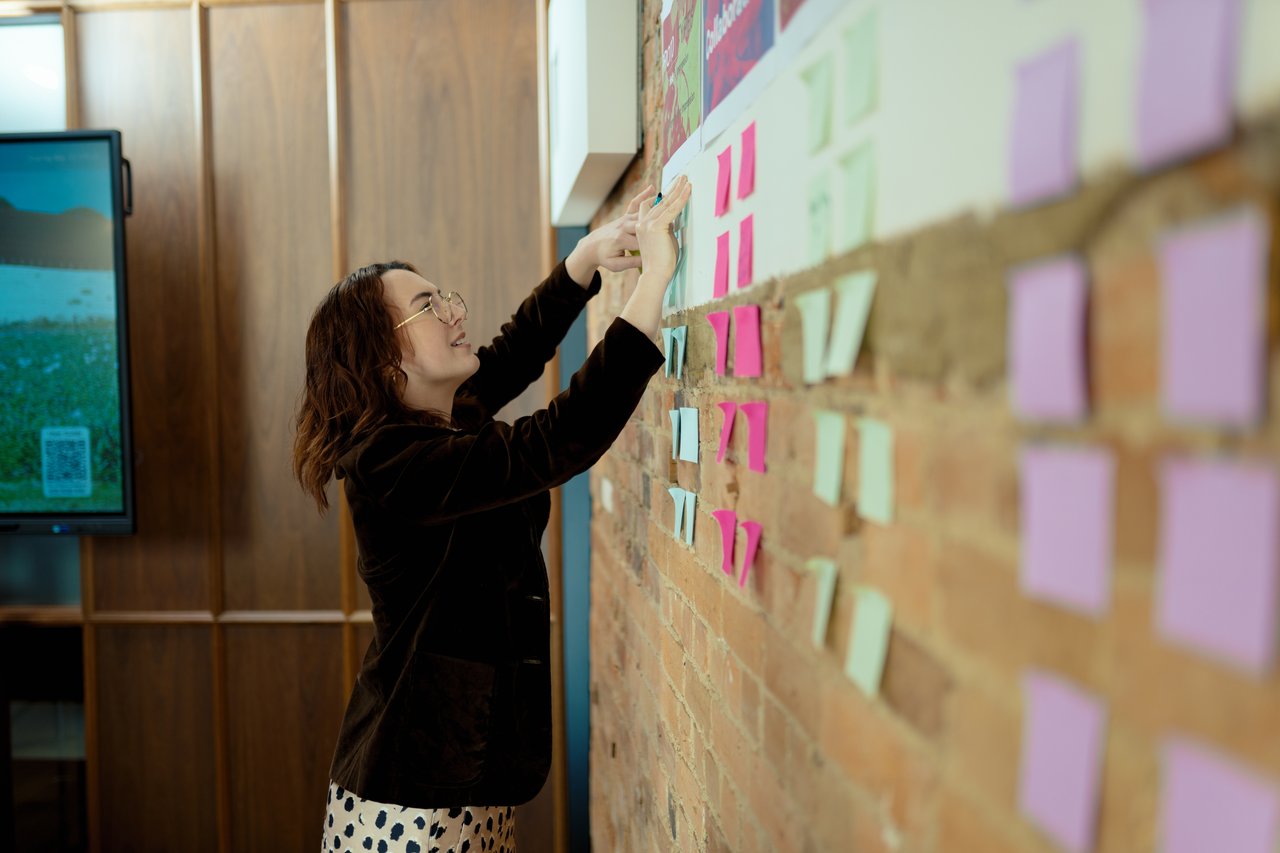
Imogen Coote - Bachelor of Design student
Read More
The Bachelor of Design has been completely reimagined around the transformative theme of regeneration. In this degree, you’ll explore design’s next evolution, where creativity meets sustainability and innovation drives positive change.
You’ll build strong technical, creative, and strategic skills while learning how design connects with real-world challenges such as climate adaptation, health futures, and social innovation. Whether you’re creating circular systems for waste reduction, designing experiences that improve wellbeing, or developing new materials from local resources, you’ll graduate ready to design solutions that work better for people and the planet.
Through the Regenerative Design Accelerator core subjects, you’ll learn how design can be applied across disciplines to address complex challenges and support innovation. In the Design Practices Major, you’ll take part in hands-on studio learning that connects traditional design skills with emerging approaches to sustainability, collaboration, and systems design.
Your learning is structured around three key pillars:
- Design Foundations, which develops your technical and visual design skills;
- Collaborative and Social Practice, where you learn to design with communities for meaningful change; and
- Systems and Futures, where you explore circular and regenerative approaches that prepare you for the future of design.
You’ll also benefit from Tasmania’s distinctive place-based learning environment, collaborating with local communities, industries, and festivals to apply your skills in real contexts while developing insights that can be transferred globally.
Ready to explore your study options?
Book an online one-on-one appointment with our course coordinator to discuss any course-related questions and explore how the Bachelor of Design can support your study and career goals.
Flexible study options
The Bachelor of Design offers flexible study options. You can:
- Study the Bachelor of Design as a standalone degree and complete it in just three years, building a strong foundation for a career in design.
- Complete a double major with Sustainability and finish your degree in just three years.
- Choose a double degree, combining Design with another discipline such as Science, Business, or ICT, and graduate with two qualifications in four years.
Half Year Periods
Half Year Periods run just before Semester 1 and 2. Two Design intensives – Circular Design Thinking and Regenerative Innovation – take place in these weeks, so you’ll start your studies early with a hands-on design sprint.
Catalyst Program
Want to combine your degree with overseas trips, summer research programs, scholarships and special events? Our Catalyst Program offers domestic high achieving school leavers all this and more. See more information under the Practical experience tab below.
Course information webinar
Tuesday 29th of October, 5:00pm - 6:00pm (AEDT)
Explore the reimagined Bachelor of Design and discover how creativity, sustainability and innovation can be used to design positive change for people and the planet.
During this webinar, we’ll cover the course structure, hands-on studio learning, flexible study options, industry and community projects, and career pathways across traditional and emerging areas of design. We’ll also discuss applications, fees, scholarships and other key information, with an opportunity to ask questions.
- 1 Develop, interpret and communicate design ideas and information.
- 2 Justify design propositions using diverse knowledge sources.
- 3 Generate and refine design propositions through iterative processes.
- 4 Communicate, collaborate, and critique design work effectively.
- 5 Apply ethical practices considering environmental and social impact.
From your first semester, you’ll engage in immersive, hands-on design studios that mirror real professional environments. You’ll work on projects that respond to genuine community and industry challenges, learning through doing, reflecting, and collaborating.
Your practical experience develops progressively across the degree:
- In your first year, you’ll build the essential creative, technical, and teamwork skills that every designer needs. Through short design sprints and studio projects, you’ll experiment with materials, prototyping, and digital tools while learning to think critically, manage projects, and communicate ideas effectively.
- In your second year, you’ll deepen your learning through applied projects that connect with communities, businesses, and festivals. You’ll develop collaborative design methods, explore social and behavioural change, and gain experience working with real clients and stakeholders.
- In your final year, you’ll take greater ownership of your learning through independent studio projects. These capstone experiences allow you to apply systems thinking and regenerative design approaches to complex challenges. You’ll graduate with a professional portfolio or exhibition that showcases your skills, creative process, and career direction.
Your studies are supported by strong local and state partnerships, giving you the chance to collaborate with organisations on real projects and authentic, place-based learning experiences.
Catalyst Program and Dean's Summer Research Scholarship
The Catalyst Program is available to high achieving domestic high school leavers studying a STEM course. It combines your bachelor's degree with scholarships, extracurricular experiences, special events, and networking opportunities. As a Catalyst scholarship recipient, you can participate in the Dean’s Summer Research Scholarship (DSRS) three times throughout your degree, with up to $9,000 in scholarships. Non-Catalyst students may also undertake the DSRS with a scholarship payment of $2,000 per experience.
Additionally, as a Bachelor of Design student, you can take advantage of additional benefits such as access to work-integrated learning opportunities or research projects. Learn more about the Catalyst Program
Become a Student Ambassador
Improve your communication, teamwork and leadership skills, meet new people, inspire and help others, and developing lasting friendships and networks as a student ambassador. Our ambassadors proudly represent the University throughout Tasmania in schools, at University and community events, and support a range of recruitment and engagement activities. Though the Student Ambassador Program or you will have many opportunities for training and professional development, experience in real-world community engagement and outreach, networking, and public speaking, plus end up with a key point of distinction on your CV.
Study overseas at one of our partner institutions
Our exchange program allows you to spend up to a year of your degree studying overseas. We have over 150 exchange partners throughout Europe, North America, and Asia. Tuition fees at the host university are waived, and all your studies can be recognised as part of your degree. A range of scholarships and financial support options are available to help with costs.
Find out more about Learning abroad.
Work Integrated Learning
While there is no compulsory placement in the Bachelor of Design, you’ll have many opportunities to gain real industry experience throughout your studies.
Design studios and project-based units give you authentic exposure to professional practice. From your first year, you’ll build essential workplace skills such as teamwork, communication, ethical practice, project management, and creative problem-solving.
As you progress, you’ll take on more complex design challenges that mirror real industry contexts and client needs. These experiences help you understand how to apply your design skills in professional environments.
In your final year, the Design Futures studio allows you to tailor your learning to your career goals. You can choose to complete an industry placement, collaborate with a client on a live brief, or develop a business or exhibition plan.
You may also choose to complete a Work Integrated Learning elective specific to Architecture and Design, offering hands-on professional experience in a real workplace.
Many units are taught by practising designers or include guest input from industry and community partners. These connections help you graduate with valuable networks and a clear pathway into your future career.
Whatever you’re passionate about, we’ll give you a hands-on education and an unforgettable adventure through our work integrated learning opportunities.
Career outcomes
Dr Vanessa Ward
Bachelor of Design Course
Co-ordinator and Lecturer
The Bachelor of Design prepares you for both established and emerging roles in the growing creative and sustainability sectors. You’ll graduate as a designer who can think critically, work collaboratively, and create positive change across industries.
Design graduates are in demand for their ability to combine creativity with problem-solving, collaboration, and systems thinking. Your skills will be valued in roles that shape products, services, experiences, and policies for a more sustainable future.
Possible career paths include:
- Experience, service, or communication design
- Regenerative or circular design
- Social and community innovation
- Health and wellbeing design
- Sustainable product and systems design
- UX and interaction design
- Design research and strategy
- Entrepreneurship and creative consulting
You’ll be equipped to work in design studios, creative agencies, not-for-profit organisations, government, and industry. Many graduates also choose to start their own ventures, lead community initiatives, or continue into postgraduate research in design and sustainability.
With design increasingly recognised as a driver of innovation and social progress, you’ll graduate ready to make a meaningful contribution wherever creativity and change intersect.
Postgraduate study
This degree also provides a pathway to postgraduate study through Honours and PhD.
Course structure
The Bachelor of Design requires the completion of 300 credit points comprising:
- 100 credit point Major Design Practices
- 100 credit points of Core: Regenerative Design Accelerator units
- 100 credit points of Elective units
All students study a set of core and major units.
In the elective component you can choose from any units marked as "Student Electives" which you meet the pre-requisites for, at any level, from across the university.
We have a range of study-plans developed which pre-select elective units across the university. These balance design skills, with deep domain knowledge and capabilities around implementation as a powerful combination for your future career.
You can also use this space to complete an optional second major which may be (i) a sustainability major, or (ii) *another major from across the institution, noting some exclusions apply. (*to enrol in a second disciplinary major, or a major outside your discipline, please contact a Student Advisor via Uconnect).
We have a team of Student Advisers available to help you structure your studies to meet your desired outcomes. For enrolment assistance please contact us via U Connect today.
This unit explores our designed worlds, the dynamic relationships between design, designers, culture, and society, examining how design shapes and is shaped by social contexts. Students will investigate how design functions as both a mirror reflecting cultural values and a…
Credit Points: 12.5
| Location | Study period | Attendance options | Available to | ||
|---|---|---|---|---|---|
| Hobart | Semester 1 |  |  |  | |
- Key:
- On-campus
 Off-Campus
- International students
- Domestic students
This 3-day intensive introduces students to fundamental circular design thinking principles and practical methodologies that can be applied throughout this degree and beyond. You will explore how to reimagine products, services, and systems to eliminate waste, create sustainable value and…
Credit Points: 12.5
| Location | Study period | Attendance options | Available to | ||
|---|---|---|---|---|---|
| Hobart | Half Year Period 1 | | | | |
- Key:
- On-campus
- Off-Campus
- International students
- Domestic students
This introductory unit explores the principles and practices of Experience Design within structured environments. Working across digital and physical dimensions, this unit focuses on task-oriented experience design. Students will develop an understanding of how users navigate and interact with designed…
Credit Points: 12.5
| Location | Study period | Attendance options | Available to | ||
|---|---|---|---|---|---|
| Hobart | Semester 2 | | | | |
- Key:
- On-campus
- Off-Campus
- International students
- Domestic students
In this unit you will be introduced to the essential principles and practices of effective visual communication. Students will develop both theoretical understanding and practical skills across key design areas including typesetting, hierarchy, and storytelling. The unit emphasises hands-on learning…
Credit Points: 12.5
| Location | Study period | Attendance options | Available to | ||
|---|---|---|---|---|---|
| Hobart | Semester 2 | | | | |
| Launceston | Semester 2 | | | | |
- Key:
- On-campus
- Off-Campus
- International students
- Domestic students
This unit focuses on developing essential empathetic and collaborative skills central to contemporary design practice. Students will explore methodologies of participatory design, co-design, and co-creation through both theoretical frameworks and applied projects. The unit emphasises understanding diverse pluralistic perspectives, facilitating…
Credit Points: 12.5
| Location | Study period | Attendance options | Available to | ||
|---|---|---|---|---|---|
| Hobart | Semester 1 | | | | |
| Launceston | Semester 1 | | | | |
- Key:
- On-campus
- Off-Campus
- International students
- Domestic students
This unit integrates behavioural science principles with design methodologies to address complex "wicked problems" rooted in human behaviour. Students will explore how attitudes, values, habits, and decision-making processes influence individual and collective actions, and how design can effectively intervene to…
Credit Points: 12.5
| Location | Study period | Attendance options | Available to | ||
|---|---|---|---|---|---|
| Hobart | Semester 1 | | | | |
- Key:
- On-campus
- Off-Campus
- International students
- Domestic students
Regenerative Innovation transcends traditional sustainability approaches by reimagining design as a catalyst for creating net-positive ecological and social impact. This 3-day intensive unit views regenerative innovation as a response to complex challenges that requires both systemic thinking and design action.…
Credit Points: 12.5
| Location | Study period | Attendance options | Available to | ||
|---|---|---|---|---|---|
| Hobart | Half Year Period 2 | | | | |
- Key:
- On-campus
- Off-Campus
- International students
- Domestic students
Design Students: This unit channels creativity toward addressing social inequality through inclusive practices and community-driven co-design principles. Work-integrated learning experiences offer a mutually beneficial relationship where you can gain critical skills and practical experience, while industry partners can benefit from the input…
Credit Points: 12.5
| Location | Study period | Attendance options | Available to | ||
|---|---|---|---|---|---|
| Hobart | Semester 2 | | | | |
| Launceston | Semester 1 | | | | |
| Semester 2 | | | | ||
- Key:
- On-campus
- Off-Campus
- International students
- Domestic students
View all details for KDA352 Architecture & Design Work Integrated Learning
The Design Practices Major equips students with essential technical design skills while embracing contemporary practices through artificial intelligence integration and Transition Design methodologies. This 100 credit point sequence comprises six experiential studio-based units that provide hands-on application of tools and methodologies introduced in the Core units. Students engage in project-based learning that connects traditional design practice with an expanded understanding of design as a catalyst for positive societal and environmental transformation. The major progresses through foundational elements and production techniques, explores material considerations and immersive experience creation, before advancing to systems thinking and futures-oriented design approaches.
This foundational unit introduces first-year Design students to the fundamental elements and principles of design, including color, shape, pattern, gestalt principles, and typography. Through a combination of theoretical knowledge, historical context, ethical considerations, and hands-on experimentation, students will develop essential…
Credit Points: 12.5
| Location | Study period | Attendance options | Available to | ||
|---|---|---|---|---|---|
| Hobart | Semester 1 | | | | |
- Key:
- On-campus
- Off-Campus
- International students
- Domestic students
This unit explores a wide range of different prototyping methods through a series of design-sprints. Each sprint will begin with a brief. From the brief you are to immediately start storyboarding how the prototype might work, in what context and…
Credit Points: 12.5
| Location | Study period | Attendance options | Available to | ||
|---|---|---|---|---|---|
| Hobart | Semester 2 | | | | |
| Launceston | Semester 2 | | | | |
- Key:
- On-campus
- Off-Campus
- International students
- Domestic students
This unit introduces students to creating immersive experiences that engage multiple senses and allow users freedom to explore. Working across digital and physical dimensions, this unit focuses on immersive, engaging, sensory-rich experience design that is flexible and self-directed by the…
Credit Points: 12.5
| Location | Study period | Attendance options | Available to | ||
|---|---|---|---|---|---|
| Hobart | Semester 2 | | | | |
- Key:
- On-campus
- Off-Campus
- International students
- Domestic students
Design Students: Design Studio Materials. Learning by Making: Transform local agricultural waste into innovative bio-design solutions through hands-on biofabrication and sustainable material .techniques Architecture Students: Architecture Choice Units offer students a chance to select units from a range of options that suit…
Credit Points: 12.5
| Location | Study period | Attendance options | Available to | ||
|---|---|---|---|---|---|
| Hobart | Semester 1 | | | | |
| Launceston | Semester 1 | | | | |
| Semester 2 | | | | ||
- Key:
- On-campus
- Off-Campus
- International students
- Domestic students
Design Futures is a capstone unit that bridges academic study with professional practice, preparing third-year design students for post-graduation careers through strategic self-reflection and portfolio development. Students engage in research-driven exploration of emerging design practices while developing a comprehensive understanding…
Credit Points: 25
| Location | Study period | Attendance options | Available to | ||
|---|---|---|---|---|---|
| Hobart | Semester 2 | | | | |
| Launceston | Semester 2 | | | | |
- Key:
- On-campus
- Off-Campus
- International students
- Domestic students
Systems Design is a capstone unit where students demonstrate integrated knowledge and skills through complex, real-world design challenges. Focusing on regenerative systems thinking, this unit connects global ecological and social issues to local design interventions. Students will conduct systems analysis,…
Credit Points: 25
| Location | Study period | Attendance options | Available to | ||
|---|---|---|---|---|---|
| Hobart | Semester 1 | | | | |
| Launceston | Semester 1 | | | | |
- Key:
- On-campus
- Off-Campus
- International students
- Domestic students
Entry requirements
We encourage you to apply for the courses you most want to study. If you are not eligible to enter your chosen course right now, the University’s admissions team will work with you to find the best pathway option.
Enquire online for more advice on the application process and the available pathways to enrol and study at the University of Tasmania.
Schools Recommendation Program
Australian year 12 students can apply for this course via our Schools Recommendation Program (SRP). Rather than an ATAR, your application is based on a recommendation by your school teachers. This can factor in your year 11 results, an assessment of your capabilities, and other considerations.
Through the SRP, you can receive and accept an offer prior to completing year 12. You will still need to finish your year 12 studies – including any exams – to commence your studies.
If you don’t receive an offer for this course through the Schools Recommendation Program, you will be re-assessed for a higher preference offer once your ATAR is released.
Domestic applicants who recently completed secondary education
Applicants are ranked by ATAR and offers are made based on the number of places available. In 2026, the lowest ATAR to receive an offer into this course was 53.15. The lowest ATAR to receive an offer may change from year to year based on the number of applications we receive.
Applicants who have recently completed senior secondary studies but have not received an ATAR may still be eligible for admission. We will consider your individual subject results on a case-by-case basis when we assess your application.
Domestic applicants with higher education study
To be eligible for an offer, applicants must have:
- Partially completed an undergraduate course at Diploma level or higher (or equivalent). Applicants must have completed at least two units of study (equivalent to 25 University of Tasmania credit points). If an applicant has failed any units, the application may be subject to further review before an offer is made; OR
- Completed the University of Tasmania University Preparation Program (or an equivalent qualification offered by an Australian university).
Domestic applicants with VET / TAFE study
To be eligible for an offer, applicants must have completed a Certificate IV (or equivalent) in any discipline.
Domestic applicants with work and life experience
Applicants without senior secondary, tertiary or VET / TAFE study can complete a personal competency statement.
Applicants may be eligible for an offer if they have relevant work and/or life experiences which demonstrate a capacity to succeed in this course.
SPECIAL CONSIDERATION
We believe university education should be an option for everyone, no matter your background. If your ability to access or participate in education has been affected by circumstances beyond your control, you can apply for special consideration as part of your application. We will consider a range of factors, including economic hardship, a serious medical condition, or disability.
We can only approve applications for special consideration if we are confident that you have the necessary skills and knowledge to succeed in your studies. If your application is not approved, the University admissions team will work with you to find the best alternative pathway to your chosen course. Special consideration is not available for international applicants.
English Language Requirements
This degree requires an IELTS (Academic) of 6.0, with no individual band less than 5.5, or a PTE Academic score of 50, with no score lower than 42 or equivalent.
For students who do not meet the English Language Requirement through citizenship or prior studies in English in an approved country, evidence of an approved English language test completed within the last 2 years must be provided.
See the English Language Requirements page for more information.
General Entry Requirements
Admission to undergraduate courses at the University of Tasmania requires the completion of qualifications equivalent to a year 12 education in Australia.
Please review the equivalent undergraduate entry requirements to see the minimum requirement relevant to your country. The ATAR information for this course is located in the “For Domestic Students” section of the entry requirements on this page.
You can also meet the General Entry Requirement for this course with the following qualifications or prior studies:
- Completion of an equivalent AQF Certificate IV or above
- Complete or incomplete (minimum 25 credit points) of previous tertiary study at Diploma level or higher
If you do not meet the minimum requirements, we offer the Foundation Studies Program.
Course Specific Requirements
This course does not have any course specific requirements.
How to apply for a credit transfer
Applications for credit can be made in your course application. Find out more information about how to apply for a credit transfer/advanced standing at Recognition of Prior Learning.
Talk to us on 13 8827 or enquire online about your credit transfer.
Bachelor of Design graduates can articulate into an honours program (BEnvDes (D4A), this is shared with the Bachelor of Architecture and Built Environments (BABE). This one-year program enables practice-led-research on a topic to be negotiated with the Unit Coordinator. Diploma of University Studies (Science) and (Arts) – 21A Students can articulate to the B.Design after completing Year 1 of DipUniSt and be credited for two Level 100 electives (25cp) in the B.Design.
TasTAFE Applications for Advanced Standing can be made for students who have successfully completed: Dip. Visual Arts; Dip. Graphic Design; Dip. Screen & Media; and ADV. Dip. Visual Arts. Credit will only be awarded for up to two Level 100 units. University Connections Program (UCP) Subject to continuation of UCP, a credit transfer of 25cp credit is available for students who have completed the UCP Object Design subject.
Detailed admissions information and advice for all undergraduate courses, including comprehensive, course-level student profiles, is available from UTAS Admissions.
Fees & scholarships
Domestic students
Commonwealth supported places (CSP) are available for this course. For eligible domestic students, this means your fees will be subsidised by the Australian Government. You’ll only need to pay the student contribution amount for each unit you study within the course.
Commonwealth Supported Place indicative annual fee: $9,700
How is this calculated?
This is an estimate. The calculation is based on the average full-time enrolment for this course in 2026. All figures are indicative only for 2027. Actual tuition fees will depend on specific unit enrolment, and are subject to annual increases each year. You can find the complete fee details for each unit of study on the individual unit pages. The units for this course are found in the course structure section of this page.
These figures do not include other costs such as the Student Services and Amenities Fee (SSAF). For further information, please visit Scholarships, fees and costs.
HECS-HELP loans
You may be able to defer payment of the student contribution amount by accessing a HECS-HELP loan from the Government. If eligible, you’ll only have to pay your tuition fees once you start earning above a specific amount.
Further information on student loans and a CSP eligibility checker can be found at Australian Government Study Assist.
International students
2027 annual international student tuition fee: $38,250 AUD
The standard year of study for this course is 100 credit points.
Indicative total tuition fee for international students: $ 120,583 AUD.
This total tuition fee is indicative only. Please visit fees and costs for further information on how this is calculated.
International students are charged the Student Services and Amenities Fee but this fee is incorporated in the annual rate. International students do not have to make any additional SSAF payments.
Domestic scholarships
Domestic Students
Each year, the University offers more than 900 awards to students from all walks of life, including: those who have achieved high academic results, those from low socio-economic backgrounds, students with sporting ability, students undertaking overseas study, and students with a disability.
For information on all scholarships available at the University of Tasmania, please visit Scholarships.
Applications for most awards commencing in Semester 1 open at the beginning of August and close strictly on 31 October in the year prior to study.
Catalyst Program
Want to combine your degree with overseas trips, summer research programs, scholarships and special events? Our Catalyst Program offers domestic high achieving school leavers all this and more.
All domestic students with an ATAR of 90 or greater, enrolled in a range of STEM courses will be awarded a $3,000 Catalyst Scholarship. Across the program students can access scholarships of up to $14,500 in value, and gain experience that will make you stand out in your chosen field. Learn more about the Catalyst Program
International scholarships
The University of Tasmania offers a range of scholarships for full fee-paying international students, designed to recognise academic merit and support access to university study.
For many of our international scholarships you will be automatically assessed when you submit your International Student Application, meaning no separate scholarship application is required. Some scholarships may require additional application steps. Explore our International Scholarships to learn more about available opportunities and application requirements.


Share this page
How can we help?
Do you have any questions about choosing a course or applying? Get in touch.