

Overview (2027)

Key Information


Duration
Minimum 3 years, up to a maximum of 7 years.


Location
 CRICOS: 081797J
Duration
Minimum 3 years, up to a maximum of 7 years.
Location
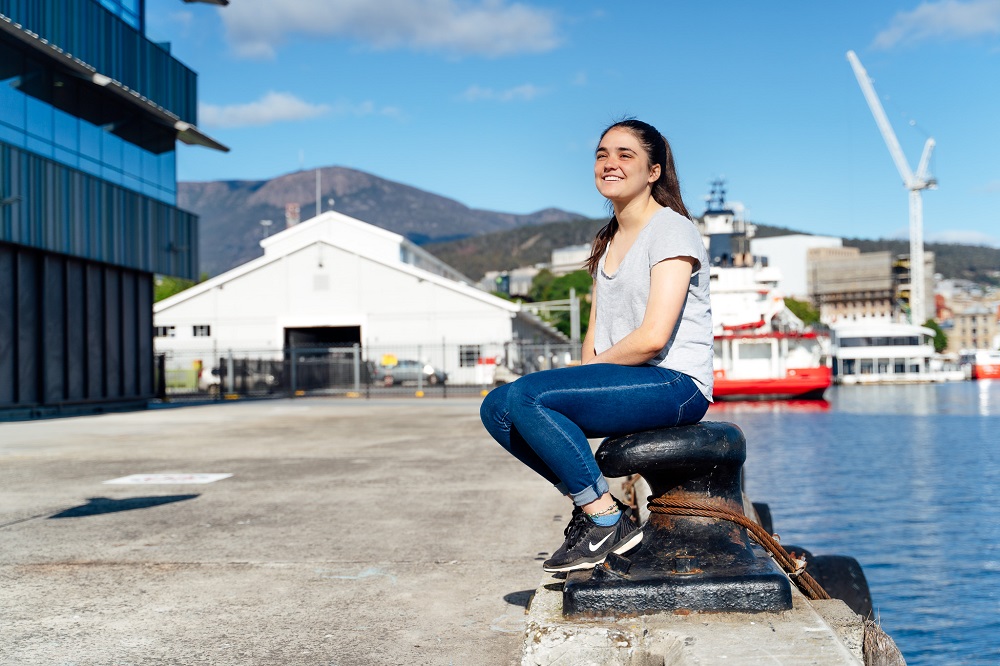
Kat Stuart
Marine and Antarctic Science student
The Bachelor of Marine and Antarctic Science is a distinctive, interdisciplinary degree that will prepare you to understand and address some of the most pressing challenges facing our oceans and polar regions. It is the only degree of its kind in Australia with a combined focus on both temperate marine systems and the Antarctic and Southern Ocean, positioning you at the forefront of globally significant environmental science.
Delivered through the Institute for Marine and Antarctic Studies (IMAS) in Hobart, the course brings together expertise from across natural and social sciences, enabling you to build a comprehensive understanding of marine environments. You will develop the ability to integrate knowledge across disciplines, which is a critical skill for tackling complex, real-world problems.
A defining feature of the degree is its strong emphasis on experiential learning. Throughout the course, you will engage in hands-on laboratory and field-based activities, including vessel-based learning in Tasmania’s globally recognised marine environment. Work-integrated learning is embedded through opportunities such as the Practicum in the Marine Environment, where you gain direct industry experience. You will also undertake an intensive Marine Research Project that develops your independent research skills.
The course has been designed in close consultation with Antarctic and Southern Ocean scientists, government and governance practitioners, and representatives from the aquaculture and fisheries sectors. This collaboration ensures the curriculum reflects current industry needs, emerging research priorities, and the skills required by employers across marine, Antarctic, and environmental fields.
With majors spanning biological, physical, and social sciences, including marine and Antarctic governance, marine biology, oceans, ice and climate, sustainable aquaculture, and sustainable fisheries, you can tailor your studies to match your interests and career goals. At the same time, all students build strong core capabilities in data analysis and scientific communication.
This degree equips you with the knowledge, practical experience, and industry connections to pursue careers in research, environmental management, policy, and sustainable development. These are fields that are critical to the future of our planet.
Catalyst Program
Want to combine your degree with overseas trips, summer research programs, scholarships and special events? Our Catalyst Program offers domestic high achieving school leavers all this and more.
All domestic students with an ATAR of 90 or greater, enrolled in a range of STEM courses will be awarded a $3,000 Catalyst Scholarship. Across the program students can access scholarships of up to $14,500 in value, and gain experience that will make you stand out in your chosen field. Learn more about the Catalyst Program.
Double Degree
This degree can be combined to form a double degree. Study what you want, explore your options and find out how you can accelerate your career.
- 1 Solve problems in Marine and/or Antarctic disciplines through collecting, recording, analysing and discussing quantitative and/or qualitative data
- 2 Evaluate complex issues in Marine and/or Antarctic science through applying appropriate interdisciplinary approaches, reflective practice and critical thinking.
- 3 Plan focussed research investigations using appropriate practical and/or theoretical techniques relevant to the discipline.
- 4 Translate diverse forms of scientific knowledge for stakeholders to inform policy and responsible management practices in the Marine and Antarctic environments.
Our study options offer you extensive practical learning opportunities on vessels, in the field, and in the lab. You will have the opportunity to take part in industry based placements and certifications.
Field trip opportunities may include exploring the marine life of Southern Tasmania, joining a voyage on a research vessel, and studying the birds and mammals of the Southern Ocean on the Tasman Peninsula.
Your learning experiences also benefit from our strong relationships and proximity to international experts and industry-leading facilities including the Australian Antarctic Division (AAD), CSIRO, and the Commission for the Conservation of Antarctic Marine Living Resources (CCAMLR). You will have the opportunity to pursue work experience and research projects with these organisations, including field trips to coastal sites around Tasmania.
Unparalleled access to world-leading facilities
The Institute for Marine and Antarctic Studies (IMAS) is a world-class centre of excellence for research and education at the University of Tasmania. Located in Southern Tasmania, it is the home to one of the world's largest critical masses of marine and Antarctic researchers. IMAS teaching facilities are located in Hobart and Taroona.
The IMAS Hobart building provides operational facilities, the Integrated Marine Observing System, the Southern Ocean Observing System, and the Australian Antarctic Partnership Program. It offers five purpose-built and state-of-the-art laboratories, as well as lecture theatre, computer lab, and flexible learning spaces.
A new, purpose-built, world-class aquaculture and fisheries teaching and research facility is being built in Taroona, located on the banks of the Derwent River just 15 minutes south of Hobart. Expected to open in 2026, the Taroona facilities will feature the latest teaching and research training laboratories for tropical and temperate species. You'll be able to work and study alongside industry partners and international research leaders.
Catalyst Program and Dean's Summer Research Scholarship
The Catalyst Program is available to high achieving domestic high school leavers studying a STEM course. It combines your Bachelor degree with scholarships, extracurricular experiences, special events, and networking opportunities. As a Catalyst scholarship recipient, you can participate in the Dean’s Summer Research Scholarship (DSRS) three times throughout your degree, with up to $9,000 in scholarships. Non-Catalyst students may also undertake the DSRS with a scholarship payment of $2,000 per experience.
As a Bachelor of Marine and Antarctic Science student, you can take advantage of additional benefits such as access to work-integrated learning opportunities or research projects. Learn more about the Catalyst Program. Learn more about the Catalyst Program.
Become a Student Ambassador
Improve your communication, teamwork and leadership skills, meet new people, inspire and help others, and develop lasting friendships and networks as a student ambassador. Our ambassadors proudly represent the University throughout Tasmania in schools, at University and community events, and support a range of recruitment and engagement activities. Through the Student Ambassador Program or STEM Outreach Team you will have many opportunities for training and professional development, experience in real-world community engagement and outreach, networking, and public speaking, plus end up with a key point of distinction on your CV.
Study overseas at one of our partner institutions
Our international exchange program offers opportunities to study at universities around the world, and it counts towards your degree. Exchange can allow you to have an affordable educational and cultural experience in a foreign country for a semester, or a full year. To facilitate this, we offer a range of scholarships and financial assistance. You may also be eligible for OS-HELP Loans or scholarship funding to assist with their airfares, accommodation and other expenses.
Tasmania has thriving aquaculture and marine research sectors for you to engage with and learn from while you study, with work placement and experience opportunities available for all study options.
We offer opportunities for placements and research projects within businesses, non-government organisations, and research centres. Our deep connections across these vast industries connect you with best-practice businesses that are exporting to the world, globally connected policy setters, and research centres undertaking world-leading study. This provides both direct, first-hand educational experiences as well as the opportunity to build valuable networks towards your future career.
If you choose the Sustainable Aquaculture specialisation, you will engage directly with the industry through a work placement unit. This unit is designed to develop aquaculture, fisheries, coastal management, and marine conservation skills, and gain an appreciation of the work environment.
Whatever you’re passionate about, we’ll give you a hands-on education and an unforgettable adventure with our work integrated learning opportunities.
Bachelor of Marine and Antarctic Science graduates can apply to become a Professional Member of the Australian Marine Sciences Association (AMSA).
Career outcomes
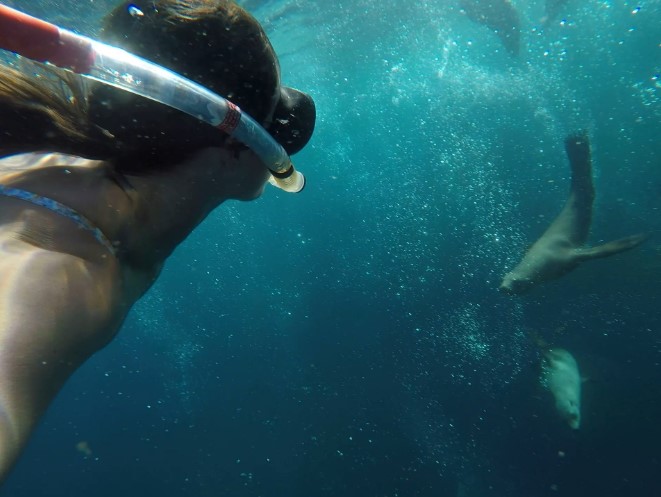
Tamsin Jones
Marine and Antarctic Science
Studying Marine and Antarctic Science opens you up to a range of exciting career options across a whole range of marine-oriented sectors. Marine biologists research, dive and explore, while oceanographers utilise maths, physics and big data to track sea-level rise, and understand the ocean’s role in climate change.
Applied science careers
Marine resource managers help guide the use of ever-strained oceans and ecosystems, while the sustainable aquaculture industry is exporting both product and best-practice to help sustainably feed the world. Through practical applications, your passion for marine and Antarctic studies can drive local changes for global benefits.
Research careers
This degree provides a clear pathway for students to undertake postgraduate and PhD study and can lead to employment with local industry connections. The Australian Antarctic Program Partnership between the University of Tasmania, CSIRO, the Bureau of Meteorology and the Australian Antarctic Division employs PhD students, early-career researchers and technicians working with senior scientists.
With the highest concentration of marine and Antarctic scientists in the southern hemisphere, Tasmania is an ideal location to launch your career.
Career opportunities in each of the five majors include
MARINE AND ANTARCTIC GOVERNANCE
- Marine Governance Consultant: Provide advice and recommendations on legal rights and obligations, ensuring operations are conducted within the relevant frameworks of law and governance.
- Environmental Management: Ensure the operations of the business or research body adhere to environmental legislation and develop and implement strategies to promote environmental best practices.
- Project Manager: Responsible for the planning and execution of a project, including coordination, budgeting, and progress reporting.
- Communications Manager : Oversee internal and external communications through various channels, synthesising and distilling complex, high-level information for a variety of audiences.
- Policy Analyst : Research data, relationships, and policy developments surrounding environmental challenges and provide recommendations for their solutions based on legislation and policies.
MARINE BIOLOGY
- Marine Park and spatial manager: Manage marine areas and guide how they're used, shape conservation policy, and support marine spatial planning to ensure these environments are protected for future generations.
- Conservation biologist: Protect endangered marine species and ecosystems, uncover the reasons they're at risk, and use scientific research to guide conservation policy, population recovery, and habitat restoration.
- Antarctic / Polar Marine Scientist: Lead research on the world’s most southern continent, support discoveries, and advance Antarctic science.
- Environmental Impact Assessment Ecologist: Lead baseline surveys and environmental monitoring, support project approvals, evaluate impacts, and guide mitigation for coastal and offshore developments.
- Marine Biosecurity Officer: Monitor and manage marine pest risks and invasive species pathways across ports, vessels, and aquaculture, support surveillance efforts, response planning, and effective risk communication.
- Science Communicator / Marine Education Officer:Translate marine science for diverse audiences through education programs, community outreach, interpretive content, and media communications.
- Marine Data Scientist: Integrate biological and environmental data through GIS, satellite and drone imagery, eDNA, and acoustic monitoring to map habitats, track biodiversity change, and support ecological decision-making.
OCEANS, ICE AND CLIMATE
- Advisor or consultant for climate risk: Provide climate‑risk insights for government and industry, supporting assessment, planning, and informed decision‑making.
- Climate change adaptation: Support sea‑level rise planning through flood‑risk assessment and coastal adaptation strategies, contributing to national resilience and the protection of coastal environments.
- Carbon management: Implement carbon reduction practices for Australia’s corporate sector under Australia’s legislated commitment to achieve net-zero carbon by 2050.
- Climate repair: Apply interdisciplinary skills to support emerging enterprises and tech start‑ups focused on tackling the climate emergency and advancing sustainable solutions.
- Data analyst: Apply high-demand programming, artificial intelligence, and big‑data skills with a climate change focus in the insurance and corporate sectors and Australia’s fast‑growing tech industry.
- Antarctic researcher: Apply interdisciplinary skills to study the Southern Ocean and Antarctica, contributing to research programs with CSIRO, the Australian Antarctic Division, the University of Tasmania, and other leading research organisations.
SUSTAINABLE AQUACULTURE
- Hatchery and Production Manager: Translate scientific advancements into innovation by enhancing commercial hatchery and production systems, and developing new aquaculture species.
- Fish Health and Nutrition Scientist: Conduct research and design innovative products and technologies to enhance animal welfare, improve performance, and ensure the quality of seafood products.
- Aquaculture Systems Engineer: Integrate animal and plant biology with advanced technology and multi-trophic systems to sustainably produce seafood in onshore, coastal, and offshore environments.
- Conservation Aquaculture Biologist: Apply marine plant and animal biology and physiology to explore, conserve, and safeguard threatened species and marine biodiversity for future generations.
- Aquatic Biosecurity Officer: Develop, implement, and enforce policies aimed at safeguarding Australian aquatic ecosystems while ensuring the sustainable future of commercial seafood production.
SUSTAINABLE FISHERIES
- Marine/Fisheries Research Scientist: Explore everything from animal movement, genetics, and food webs to the economic drivers of fishing, working both on the water and in the lab.
- Fisheries Manager / Policy Officer: Work in collaboration with fishers, scientists, industry groups, and government agencies. Design rules for sustainable fishing, protecting habitats, and balancing community needs with conservation.
- Environmental / Fisheries Technician: This career provides the opportunity to work on boats sampling fish, testing water quality, identifying species, or helping scientists run field experiments, working in labs processing samples and supporting monitoring programs.
- Environmental Consultant: Use scientific knowledge to advise governments and organisations to make smarter, more sustainable decisions, developing fishing regulations, doing environmental impact studies, or designing plans to reduce harm to sensitive ecosystems.
- Fisheries Observer: Work onboard commercial vessels or in processing plants recording what’s being caught, how fishing gear is used, and whether protected species are affected.
Postgraduate study
If you successfully complete this course, you may also be eligible to apply for a range of other postgraduate courses including graduate certificates and graduate diplomas and master's by coursework and research degrees.
Course structure
The Bachelor of Marine and Antarctic Science requires the completion of 300 credit points comprising:
- 100 credit point Major
- 100 credit points of Core units
- 100 credit points of Elective units
A Major is an area of focus in your degree. During your studies, you’ll choose an area that interests you, and then study a group of units related to that area. Find out more at What is a Major?
For your major, you may select from one of the majors below.
The core units are compulsory for all students.
In your elective component you can choose from any units marked as "Student Electives" for which you meet any pre-requisites, at any level, from across the university.
Your electives can be used to add breadth to your degree, by exploring a variety of different subject areas from within or outside the College of Sciences and Engineering. Alternatively, you can deepen your engagement with specific subject areas, for example, by completing additional units in the same discipline as your major or related fields.
You can also use this space to complete an optional second major which may be a (i) *second disciplinary major, (ii) a sustainability major, or (iii) *another major from across the institution, noting some exclusions apply. (*to enrol in a second disciplinary major, or a major outside your discipline, please contact a Student Advisor via Uconnect).
We have a team of Course Information Officers available to help you structure your studies to meet your desired outcomes. For enrolment assistance please contact us via U Connect today.
In the Marine Biology major students will learn about the plants and animals of temperate marine, southern ocean and Antarctic ecosystems ranging from microscopic plankton to large animals. Graduates will develop broad skills and knowledge in marine biology that can be applied globally.
Major Co-ordinator: Jemina Stuart-Smith
This unit aims to provide you with an understanding of fundamental concepts in ecology focusing on the ways in which organisms interact with their environment. It will explore this organism-environment interaction at different levels of biological organisation – from individuals…
Credit Points: 12.5
| Location | Study period | Attendance options | Available to | ||
|---|---|---|---|---|---|
| Hobart | Semester 2 |  |  |  | |
- Key:
- On-campus
 Off-Campus
- International students
- Domestic students
KZA161 Biology of Animals introduces you to the scientific study of animals. In this unit you will investigate animal diversity by exploring the evolutionary paths through increasing body complexity, with an emphasis on Australian examples. You will consider the structural and…
Credit Points: 12.5
| Location | Study period | Attendance options | Available to | ||
|---|---|---|---|---|---|
| Hobart | Semester 1 | | | | |
- Key:
- On-campus
- Off-Campus
- International students
- Domestic students
This core unit provides a broad training in fundamental aspects of population and community ecology and (with other core units in the School of Biological Sciences) forms an essential basis for specialist studies at third year level. This unit focuses…
Credit Points: 12.5
| Location | Study period | Attendance options | Available to | ||
|---|---|---|---|---|---|
| Hobart | Semester 1 | | | | |
- Key:
- On-campus
- Off-Campus
- International students
- Domestic students
View all details for KPZ211 Population and Community Ecology
KZA212 Functional Biology of Animals is required in the Zoology major and provides a broad training in fundamental aspects of Zoology. With KPZ211, the unit forms an essential basis for specialist studies in Zoology at level 3 the advanced level.…
Credit Points: 12.5
| Location | Study period | Attendance options | Available to | ||
|---|---|---|---|---|---|
| Hobart | Semester 2 | | | | |
- Key:
- On-campus
- Off-Campus
- International students
- Domestic students
In Marine Ecology you will learn about detailed ecological principles and processes in a variety of marine systems. These include varying primary production sources, trophic interactions and human influences across intertidal, shallow and mesophotic systems. You will also learn…
Credit Points: 12.5
| Location | Study period | Attendance options | Available to | ||
|---|---|---|---|---|---|
| Hobart | Half Year Period 1 | | | | |
- Key:
- On-campus
- Off-Campus
- International students
- Domestic students
Quantitative Methods in Biology builds on second-year biological data analysis units by deepening and extending your knowledge, understanding and application of common statistical approaches used to analyse a range of biological datasets. Topics covered include: linear models with continuous and…
Credit Points: 12.5
| Location | Study period | Attendance options | Available to | ||
|---|---|---|---|---|---|
| Hobart | Semester 1 | | | | |
- Key:
- On-campus
- Off-Campus
- International students
- Domestic students
This course will provide you with fundamental knowledge about Antarctic ecology from the terrestrial system, through the Antarctic marine systems, to the subantarctic system. Emphasis is placed on understanding the links between the physical environment and its influence on biological…
Credit Points: 12.5
| Location | Study period | Attendance options | Available to | ||
|---|---|---|---|---|---|
| Hobart | Semester 2 | | | | |
- Key:
- On-campus
- Off-Campus
- International students
- Domestic students
In this unit, you will delve into the biology of birds and mammals inhabiting the Southern Ocean, from Southern Australia to Antarctica, exploring their crucial roles in marine ecosystems. You will cover a broad range of topics including ecology, taxonomy,…
Credit Points: 12.5
| Location | Study period | Attendance options | Available to | ||
|---|---|---|---|---|---|
| Hobart | Half Year Period 2 | | | | |
- Key:
- On-campus
- Off-Campus
- International students
- Domestic students
View all details for KSM302 Birds and Mammals of the Southern Ocean
In Aquatic Botany (KSM305) you will be introduced to the biodiversity and phylogeny of marine algal groups including microalgae and macroalgae. The first half of the unit will focus on microalgae – the diatoms, dinoflagellates, cyanobacteria – and will include…
Credit Points: 12.5
| Location | Study period | Attendance options | Available to | ||
|---|---|---|---|---|---|
| Hobart | Semester 2 | | | | |
- Key:
- On-campus
- Off-Campus
- International students
- Domestic students
Solving complex geopolitical environmental issues requires an understanding of the science at the core of issues and communicating this information to government in a compelling way to inform policy. Take a multidisciplinary approach to learning with topics available ranging from Marine Ecology to International Relations.
Major Co-ordinator: Hanne Nielsen
HIR101 provides students with an overview of the theory and practice of international relations. The unit is divided into two modules. In module one, you will learn about theoretical approaches to the study of IR including introductions to realist, liberal,…
Credit Points: 12.5
| Location | Study period | Attendance options | Available to | ||
|---|---|---|---|---|---|
| Hobart | Semester 2 | | | | |
| Launceston | Semester 2 | | | | |
| Online | Semester 2 | | | | |
- Key:
- On-campus
- Off-Campus
- International students
- Domestic students
View all details for HIR101 Introduction to International Relations
This unit provides a foundation for the study of politics, public policy, and international relations. Students are introduced to key concepts, theories and debates that shape political life, including power, the state, democracy, governance, and ideology. Students examine how political…
Credit Points: 12.5
| Location | Study period | Attendance options | Available to | ||
|---|---|---|---|---|---|
| Hobart | Semester 1 | | | | |
| Launceston | Semester 1 | | | | |
| Online | Semester 1 | | | | |
- Key:
- On-campus
- Off-Campus
- International students
- Domestic students
View all details for HPP101 Introduction to Politics and Policy
This unit presents the fundamental building blocks of marine economics and the key objectives and components of major economic theories of resource and environmental management. Students will gain knowledge in basic resource and environmental economic theory as well knowledge of…
Credit Points: 12.5
| Location | Study period | Attendance options | Available to | ||
|---|---|---|---|---|---|
| Hobart | Semester 1 | | | | |
- Key:
- On-campus
- Off-Campus
- International students
- Domestic students
Antarctica and the Southern Ocean – valued, protected, understood. This mantra was coined originally by the Australian Antarctic Division (the government department with responsibility for Australian activities in the Antarctic) and was also adopted, with modification, by Antarctica New Zealand…
Credit Points: 12.5
| Location | Study period | Attendance options | Available to | ||
|---|---|---|---|---|---|
| Hobart | Semester 1 | | | | |
| Online | Semester 1 | | | | |
- Key:
- On-campus
- Off-Campus
- International students
- Domestic students
International cooperation has undoubtly a positive ring to it. Recent decades have seen an impressive increase in inter-governmental and transnational cooperation, which often have been hailed for creating policies of peace and prosperity. Examples include the European Union, the Arms…
Credit Points: 12.5
| Location | Study period | Attendance options | Available to | ||
|---|---|---|---|---|---|
| Hobart | Semester 1 | | | | |
| Online | Semester 1 | | | | |
- Key:
- On-campus
- Off-Campus
- International students
- Domestic students
The public policy arena presents a complex framework of actors, politics, instruments, and practices. This unit examines the broad range of theories, models, influences, and players that shape the development of Australian public policy. It aims to equip students with…
Credit Points: 12.5
| Location | Study period | Attendance options | Available to | ||
|---|---|---|---|---|---|
| Hobart | Semester 2 | | | | |
| Online | Semester 2 | | | | |
- Key:
- On-campus
- Off-Campus
- International students
- Domestic students
In this unit, you will investigate the global role of marine protected areas (MPAs) in balancing biodiversity conservation and sustainable food production. Using examples worldwide, you will study various MPAs and other types of area-based management - from small fishery…
Credit Points: 12.5
| Location | Study period | Attendance options | Available to | ||
|---|---|---|---|---|---|
| Hobart | Semester 1 | | | | |
- Key:
- On-campus
- Off-Campus
- International students
- Domestic students
This unit integrates the natural and social sciences to place contemporary maritime issues into a broader context. Its objective is to provide a comprehensive, multidisciplinary introduction to the management of uses of the international marine environment. It includes a series…
Credit Points: 12.5
| Location | Study period | Attendance options | Available to | ||
|---|---|---|---|---|---|
| Hobart | Semester 2 | | | | |
| Online | Semester 2 | | | | |
- Key:
- On-campus
- Off-Campus
- International students
- Domestic students
Oceans, Ice and Climate explores Antarctica and the Southern Ocean. In this major, you will become a specialist in ocean dynamics, Earth's changing climate, sea level rise and the carbon cycle.
Your education and training is provided by experienced Antarctic researchers and you will gain insight to the inner workings of the CSIRO and the Australian Antarctic Division, as well as IMAS.
You will delve into the most pressing environmental issues humanity is facing today, including the vital role of the Southern Ocean which stores more heat and carbon than any other ocean, the disturbing decline of Antarctic sea ice, and the impact of melting glaciers and circulation shifts in the global ocean. Collaborating with IMAS researchers could include experiences like joining a research voyage aboard the RV Investigator, where you'll gain first-hand experience and invaluable insight into the world's oceans.
Careers in Oceans, Ice and Climate include:
- Advisor or consultant for climate risk - You'll have the expertise to work in Australia's large and growing climate risk industry, as a scientific advisor in government or a consultant working in the private sector
- Climate change adaptation - You can be a sea level specialist involved with flood risk and coastal adaptation planning, which is essential for securing national resilience and for protection of coastal environments
- Climate repair and carbon management - You can apply your interdisciplinary knowledge and problem-solving skills in fast-growing new enterprises and start-ups tackling the climate emergency of our time
- Data analyst - Your skills in programming, Artificial Intelligence and 'big data' will be highly sought-after by many industries, including insurance companies, corporations and the tech industry
- Antarctic researcher - You can use your interdisciplinary skills as a researcher of the Southern Ocean and Antarctica, with CSIRO, the Australian Antarctic Division, the University of Tasmania or other research organisations.
Major Co-ordinator:Tessa Vance
This unit introduces programming with an emphasis on building both foundational understanding and practical skills. It is designed to be accessible to students from a wide range of disciplines, while also providing a strong basis for further study. The unit…
Credit Points: 12.5
| Location | Study period | Attendance options | Available to | ||
|---|---|---|---|---|---|
| Melbourne Study Centre | Semester 1 | | | ||
| Ultimo Study Centre | Semester 1 | | | ||
| Hobart | Semester 1 | | | | |
| Semester 2 | | | | ||
| Launceston | Semester 1 | | | | |
| Semester 2 | | | | ||
| Online | Semester 1 | | | | |
| Semester 2 | | | | ||
- Key:
- On-campus
- Off-Campus
- International students
- Domestic students
The applicability of calculus and linear algebra is so broad that fluency in it is essential for a successful career in a variety of areas including science and engineering. This unit is devoted to the conceptual and logical development of…
Credit Points: 12.5
| Location | Study period | Attendance options | Available to | ||
|---|---|---|---|---|---|
| Hobart | Semester 1 | | | | |
| Launceston | Semester 1 | | | | |
| Online | Semester 1 | | | | |
- Key:
- On-campus
- Off-Campus
- International students
- Domestic students
This unit will train you in big data analytics and scientific methods used every day by Antarctic researchers. You will learn how to explore, prepare, transform and display scientific data using open-source Python software assisted by generative AI. You will…
Credit Points: 12.5
| Location | Study period | Attendance options | Available to | ||
|---|---|---|---|---|---|
| Hobart | Semester 2 | | | | |
- Key:
- On-campus
- Off-Campus
- International students
- Domestic students
View all details for KSA206 Polar Observations and Modelling
Every day, Australian and international researchers are sailing the open ocean, collecting observations of our vast oceans to support their research into fundamental topics such as climate change, glaciology and ecosystem management. In this unit you will gain hands-on experience…
Credit Points: 12.5
| Location | Study period | Attendance options | Available to | ||
|---|---|---|---|---|---|
| Hobart | Semester 1 | | | | |
- Key:
- On-campus
- Off-Campus
- International students
- Domestic students
Synthesising the comprehensive skills and knowledge from the marine science curriculum, this unit examines Antarctic climate evolution and its past extremes to provide context for future climate projections. This unit investigates past periods of climate extreme and rapid change to…
Credit Points: 12.5
| Location | Study period | Attendance options | Available to | ||
|---|---|---|---|---|---|
| Hobart | Semester 2 | | | | |
- Key:
- On-campus
- Off-Campus
- International students
- Domestic students
View all details for KSA306 Antarctic Climate Evolution and Past Extremes
The Southern Ocean may seem far away, but it plays a critical role as a climate change ‘shock absorber’, literally absorbing carbon dioxide that would otherwise worsen climate change right here in Hobart. Utilising the skills in data analysis and…
Credit Points: 12.5
| Location | Study period | Attendance options | Available to | ||
|---|---|---|---|---|---|
| Hobart | Semester 1 | | | | |
- Key:
- On-campus
- Off-Campus
- International students
- Domestic students
View all details for KSA308 Southern Ocean in the Global Carbon Cycle
How will sea level rise and climate extremes impact coastal nations like Australia? This unit introduces Glaciology and connects your knowledge of the Southern Ocean with glaciers and the study of the Earth’s largest ice sheet in Antarctica. Current and…
Credit Points: 12.5
| Location | Study period | Attendance options | Available to | ||
|---|---|---|---|---|---|
| Hobart | Semester 2 | | | | |
- Key:
- On-campus
- Off-Campus
- International students
- Domestic students
View all details for KSA309 Ice Sheets, Climate, and Sea Level Rise
Building on your understanding of oceanographic techniques, observation, and modelling, this unit delves into the dynamics of ocean circulation and its influence on global climate variability. You will gain an understanding of fundamental concepts in ocean dynamics across various scales,…
Credit Points: 12.5
| Location | Study period | Attendance options | Available to | ||
|---|---|---|---|---|---|
| Hobart | Semester 1 | | | | |
- Key:
- On-campus
- Off-Campus
- International students
- Domestic students
View all details for KSM310 Ocean Dynamics and Global Climate Variability
Sustainability is the key to the future of the aquaculture industry. Designed with industry needs in mind, gain knowledge and skills to create innovative processes that provide sustainable environmental, economic, and community benefits to, and from, the aquaculture industry.
Major Co-ordinator: Louise Adams
Sustainable marine food production introduces students to core principles, industry practices and current technologies that underpin site selection, production and harvest of major seafood species. The unit explores biology and behaviour and their importance in the development of production technologies,…
Credit Points: 12.5
| Location | Study period | Attendance options | Available to | ||
|---|---|---|---|---|---|
| Hobart | Semester 2 | | | | |
- Key:
- On-campus
- Off-Campus
- International students
- Domestic students
View all details for KSM102 Sustainable Marine Food Production
KZA161 Biology of Animals introduces you to the scientific study of animals. In this unit you will investigate animal diversity by exploring the evolutionary paths through increasing body complexity, with an emphasis on Australian examples. You will consider the structural and…
Credit Points: 12.5
| Location | Study period | Attendance options | Available to | ||
|---|---|---|---|---|---|
| Hobart | Semester 1 | | | | |
- Key:
- On-campus
- Off-Campus
- International students
- Domestic students
This unit is designed to provide students with a comprehensive understanding of the practical and theoretical concepts involved in the production of commercially important aquatic species, including molluscs, crustaceans, finfish and plants. Throughout this unit, students will gain a detailed…
Credit Points: 12.5
| Location | Study period | Attendance options | Available to | ||
|---|---|---|---|---|---|
| Hobart | Semester 1 | | | | |
- Key:
- On-campus
- Off-Campus
- International students
- Domestic students
This unit will provide students with a comprehensive understanding of larval and early life history biology, as well as the practices and processes that underpin hatchery operations for algal, molluscan, crustacean and finfish production. By exploring various techniques and approaches…
Credit Points: 12.5
| Location | Study period | Attendance options | Available to | ||
|---|---|---|---|---|---|
| Hobart | Semester 2 | | | | |
- Key:
- On-campus
- Off-Campus
- International students
- Domestic students
In this unit you will explore the impact of aquatic animal feeds and nutrition on fish performance and seafood product quality. You will investigate the relationships between nutrition feeding technology and practices, feed formulation, nutritional physiology and biochemistry of aquatic…
Credit Points: 12.5
| Location | Study period | Attendance options | Available to | ||
|---|---|---|---|---|---|
| Hobart | Semester 1 | | | | |
- Key:
- On-campus
- Off-Campus
- International students
- Domestic students
View all details for JFA302 Aquatic Animal Feeds and Nutrition
The purpose of this unit is to give you the knowledge necessary to recognise and identify infectious and non-infectious diseases in aquaculture and wild aquatic animals (fish, molluscs, crustaceans). In particular, the unit focuses on how the interactions among the…
Credit Points: 12.5
| Location | Study period | Attendance options | Available to | ||
|---|---|---|---|---|---|
| Hobart | Semester 2 | | | | |
- Key:
- On-campus
- Off-Campus
- International students
- Domestic students
In this unit you will gain a comprehensive understanding of animal physiology and behaviour with a focus on ectothermic vertebrates that live in wet places. We will learn about the different strategies that aquatic animals employ to breathe, move, regulate,…
Credit Points: 12.5
| Location | Study period | Attendance options | Available to | ||
|---|---|---|---|---|---|
| Hobart | Semester 1 | | | | |
- Key:
- On-campus
- Off-Campus
- International students
- Domestic students
View all details for JFA304 Aquatic Animal Physiology and Behaviour
Molecular biology involves the study of DNA, RNA and proteins that are common to all organisms on Earth. The unit introduces the structure, function and diversity of DNA, RNA and proteins, the forms and scales of genetic diversity encoded in…
Credit Points: 12.5
| Location | Study period | Attendance options | Available to | ||
|---|---|---|---|---|---|
| Hobart | Semester 2 | | | | |
- Key:
- On-campus
- Off-Campus
- International students
- Domestic students
Work closely with local industry and global experts in fisheries science, gaining the qualifications necessary to make a meaningful impact in this critical field. Your studies include hands-on experience with fishing technology and exposure to the contemporary needs of industry, stakeholders, policy, and management. Learn about applying cutting-edge science to real-world management through close study with our research programs.
Major Co-ordinator: Nils Krueck
Sustainable marine food production introduces students to core principles, industry practices and current technologies that underpin site selection, production and harvest of major seafood species. The unit explores biology and behaviour and their importance in the development of production technologies,…
Credit Points: 12.5
| Location | Study period | Attendance options | Available to | ||
|---|---|---|---|---|---|
| Hobart | Semester 2 | | | | |
- Key:
- On-campus
- Off-Campus
- International students
- Domestic students
View all details for KSM102 Sustainable Marine Food Production
KZA161 Biology of Animals introduces you to the scientific study of animals. In this unit you will investigate animal diversity by exploring the evolutionary paths through increasing body complexity, with an emphasis on Australian examples. You will consider the structural and…
Credit Points: 12.5
| Location | Study period | Attendance options | Available to | ||
|---|---|---|---|---|---|
| Hobart | Semester 1 | | | | |
- Key:
- On-campus
- Off-Campus
- International students
- Domestic students
This unit presents the fundamental building blocks of marine economics and the key objectives and components of major economic theories of resource and environmental management. Students will gain knowledge in basic resource and environmental economic theory as well knowledge of…
Credit Points: 12.5
| Location | Study period | Attendance options | Available to | ||
|---|---|---|---|---|---|
| Hobart | Semester 1 | | | | |
- Key:
- On-campus
- Off-Campus
- International students
- Domestic students
This unit introduces the major factors impacting the quality and safety of seafood products. You will learn about microbial and enzymatic spoilage processes and the ways in which seafood processors mitigate these to extend the shelf life of seafood. You…
Credit Points: 12.5
| Location | Study period | Attendance options | Available to | ||
|---|---|---|---|---|---|
| Hobart | Semester 2 | | | | |
- Key:
- On-campus
- Off-Campus
- International students
- Domestic students
View all details for JFA216 Seafood Safety and Quality Control
In this unit, you will learn how to measure the abundance and biomass of fish populations to inform sustainable fisheries management. The unit will cover the theory of marine population dynamics and critically discuss the assumptions underpinning a diverse range…
Credit Points: 12.5
| Location | Study period | Attendance options | Available to | ||
|---|---|---|---|---|---|
| Hobart | Semester 1 | | | | |
- Key:
- On-campus
- Off-Campus
- International students
- Domestic students
In this unit, you will investigate the global role of marine protected areas (MPAs) in balancing biodiversity conservation and sustainable food production. Using examples worldwide, you will study various MPAs and other types of area-based management - from small fishery…
Credit Points: 12.5
| Location | Study period | Attendance options | Available to | ||
|---|---|---|---|---|---|
| Hobart | Semester 1 | | | | |
- Key:
- On-campus
- Off-Campus
- International students
- Domestic students
In this unit, you will explore the biological and physical factors that shape the design of fishing gears and methods, and their operation in fisheries both in Australia and globally. A special focus will be on the identification and mitigation…
Credit Points: 12.5
| Location | Study period | Attendance options | Available to | ||
|---|---|---|---|---|---|
| Hobart | Semester 1 | | | | |
- Key:
- On-campus
- Off-Campus
- International students
- Domestic students
In this unit, you will study fisheries biology by exploring how age, growth, reproduction, and life history strategies affect the exploitation of fish and invertebrate fisheries species. The unit covers theory and methods required for fisheries biological and ecological investigation,…
Credit Points: 12.5
| Location | Study period | Attendance options | Available to | ||
|---|---|---|---|---|---|
| Hobart | Semester 2 | | | | |
- Key:
- On-campus
- Off-Campus
- International students
- Domestic students
KSA101 will provide a background to the science and management of the seas with focus on Antarctic and Southern Ocean. On the completion of this unit, students will demonstrate a knowledge and comprehension of the contemporary issues facing Antarctic, marine…
Credit Points: 12.5
| Location | Study period | Attendance options | Available to | ||
|---|---|---|---|---|---|
| Hobart | Semester 1 | | | | |
| Online | Semester 1 | | | | |
- Key:
- On-campus
- Off-Campus
- International students
- Domestic students
View all details for KSA101 Introduction to Marine and Antarctic Science A
This unit introduces students to the science disciplines underpinning the study of marine and Antarctic environments and the application of science to solve problems in marine and Antarctic disciplines. It provides the foundational skills and knowledge for students in the…
Credit Points: 12.5
| Location | Study period | Attendance options | Available to | ||
|---|---|---|---|---|---|
| Hobart | Semester 2 | | | | |
| Online | Semester 2 | | | | |
- Key:
- On-campus
- Off-Campus
- International students
- Domestic students
View all details for KSA102 Introduction to Marine and Antarctic Science B
Spatial information is fundamental to the study of marine and Antarctic science, providing critical insights into these dynamic environments, how people interact with them, and the threats they face. Examples of this information include the distribution of a key marine…
Credit Points: 12.5
| Location | Study period | Attendance options | Available to | ||
|---|---|---|---|---|---|
| Hobart | Semester 2 | | | | |
- Key:
- On-campus
- Off-Campus
- International students
- Domestic students
Data Handling and Statistics 1 is the first of three applied statistics units offered by the School of Natural Sciences (Mathematics). Statistics is the science of decision making, and as such forms a key foundation of any scientific research. This…
Credit Points: 12.5
| Location | Study period | Attendance options | Available to | ||
|---|---|---|---|---|---|
| Hobart | Semester 1 | | | | |
| Semester 2 | | | | ||
| Online | Semester 1 | | | | |
| Semester 2 | | | | ||
- Key:
- On-campus
- Off-Campus
- International students
- Domestic students
The objective of this unit is to provide a thorough grounding in mechanics, properties of matter, and oscillations, as well as to appreciate the mathematical framework through which quantitative problems in these areas can be solved. On completion of the…
Credit Points: 12.5
| Location | Study period | Attendance options | Available to | ||
|---|---|---|---|---|---|
| Hobart | Semester 1 | | | | |
| Online | Semester 1 | | | | |
- Key:
- On-campus
- Off-Campus
- International students
- Domestic students
In this unit you will receive an introduction to oceanography - the interdisciplinary science of the oceans. You will learn about the physics of the ocean, including the forces that drive the movement of water and aspects important to the…
Credit Points: 12.5
| Location | Study period | Attendance options | Available to | ||
|---|---|---|---|---|---|
| Hobart | Semester 1 | | | | |
- Key:
- On-campus
- Off-Campus
- International students
- Domestic students
Marine resources play a central role in the wellbeing, sustenance, and livelihoods of coastal nations. The marine environment is a common good managed under a suite of regulations and laws, and impacted by socio-economic, cultural, and ecological context. Contention in…
Credit Points: 12.5
| Location | Study period | Attendance options | Available to | ||
|---|---|---|---|---|---|
| Hobart | Semester 2 | | | | |
- Key:
- On-campus
- Off-Campus
- International students
- Domestic students
View all details for KSM201 Marine Resource Management and Conservation
In Marine and Antarctic Ecosystems you will be introduced to coastal and open ocean ecosystems from the tropics to the poles, covering water-column and benthic communities including reefs and the deep sea. The unit will cover fundamental concepts of marine…
Credit Points: 12.5
| Location | Study period | Attendance options | Available to | ||
|---|---|---|---|---|---|
| Hobart | Semester 1 | | | | |
- Key:
- On-campus
- Off-Campus
- International students
- Domestic students
JFA207 Data Analysis and Presentation builds upon your first-year units that include data analysis and presentation. The emphasis in this unit is on training you to be literate in data presentation and statistical analysis so that you can effectively communicate…
Credit Points: 12.5
| Location | Study period | Attendance options | Available to | ||
|---|---|---|---|---|---|
| Hobart | Semester 2 | | | | |
- Key:
- On-campus
- Off-Campus
- International students
- Domestic students
Data Handling and Statistics 2 is the second of three applied statistics units offered by the School of Natural Sciences (Mathematics). This unit is designed to extend students' knowledge of statistical data analysis. It builds on the concepts introduced in…
Credit Points: 12.5
| Location | Study period | Attendance options | Available to | ||
|---|---|---|---|---|---|
| Hobart | Semester 2 | | | | |
| Online | Semester 2 | | | | |
- Key:
- On-campus
- Off-Campus
- International students
- Domestic students
Entry requirements
We encourage you to apply for the courses you most want to study. If you are not eligible to enter your chosen course right now, the University’s admissions team will work with you to find the best pathway option.
Enquire online for more advice on the application process and the available pathways to enrol and study at the University of Tasmania.
Schools Recommendation Program
Australian year 12 students can apply for this course via our Schools Recommendation Program. Rather than an ATAR, your application is based on a recommendation by your school teachers. This can factor in your year 11 results, an assessment of your capabilities, and other considerations.
Through the program, you can receive and accept an offer prior to completing year 12. You will still need to finish your year 12 studies – including any exams – to commence your studies. In addition, certain majors for this course require you to pass specific pre-requisite subjects in Year 12 (or equivalent), see below for details.
If you don’t receive an offer for this course through the Schools Recommendation Program, you will be re-assessed for a higher preference offer once your ATAR is released.
Domestic applicants who recently completed secondary education
Applicants are ranked by ATAR and offers are made based on the number of places available. This course has a Guaranteed ATAR of 65.
In 2026, the lowest ATAR to receive an offer into this course was 65.4. The lowest ATAR to receive an offer may change from year to year based on the number of applications we receive.
Applicants who have recently completed senior secondary studies but have not received an ATAR may still be eligible for admission. We will consider your individual subject results on a case-by-case basis when we assess your application.
Domestic applicants with higher education study
To be eligible for an offer, applicants must have:
- Partially completed an undergraduate course at Diploma level or higher (or equivalent). Applicants must have completed at least two units of study (equivalent to 25 University of Tasmania credit points). If an applicant has failed any units, the application may be subject to further review before an offer is made; OR
- Completed the University of Tasmania University Preparation Program (or an equivalent qualification offered by an Australian university).
Domestic applicants with VET / TAFE study
To be eligible for an offer, applicants must have completed a Certificate IV (or equivalent) in any discipline.
Domestic applicants with work and life experience
Applicants without senior secondary, tertiary or VET / TAFE study can complete a personal competency statement.
Applicants may be eligible for an offer if they have relevant work and/or life experiences which demonstrate a capacity to succeed in this course.
Subject Prerequisites
These prerequisites (by major) apply to students from all educational backgrounds.
To be eligible for an offer, you must have completed studies or have experience equivalent to a satisfactory achievement in the following Tasmanian Senior Secondary subjects:
| Major | Prerequisite Senior Secondary Studies |
| Marine and Antarctic Governance | Nil |
| Marine Biology | Biology (BIO315124) OR Chemistry (CHM415115) OR Physics (PHY415115) OR equivalent |
| Sustainable Fisheries | Nil |
| Oceans, Ice and Climate | Mathematics Methods (MTM415117) or equivalent and Physical Sciences (PSC315118) OR equivalent |
| Sustainable Aquaculture | Nil |
You can enquire online for information on interstate and international equivalents to the Tasmanian senior secondary subject above. If you need assistance to meet the prerequisites, we offer foundation units that you can complete before you start your course.
SPECIAL CONSIDERATION
We believe university education should be an option for everyone, no matter your background. If your ability to access or participate in education has been affected by circumstances beyond your control, you can apply for special consideration as part of your application. We will consider a range of factors, including economic hardship, a serious medical condition, or disability.
We can only approve applications for special consideration if we are confident that you have the necessary skills and knowledge to succeed in your studies. If your application is not approved, the University admissions team will work with you to find the best alternative pathway to your chosen course. Special consideration is not available for international applicants.
COURSE PARTICIPATION REQUIREMENTS
This course includes compulsory Work Integrated Learning (professional experience placements). In order to participate in placements, all students must:
- Complete a Safe to Practice Agreement declaring they have the medical, physical or psychological capacity to safely participate in professional experience practice.
English Language Requirements
This degree requires an IELTS (Academic) of 6.0, with no individual band less than 5.5, or a PTE Academic score of 50, with no score lower than 42 or equivalent.
For students who do not meet the English Language Requirement through citizenship or prior studies in English in an approved country, evidence of an approved English language test completed within the last 2 years must be provided.
See the English Language Requirements page for more information.
General Entry Requirements
Admission to undergraduate courses at the University of Tasmania requires the completion of qualifications equivalent to a year 12 education in Australia.
Please review the equivalent undergraduate entry requirements to see the minimum requirement relevant to your country. The ATAR information for this course is located in the “For Domestic Students” section of the entry requirements on this page.
You can also meet the General Entry Requirement for this course with the following qualifications or prior studies:
- Completion of an equivalent AQF Certificate IV or above
- Complete or incomplete (minimum 25 credit points) of previous tertiary study at Diploma level or higher
Course Specific Requirements
These prerequisites (by major) apply to students from all educational backgrounds.
To be an eligible for an offer, you must have completed studies or have experience equivalent to a satisfactory achievement in the following Tasmanian Senior Secondary subjects:
| Major | Prerequisite Senior Secondary Studies |
| Marine and Antarctic Governance | Nil |
| Marine Biology | Biology (BIO315124) OR Chemistry (CHM415115) OR Physics (PHY415115) OR equivalent |
| Sustainable Fisheries | Nil |
| Oceans, Ice and Climate | Mathematics Methods (MTM415117) or equivalent and Physical Sciences (PSC315118) OR equivalent |
| Sustainable Aquaculture | Nil |
You can enquire online for information on interstate and international equivalents to the Tasmanian senior secondary subject above. If you need assistance to meet the prerequisites, we offer foundation units that you can complete before you start your course.
COURSE PARTICIPATION REQUIREMENTS
This course includes compulsory Work Integrated Learning (professional experience placements). In order to participate in placements, all students must:
- Complete a Safe to Practice Agreement declaring they have the medical, physical or psychological capacity to safely participate in professional experience practice.
How to apply for a credit transfer
Applications for credit can be made in your course application. Find out more information about how to apply for a credit transfer/advanced standing at Recognition of Prior Learning.
Talk to us on 13 8827 or enquire online about your credit transfer.
If you successfully complete this course, you may be also be eligible to apply for a range of other postgraduate courses including Graduate Certificates and Graduate Diplomas and Masters by coursework and research.
If you haven't completed the required pre-requisite unit(s), we offer foundation units to help you bridge the gap. Many run in spring and summer school so you can meet a prerequisite and not delay the start of your Bachelor level studies. HECS scholarships may also be available for domestic students.
|
| Alternate prerequisite relevant UTAS units |
| Marine Biology | Introduction to Chemistry [KRA161] and Applied Mathematics Foundation [KMA002]* * or Introduction to University Mathematics [KMA100] will be accepted |
| Oceans, Ice and Climate | Introduction to University Mathematics [KMA100] And Introductory Physics [KYA103] |
- Visit the Foundation Unit page to find out more.
If you aren’t eligible for an offer to this course, you should consider enrolment in the Diploma of University Studies (Science Specialisation) or the University Preparation Program.
In all cases, contact us to discuss an option best suited to your needs.
Detailed admissions information and advice for all undergraduate courses, including comprehensive, course-level student profiles, is available from UTAS Admissions.
Fees & scholarships
Domestic students
Commonwealth supported places (CSP) are available for this course. For eligible domestic students, this means your fees will be subsidised by the Australian Government. You’ll only need to pay the student contribution amount for each unit you study within the course.
Commonwealth Supported Place indicative annual fee: $9,074
How is this calculated?
This is an estimate. The calculation is based on the average full-time enrolment for this course in 2026. All figures are indicative only for 2027. Actual tuition fees will depend on specific unit enrolment, and are subject to annual increases each year. You can find the complete fee details for each unit of study on the individual unit pages. The units for this course are found in the course structure section of this page.
These figures do not include other costs such as the Student Services and Amenities Fee (SSAF). For further information, please visit Scholarships, fees and costs.
HECS-HELP loans
You may be able to defer payment of the student contribution amount by accessing a HECS-HELP loan from the Government. If eligible, you’ll only have to pay your tuition fees once you start earning above a specific amount.
Further information on student loans and a CSP eligibility checker can be found at Australian Government Study Assist.
International students
2027 annual international student tuition fee: $49,950 AUD
The standard year of study for this course is 100 credit points.
Indicative total tuition fee for international students: $ 157,467 AUD.
This total tuition fee is indicative only. Please visit fees and costs for further information on how this is calculated.
International students are charged the Student Services and Amenities Fee but this fee is incorporated in the annual rate. International students do not have to make any additional SSAF payments.
Domestic scholarships
Scholarships for domestic students
Each year, the University offers more than 900 awards to students from all walks of life, including: those who have achieved high academic results, those from low socio-economic backgrounds, students with sporting ability, students undertaking overseas study, and students with a disability.
For more information refer to Scholarships, fees and costs.
Applications for most awards commencing in Semester 1 open at the beginning of August and close strictly on 31 October in the year prior to study.
Catalyst Program
Want to combine your degree with overseas trips, summer research programs, scholarships and special events? Our Catalyst Program offers domestic high achieving school leavers all this and more.
All domestic students with an ATAR of 90 or greater, enrolled in a range of STEM courses will be awarded a $3,000 Catalyst Scholarship. Across the program students can access scholarships of up to $14,500 in value, and gain experience that will make you stand out in your chosen field. Learn more about the Catalyst Program
International scholarships
The University of Tasmania offers a range of scholarships for full fee-paying international students, designed to recognise academic merit and support access to university study.
For many of our international scholarships you will be automatically assessed when you submit your International Student Application, meaning no separate scholarship application is required. Some scholarships may require additional application steps. Explore our International Scholarships to learn more about available opportunities and application requirements.


Share this page
How can we help?
Do you have any questions about choosing a course or applying? Get in touch.